Home functionality is the way a property actually supports everyday living, not simply the number of bedrooms, bathrooms, or square feet it contains. Buyers should consider how they enter the home, move between rooms, store everyday items, prepare meals, handle laundry, accommodate guests, use outdoor areas, park vehicles, and separate activities that should not interfere with one another. A home can look impressive during a showing and still create recurring inconveniences once normal routines begin.
That matters throughout San Luis Obispo County because homes with similar specifications can function very differently. An older San Luis Obispo residence may have rooms added over several decades, while a compact Morro Bay home may use a smaller footprint exceptionally well. A larger Paso Robles property can provide considerably more space but require buyers to think carefully about distances among parking, household entrances, outdoor areas, bedrooms, and secondary structures. Square footage alone does not explain how effectively the property works.
Buyers should therefore evaluate functionality by mentally living through the home rather than simply touring it. Where do groceries enter? Where do shoes, bags, equipment, and household supplies go? Can someone work while another person entertains? Is outdoor space connected to the rooms that will actually use it? Does parking support the household’s real vehicles? The strongest functional home is not necessarily the largest. It is the one whose physical configuration supports the buyer’s recurring routines with fewer unnecessary compromises.
Central Coast Neighborhood Video Tour ⬇️
Start With How the Rooms Work Together
👉 What Buyers Should Know About Functional Layout in San Luis Obispo County
Functional layout is one part of home functionality, but buyers should evaluate more than whether individual rooms are large enough. The relationship among rooms often matters more.
A generous kitchen can function poorly if household circulation cuts directly through the primary work area. A large dining room may receive little use if it feels isolated from both the kitchen and outdoor entertaining space. An appropriately sized home office can still be difficult to use if it sits directly beside the property's busiest gathering area.
Buyers should walk through ordinary sequences rather than viewing each room independently. Trace the route from the primary entrance to the kitchen, bedrooms to bathrooms, and common areas to outdoor spaces. Consider whether guests can reach shared rooms without moving through private areas.
A functional layout allows major activities to occur simultaneously without forcing one activity to interrupt another unnecessarily.
Parking and Arrival Affect Everyday Use of the Interior
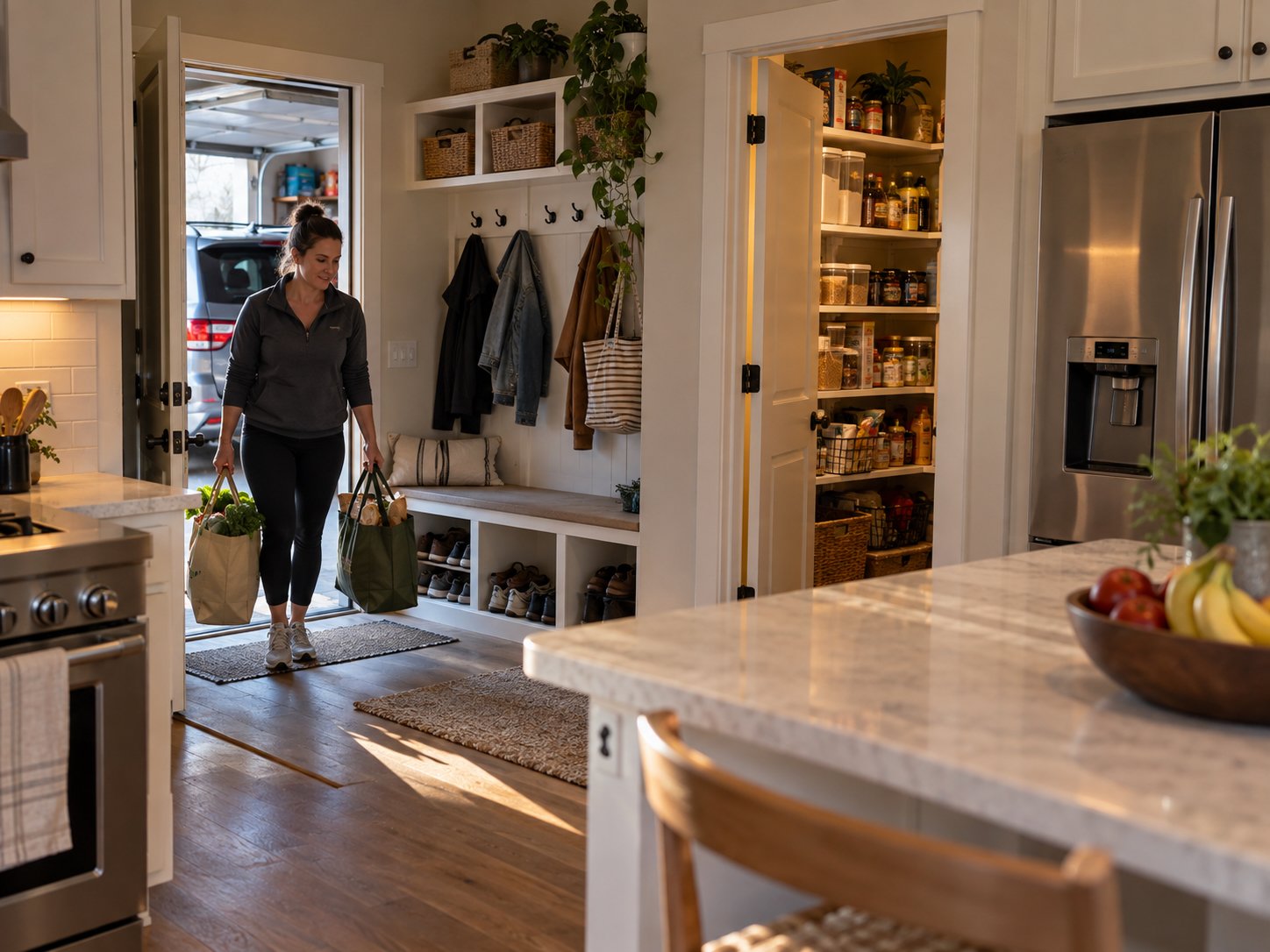
👉 What Buyers Should Know About Parking and Access in San Luis Obispo County
Functionality begins before a buyer walks through the front door. Where household members park and which entrance they normally use can affect daily life several times a day.
A convenient garage may be less useful if the interior entry is disconnected from the kitchen and storage. A secondary entrance can be extremely practical when it leads directly toward a pantry, drop zone, laundry area, or another place where items naturally need to go.
This can matter significantly in coastal communities where parking configurations vary. A Cayucos buyer may value secure off-street parking differently when the route from the vehicle to the house is short and practical. On a larger inland property, buyers may need to consider guest parking, turnaround space, garage access, and the distance between vehicles and the primary residence.
Repeated routines magnify small design differences. The arrival sequence deserves more attention than buyers sometimes give it during an initial showing.
Outdoor Space Is More Functional When the House Can Actually Use It
👉 How to Evaluate Outdoor Space When Buying on the Central Coast
A large yard or attractive patio does not automatically provide useful outdoor living. Buyers should examine how exterior areas connect to the rooms most likely to use them.
A dining patio directly outside the kitchen can function differently from an equally large patio reached only through a distant hallway. A pool may look impressive while creating an awkward route between the water, bathrooms, changing areas, and primary outdoor seating.
The same principle applies to yards. A large rear area may support recreation, gardening, pets, and entertaining, but buyers should determine whether those uses can coexist without interfering with one another.
An Arroyo Grande property with separate lawn, patio, and utility areas may work particularly well when each can be accessed without carrying equipment through another activity zone.
Outdoor square footage becomes more useful when its relationship to the house supports the activities the buyer realistically expects to use.
Storage Should Be Located Where the Need Occurs
👉 What Sellers Should Know About Buyer Comparison in San Luis Obispo County
Buyers often compare total storage without asking whether that storage is located where they will actually need it.
A large closet at the opposite end of the house does little to solve entry storage. Extensive garage shelving does not replace a pantry. A large primary closet does not address where towels, cleaning supplies, luggage, sporting equipment, or everyday household items will go.
Functionality improves when storage corresponds with activity. Kitchen supplies should be reasonably close to the kitchen. Outdoor equipment should have a practical route to the yard. Laundry supplies should remain near the laundry area.
NAHB research identifies practical features including laundry rooms, patios, garage storage, full baths on the main level, walk-in pantries, and kitchen table space among features buyers value. The findings are national rather than San Luis Obispo County-specific, but they reinforce the importance buyers place on spaces that support ordinary household use.
Search Priorities Should Be Tested Against Real Routines
👉 How to Evaluate Home Search Priorities in San Luis Obispo County
Buyers often begin with categories such as three bedrooms, two bathrooms, an office, a garage, or a certain amount of square footage. Those priorities are useful, but functionality requires going one level deeper.
Ask why each feature is needed.
If two people regularly work remotely, one flexible room may not solve the real requirement. A buyer wanting a large yard for entertaining may benefit more from direct kitchen-to-patio access than from additional land disconnected from the primary living areas. Someone requesting a garage may actually need room for two vehicles, bicycles, storage, a workbench, or recreational equipment.
A buyer looking in Nipomo may discover that a somewhat smaller home with better separation among work, living, storage, and outdoor areas functions more effectively than a larger property with considerable square footage concentrated in seldom-used rooms.
Search priorities become more useful when each requested feature is connected to the routine or problem it is supposed to support.
Location Trade-Offs Can Change How the Home Functions
👉 What Buyers Should Know About Location Trade-Offs in San Luis Obispo County
Home functionality does not end at the property line. Location can affect how often certain parts of the home are used and which physical features become important.
A household with substantial daily driving may place greater importance on convenient vehicle access, organized arrival storage, and an efficient route into the house. Someone living close to downtown San Luis Obispo may use parking and garage space differently when many activities can be reached without driving.
Property type creates another layer. A buyer choosing more acreage outside Paso Robles may gain privacy, outdoor utility, and separation while accepting greater distance among the residence, parking, secondary structures, and exterior work areas. A compact coastal property may offer less storage while simplifying access to nearby activities.
Neither configuration is inherently more functional.
Buyers should determine whether the trade-offs created by location support or complicate how they expect to use the property during a normal week.
Kitchens Should Be Evaluated as Workspaces, Not Displays
Kitchen functionality depends on movement, preparation space, storage, appliance placement, and the relationship to adjoining rooms.
A beautifully finished kitchen can still require awkward movement among the refrigerator, sink, cooking area, pantry, and primary preparation surface. An oversized island can become an obstacle if household traffic repeatedly crosses the working side.
Buyers should imagine more than one person using the room. Can someone prepare food while another person opens the refrigerator? Is there a natural location for groceries when they enter the house? Can people reach dining or outdoor areas without cutting directly through cooking activity?
Also consider where everyday items will remain after the staging disappears. Coffee appliances, mail, school items, pet supplies, recycling, and frequently used food items can consume surfaces that appear generous during a showing.
The better question is not whether the kitchen photographs well. It is whether ordinary tasks can occur efficiently after normal household life returns.
Bedroom and Bathroom Relationships Affect Privacy
Bedroom and bathroom counts tell buyers surprisingly little about how those spaces function together.
A guest bathroom near a primary gathering area may serve visitors conveniently. The same bathroom located deep inside a bedroom hallway can require guests to move through a more private part of the house. A primary bedroom adjoining a television room or heavily traveled hallway may create a different relationship than a floor plan initially suggests.
Bedroom separation also means different things to different households. Parents with younger children may prefer closer bedrooms. Buyers hosting extended guests may value greater separation. A multigenerational household may want convenient bathroom access without placing every sleeping area together.
During a showing, buyers can imagine different times of day: early mornings, overnight guests, children sleeping while others entertain, or one household member working while another rests.
Functionality becomes easier to recognize when room relationships are tested against actual household behavior instead of evaluated only by labels and dimensions.
Laundry and Household Work Areas Deserve Serious Attention
Laundry rooms, utility spaces, cleaning storage, and household drop zones rarely create the strongest emotional reaction during a showing, but they support tasks repeated throughout ownership.
Location matters. Laundry close to bedrooms reduces movement of clothing through the house. Laundry near an exterior or garage entry may work better for households dealing with pets, outdoor activity, work clothing, or frequent cleanup. Neither arrangement is automatically preferable.
Buyers should look beyond whether a home technically has a laundry room. Is there space to operate appliance doors without blocking passage? Where will hampers, cleaning supplies, bulk household products, vacuums, and pet equipment go?
HUD's residential universal-design guidance emphasizes creating homes and features usable by a broad range of people and capable of adapting as household needs change. That principle is useful when considering circulation, entries, work areas, and other spaces used repeatedly throughout daily life.
Small operational details deserve attention because minor inconveniences repeated hundreds of times can affect how comfortable a home feels to own.
Flexible Space Is Useful Only When It Can Perform a Real Job
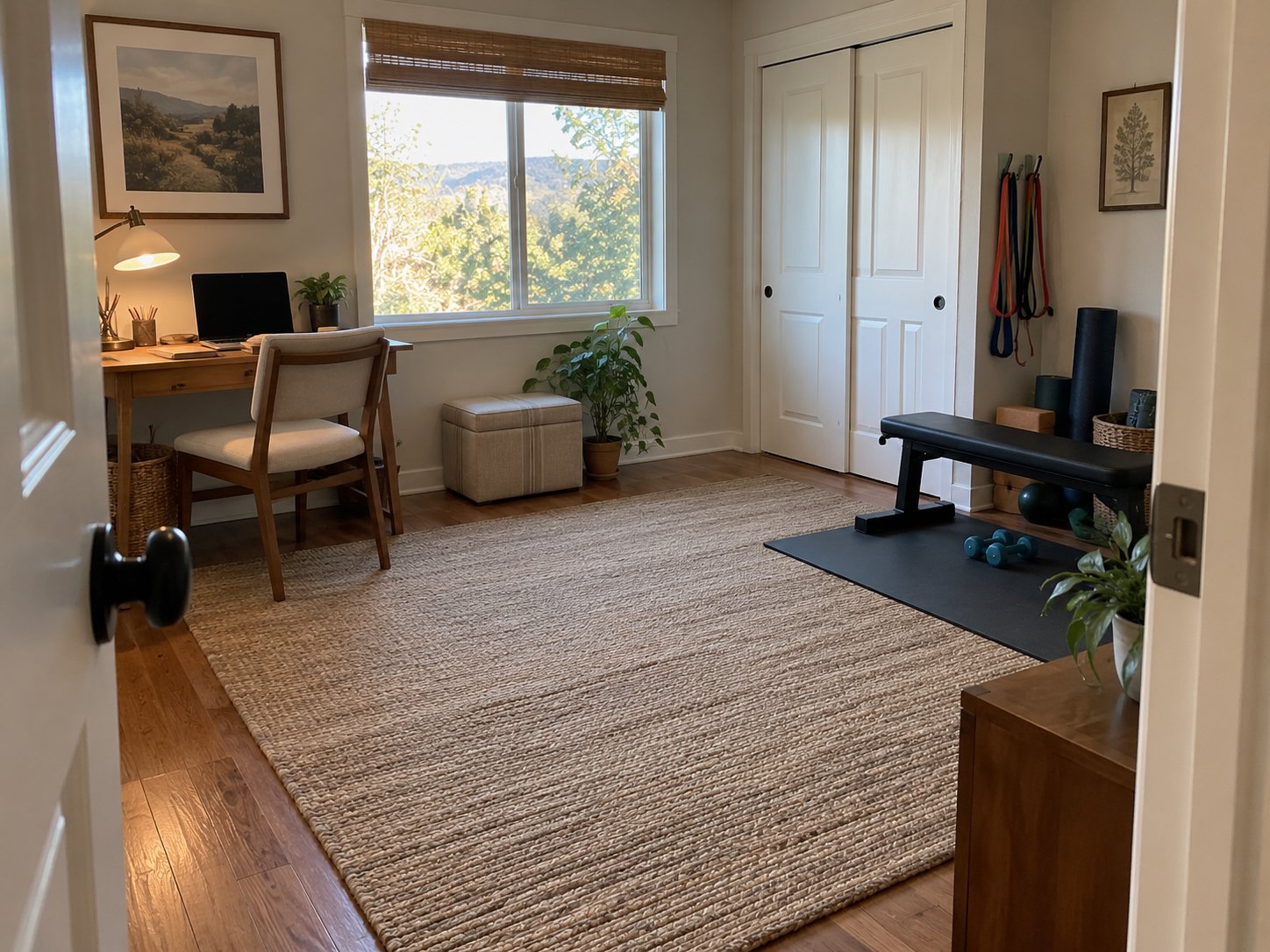
A flexible room is valuable when it can credibly support more than one use without requiring significant alteration.
A secondary room may work as an office, homework area, fitness room, library, or guest space because its dimensions, privacy, light, storage, and circulation allow those uses. An awkward leftover area is not genuinely flexible simply because marketing describes it that way.
Buyers should test possible uses physically. Would a desk fit without blocking a doorway? Could a guest use the space with reasonable privacy? Can fitness equipment remain there without consuming the circulation path? Is there appropriate storage for the activity the room is expected to support?
With more than 30 years of experience representing buyers and sellers on the Central Coast, Joesef Jackson has seen homes with similar square footage function very differently because one allocates usable space deliberately while another simply contains more rooms.
Genuine flexibility gives buyers options. It should reduce future compromises rather than require buyers to invent a purpose for space they are unlikely to use.
Functional Compromises Matter More When They Repeat Every Day
Every home contains compromises. Buyers should pay the greatest attention to compromises they will encounter repeatedly.
A small guest closet used occasionally may have little effect on ownership. An awkward kitchen route, inadequate everyday parking, poor entry storage, or a laundry configuration used constantly can become considerably more significant.
Walk through a normal weekday mentally. Then consider weekends, guests, deliveries, work-from-home days, pets, outdoor activities, and transitions between household members.
Some functional shortcomings are relatively easy to improve through cabinetry, furniture placement, or storage modifications. Others are embedded in stairs, walls, entrances, room relationships, driveway configuration, or the placement of separate structures.
That distinction matters when comparing properties.
A buyer may reasonably accept an inconvenience that occurs several times a year while rejecting another that affects nearly every morning and evening. The more permanent the physical limitation and the more frequently it touches ordinary life, the more weight it deserves in the purchase decision.
A Functional Home Supports the Buyer’s Actual Life
A functional home does not need the newest floor plan, the largest rooms, or every feature a buyer initially imagined. It needs the important parts of the property to work together.
Parking should connect logically with everyday entry. Storage should exist near the activities it supports. The kitchen should permit normal movement. Bedrooms and bathrooms should provide appropriate privacy. Laundry and household work areas should make repeated tasks manageable. Outdoor areas should connect with the rooms expected to use them. Flexible spaces should perform genuine functions instead of simply adding square footage.
Those relationships can vary considerably across San Luis Obispo County. An older city residence, compact coastal home, South County property, and larger North County home can each be highly functional in entirely different ways.
The best test is not whether the property follows a particular design formula. It is whether buyers can move through their actual routines without repeatedly working around the house.
Once functionality is evaluated that way, differences between otherwise comparable homes become much easier to recognize.
Frequently Asked Questions
What does home functionality mean when buying a house?
Home functionality describes how effectively the property's layout, access, storage, rooms, utility areas, parking, outdoor spaces, and other physical features support everyday household activities.
Is functional layout the same as home functionality?
No. Functional layout primarily addresses how interior spaces relate to one another. Overall home functionality also includes parking, household entry, storage, outdoor connections, utility areas, privacy, and how the entire property supports repeated routines.
Can a smaller home be more functional than a larger one?
Yes. A smaller home with efficient circulation, appropriately located storage, useful rooms, and strong relationships among spaces can function better for a particular household than a larger home containing poorly allocated square footage.
How should buyers evaluate functionality during a showing?
Mentally perform ordinary routines. Trace the route from the car to the kitchen, bedrooms to bathrooms, kitchen to outdoor areas, laundry to clothing storage, and household entry to everyday storage.
How important is storage to home functionality?
Storage is most useful when it is located near the activity it supports. Large amounts of storage may be less convenient when frequently used items must repeatedly be carried through unrelated parts of the home.
Does an open floor plan automatically make a home more functional?
No. Open spaces can support interaction and flexible use, but they can also create noise, privacy, furniture-placement, and circulation challenges. Functionality depends on the household and the actual configuration.
Should buyers consider future needs when evaluating functionality?
Yes, when likely changes are reasonably foreseeable. Buyers can consider whether rooms and circulation provide useful adaptability without trying to purchase a home for every hypothetical future circumstance.
Can home functionality be improved after buying?
Some issues can be improved through cabinetry, storage, furniture placement, doors, or modest remodeling. Limitations involving stairs, major room relationships, parking, entrances, or lot configuration can be substantially harder to change.
If you are preparing to buy or sell real estate on the Central Coast and want personalized guidance, contact Joesef Jackson at SLO Life Realty Group.