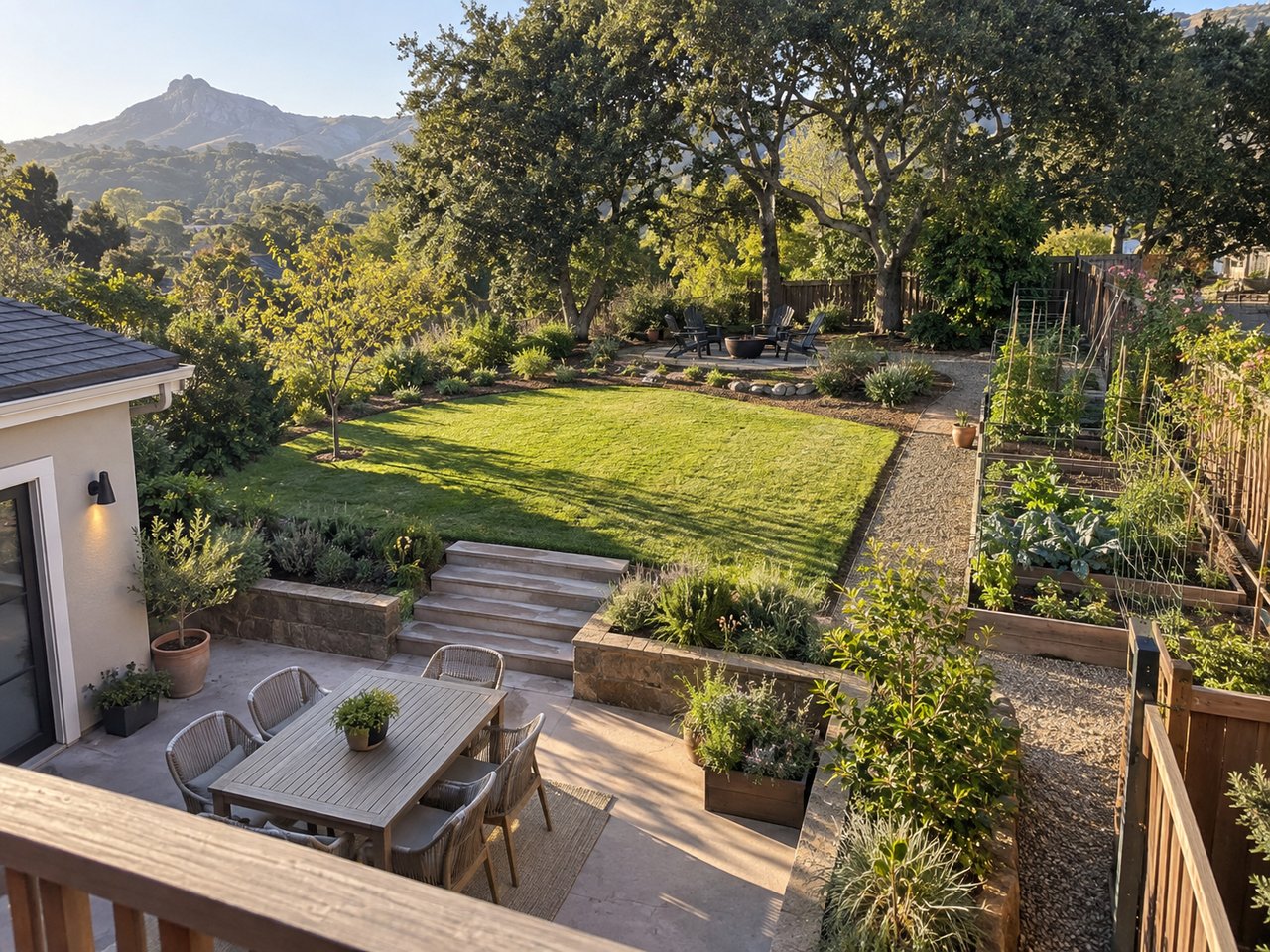
Outdoor space can influence how a home feels, functions, and ultimately fits a buyer's lifestyle, but acreage or yard size alone does not tell the full story. A large lot may contain steep terrain that offers little everyday use, while a smaller property may provide an exceptionally practical patio, protected yard, garden area, or connection between indoor and outdoor living.
On the Central Coast, outdoor space also changes considerably from one community to another. Coastal exposure, slope, vegetation, privacy, access, neighboring properties, wind, sun, drainage, and natural surroundings can all affect how a buyer experiences the land around a home.
The strongest evaluation begins with a practical question: what will you actually do outside?
A buyer planning frequent outdoor meals needs something different from someone prioritizing gardening, pets, children, entertaining, privacy, recreational equipment, or simply a quiet place to sit. Once that use is defined, buyers can evaluate whether the property supports it naturally rather than being impressed by acreage or landscaping alone.
Central Coast Neighborhood Video Tour ⬇️
Natural Conditions Can Affect How Much of the Outdoor Space Is Truly Usable
Outdoor areas should be evaluated in relation to the land and surrounding environment.
👉 What Buyers Should Know About Natural Hazard Disclosures in San Luis Obispo County
Slope, drainage patterns, vegetation, wildfire exposure, flood considerations, and other site characteristics may affect how buyers use or modify the property.
A large hillside parcel can provide privacy and views while offering relatively little level ground for recreation. A flatter property may provide more practical daily use even with substantially less acreage.
The California Department of Forestry and Fire Protection provides fire hazard severity zone information that can be relevant when evaluating properties in areas where wildfire exposure is a consideration.
After more than 30 years representing Central Coast real estate, Joesef Jackson has found that buyers often evaluate outdoor space more successfully when they separate total land area from the portion of the property that actually supports the activities they envision.
The usable part of the lot frequently matters more than the number printed in the listing.
The Surrounding Neighborhood Changes the Experience of the Yard
A property's outdoor space does not exist independently from the homes and streets around it.
👉 How to Evaluate Neighborhoods in San Luis Obispo County
Buyers should notice neighboring elevations, window placement, street activity, nearby open space, fences, mature vegetation, and the relationship between the yard and adjoining properties.
A rear patio may appear private from ground level while remaining visible from several neighboring second-story windows. Another property may have a modest yard but back directly to open space, creating a much greater sense of separation.
Neighborhood context also affects sound.
A property near a commonly traveled street, school, commercial area, or recreation corridor may experience different activity throughout the day.
Buyers should spend enough time outside to understand how the space interacts with its surroundings rather than evaluating it only from inside the home.
Coastal Outdoor Areas Should Be Evaluated for Exposure as Well as View
Ocean proximity can make outdoor space particularly appealing, but coastal conditions deserve practical consideration.
👉 What to Expect When Buying a Coastal Home on the Central Coast
Wind direction, marine air, fog, salt exposure, temperature changes, and the orientation of outdoor areas can determine how frequently those spaces are comfortable to use.
A dramatic exposed deck may provide an extraordinary view while experiencing regular afternoon wind. A smaller protected courtyard may become the space the household uses every day.
The same distinction can occur within a single property.
A home in Shell Beach might have an ocean-facing terrace for views and a sheltered side patio for dining. A Cayucos property may offer direct coastal exposure while relying on wind screens, landscaping, or building orientation to create usable outdoor areas.
Buyers should evaluate not only what they can see from the outdoor space, but when and how comfortably they can use it.
Location Influences Which Outdoor Features Carry the Most Value
The value of outdoor space often depends on where the property is located.
👉 Buying a Home in San Luis Obispo County: How Location Impacts Price and Lifestyle
A large yard may be relatively common in one inland community and unusually scarce in another. A private courtyard close to downtown San Luis Obispo can offer a different kind of value from several acres outside Santa Margarita.
Buyers should compare outdoor space with realistic alternatives within the same search area.
If most homes within a coastal price range provide minimal yards, a well-designed usable outdoor area may become a meaningful differentiator. In a rural market, buyers may expect more land but evaluate access, fencing, water, terrain, and maintenance requirements more closely.
With more than 2,130 closed transactions, Joesef has seen buyers misjudge outdoor value when they compare properties across markets where land serves completely different purposes.
Outdoor space should be evaluated in the context of the location, not as a universal measure of quality.
Parking and Access Can Determine Whether Outdoor Space Works in Practice
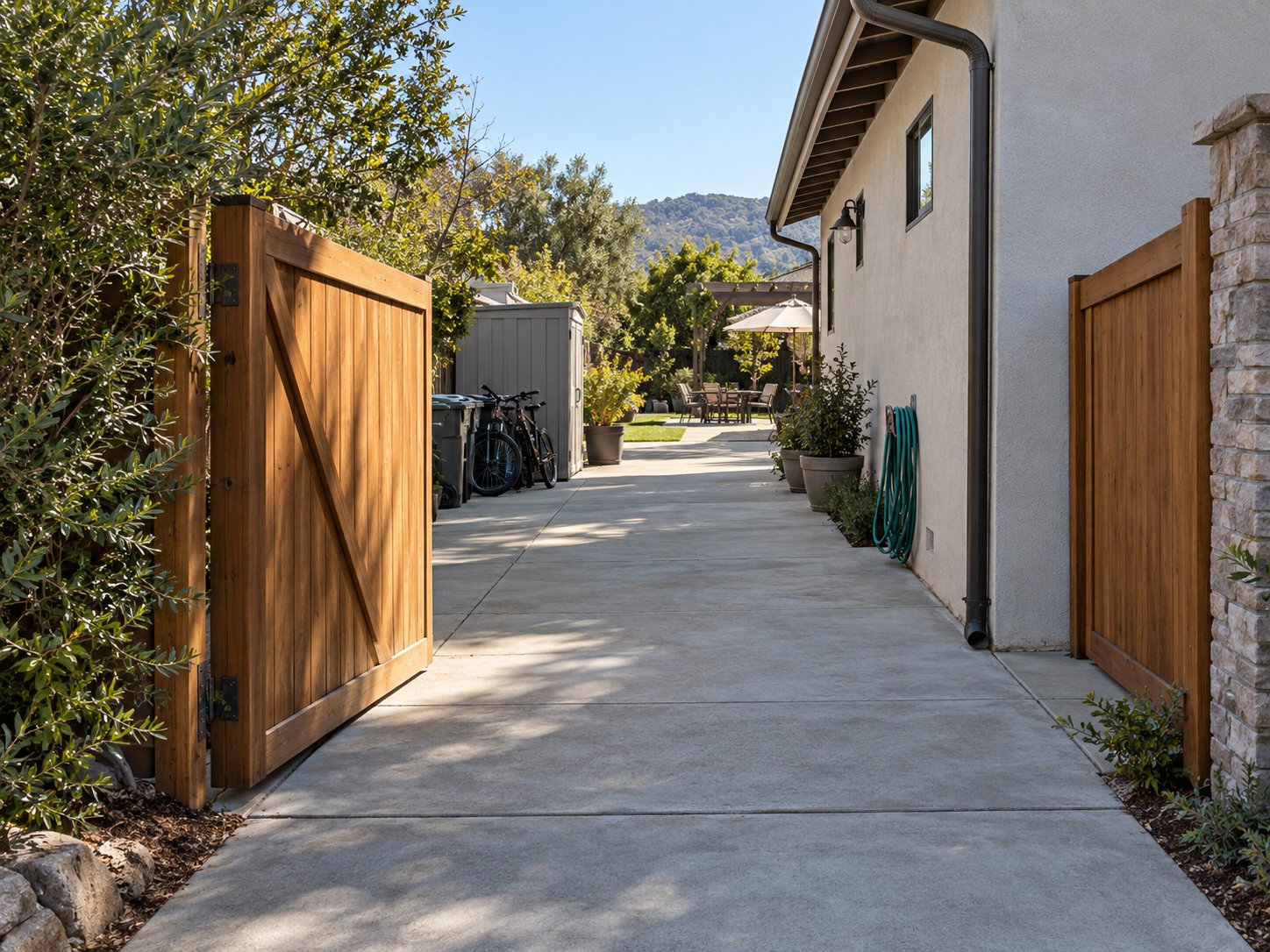
A property may have an attractive yard while presenting practical access limitations.
👉 What Buyers Should Know About Parking and Access in San Luis Obispo County
Buyers should consider how people, vehicles, pets, equipment, and maintenance crews reach different areas of the property.
A side gate wide enough for ordinary foot traffic may not accommodate larger equipment. A steep driveway can affect vehicle access. A detached garage may change how groceries or household items move between parking and the home.
Outdoor living also changes when guest parking is limited.
A buyer who expects frequent gatherings may value the patio itself, but the experience begins with where visitors park and how they reach it.
Privacy Should Be Evaluated From Every Outdoor Use Area
Privacy is not simply a matter of fence height.
👉 What Makes Privacy Valuable in San Luis Obispo County Real Estate
Buyers should stand where they would actually sit, dine, swim, garden, or relax and look outward in every direction.
Neighboring homes may sit higher or lower. A second-story balcony may overlook one portion of the yard. Landscaping may provide excellent screening now but change substantially if vegetation is removed or trimmed.
The strongest private spaces often result from several elements working together: building placement, topography, mature vegetation, walls, fencing, and thoughtful orientation.
Privacy also varies by activity.
A buyer may be comfortable with a visible front garden while expecting complete separation around a pool or primary outdoor dining area.
The question is not whether the lot is technically private. It is whether the areas that matter most feel private during actual use.
Sun Exposure Can Change the Usefulness of a Patio Throughout the Day
Buyers often visit a property at one particular time.
Outdoor light conditions can be very different several hours later.
A west-facing patio may be shaded during a morning showing and receive intense afternoon sun. A yard bordered by mature trees may offer exceptional summer shade while remaining cooler during other parts of the year.
Orientation matters because outdoor space is experienced over time.
Buyers who expect to eat breakfast outside may value morning sun. Those planning evening gatherings may care more about western exposure, shade, or protection from prevailing wind.
A useful evaluation considers when the outdoor area will most often be used and whether the orientation supports that routine.
Terrain Determines Whether Large Lots Feel Expansive or Restrictive
Lot size and usable area are not interchangeable.
A half-acre property could provide extensive level lawn, gardens, patios, and room for additional outdoor uses. Another half-acre parcel may consist largely of steep slope, dense vegetation, or terrain that functions primarily as visual separation.
Neither property is inherently better.
The buyer needs to know what they expect the land to accomplish.
Someone seeking privacy may value slope and vegetation precisely because they separate the home from neighbors. A buyer wanting recreational space may prioritize level usable ground.
Acreage should therefore be evaluated through function rather than scale alone.
Drainage Patterns Are Easier to Understand by Looking Beyond the Patio
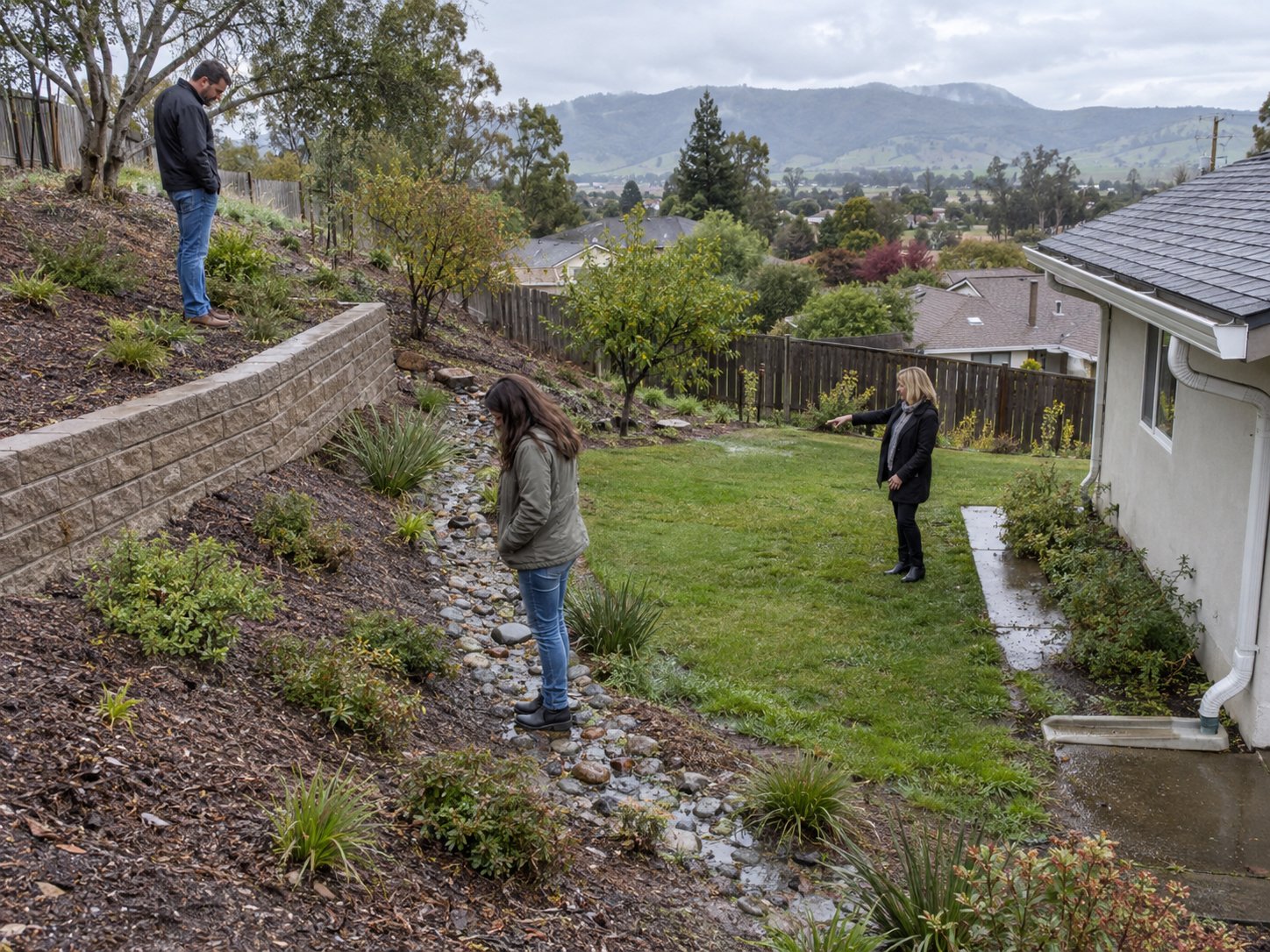
Outdoor evaluation should include where water is expected to move.
Grades, drains, swales, retaining walls, roof runoff, low spots, and neighboring elevations can all influence how the property responds to rain.
The County of San Luis Obispo provides flood hazard and mapping resources that can provide broader context for properties where flood conditions warrant investigation.
Buyers should not diagnose drainage performance from appearance alone. The objective during an initial evaluation is to identify questions requiring further investigation.
A beautifully landscaped yard can still deserve closer review when the grade directs water toward structures or when retaining features play an important role in the site.
Outdoor Rooms Should Be Judged by How Naturally They Connect to the House
A patio can be beautifully finished and still receive little use if reaching it is inconvenient.
Buyers should notice which interior room connects to the outdoor area and how that route affects daily life.
A dining terrace directly off the kitchen may function naturally for meals. A patio accessible only through a bedroom may serve a very different purpose.
Doors, steps, thresholds, and elevation changes all influence how integrated the space feels.
A good indoor-outdoor relationship does not require enormous glass walls or elaborate architecture. It requires a connection that matches the intended use.
The strongest test is simple: would the household naturally move into this outdoor space during an ordinary day?
Yard Shape Can Matter as Much as Yard Size
Two yards with identical square footage may support completely different activities.
A long narrow yard can work extremely well for gardening or a lap pool while being less useful for large gatherings. A broad rectangular lawn may accommodate play areas, pets, or multiple outdoor zones more easily.
Irregular boundaries can create privacy pockets or difficult leftover spaces.
Buyers should look past landscaping and imagine the underlying geometry.
Where would a table go? Is there room for the activity being envisioned? Can people circulate without crossing planting beds or narrow passages?
Usable shape is often one of the most overlooked outdoor characteristics.
Fencing Should Be Evaluated According to the Buyer's Actual Purpose
A fenced yard may sound straightforward, but buyers can require fencing for very different reasons.
Someone with a small dog may care about gaps and gate security. A household with children may focus on separation from a pool, driveway, or street. A gardening buyer may care more about wildlife access.
Fence height, materials, condition, and location can all affect the result.
Property boundaries also should not be assumed solely from visible fencing.
The physical fence and the legal property line are not necessarily the same thing.
Buyers planning improvements near boundaries should investigate the relevant property information rather than treating existing landscape elements as definitive.
Trees Can Add Exceptional Value While Also Shaping How the Site Works
Mature trees can provide shade, privacy, beauty, habitat, and a sense of permanence that cannot be recreated quickly.
They can also influence sunlight, usable ground, views, roof clearance, and future landscaping decisions.
A large oak on an Atascadero property may become the central feature of the outdoor environment. Its canopy may create an exceptional shaded area while limiting where certain improvements can reasonably occur.
Buyers should evaluate established trees as part of the property's physical structure rather than simply as decoration.
The question is how the vegetation contributes to the site and whether that relationship fits the buyer's intended use.
Outdoor Improvements Should Be Evaluated as Part of the Property, Not Automatically as Added Value
Pools, outdoor kitchens, fire features, pergolas, sport areas, spas, and elaborate landscaping can be attractive, but buyers should consider whether they genuinely want those features.
An improvement has more practical value when it supports the buyer's lifestyle.
Someone who expects frequent gatherings may place substantial value on an outdoor kitchen. Another buyer may see the same feature primarily as something that occupies space they would rather use differently.
The same principle applies to pools.
A pool may be highly desirable to one household and largely irrelevant to another.
Outdoor improvements should be evaluated according to utility rather than the cost someone previously spent creating them.
Views Should Be Evaluated From the Places Where Daily Life Happens
A property may be advertised around a view, but buyers should consider where that view is actually visible.
An ocean glimpse from one corner of an upstairs deck creates a different experience from a view visible from the kitchen, living room, primary bedroom, and main patio.
The same applies to vineyard, mountain, valley, or open-space views.
Buyers should stand in the places they expect to use regularly.
A view gains practical value when it becomes part of ordinary life rather than something available only from one isolated point.
Joesef's experience representing more than $1.81 billion in career sales volume has reinforced that buyers often respond most strongly to site characteristics that repeatedly influence everyday experience rather than features encountered only occasionally.
Outdoor Space Should Be Viewed Under More Than One Set of Conditions When Possible
A single showing provides only one snapshot.
Morning light, afternoon wind, weekday traffic, weekend activity, temperature, and neighboring use can change how an outdoor area feels.
Buyers do not always have the opportunity to visit repeatedly, particularly in competitive situations.
When time allows, however, returning at another hour can reveal useful information.
A peaceful morning yard may sit close to an active afternoon route. A shaded patio may become ideal later in the day. Coastal wind may strengthen after the marine layer clears.
The objective is not to find a time when the space feels perfect.
It is to understand how conditions vary.
Future Plans Should Be Separated From What the Property Offers Today
Outdoor areas often encourage buyers to imagine additions.
A pool could go here. A guest structure might fit there. The patio could be expanded. A retaining wall might create another level.
Those ideas can be valuable, but they are not the existing property.
Permits, zoning, setbacks, terrain, easements, utilities, access, and other constraints can affect whether a future improvement is practical.
Buyers should therefore evaluate the property first according to what exists today.
Potential improvements should be investigated separately rather than assumed to be part of the purchase value.
The Best Outdoor Space Is the Space the Buyer Will Actually Use
A dramatic lot can be memorable without being particularly useful. A modest yard can become one of the most valuable parts of a home when it supports everyday life effortlessly.
For Central Coast buyers, outdoor evaluation should move beyond acreage, landscaping, and first impressions.
Consider usable terrain, privacy, access, sun, wind, drainage, yard shape, fencing, mature vegetation, indoor-outdoor connection, neighboring conditions, and the activities the household expects to enjoy.
Different buyers will reach different conclusions about the same property.
That is exactly the point.
The right outdoor space is not the largest or most elaborate. It is the one whose physical characteristics align most naturally with the way the buyer plans to live.
Frequently Asked Questions
What should buyers look for when evaluating a backyard?
Consider usable area, grade, privacy, sun exposure, access, drainage, fencing, neighboring sightlines, vegetation, and how naturally the yard connects with the home.
Is a larger lot always better?
No. A smaller property with level, accessible, private outdoor space may be more useful than a much larger lot dominated by steep or difficult terrain.
How can buyers evaluate privacy in a yard?
Stand in the areas where you would actually sit or gather and look toward neighboring windows, upper floors, streets, adjacent lots, and other potential sightlines.
Why does yard orientation matter?
Orientation affects sunlight, shade, wind exposure, temperature, and which parts of the outdoor space are comfortable at different times of day.
Should buyers worry about sloped outdoor space?
Not automatically. Slope can provide views and privacy, but buyers should consider usable ground, access, drainage, retaining features, and whether the terrain suits their intended use.
How important is direct access from the house to the yard?
It depends on how the buyer expects to use the outdoor space. Direct kitchen or living-area access can be particularly valuable for dining, entertaining, children, or pets.
Should buyers assume existing fences mark the property line?
No. Physical fences should not automatically be treated as legal boundary evidence. Buyers with boundary concerns should review appropriate property information.
Can buyers assume there is room to add a pool or outdoor structure?
No. Lot size alone does not establish feasibility. Setbacks, zoning, easements, terrain, utilities, access, permits, and other requirements may affect what can be built.
If you are preparing to buy or sell real estate on the Central Coast and want personalized guidance, contact Joesef Jackson at SLO Life Realty Group.