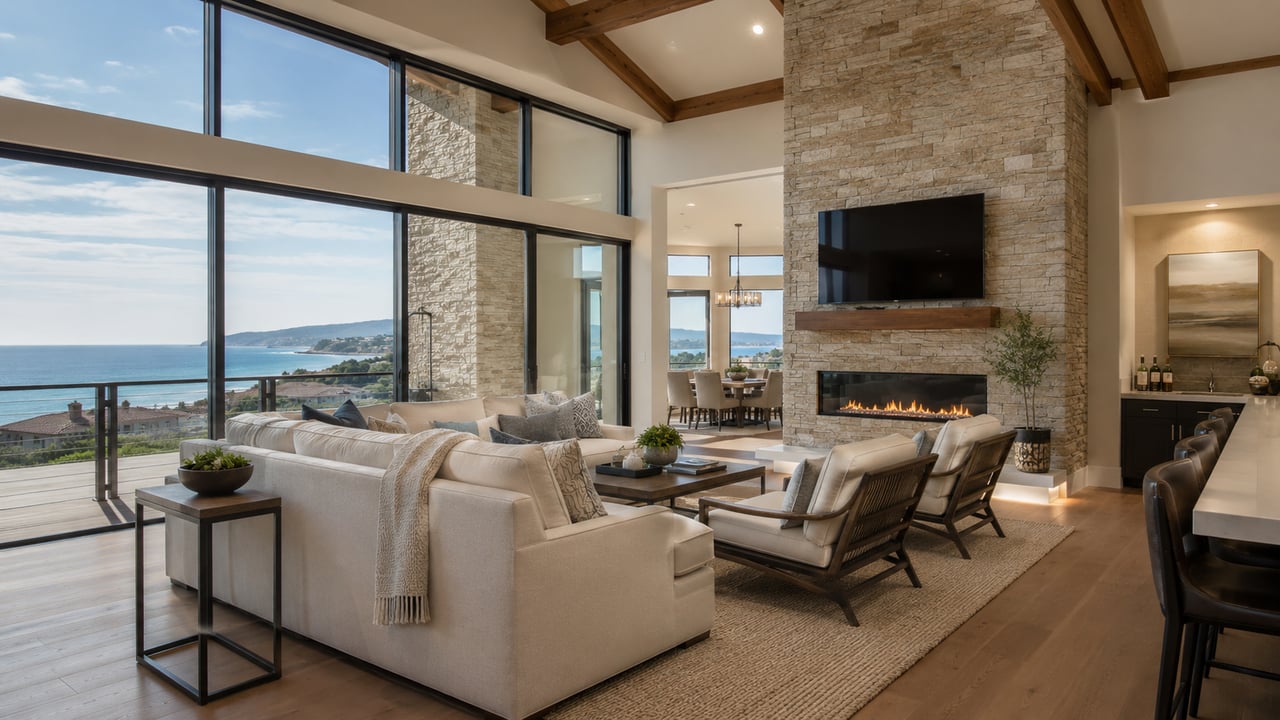
Buying a home in San Luis Obispo County is about much more than choosing a property with the right number of bedrooms, square footage, or finishes. On the Central Coast, location can change what your budget buys, how you spend your time, the climate you experience, your access to the coast or downtown areas, the amount of land around you, and even the types of homes available.
That makes location one of the most important decisions buyers make. A home in San Luis Obispo, Pismo Beach, Avila Beach, Arroyo Grande, Morro Bay, Los Osos, Atascadero, Templeton, or Nipomo may provide a very different combination of price, space, setting, convenience, and lifestyle even when the properties fall within a similar overall budget.
The goal is not necessarily to identify the least expensive community or the home with the most square footage. It is to understand what you are receiving for your money and whether that location supports the way you realistically expect to live.
Central Coast Neighborhood Video Tour ⬇️
Why Location Changes What Buyers Are Really Purchasing
When buyers compare homes, it can be tempting to focus on visible features: remodeled kitchens, larger living areas, updated flooring, outdoor spaces, or newer construction. Those features matter, but they exist within a location that often has an even greater influence on the overall buying decision.
Location affects scarcity. It affects convenience. It influences the amount and type of available housing. It can determine whether a property offers coastal access, downtown walkability, acreage, views, privacy, or proximity to major employment and transportation routes.
This is why two similarly sized homes can have substantially different values.
👉 What Drives Home Prices in San Luis Obispo Count
The important point is that a buyer is rarely paying only for the structure. Part of the purchase price reflects the advantages—or limitations—of the property's exact setting.
San Luis Obispo Puts Convenience at the Center of the Decision
San Luis Obispo attracts buyers who place a high value on access.
Downtown restaurants, shopping, Cal Poly, recreation, employment centers, Highway 101, and established residential neighborhoods are all relatively close together compared with many larger California markets. For some buyers, that convenience is worth accepting a smaller lot, an older home, or less square footage than the same budget might purchase elsewhere.
That trade is important to recognize.
A buyer who regularly works in San Luis Obispo, enjoys downtown activities, or wants to minimize driving may receive considerable everyday value from being close to those destinations. Someone whose priorities center on acreage, newer construction, or more separation between neighboring homes may reach a different conclusion.
Neither buyer is evaluating the market incorrectly. They are assigning value to different things.
This is also why buyers should avoid comparing San Luis Obispo homes with properties elsewhere in the county using square footage alone. More house for the money does not automatically mean more value if the alternative location works less effectively for the buyer's daily routine.
Coastal Real Estate Adds Scarcity That Cannot Be Recreated
Location becomes even more pronounced when buyers move toward the coastline.
Pismo Beach, Avila Beach, Morro Bay, and other coastal areas contain something inland communities cannot duplicate: immediate proximity to the Pacific Ocean.
That scarcity can influence value even before considering an individual home's finishes or size. Add an ocean view, walkability to the beach, a particularly desirable elevation, or limited inventory within a specific pocket, and the relationship between location and price can become even stronger.
A buyer looking at coastal property may therefore find that the same budget purchases less interior space than it would farther inland. But the buyer may be receiving something else of considerable value: an irreplaceable setting.
👉 What to Expect When Buying a Coastal Home on the Central Coast
Coastal comparisons also need to become more precise. Two homes in the same community may feel very different depending on their elevation, street position, distance from the water, views, nearby development, and ease of access.
A map can show distance. It cannot always show how that location functions in everyday life.
South County Can Stretch a Buyer's Options in Different Directions
Moving into South County can introduce another combination of housing choices.
Arroyo Grande includes established neighborhoods, rural and semi-rural areas, larger parcels, and homes that can feel very different depending on where they are located. Grover Beach provides convenient access to coastal areas while maintaining its own residential character. Nipomo can offer buyers opportunities for additional space, planned communities, or a setting that feels different from denser coastal locations.
For a buyer, this can create an important question: What matters more—proximity or property?
Someone who wants a larger yard, additional garage space, a newer home, or more separation from neighboring properties may decide that moving farther from San Luis Obispo or the immediate coastline creates a better overall fit.
Another buyer may decide that reducing drive time or remaining closer to favorite coastal destinations is more important than gaining additional square footage.
This is where value becomes personal rather than purely mathematical.
The strongest comparison is not simply the asking price of one home against another. It is the package of benefits each property delivers.
North County Creates a Different Version of Central Coast Living
Atascadero, Templeton, and Paso Robles demonstrate just how much the experience of living on the Central Coast can change within one county.
Buyers may encounter larger lots, more space between homes, ranch-style properties, newer subdivisions, acreage, and wine-country settings. The climate is also generally warmer inland than it is closer to the ocean, which can be either an advantage or a drawback depending on personal preference.
A buyer who values land, outdoor space, or a more inland setting may find the trade compelling. Someone who expects to spend significant time in San Luis Obispo or at the coast may weigh the additional driving differently.
What matters is recognizing these choices before falling in love with an individual house.
👉 How to Compare Value Across San Luis Obispo County Communities
The practical lesson is simple: San Luis Obispo County does not function as one uniform housing market. Different communities can satisfy very different priorities.
The Same Budget Can Produce Completely Different Homes
One of the most useful things a buyer can do is compare what the same approximate budget purchases in several locations.
Instead of assuming that one community is automatically right, look at representative properties across a few realistic alternatives.
A similar budget might provide:
- a smaller home with strong walkability;
- a coastal property with limited yard space;
- a larger inland home;
- a newer property farther from major employment centers;
- a home with additional land;
- an older property in a location where inventory is especially limited.
Seeing those alternatives side by side can quickly clarify what the buyer values most.
👉 How to Compare Multiple Properties on the Central Coast
The objective is not to maximize every category simultaneously. That is rarely possible.
The objective is to identify which characteristics deserve the greatest share of your budget.
Think About an Ordinary Week, Not Just a Showing
A property can be impressive during a weekend showing while still being poorly aligned with a buyer's everyday routine.
Before deciding on a location, picture a normal week.
Where will you drive most often? How frequently will you use Highway 101? Do you expect to commute into San Luis Obispo? Will you actually walk to restaurants and shops if they are nearby? How often do you want to reach the beach? Is having more land worth additional driving? Would you use a larger backyard enough to justify moving farther from the places you visit regularly?
These questions can be more revealing than a list of amenities.
The best home is not necessarily the one that creates the strongest first impression. It is often the one that continues to make sense after daily routines take over.
For buyers who work remotely, location may be evaluated differently than it is by someone commuting several days each week. Retirees may prioritize another set of considerations. A second-home buyer may place considerably more value on immediate access to recreation than on proximity to employment.
The property search becomes much clearer once these priorities are explicit.
City Choice Is Only the Beginning
Even after buyers narrow their search to one or two communities, neighborhood-level differences can still be meaningful.
Within San Luis Obispo, individual areas vary in housing age, density, lot size, terrain, street design, access, and proximity to downtown. Arroyo Grande can move from neighborhood environments to larger properties within relatively short distances. Coastal communities may change significantly based on elevation, walkability, views, and surrounding development.
That makes neighborhood evaluation a second layer of location analysis.
👉 How to Evaluate Neighborhoods in San Luis Obispo County
When practical, buyers can also benefit from experiencing an area at more than one time of day. Consider traffic patterns, parking, road access, noise sources, nearby commercial activity, terrain, and the time required to reach destinations you expect to use frequently.
These are objective characteristics that may be difficult to appreciate during a single showing.
Location Trade-Offs Should Be Chosen, Not Discovered Later
Nearly every real estate purchase requires compromise.
The question is whether those compromises are intentional.
One buyer may knowingly accept less square footage because being close to downtown is more important. Another may accept a longer drive because acreage and privacy matter more. A coastal buyer may prioritize setting over interior size. Someone else may choose an inland community because the property itself provides greater utility.
These can all be sound decisions when the buyer understands what is being exchanged.
The problems tend to arise when a trade-off becomes apparent only after the purchase.
👉 What Buyers Should Know About Location Trade-Offs in San Luis Obispo County
Before making an offer, buyers should be able to explain why the property's location works for them—not merely why they like the house.
That distinction can protect buyers from allowing an attractive interior to overshadow a geographic compromise they may eventually resent.
Avoid Paying for Advantages You Will Rarely Use
Certain location features command premiums because many buyers value them.
That does not mean every buyer should pay for them.
Walkability has less practical value to someone who rarely expects to walk to restaurants or services. Acreage may be unnecessary for someone who wants minimal outdoor upkeep. Immediate coastal access may be less important to a buyer who spends most weekdays commuting inland. A short downtown drive may be irrelevant to someone whose routine is centered elsewhere.
Buyers should separate market value from personal value.
A feature can be objectively desirable and still be relatively unimportant to a particular buyer.
This distinction allows buyers to allocate their budget more intentionally. Instead of trying to secure every desirable characteristic, they can concentrate spending on the features and locations they are most likely to appreciate.
Compare Properties Within the Market That Actually Competes With Them
Location also affects how buyers should interpret pricing.
A coastal cottage should not automatically be compared with a larger inland home simply because the two properties have similar square footage. A downtown residence may attract a different buyer than an acreage property. A newer subdivision home may compete differently than an older property in a highly constrained neighborhood.
Comparable sales are most useful when they reflect the characteristics that buyers are actually paying for.
That means analyzing not only size and condition but also the property's relationship to its surrounding market.
This does not mean location justifies any asking price. Buyers still need to consider recent comparable sales, current competition, market conditions, property-specific characteristics, and the seller's positioning.
But the analysis becomes more meaningful when the comparison begins with the correct geographic and property context.
A Better Home Search Starts With Priorities Before ZIP Codes
Online home searches encourage buyers to start with geography: choose a city, enter a price range, and browse listings.
A more strategic approach can reverse that order.
Start by identifying the characteristics that will shape your daily experience:
- preferred amount of driving;
- desired access to the coast;
- importance of walkability;
- need for additional land;
- preference for coastal or inland climate;
- proximity to work or frequently visited destinations;
- importance of privacy;
- willingness to trade interior space for a particular setting.
Once those preferences become clear, the geographic search often narrows naturally.
This can also prevent buyers from treating an arbitrary city boundary as though it were the most important part of the decision.
Sometimes the strongest fit is exactly where the buyer expected. Other times, comparing several areas reveals a community that delivers a better combination of price and lifestyle than the buyer originally anticipated.
Local Context Can Make Property Comparisons More Useful
After more than 30 years working with buyers and sellers throughout San Luis Obispo County, one pattern remains consistent: buyers tend to make stronger decisions when they understand what changes as they move from one part of the county to another.
The differences are not simply about which city is more expensive.
They are about scarcity, housing type, land, access, climate, proximity, convenience, and the way those characteristics combine.
That context becomes especially useful when a buyer is choosing between two properties that are attractive for completely different reasons.
One may offer the better house. The other may offer the harder-to-replace location.
There is no formula that automatically determines which choice is correct. The value of experienced local guidance is helping buyers identify the relevant differences, interpret the market around each property, and make a decision based on their own priorities rather than on a generic ranking of communities.
The Strongest Choice Connects the Home to the Life Around It
Buying a home in San Luis Obispo County means choosing both a property and a place.
The house determines what happens inside the property lines. The location shapes much of what happens beyond them.
That is why the strongest buying decisions usually connect price to daily value. Buyers should understand what they are paying for, which elements of the location are difficult to replicate, and whether those characteristics will remain meaningful after the excitement of the purchase has passed.
A kitchen can be remodeled. Flooring can change. Landscaping can evolve. A home may be improved over time.
The coastline cannot be moved closer. A commute does not become shorter because the house is beautiful. Acreage cannot usually be added to a small residential lot. A view, downtown proximity, walkability, surrounding density, and regional access are fundamentally tied to where the property sits.
For buyers on the Central Coast, recognizing that difference can make the search more focused and the final decision far more intentional.
Frequently Asked Questions
Why do similar homes cost different amounts across San Luis Obispo County?
Homes with similar square footage can carry different values because buyers are also paying for location-specific benefits such as coastal proximity, views, land, walkability, access to employment, limited inventory, or convenience. Property type and local supply also influence how buyers perceive value.
Should I choose the community before I start looking at homes?
It can help to begin with a few communities, but buyers may benefit from defining their priorities first. Understanding how much you value space, coastal access, commute time, walkability, privacy, land, and other location characteristics can reveal which communities deserve serious consideration.
Is buying closer to the coast always better?
No. Coastal proximity may command a premium because of scarcity and demand, but whether it represents the best choice depends on the buyer. Someone prioritizing land, interior space, or a particular daily commute may receive more personal value elsewhere.
Is a larger home automatically a better value?
Not necessarily. A larger home may provide more physical space, but another property may offer a location that is harder to duplicate. Buyers should evaluate the complete combination of property and location rather than treating square footage as the only measure of value.
How can I compare two homes in different San Luis Obispo County communities?
Compare both the physical properties and the daily experience each location would create. Consider price, housing type, lot size, access, commute patterns, nearby services, coastal proximity, climate, privacy, and the features you expect to use regularly.
How important is it to visit a neighborhood more than once?
When practical, additional visits can provide useful information about traffic, parking, road access, noise, surrounding land uses, and travel times. A single showing may not reveal how the location functions throughout a normal week.
If you are preparing to buy or sell real estate on the Central Coast and want personalized guidance, contact Joesef Jackson at SLO Life Realty Group.