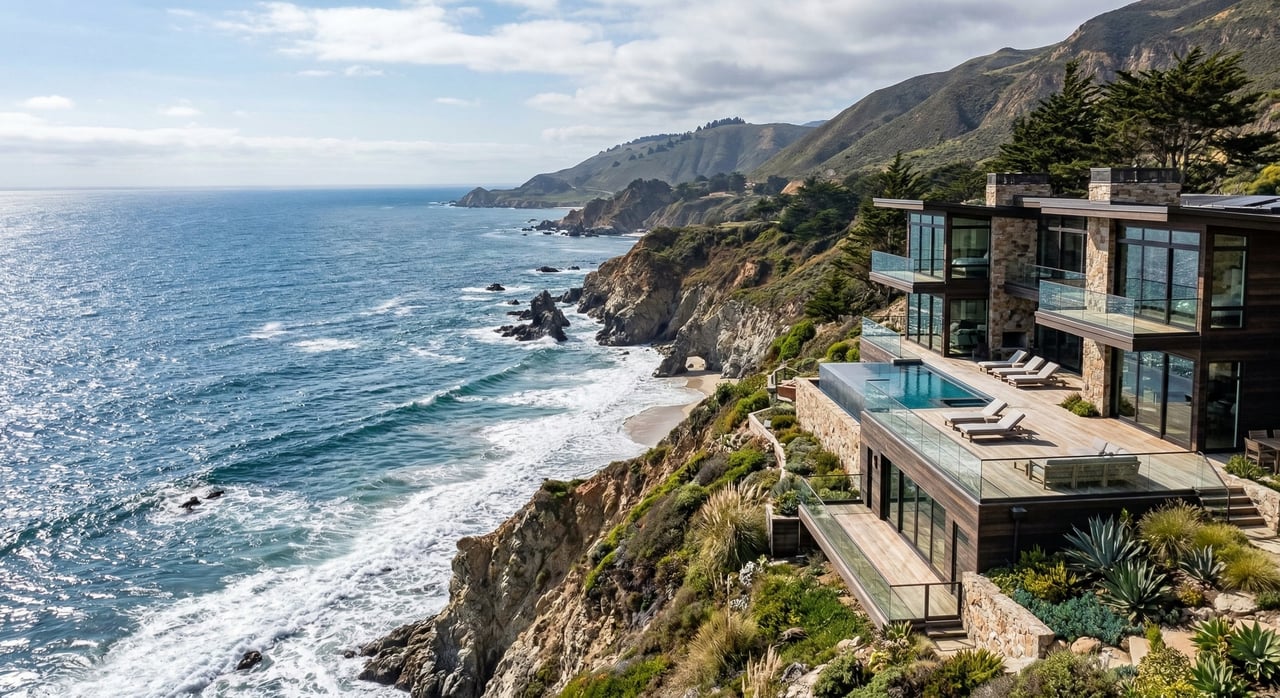
Buying a coastal home on the Central Coast can involve considerations that are less significant—or sometimes entirely absent—when purchasing farther inland. Ocean proximity may be the reason a buyer is drawn to a property, but the same setting can introduce questions involving moisture, salt exposure, drainage, bluff or flood considerations, insurance availability, access, coastal regulations, and the way a home has performed in its environment over time.
Those factors do not make coastal ownership inherently problematic. They simply mean the property should be evaluated in the context of where it sits. A home in Pismo Beach, Shell Beach, Avila Beach, Cayucos, Cambria, or Morro Bay can have characteristics that vary dramatically even within a small geographic area. Elevation, distance from the water, topography, construction, orientation, and immediate surroundings can matter as much as the community name.
For buyers, the objective is to understand what creates the property's coastal appeal while also identifying the practical characteristics that will shape ownership after closing. That requires looking beyond the view and evaluating the home, land, documentation, insurance, and location as one connected purchase.
Central Coast Neighborhood Video Tour ⬇️
Coastal Location Should Be Evaluated Property by Property
The phrase “coastal home” covers an enormous range of real estate on the Central Coast.
A house overlooking the ocean from an elevated Shell Beach location presents a different set of considerations than a property on relatively low terrain closer to the water. A Cambria residence surrounded by vegetation and influenced by a cooler coastal climate differs from a condominium near downtown Pismo Beach. A Morro Bay home several blocks inland may experience coastal conditions differently from one directly exposed to prevailing winds.
Buyers should therefore avoid applying broad assumptions to an entire coastal community.
Instead, evaluate the specific site. Consider elevation, orientation, surrounding terrain, proximity to bluffs or drainage areas, exposure to wind and moisture, access routes, neighboring development, and how the property physically relates to the coastline.
What should buyers evaluate first when considering a coastal home? Start with the specific site rather than the city name. Two homes in the same coastal community can have materially different exposure, terrain, access, views, weather patterns, and ownership considerations.
That site-specific perspective is one of the most important distinctions I have observed during more than 30 years representing real estate clients on the Central Coast. Buyers sometimes begin with an idea of a coastal town, but the actual ownership experience is determined much more precisely by the individual property.
👉 Primary Residence vs Second Home on the Central Coast: Key Differences Buyers Should Know
Ocean Exposure Can Affect How a Home Ages
Salt air, moisture, wind, fog, and persistent exposure can affect building materials differently than conditions farther inland.
The degree of exposure varies considerably. A protected property may experience relatively moderate effects, while a home facing prevailing coastal weather can show wear more quickly on certain exterior components.
Buyers should pay attention to exterior metal, windows, doors, railings, fasteners, roofing components, decks, exterior finishes, and other areas consistently exposed to weather. Corrosion, moisture intrusion, deteriorated finishes, and weathered materials do not automatically indicate a serious defect, but they deserve appropriate evaluation.
The more useful question is how the home has been maintained within its particular setting.
A coastal property that has been consistently maintained may perform very well. A similar home where relatively small exterior issues have been deferred may require a different near-term approach.
This is one reason generic assumptions about the age of a property can be misleading. Two homes built in the same year can present very differently depending on exposure, construction methods, materials, maintenance history, and microclimate.
Natural Hazard Information Deserves More Than a Quick Review
California real estate transactions can involve Natural Hazard Disclosure information identifying whether a property is located within specified hazard areas. The California Department of Real Estate explains that applicable disclosures can include designated special flood hazard areas and other mapped hazard zones. Buyers should review the actual disclosure documents supplied in their transaction and investigate questions that matter to the particular property.
For coastal buyers, this is especially relevant because distance from the ocean alone does not establish flood or other hazard exposure. Elevation, mapped flood zones, drainage patterns, terrain, and the property's precise location all matter.
👉 What Buyers Should Know About Natural Hazard Disclosures in San Luis Obispo County
Does living near the ocean automatically mean a home is in a FEMA flood zone? No. Coastal proximity and mapped flood risk are not the same thing. Buyers should check the specific property rather than assuming that every home near the coast carries the same flood designation.
The FEMA Flood Map Service Center is the federal government's official public source for National Flood Insurance Program flood hazard information and allows users to search official flood maps by address or location. Because flood maps can change over time, buyers should review current information for the property they are evaluating.
A mapped designation is also only one part of property evaluation. Buyers may want appropriate professionals to investigate drainage, site characteristics, past water intrusion, retaining structures, bluff conditions, or other concerns when those issues are relevant.
Insurance Should Be Investigated Before It Becomes a Contract Problem

Insurance deserves early attention when purchasing any home, and coastal properties can warrant additional investigation depending on location and characteristics.
Do not assume that because the current owner has insurance, a new buyer will automatically obtain the same coverage at the same cost. Carrier underwriting standards, property characteristics, replacement-cost assumptions, prior claims, hazard exposure, and broader insurance-market conditions can affect availability and pricing.
A buyer should generally investigate insurability during the transaction rather than waiting until closing approaches.
👉 What Buyers Should Know About Homeowners Insurance Before Buying on the Central Coast
For some properties, insurance questions may intersect with financing because lenders typically impose insurance requirements. Understanding those requirements early can prevent a desirable home from becoming difficult to purchase for reasons unrelated to the negotiated sale price.
When should a coastal buyer obtain insurance quotes? Early enough in the transaction to evaluate availability, coverage, exclusions, deductibles, and cost before applicable contingency deadlines expire.
The cheapest policy should not automatically be treated as the best solution. Buyers need to understand what is actually covered and ask the insurance professional questions specific to the home being considered.
Views Should Be Evaluated Beyond What You See Today
Ocean views can contribute substantially to the appeal of a Central Coast property, but buyers should evaluate a view as a property characteristic rather than simply as a visual reaction during a showing.
Consider the orientation of the home, where the view can be experienced, whether neighboring parcels could affect it, existing vegetation, topography, public spaces, roads, and nearby development.
A dramatic view from a primary living area may contribute differently to buyer appeal than a limited ocean glimpse from one part of the property. Similarly, views that require a buyer to stand in one particular location may function differently in daily life than broad views visible from several living spaces.
Buyers should also avoid assuming that existing surroundings will remain unchanged indefinitely. Questions about development potential, vegetation, public rights, or building restrictions require property-specific research through the appropriate agencies and professionals.
The objective is not to assign a universal dollar value to an ocean view. It is to understand precisely what the property offers and how integral that feature is to the home's overall appeal.
👉 What Makes a Coastal Property Feel Premium on the Central Coast
Coastal Regulations Can Matter When Future Plans Are Important
Some buyers approach a coastal purchase with plans to remodel, expand, rebuild, add outdoor improvements, change access, or otherwise modify the property.
Those intentions should be investigated rather than assumed.
Coastal properties can be affected by local zoning, building requirements, California Coastal Act considerations, coastal development permitting, setbacks, environmental restrictions, or other regulations depending on the location and proposed work.
The fact that a neighboring property has a particular feature does not establish that a buyer can reproduce it today. Rules can change, sites differ, permits may have been issued under earlier standards, and seemingly similar parcels can be subject to different constraints.
Can you remodel or expand any coastal home after buying it? Not necessarily. What can be changed depends on the property, jurisdiction, zoning, site characteristics, existing improvements, and the scope of the proposed project.
If future modification is central to the purchase decision, investigate feasibility before relying on that future outcome as part of the property's value.
This distinction is particularly important when a buyer is paying a premium for a location while also assuming the existing structure can later be transformed.
Inspections Should Reflect the Coastal Setting
A standard home inspection provides important information, but the specific property may justify additional investigation.
The right inspections depend on what is observed, the age and type of construction, site characteristics, disclosures, and the buyer's concerns. A coastal home may warrant closer attention to moisture-related conditions, exterior deterioration, drainage, decks, retaining elements, roofing interfaces, windows, foundations, or other components affected by exposure.
👉 Home Inspections on the Central Coast: What Buyers Should Expect
Specialized properties may also involve septic systems, wells, private roads, retaining structures, unusual foundations, accessory buildings, or other features that require professionals beyond a general home inspector.
The goal is not to order every inspection imaginable. It is to respond intelligently to the property.
Having participated in more than 2,130 real estate transactions, I have found that the most useful inspection periods are investigative rather than merely procedural. Buyers should use the available information to understand significant issues, distinguish ordinary ownership items from larger concerns, and decide which questions require specialized expertise.
Access and Parking Can Matter More Than Buyers Expect
Coastal communities often developed differently from newer suburban areas. Lots can be smaller, streets narrower, garages less conventional, and parking more limited.
These characteristics may be completely acceptable to a buyer who values the location. They should still be evaluated as part of everyday ownership.
Consider how vehicles enter the property, garage dimensions, driveway slope, street-parking conditions, guest parking, pedestrian traffic, and access during busy periods. If the home is intended as a second residence, the buyer may also think differently about security and access when the property is vacant.
In highly desirable coastal settings, buyers sometimes accept characteristics they would reject elsewhere because the location has greater personal value. That is a legitimate trade-off when it is intentional.
What matters is recognizing the trade-off before purchasing rather than discovering it during routine ownership.
Lifestyle Appeal Should Not Replace Practical Evaluation

One of the greatest strengths of Central Coast coastal property is the lifestyle associated with it. Beaches, walking routes, restaurants, harbor activity, outdoor recreation, views, and the atmosphere of individual communities can all influence why buyers are willing to pay a premium.
That emotional appeal is real and should be part of the purchase decision.
It should not eliminate practical analysis.
A buyer who wants immediate access to downtown Pismo Beach may gladly accept more activity around the property. Someone seeking privacy may prefer a quieter location even if it means being farther from restaurants and beaches. A buyer considering Cambria may value wooded surroundings and character differently from someone focused on a more open coastal setting.
👉 How to Compare Coastal and Inland Homes on the Central Coast
The strongest purchase decision is not based on whether coastal living is objectively better. It is based on whether the specific coastal environment delivers what the buyer values enough to justify the property's price and characteristics.
Consider How the Property Will Actually Be Used
Coastal homes on the Central Coast are purchased for different reasons.
Some are primary residences. Others are second homes, retirement properties, family gathering places, or long-term investments. The intended use can change which property characteristics deserve the greatest weight.
A full-time resident may focus heavily on everyday access, storage, parking, commute patterns, and year-round comfort. A second-home buyer may prioritize lock-and-leave convenience, proximity to recreation, and how the home functions during shorter stays.
Buyers who anticipate rental use should investigate applicable rules before assuming that a property can legally or practically produce rental income, particularly when short-term occupancy is part of the plan.
This is another reason identical-looking homes can have different values to different buyers. The property's usefulness depends partly on what the buyer needs it to accomplish.
Frequently Asked Questions
Are coastal homes on the Central Coast more expensive than inland homes?
Often, but not universally. Ocean proximity, views, scarcity, neighborhood, lot characteristics, home quality, and buyer demand can create premiums, while individual property characteristics still determine value.
Does salt air damage coastal homes?
Salt and moisture exposure can accelerate deterioration of certain metals, finishes, exterior components, and building materials. The effect varies based on proximity, orientation, protection, construction, and ongoing maintenance.
Should I get additional inspections when buying near the ocean?
Possibly. The appropriate inspections depend on the home, site, disclosures, age, visible conditions, and concerns identified during due diligence. A general inspector may recommend additional specialists when warranted.
Are ocean-view homes always worth more?
Not automatically. View quality, permanence, orientation, where the view is visible from the home, location, privacy, and buyer demand all influence how much value a view may contribute.
Can coastal flooding affect homes that are not directly on the beach?
Yes. Flood risk is property-specific and depends on mapped hazards, elevation, drainage, terrain, and other factors. Buyers should review current information for the exact address rather than relying only on distance from the ocean.
Is homeowners insurance harder to obtain for coastal homes?
It can be for some properties, depending on location, property characteristics, hazard exposure, insurer underwriting, and current insurance-market conditions. Buyers should investigate coverage and pricing early in the transaction.
Is a coastal home a good choice for a second residence?
It can be when the property aligns with how the buyer expects to use it. Access, maintenance expectations, insurance, security, parking, location, and time spent at the property can all influence suitability.
What Central Coast communities should I consider for a coastal home?
The right community depends on the buyer's priorities rather than a single ranking. Pismo Beach, Shell Beach, Avila Beach, Morro Bay, Cayucos, Cambria, and other coastal areas offer different combinations of setting, housing, access, activity, and lifestyle.
Coastal Ownership Starts With Understanding the Individual Property
Buying a coastal home on the Central Coast is ultimately a property-specific decision. The coastline creates much of the appeal, but it also makes broad assumptions particularly unreliable. A few blocks, a change in elevation, different orientation, or a different construction style can materially alter the characteristics of two homes within the same community.
The strongest evaluation combines the reasons a buyer wants to live near the coast with disciplined investigation of the actual property. Site exposure, natural hazard information, insurance, construction, inspections, access, views, future plans, and intended use should all be considered according to their relevance rather than treated as a generic coastal checklist.
For buyers throughout San Luis Obispo County, the objective is not to eliminate every characteristic unique to coastal ownership. Those characteristics are part of what makes these properties different. The objective is to know precisely which ones belong to the home you are considering and whether they fit the way you intend to own and enjoy it.
If you are preparing to buy or sell real estate on the Central Coast and want personalized guidance, contact Joesef Jackson at SLO Life Realty Group.