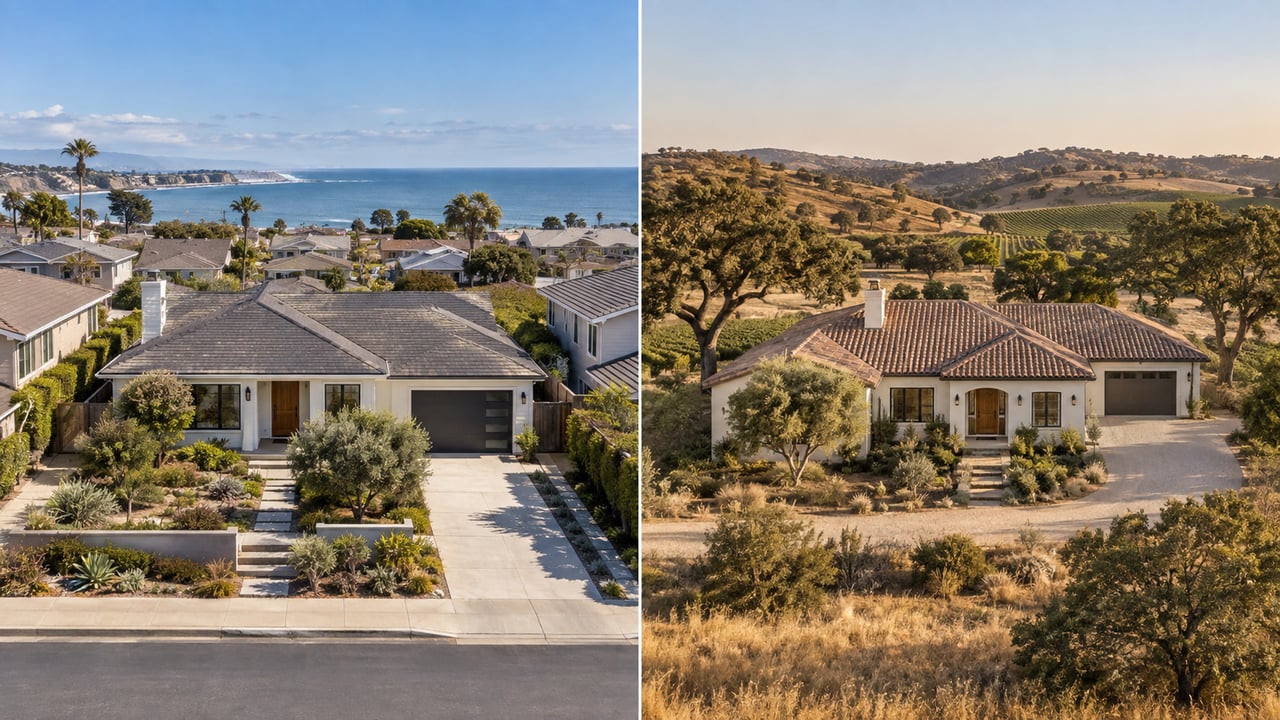
Choosing between a coastal home and an inland home on the Central Coast involves more than deciding how close you want to live to the ocean. The two settings can offer materially different housing stock, lot sizes, climates, price structures, neighborhood patterns, and day-to-day experiences.
A buyer considering Pismo Beach or Cayucos may encounter smaller lots, stronger premiums for proximity and views, and housing designed around coastal orientation. A buyer looking in Templeton, Atascadero, or Paso Robles may find more land, warmer conditions, greater separation between properties, and different combinations of house size and price.
Neither setting is inherently superior. The stronger choice depends on what the buyer values enough to pay for, what characteristics matter during ordinary life, and which compromises remain acceptable after the initial appeal of the setting wears off.
The most useful comparison is therefore not coast versus inland in the abstract. It is one realistic property against another, with each judged according to the lifestyle and value it actually delivers.
Central Coast Neighborhood Video Tour ⬇️
Resale Value Comes From Different Sources in Coastal and Inland Markets
Coastal and inland homes can both hold strong buyer appeal, but the attributes supporting that appeal may differ.
👉 What Buyers Should Know About Resale Value in San Luis Obispo County
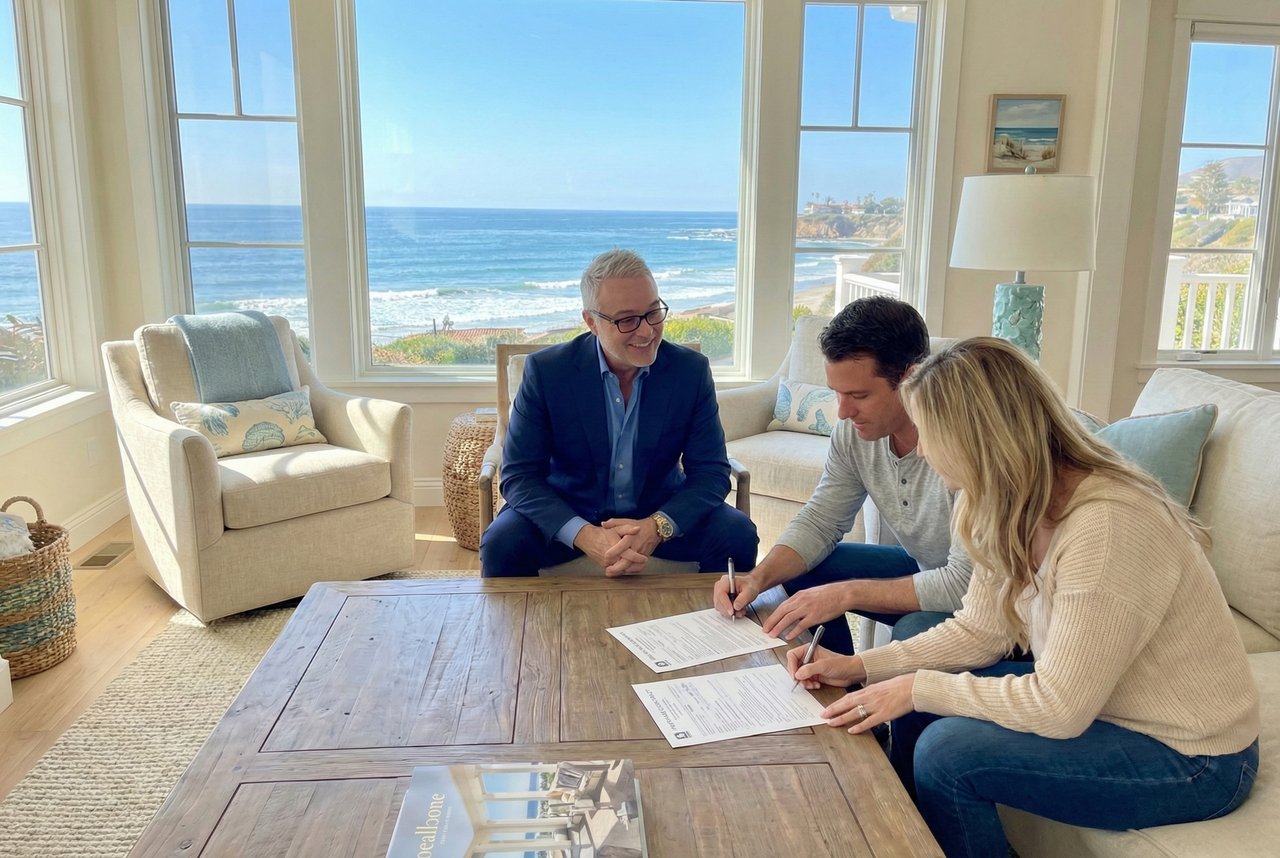
Along the coast, scarcity can be significant. Ocean proximity, views, walkability to beaches, and limited opportunities for additional development may influence how buyers perceive long-term desirability.
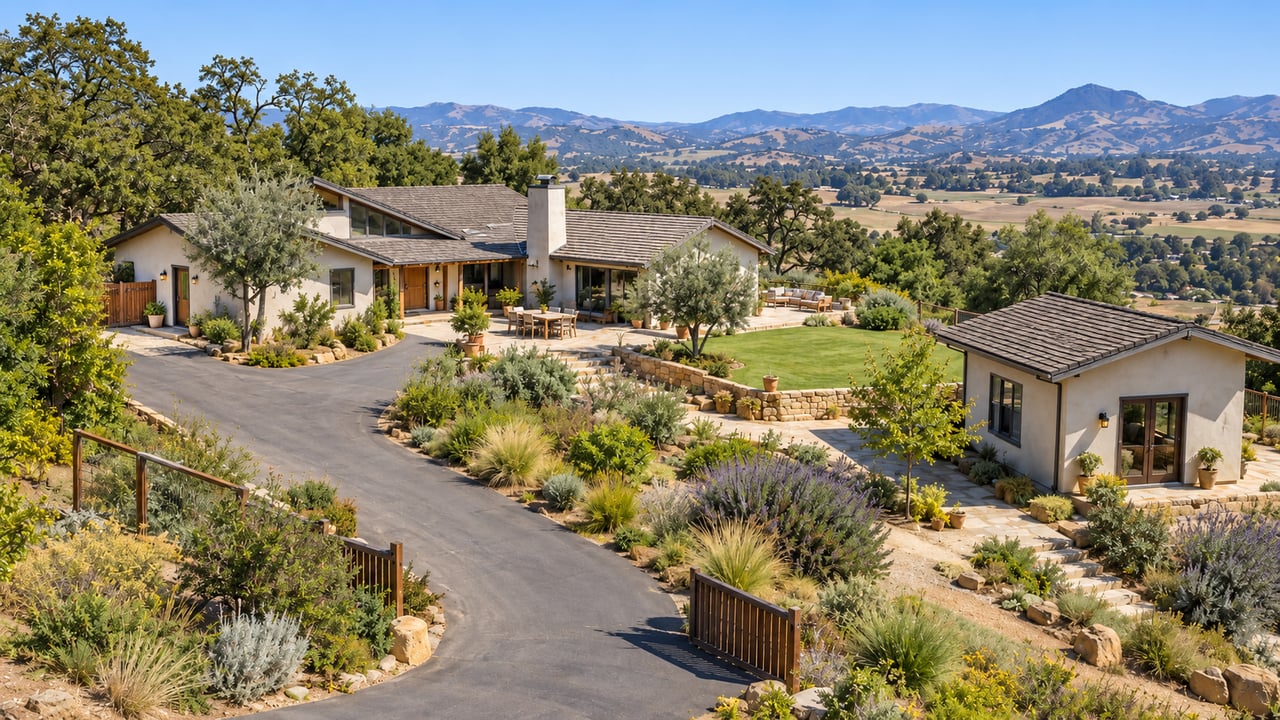
Inland markets can derive value from different strengths, including larger parcels, newer construction, additional garage capacity, privacy, agricultural surroundings, or proximity to wine-country amenities.
After more than 30 years representing property throughout San Luis Obispo County, Joesef Jackson has found that buyers make better comparisons when they identify what future purchasers are likely to value about each specific property rather than assuming coastal addresses automatically outperform inland ones.
Resale strength begins with the property's individual advantages within its own market.
Affordability Can Change Dramatically Within a Short Driving Distance
Coastal proximity can materially affect what a given budget buys.
👉 How Much Can You Afford to Buy on the Central Coast? A Practical Guide
A buyer who prioritizes Pismo Beach, Shell Beach, or Avila Beach may accept less interior space, a smaller lot, or an attached property to remain close to the coast.
The same budget farther inland may purchase additional bedrooms, more garage space, a larger yard, or substantially more land.
That does not make the inland home a better value automatically.
Value depends on which characteristics the buyer would rather own.
Someone who spends significant time at the beach may willingly trade square footage for proximity. Another buyer may place much greater value on a larger workshop, guest space, or room for outdoor recreation.
The comparison should focus on what each dollar purchases in features the buyer will actually use.
Buyer Priorities Often Shift When the Properties Are Viewed Side by Side
The strongest coastal-versus-inland comparison occurs after buyers have experienced both.
👉 What Buyers Look for Most in Central Coast Homes Right Now
A buyer may initially believe ocean proximity is essential but discover that additional privacy and land matter more. Another may tour a larger inland property and realize that the coastal setting remains more important than additional square footage.
These discoveries are useful because they reveal priorities through actual trade-offs.
With more than 2,130 closed transactions, Joesef has seen buyers refine their searches considerably once they stop comparing homes through listing statistics alone.
A spreadsheet can compare bedrooms, square footage, and price.
A showing reveals whether the buyer would rather wake up near the coast, live with more land, walk to restaurants, enjoy a quieter rural setting, or have greater separation from neighboring properties.
Seasonal Conditions Affect Coastal and Inland Properties Differently
The Central Coast does not experience one uniform climate.
👉 How Seasonality Affects Home Buying and Selling on the Central Coast
Coastal communities can experience marine influence, fog, cooler summers, wind, and smaller temperature swings. Inland areas typically experience warmer summer afternoons, colder winter mornings, and larger daily temperature changes.
Those differences affect how outdoor areas, windows, shade, patios, pools, and interior spaces are experienced.
The National Centers for Environmental Information provides U.S. climate normals and historical climate information that can give buyers broader regional context.
A home that feels cool and comfortable near Morro Bay during summer may offer a substantially different daily environment from a property in Paso Robles at the same time of year.
Buyers should compare not simply weather preferences, but how the house itself responds to those conditions.
Location Trade-Offs Become More Specific When the Coast and Inland Areas Are Compared
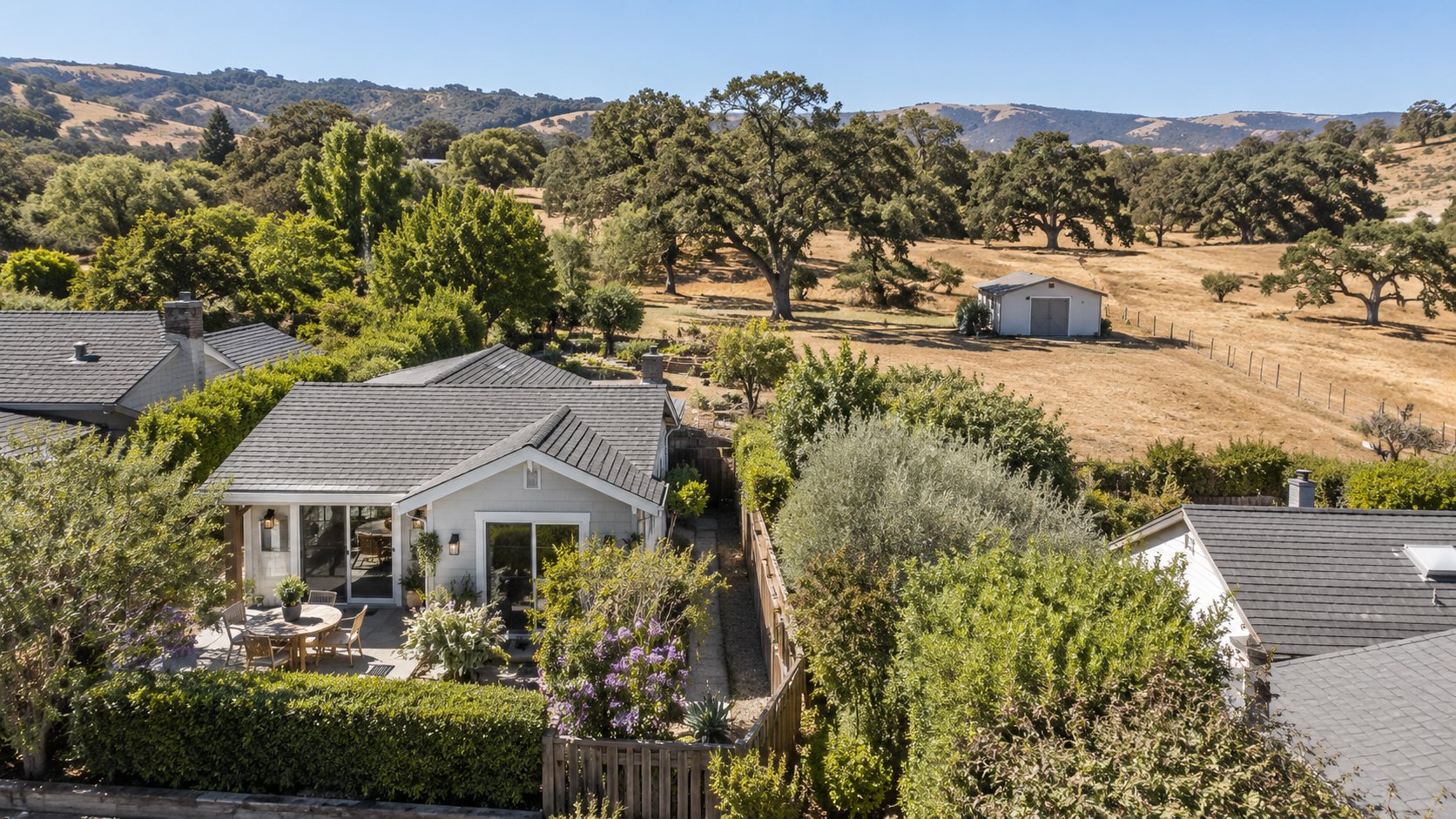
The coastal-versus-inland decision often becomes a series of smaller location decisions.
👉 What Buyers Should Know About Property Trade-Offs in San Luis Obispo County
A coastal buyer may gain walkability, beach proximity, cooler weather, or a particular view while accepting a smaller parcel, greater visitor activity, or less private outdoor area.
An inland buyer may gain land, garage capacity, separation, or more house for the budget while accepting warmer temperatures or a longer drive to coastal destinations.
The key is identifying which trade-offs occur repeatedly.
A compromise affecting one weekend each year may carry little weight. A compromise encountered every morning deserves much more attention.
Community Value Should Be Compared Within the Right Local Market
Price per square foot alone can create misleading comparisons across San Luis Obispo County.
👉 How to Compare Value Across San Luis Obispo County Communities
A smaller home close to the coast may command a higher total price than a larger inland home because the buyer is purchasing a different combination of land scarcity, location, amenities, and demand.
Likewise, an inland estate property may command a substantial premium because of acreage, architecture, privacy, vineyard surroundings, or improvements that are uncommon elsewhere.
Buyers should therefore compare coastal properties primarily with realistic coastal alternatives and inland properties with appropriate inland competition.
Cross-market comparisons remain useful, but primarily for deciding which lifestyle and bundle of features deserve the buyer's budget.
They are less useful when treated as proof that one community is objectively overpriced or underpriced.
Lot Size Means Different Things in Coastal and Inland Settings
A modest coastal parcel can be highly functional when the location itself provides access to beaches, trails, restaurants, and public spaces.
An inland buyer may expect the private property to provide more of those lifestyle functions directly.
That can include space for gardening, pets, recreational equipment, guest parking, outdoor entertaining, workshops, or simply greater separation.
The California Coastal Commission oversees California's coastal zone under the state's coastal management framework, which contributes to the distinct planning environment found in many coastal communities.
Buyers should not assume that additional land is always more valuable.
The relevant question is whether private land is an important part of the lifestyle they are purchasing.
Housing Stock Often Reflects the Geography Around It
Coastal housing tends to respond to constrained land, views, slopes, and proximity to developed community centers.
That can produce narrower parcels, multilevel homes, elevated living areas, rooftop decks, compact garages, and architecture oriented toward specific outlooks.
Inland properties may be more likely to spread horizontally across flatter or larger parcels.
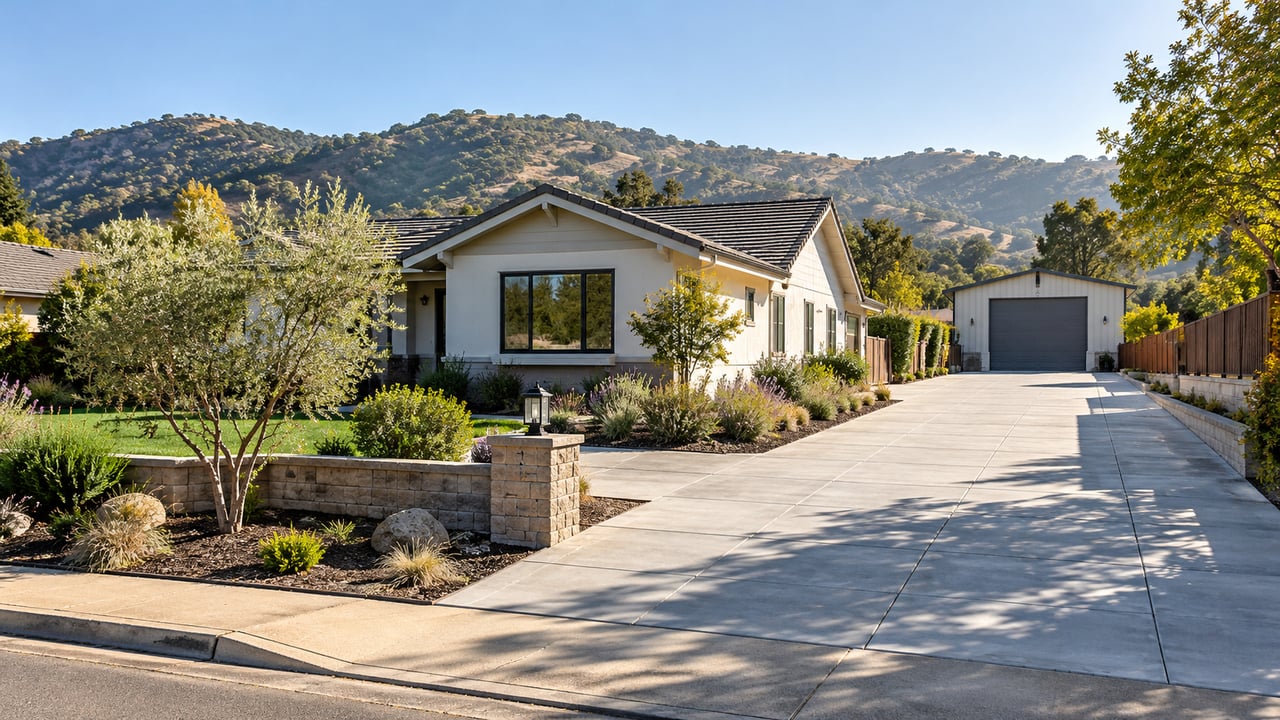
Single-level plans, larger garages, detached buildings, broad driveways, and deeper setbacks can appear more frequently depending on the community.
These patterns are not rules.
They are useful clues when buyers decide which architectural form feels more natural for the way they live.
A buyer who strongly prefers one-story living may find a different set of choices inland than along certain hillside coastal neighborhoods.
Daily Temperature Changes Can Affect How the House Is Used
Climate is not merely an outdoor experience.
A coastal residence may rely on cross ventilation, sheltered patios, and windows positioned to capture marine air.
An inland home may place greater emphasis on shade, covered outdoor areas, orientation, and ways of managing warmer afternoon conditions.
The same room can function differently according to exposure.
A west-facing wall near the coast may feel entirely manageable. Similar orientation farther inland can create a noticeably warmer late-day space.
Buyers should pay attention to where the sun enters, which outdoor areas remain comfortable, and whether the home's design appears responsive to its particular setting.
The Definition of Outdoor Living Changes Between Coast and Inland Areas
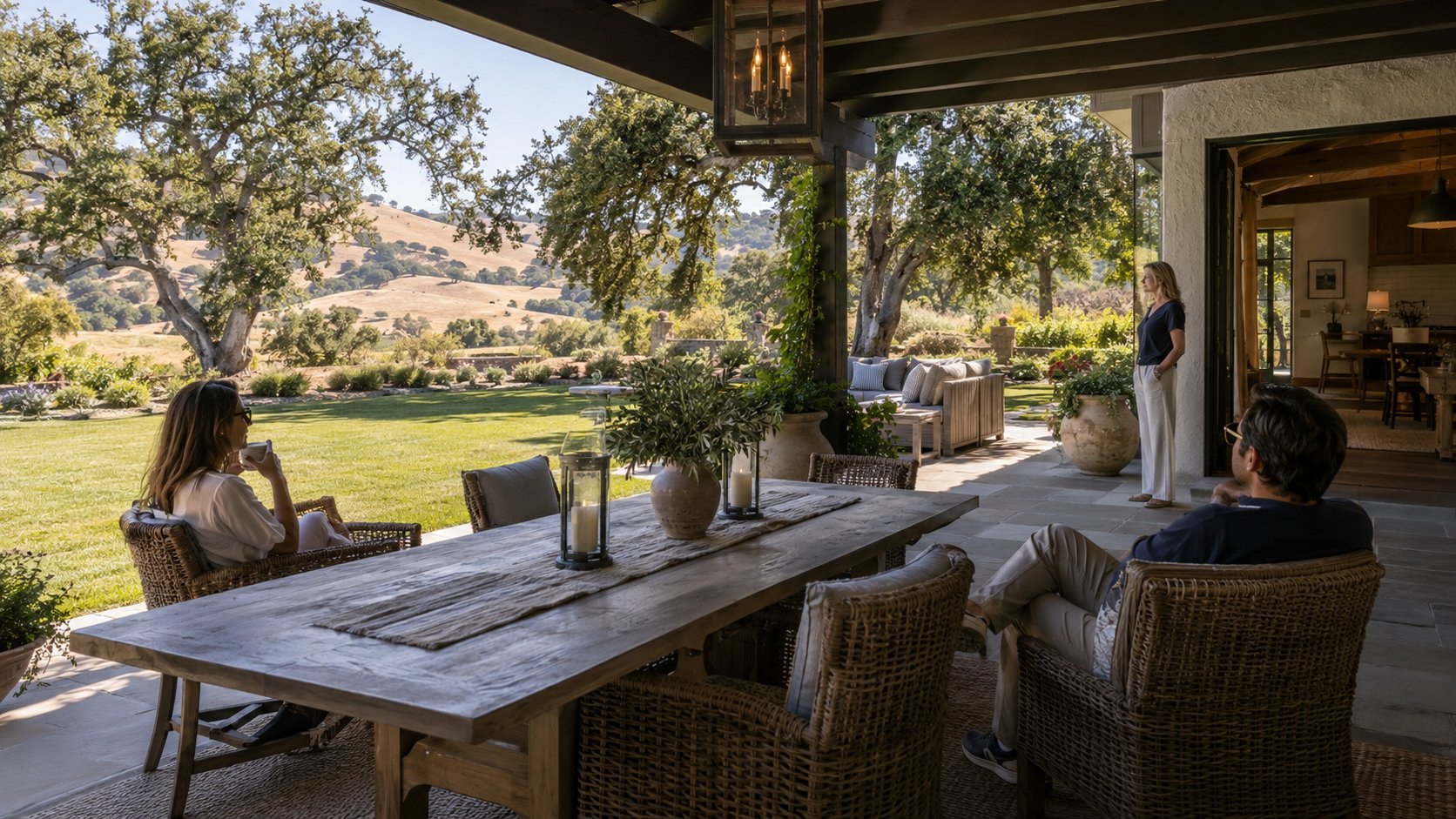
Outdoor living near the coast may revolve around compact patios, protected decks, views, walking access, and spaces designed around wind or marine exposure.
Inland properties can offer broader yards, pools, covered dining areas, gardens, outdoor kitchens, or spaces connected with larger parcels.
A buyer should consider duration as well as size.
A large inland patio may be ideal during mornings and evenings but receive substantial afternoon heat. A smaller coastal terrace may remain comfortable for longer periods but have more wind.
The most valuable outdoor area is the one the buyer expects to use frequently.
Coastal Proximity Can Change How Often Buyers Leave the Property on Foot
Some coastal communities place buyers closer to beaches, cafes, paths, parks, and compact commercial areas.
That can make the surrounding community function as an extension of the property.
A buyer in Cayucos may accept less private yard because the shoreline and town are easily reached on foot. Someone in a more dispersed inland setting may expect the home itself to provide additional recreational or gathering space.
This distinction can materially affect the value of square footage and land.
Buyers who enjoy walking to destinations may place less importance on certain private-property features.
Those who prefer spending most free time at home may value larger private spaces more heavily.
Inland Properties Can Offer Greater Separation Between Uses
Larger inland parcels can create physical distance between activities.
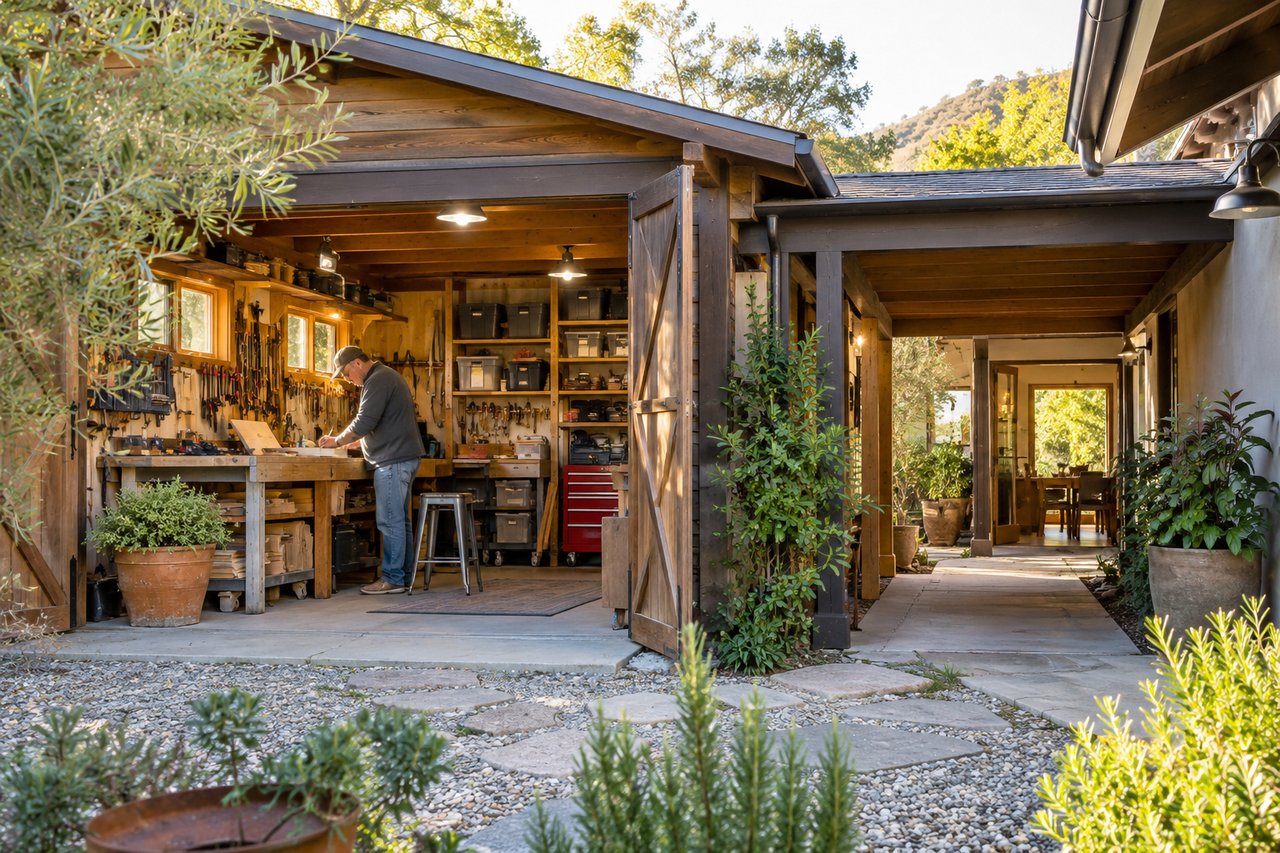
A workshop can sit away from the house. Guest accommodations may have greater independence. Parking, recreation, gardening, and entertaining can occupy separate zones.
That separation can be attractive to buyers who need room for multiple activities.
It can also mean more distance between different parts of the property.
Someone attracted to acreage should consider how much of it will actually be incorporated into daily life.
More separation can create privacy and flexibility. It can also make the property feel more dispersed.
The buyer's intended use determines whether that distinction is an advantage.
Coastal Homes May Place Greater Value on Orientation Than Raw Size
When an ocean or coastal outlook is part of the purchase, room orientation can become extremely important.
A smaller residence may feel more valuable if the primary living spaces capture the setting effectively.
A larger coastal home can be less compelling when its principal rooms turn away from the feature buyers expect to enjoy.
Orientation can also determine how wind and sunlight affect decks, windows, and outdoor areas.
This is why coastal buyers should evaluate not just whether a view exists but where it appears during everyday life.
An outlook visible from the kitchen and living room is different from one available only from an upstairs corner.
Inland Homes Can Deliver Features That Are Difficult to Replicate Near the Coast
Certain property characteristics become easier to find as buyers move inland.
Large garages, workshops, broad single-level plans, deeper setbacks, acreage, equestrian facilities, larger pools, and additional detached structures may appear more frequently in some inland areas.
For buyers who genuinely use those features, the difference can outweigh ocean proximity.
The important phrase is genuinely use.
Additional space has limited practical value when it exists primarily because the buyer could obtain it for the budget.
A smaller property offering the features used every day can outperform a much larger property filled with spaces that receive little attention.
Coastal Activity Levels Can Change With the Calendar
Some coastal communities experience noticeably different rhythms during weekends, summer periods, holidays, or major events.
Restaurants, beaches, streets, and public parking may become more active.
A buyer who enjoys that energy may see it as part of the appeal.
Another may prefer quieter residential patterns.
Inland communities also have seasonal variation, including tourism, wine events, agricultural activity, and festivals, but the pattern can feel different from concentrated coastal visitor activity.
Buyers should visit a community under more than one condition when possible.
The goal is to understand the normal range of activity rather than judge an area from a single quiet or busy afternoon.
Inland Communities Can Feel More Connected to Land and Regional Roads
Life farther inland often involves different spatial relationships.
Properties may sit farther apart, destinations may require more driving, and access to regional roads can become more important.
For some buyers, that produces a sense of openness that is difficult to find closer to the coast.
For others, the convenience of a compact coastal community outweighs additional land.
A Templeton buyer might prioritize quick regional access combined with a quieter residential setting. Someone in Cambria may care more about being near the village and coastline.
These are not small differences once repeated through daily routines.
Coastal and Inland Buyers Often Define Privacy Differently
Privacy near the coast may come from building orientation, landscaping, elevation, interior design, or limited sightlines despite relatively close neighboring homes.
Inland privacy may come more directly from distance, acreage, topography, or mature vegetation.
Both can feel private.
They simply achieve it differently.
A buyer should therefore evaluate the experience rather than measure only the distance between structures.
A well-designed coastal property can feel remarkably secluded on a modest parcel. A large inland lot can still feel exposed if the house occupies an open site visible from surrounding roads or neighboring elevations.
The Same Budget Should Be Compared Through Lifestyle Yield
One of the most useful ways to compare coastal and inland homes is to ask what lifestyle each property produces for the same investment.
The coastal home may provide proximity, walkability, cooler weather, a view, and immediate access to recreation.
The inland property may provide land, privacy, larger rooms, additional structures, and greater physical flexibility.
Those benefits cannot be reduced to one universal price-per-square-foot calculation.
Joesef's experience representing more than $1.81 billion in career sales volume has reinforced that buyers often reach better conclusions when they identify which benefits they would miss most after choosing the alternative.
That question exposes the features carrying real personal value.
Buyers Should Compare Ordinary Tuesdays, Not Just Weekend Appeal
Coastal property can be exceptionally attractive during a sunny weekend.
An inland property can be equally compelling during a relaxed afternoon around a pool or under mature oaks.
Neither snapshot reveals daily life by itself.
Buyers should imagine ordinary schedules.
Where will groceries come from? How long is the drive to work? What does a normal evening look like? Will the outdoor area be used after work? How frequently will the beach actually be visited? Will acreage become an active part of life or primarily a visual backdrop?
A strong comparison uses the ordinary week as the standard rather than the most appealing moment.
Coastal and Inland Should Be Compared as Different Packages of Value
The Central Coast gives buyers an unusual ability to choose between materially different environments within a relatively compact region.
That is what makes the comparison valuable.
A coastal home can offer scarcity, proximity, marine climate, community activity, and strong connection to the shoreline.
An inland home can offer space, land, privacy, larger property improvements, warmer weather, and a different relationship with the landscape.
The right decision does not come from deciding which category is better.
It comes from identifying which package of value fits the buyer's actual priorities and then comparing individual properties within that framework.
Once buyers understand what they are receiving—and what they are giving up—the difference between coastal and inland homes becomes much easier to evaluate.
Frequently Asked Questions
Are coastal homes always more expensive than inland homes on the Central Coast?
No. Coastal proximity often carries a premium, but price also depends on community, property type, condition, views, lot, architecture, size, and other individual characteristics.
Do inland homes usually have larger lots?
Often, but not universally. Many inland areas offer more land at a given price, while lot sizes vary considerably within both coastal and inland communities.
Is the weather significantly different between coastal and inland San Luis Obispo County?
It can be. Coastal areas generally experience greater marine influence, while inland communities commonly have warmer summer afternoons and larger daily temperature swings.
Should buyers compare coastal and inland homes by price per square foot?
Price per square foot can provide context, but it should not be the sole comparison because location, land, views, scarcity, property type, and amenities can differ substantially.
Are coastal homes better for second-home buyers?
They can be appealing because of beach access, recreation, and proximity to coastal amenities, but some second-home buyers prefer inland wine-country settings, acreage, or greater privacy.
What are some advantages of buying inland?
Depending on the community, buyers may find more land, larger homes, additional garage space, greater separation, single-level options, and property features that are harder to find near the coast.
What are some advantages of buying near the coast?
Coastal buyers may value ocean proximity, cooler weather, walkability, recreation, views, compact communities, and the relative scarcity of certain locations.
How should buyers choose between coastal and inland communities?
Compare the way each setting affects ordinary daily life, then decide which advantages are important enough to justify the trade-offs required by the other option.
If you are preparing to buy or sell real estate on the Central Coast and want personalized guidance, contact Joesef Jackson at SLO Life Realty Group.