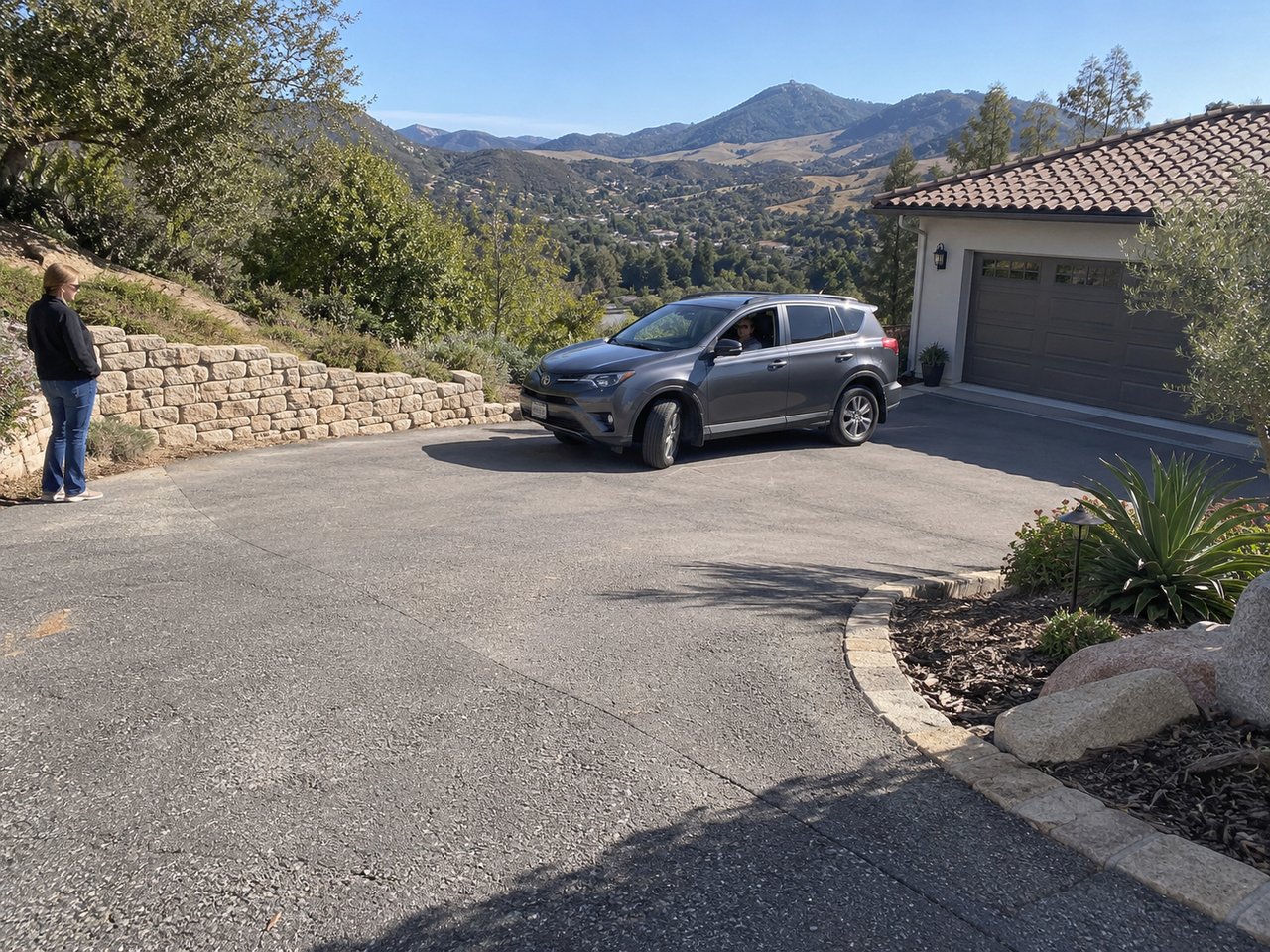
Parking and access can appear secondary when buyers first evaluate a home, yet both can influence everyday convenience, guest use, vehicle storage, property maintenance, and future plans. A house may offer the right bedrooms, setting, and price while creating practical challenges every time someone arrives, leaves, parks a second vehicle, or tries to bring equipment onto the property.
In San Luis Obispo County, those considerations vary widely. A downtown San Luis Obispo home may depend heavily on driveway dimensions and street parking. A hillside property can involve steep grades and limited turning space. Rural acreage may have a long private road or shared access. Condominiums may assign specific spaces and impose separate rules for guests, oversized vehicles, or garages.
Buyers should therefore evaluate more than whether a listing says "two-car garage" or "off-street parking." The important question is how the entire arrival and access system works in practice.
That includes the road, curb, driveway, garage, gates, turning areas, pedestrian route, legal access, and any restrictions that affect how those elements can be used.
Central Coast Neighborhood Video Tour ⬇️
Access Conditions Can Create Risks That Are Easy to Miss During a Showing
Some access issues become noticeable only when buyers stop looking at the house and study how they actually reach it.
👉 How to Evaluate Location Risk on the Central Coast
A narrow road, limited sight distance, steep driveway, sharp turn, or difficult intersection may feel insignificant during a quiet showing but become more consequential during regular daily use.
The same is true when several homes share a private lane or when a property sits where backing into traffic is difficult.
After more than 30 years representing Central Coast real estate, Joesef Jackson has found that access is one of those property characteristics buyers often understand best through repetition. Driving in once may feel manageable. Imagining that same movement twice a day, in darkness, during rain, or with another vehicle present creates a more useful assessment.
Buyers should approach the property from both directions when possible and notice whether visibility, width, grade, and turning movements feel reasonable for their normal routine.
Lower-Risk Parking Usually Comes From Simplicity and Predictability
Parking arrangements are easier to live with when buyers immediately understand where vehicles belong and how they move.
👉 What Makes a Property Low Risk on the Central Coast
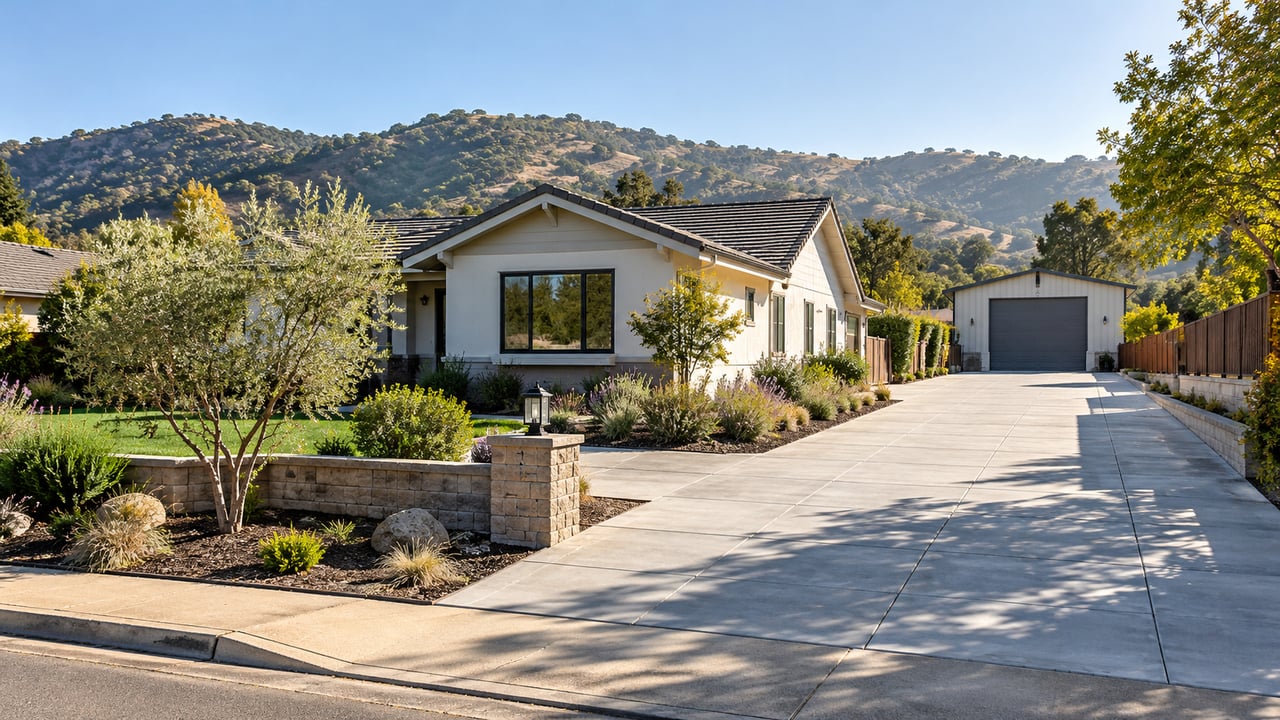
A straightforward driveway with adequate width, visible garage access, and room to enter or exit without complicated maneuvering can reduce daily friction.
More complicated configurations are not necessarily unacceptable. They simply deserve closer evaluation.
Tandem parking, shared driveways, steep approaches, narrow garage openings, or spaces requiring one vehicle to move before another can leave may work perfectly for some households and poorly for others.
The important distinction is predictability.
If the buyer understands the arrangement before purchasing and it fits the household's vehicle use, complexity may not matter. Problems usually arise when buyers assume a parking arrangement will work differently than it actually does.
Legal Access and Physical Access Are Not Always the Same Thing
A driveway may physically cross a particular area, but buyers should not assume that visible use alone defines legal rights.
👉 How Title and Title Insurance Work in San Luis Obispo County Real Estate
Easements, shared driveways, private roads, access agreements, and other recorded rights can affect how a property is reached and who may use particular portions of the land.
This is especially important when a driveway crosses neighboring property, multiple owners share a private lane, or access does not appear to follow obvious parcel boundaries.
Physical appearance tells buyers how the property is being used today. Title information can provide important context regarding recorded rights and obligations.
The California Department of Real Estate provides consumer information regarding real estate transactions and property ownership matters.
Buyers with questions about access rights should review the appropriate transaction documents and obtain professional advice when circumstances warrant it rather than relying on assumptions made from the driveway itself.
Condo Parking Requires More Than Counting Assigned Spaces
Condominium parking can operate very differently from parking at a detached home.
👉 How to Buy a Condo in San Luis Obispo County: What Makes It Different From Buying a House
A unit may include one garage space, one assigned outdoor space, shared guest parking, or a combination of arrangements. The practical value depends on location, dimensions, restrictions, and how the spaces can actually be used.
Buyers should determine whether parking is deeded, assigned, limited common area, or otherwise governed by the development's documents.
The location of the space also matters. A parking stall far from the unit may be acceptable for occasional use but less convenient for daily groceries, children, mobility needs, or frequent loading.
Guest parking deserves its own review. A community may have several spaces that appear available during a weekday showing but become heavily used during evenings or weekends.
HOA Rules Can Affect Vehicles Buyers Assume They Can Keep at Home
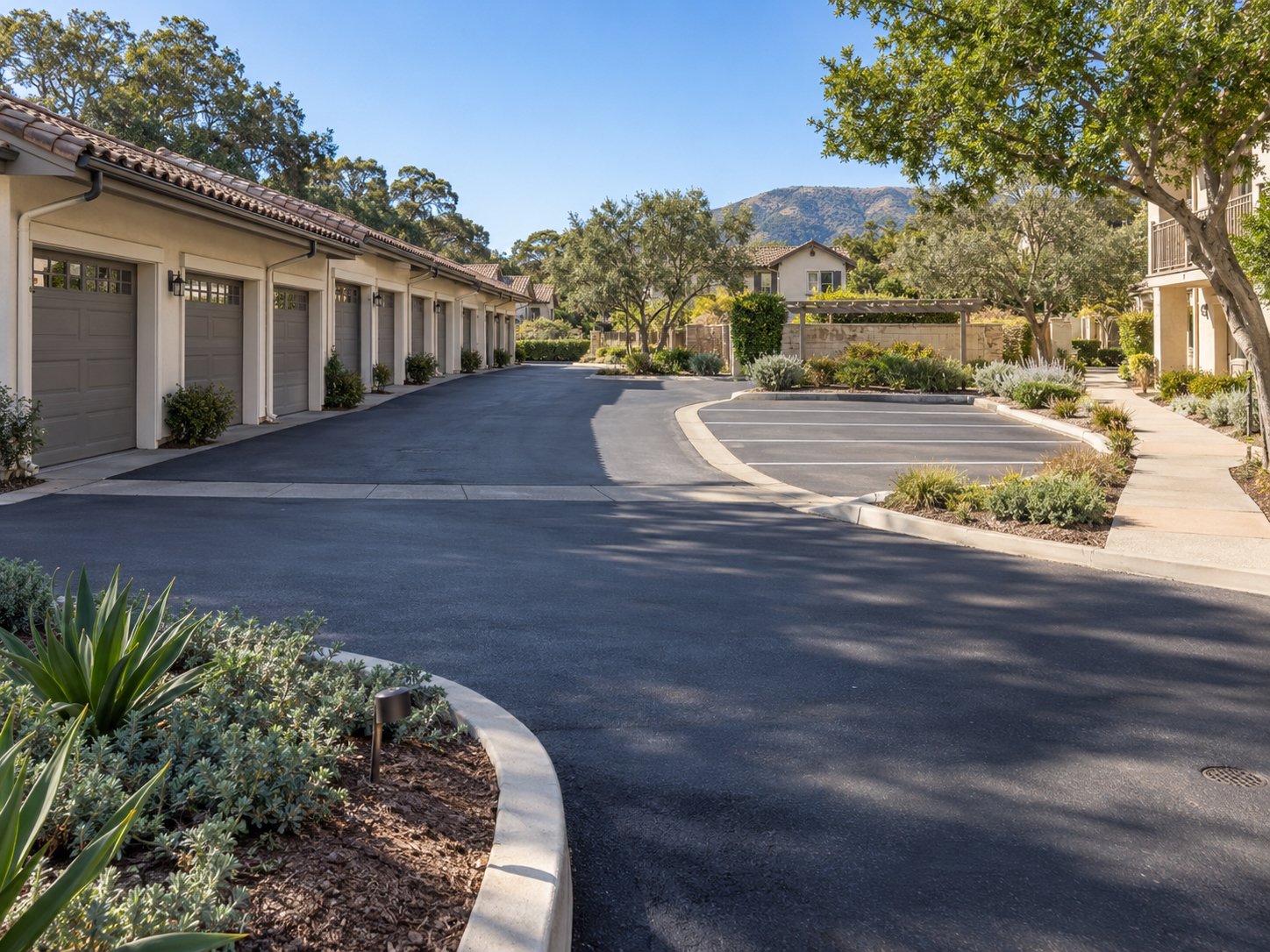
Parking rights within a homeowners association can be subject to detailed restrictions.
👉 How to Avoid Common Buyer Mistakes in San Luis Obispo County
Rules may address guest parking, overnight street parking, commercial vehicles, recreational vehicles, trailers, vehicle repairs, garage use, driveway parking, or how long a vehicle may remain in a particular location.
The fact that a vehicle physically fits does not necessarily mean association rules permit it.
A buyer with a work truck, boat trailer, camper van, classic car, or multiple household vehicles should review parking rules with those actual uses in mind.
Commute Patterns Can Make Access More Important Than Distance
A property may be geographically close to work, school, or everyday destinations while still requiring an inconvenient route.
👉 How Buyers Should Evaluate School and Commute Factors on the Central Coast
Buyers should consider how quickly they can enter the main road network, whether a left turn is difficult during peak traffic, and whether nearby intersections create recurring delays.
A home several miles farther away may offer a simpler drive than one that appears closer on a map.
School drop-off patterns, event traffic, agricultural activity, tourism, and commuter flows can also affect certain routes at specific times.
Someone considering a home near Highway 101 in Arroyo Grande may have different access considerations from a buyer farther into a residential neighborhood in Atascadero.
The most useful test is to drive the likely route at the time it would normally be used rather than relying exclusively on mileage.
Garage Dimensions Matter More Than the Garage Count
A "two-car garage" does not guarantee that two current vehicles will fit comfortably.
Vehicle widths and lengths vary considerably, and usable garage space can be reduced by storage cabinets, water heaters, laundry equipment, structural posts, stairs, or mechanical systems.
Buyers should pay attention to the garage door opening as well as interior dimensions.
A large interior garage reached through a narrow opening can create a different experience from one with wider individual doors.
Door clearance matters once vehicles are parked. It should be possible to enter and exit without routinely striking walls, cabinets, or the adjacent vehicle.
With more than 2,130 closed transactions, Joesef has seen garage terminology create expectations that the actual space does not always support. Buyers should evaluate the garage using the vehicles they own rather than the label used in marketing.
Driveway Geometry Determines How Vehicles Actually Move
Driveway length receives attention, but shape can be equally important.
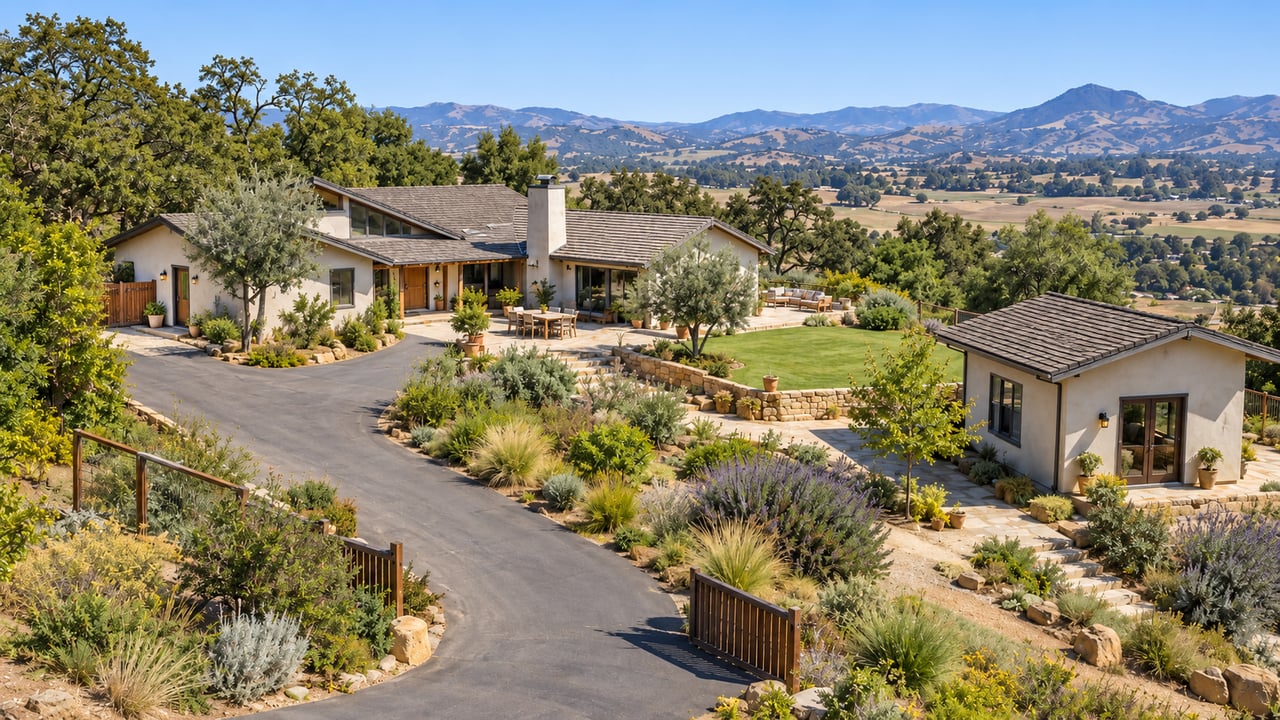
A curved driveway may offer an elegant arrival while requiring more careful maneuvering. A narrow driveway bordered by walls or landscaping may provide little margin for wider vehicles. A steep driveway can affect low-clearance cars and make backing more difficult.
Turning space matters on longer properties.
If there is no area near the house to turn around, drivers may need to reverse a substantial distance or back into the road.
That may be inconsequential on a quiet rural lane and frustrating on a busier street.
Buyers should consider how many movements are required to park, turn, and leave rather than evaluating the driveway only by appearance.
Street Parking Can Change Dramatically by Time and Day
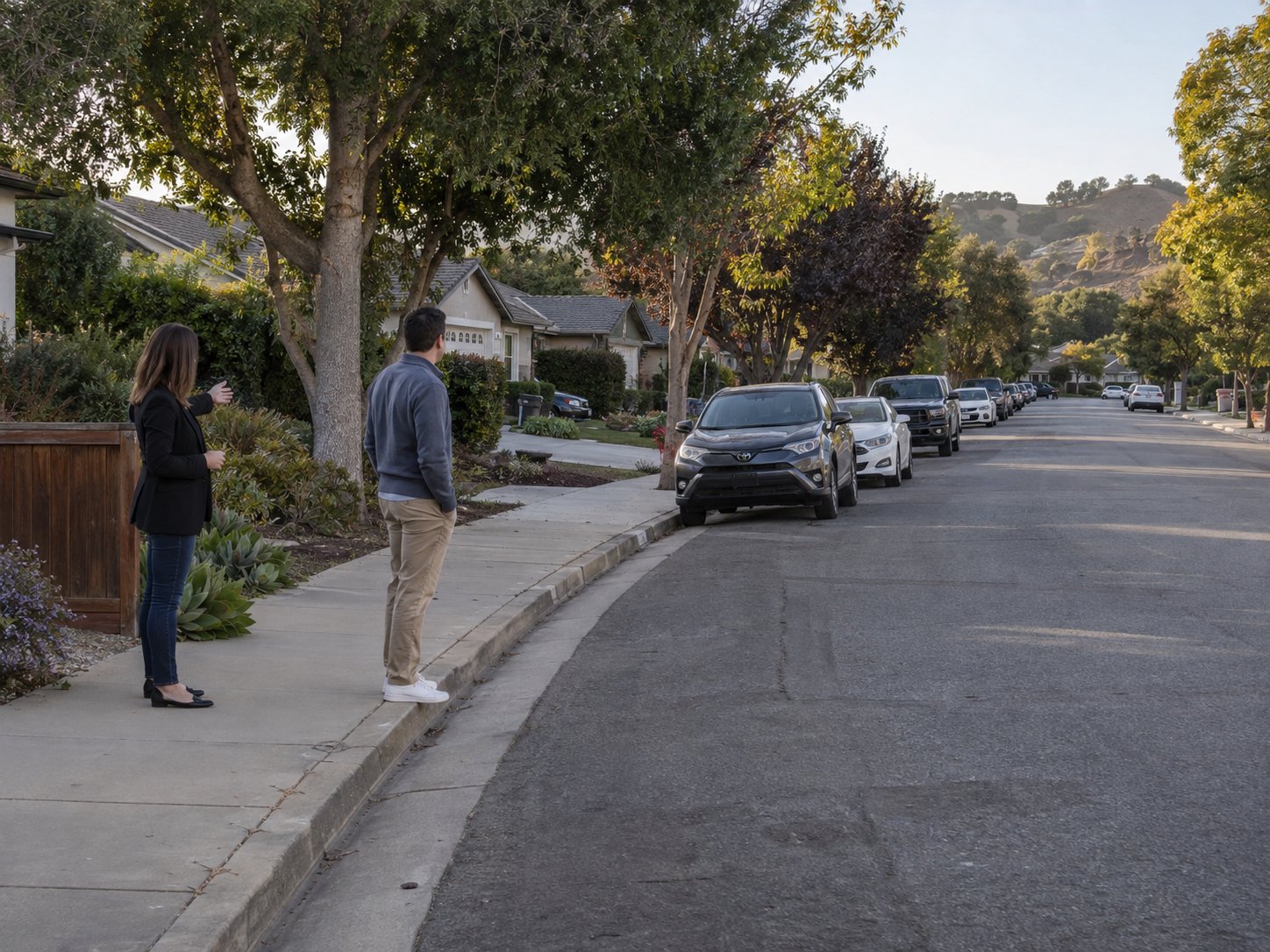
A nearly empty street during a weekday showing may look entirely different in the evening.
Parking demand can increase near downtown areas, beaches, schools, parks, restaurants, apartments, vacation areas, and event venues.
Buyers who expect to rely on street parking should return at realistic times when possible.
In communities such as Grover Beach or portions of San Luis Obispo, the availability of curb parking can vary block by block according to surrounding density and nearby uses.
Street width also matters.
Cars parked on both sides of a narrow street may affect visibility and the ease of entering a driveway.
Guest Parking Should Be Evaluated Separately From Household Parking
A home can adequately accommodate the owners' vehicles while becoming difficult when visitors arrive.
That distinction matters to buyers who entertain frequently, host family, operate a home office with occasional visitors, or expect adult children to return periodically.
Guest parking may consist of driveway space, curb availability, designated community stalls, or a combination of all three.
Buyers should consider whether adding one or two cars blocks the garage or requires household vehicles to be rearranged.
A property does not need extensive guest parking to be functional.
It needs an arrangement that is realistic for the buyer's expected pattern of use.
Emergency and Service Access Can Reveal Another Side of the Property
Everyday passenger vehicles are only part of the access equation.
Delivery vehicles, moving trucks, contractors, emergency responders, refuse collection, landscaping equipment, and utility service may all need to reach or approach the property.
Rural and hillside homes deserve particular attention because road width, overhead vegetation, gates, curves, bridges, and turnaround areas can affect larger vehicles differently.
San Luis Obispo County Public Works maintains information and services involving county roads, transportation infrastructure, drainage, and related public facilities.
Buyers do not need to perform a technical road assessment during a showing. They should notice unusual conditions and identify questions that warrant additional investigation.
Gates Need to Work With the Vehicles and Routine Behind Them
A gated driveway can provide privacy and control, but the gate's location changes how arrivals function.
If a vehicle must stop partly in the roadway while the gate opens, that may matter on a busier street.
If the gate sits farther inside the property, there may be room for a vehicle to pull completely off the road before waiting.
Width matters as well.
A gate that works easily for a compact car may be less comfortable for a pickup, trailer, or service vehicle.
Buyers should also consider pedestrian access. Delivery drivers, visitors, and service providers may need a logical way to reach the house without relying on the vehicle gate.
Shared Driveways Need a Practical Use Test
A shared driveway can function extremely well when its dimensions and usage patterns support the participating properties.
Buyers should understand where vehicles may stop, whether anyone can park within the shared area, and how one household's use affects another.
A driveway serving two homes may feel straightforward when both garages branch naturally from a common entrance.
A narrow drive serving several properties may require more coordination.
The issue is not simply that access is shared.
It is whether the physical arrangement and documented rights create a workable system for everyone who depends on it.
Rural Access Should Be Evaluated Beyond the Main Entrance
A long private approach can be one of the appealing features of a rural property, but buyers should examine the entire route.
Road surface, width, grade, drainage, curves, gates, cattle guards, bridges, and seasonal conditions can all influence access.
A buyer considering property outside Paso Robles or Templeton may encounter gravel or private roads that are entirely normal for the area but require a different mindset from suburban streets.
Maintenance responsibility also matters when several properties use the same road.
Buyers should determine which portions are public, private, or shared and investigate the corresponding responsibilities when relevant.
The entrance is only one piece of rural access. The route between the public road and the house is part of the property experience.
Parking Should Account for the Vehicles a Household May Actually Own
Buyers sometimes evaluate parking using whatever vehicle happens to be present during the showing.
A household with a full-size pickup, sports car, multiple drivers, bicycles, motorcycles, or recreational equipment may need a different arrangement.
Future vehicle needs may matter as well.
Teen drivers can add cars. Work changes can introduce a company vehicle. A household may eventually need charging access for an electric vehicle.
The point is not to predict every future purchase.
It is to recognize when the current parking arrangement has little flexibility beyond today's minimum requirement.
Access From Parking to the House Matters in Everyday Life
Where a vehicle stops is only part of the daily routine.
Buyers should follow the path from parking into the house.
A garage that opens directly near the kitchen can work well for groceries. A detached garage across an exposed area may feel different during rain or when carrying packages.
Steps, slopes, narrow passages, and changes in elevation can also affect how convenient that route feels.
Someone buying a single-level home because they value limited stair use should consider whether the path from the primary parking area introduces steps before reaching the front door.
Parking functionality continues until the person is actually inside.
Additional Dwelling Units Can Change Parking Demand
Properties with an accessory dwelling unit, guest quarters, or other separate living area may require buyers to think about parking as a shared resource.
An additional unit can add occupants, visitors, deliveries, and different arrival patterns.
The main house may have adequate parking when considered alone while the overall property becomes tighter once another living area is occupied.
Buyers interested in rental or multigenerational use should examine whether vehicles can park independently without repeatedly blocking one another.
This becomes especially important when the additional unit has its own entrance but no clearly associated parking area.
Future Improvements Can Alter an Existing Parking Arrangement
Buyers often envision converting garages, adding bedrooms, constructing an ADU, installing a gate, widening a driveway, or changing landscaping.
Those projects can affect parking and circulation.
A garage conversion may eliminate protected vehicle storage. An addition can occupy existing driveway or turnaround space. A new gate may change vehicle stacking near the road.
Buyers should therefore avoid treating current unused space as automatically available for another purpose.
Any significant change may involve local planning, permitting, setbacks, access requirements, or other considerations.
The current parking arrangement should work for the buyer before future alterations are assumed.
Parking Problems Often Become More Noticeable After the Excitement of the Showing
A beautiful interior can easily dominate a first visit.
Parking usually becomes more important later, when the buyer begins imagining repeated arrivals, guests, groceries, commute departures, service vehicles, and multiple household cars.
Joesef's experience representing more than $1.81 billion in career sales volume has reinforced how often ordinary daily characteristics influence long-term satisfaction with a property.
Parking and access rarely create the emotional centerpiece of a showing.
They can nevertheless become part of every day of ownership.
That makes them worth evaluating before an offer rather than after the moving truck arrives.
The Best Parking Arrangement Is the One That Works Without Constant Coordination
There is no universal parking standard that fits every buyer.
One household may need a large garage and several driveway spaces. Another may comfortably own one vehicle and value walkability more than private parking. Rural buyers may prioritize equipment access, while condominium buyers may care most about secure assigned spaces and reliable guest parking.
The strongest evaluation focuses on how much coordination the arrangement requires.
Can household vehicles enter and leave independently? Can visitors park without blocking regular use? Is the garage realistically sized? Can larger service vehicles approach when necessary? Are access rights understood? Do restrictions match the buyer's plans?
In San Luis Obispo County, where property types range from compact urban homes to coastal condominiums and rural acreage, parking and access should be evaluated according to the property rather than assumed from a listing description.
The right arrangement is one that continues to work after arrival becomes routine.
Frequently Asked Questions
What should buyers check about a driveway before purchasing?
Consider width, grade, surface, visibility, turning space, garage alignment, vehicle clearance, and whether cars can enter and leave without difficult repeated maneuvering.
Does a two-car garage mean two vehicles will fit comfortably?
Not necessarily. Buyers should consider interior dimensions, door openings, storage, mechanical equipment, structural posts, and space required to open vehicle doors.
What should condo buyers verify about parking?
Review assigned or deeded spaces, garage rights, guest parking, HOA restrictions, stall location, vehicle limits, and how parking areas relate to the unit.
Why do shared driveways require additional review?
Shared access may involve recorded rights, maintenance arrangements, parking limitations, and physical conditions that affect multiple owners.
Should buyers visit a neighborhood at night to evaluate parking?
It can be useful when street or guest parking is important. Evening or weekend conditions may differ substantially from those seen during a weekday showing.
Can an HOA restrict what vehicles a homeowner parks?
Yes. Association documents may contain rules affecting recreational, commercial, oversized, guest, driveway, or overnight parking.
What should buyers consider about rural property access?
Review road width, surface, grade, drainage, gates, turning areas, seasonal conditions, maintenance responsibility, and whether the route is public, private, or shared.
Why does the route from parking to the house matter?
Steps, slopes, distance, weather exposure, and the location of the entry can affect everyday activities such as carrying groceries, receiving deliveries, or accommodating mobility needs.
If you are preparing to buy or sell real estate on the Central Coast and want personalized guidance, contact Joesef Jackson at SLO Life Realty Group.