Location risk is the possibility that characteristics surrounding a property—not just the home itself—could affect ownership costs, daily use, insurance, future improvements, or eventual resale. Buyers should evaluate these issues before becoming focused solely on the residence, because many location characteristics are difficult or impossible to change after closing.
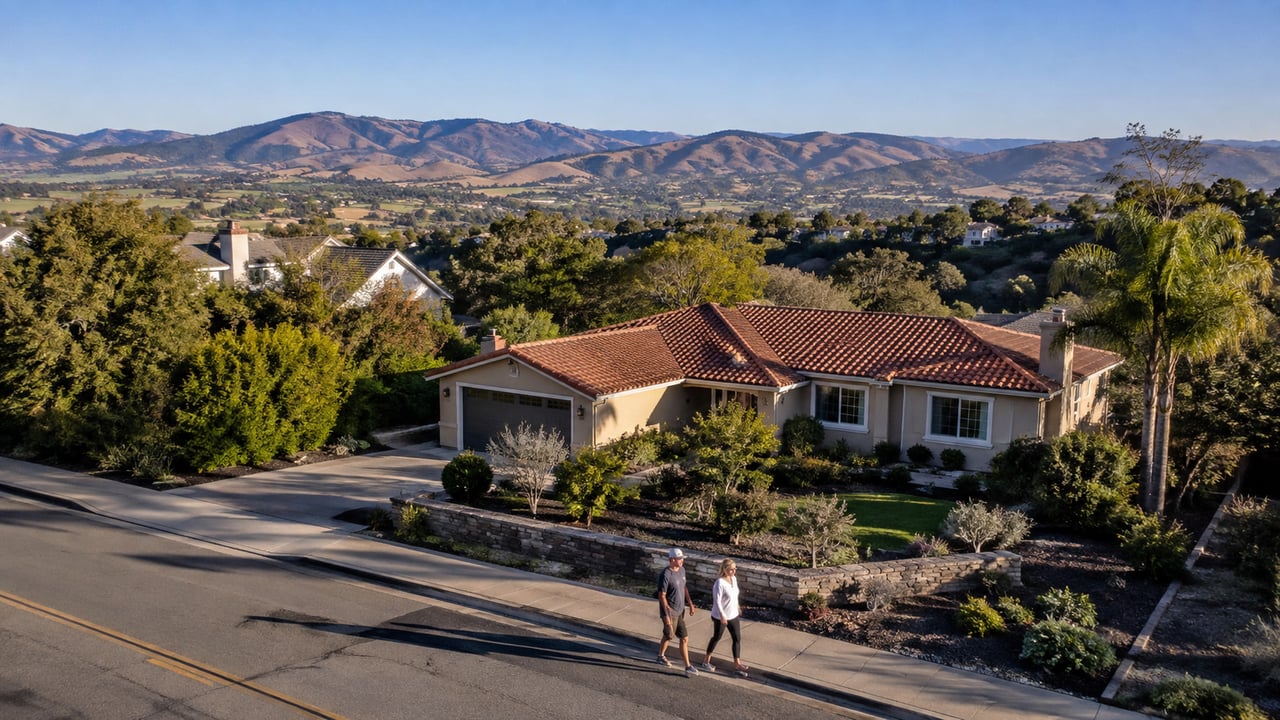
On the Central Coast, location risk varies substantially from one property to another. A coastal home in Cambria may involve different considerations than an acreage property outside Paso Robles, a hillside residence in San Luis Obispo, or a home near downtown Pismo Beach. Wildfire exposure, drainage, road access, nearby land uses, insurance availability, traffic, coastal conditions, utilities, and neighborhood characteristics can all influence the ownership experience.
Risk does not automatically make a property undesirable. Some of San Luis Obispo County’s most appealing homes have characteristics that require additional investigation. Ocean proximity, rural privacy, hillsides, acreage, mature vegetation, and distinctive settings can provide significant lifestyle value while also creating obligations buyers should understand.
The goal is to identify the location-specific issues, determine whether they can be managed reasonably, and decide whether the benefits of the property justify the associated responsibilities.
Central Coast Neighborhood Video Tour ⬇️
Natural Hazard Information Should Be Reviewed Property by Property
California real estate transactions commonly provide buyers with information concerning natural hazards, but the usefulness of that information depends on understanding how the identified conditions relate to the specific property.
👉 What Buyers Should Know About Natural Hazard Disclosures in San Luis Obispo County
Wildfire, flooding, seismic conditions, landslides, and other environmental factors can vary significantly even within the same community. Buyers should avoid assuming that a city name or ZIP code provides enough information to evaluate an individual location.
A hillside property may have exceptional views while also requiring closer review of slope, drainage, retaining structures, vegetation, and access. A rural residence may offer substantial privacy but have greater wildfire exposure or longer emergency-response routes. Properties near creeks, low-lying areas, or drainage channels may require additional investigation into water movement during heavy storms.
Natural hazard information should be considered together with inspections, insurance research, property disclosures, and observations of the site. Buyers should also look beyond the structure itself. Surrounding vegetation, neighboring slopes, road configuration, drainage paths, and nearby open land can all matter.
After more than 30 years in real estate, Joesef Jackson has found that the most productive approach is to identify location-related concerns early enough that buyers can investigate them without unnecessary time pressure.
Evaluate the Neighborhood Beyond the Immediate Street
A home can be attractive while its surrounding environment creates compromises the buyer did not notice during the first showing.
👉 How to Evaluate Neighborhoods in San Luis Obispo County
Buyers should examine traffic patterns, parking, surrounding property conditions, nearby commercial activity, schools, recreational uses, access routes, and the relationship between the home and neighboring parcels.
Visiting more than once can be valuable. A quiet residential street on a weekday afternoon may feel different during morning traffic, an evening event, or a busy summer weekend. This can be particularly relevant near downtown San Luis Obispo, Cal Poly, beaches, tourist areas, and major transportation routes.
Buyers should also consider how the neighborhood supports the activities they expect to do regularly. Distance to work, medical services, shopping, family, recreation, and major roads can affect daily satisfaction more than an attractive interior finish.
Neighborhood evaluation is not about finding a location without activity or change. It is about determining whether the surroundings are compatible with how the buyer expects to use the property.
Coastal Locations Require a Different Type of Review
Coastal ownership can provide exceptional lifestyle benefits, but proximity to the ocean introduces conditions that buyers should investigate separately from those of inland properties.
👉 What to Expect When Buying a Coastal Home on the Central Coast
In communities such as Pismo Beach, Morro Bay, Cayucos, and Cambria, buyers may want to examine salt exposure, moisture, exterior materials, drainage, wind, bluff or slope conditions where applicable, and insurance considerations.
The age and construction of the home matter. Metal components, exterior fixtures, windows, decks, railings, roofing materials, and finishes can respond differently to sustained marine exposure. A home that has been maintained consistently may perform very differently from one where coastal maintenance has been postponed.
Access and seasonal activity may also matter. A property close to the beach can provide substantial convenience while experiencing increased visitor traffic, parking demand, or weekend activity during certain periods.
Coastal risk should be evaluated as part of the complete ownership package. A buyer may reasonably accept additional maintenance because ocean proximity is central to the reason for purchasing the home. The important issue is understanding that trade-off before closing.
Location Influences More Than Purchase Price
Buyers often recognize that location affects home value, but it can also influence insurance, transportation, utilities, maintenance, future improvements, and daily expenses.
👉 Buying a Home in San Luis Obispo County: How Location Impacts Price and Lifestyle
A larger home in Atascadero may offer substantially more space than a similarly priced San Luis Obispo property, but the buyer may have a longer commute and different cooling costs. A rural Paso Robles property may provide acreage and privacy while requiring private systems, vegetation management, and additional property maintenance.
A smaller coastal residence may offer convenient access to beaches and moderate temperatures while providing less land, storage, or parking. None of those choices is inherently better. Each represents a different combination of benefits and obligations.
With more than 2,130 career transactions, Joesef has observed that buyers sometimes focus heavily on the purchase-price difference between communities while giving less attention to the ongoing consequences of the location. The purchase price is only one part of the comparison.
The stronger analysis asks what the location will require every month and every year, not simply what it costs to acquire today.
Neighborhood Fit Can Reduce Long-Term Ownership Friction

Location risk also includes the possibility that a neighborhood does not fit the buyer’s daily routines or longer-term plans.
👉 What Buyers Should Know About Neighborhood Fit in San Luis Obispo County
A neighborhood can be objectively desirable yet still be unsuitable for a particular household. A buyer who values walkability may gladly accept smaller lots and greater activity near downtown San Luis Obispo. Another may prefer a quieter environment in Arroyo Grande, Los Osos, or an inland community even when that means additional driving.
Buyers should consider noise tolerance, parking needs, pets, outdoor activities, commuting patterns, storage, accessibility, and how often they use nearby services. They should also think about whether these priorities are likely to change.
Neighborhood fit matters because moving again is expensive and disruptive. A buyer may be able to remodel a kitchen or add landscaping, but the surrounding street, commute, density, and neighborhood activity will remain largely unchanged.
Joesef’s experience with more than $1.81 billion in career sales volume has shown that permanent location characteristics deserve more weight than cosmetic qualities that can be modified later.
Insurance Should Be Investigated Before the Buyer Is Fully Committed
Insurance availability and cost have become an important part of evaluating certain California properties. Buyers should not assume that coverage for one home will resemble coverage for another nearby property.
👉 What Buyers Should Know About Insurance Review in San Luis Obispo County
The property’s location, roof, construction, age, surrounding vegetation, wildfire exposure, claims history, and other characteristics may affect underwriting. Coastal exposure and specialized property features can create additional considerations.
A buyer considering a rural home near Templeton may face a different insurance review than someone purchasing a condominium in San Luis Obispo. Even neighboring homes can receive different results based on structure characteristics and insurer requirements.
Insurance research should begin early enough for buyers to obtain property-specific information before critical contractual deadlines. A premium that is materially higher than expected can affect the total monthly ownership cost, while limited coverage options may influence the buyer’s willingness to proceed.
The California Department of Insurance provides consumer information concerning residential insurance and resources for California property owners.
Insurance is part of location analysis because environmental exposure and property surroundings can affect both availability and price. Buyers should consider the cost alongside the benefits of the setting rather than treating it as a separate issue discovered near closing.
Road Access and Emergency Access Deserve Attention
Access can be easy to overlook during a pleasant showing, particularly when buyers are focused on the residence and views.
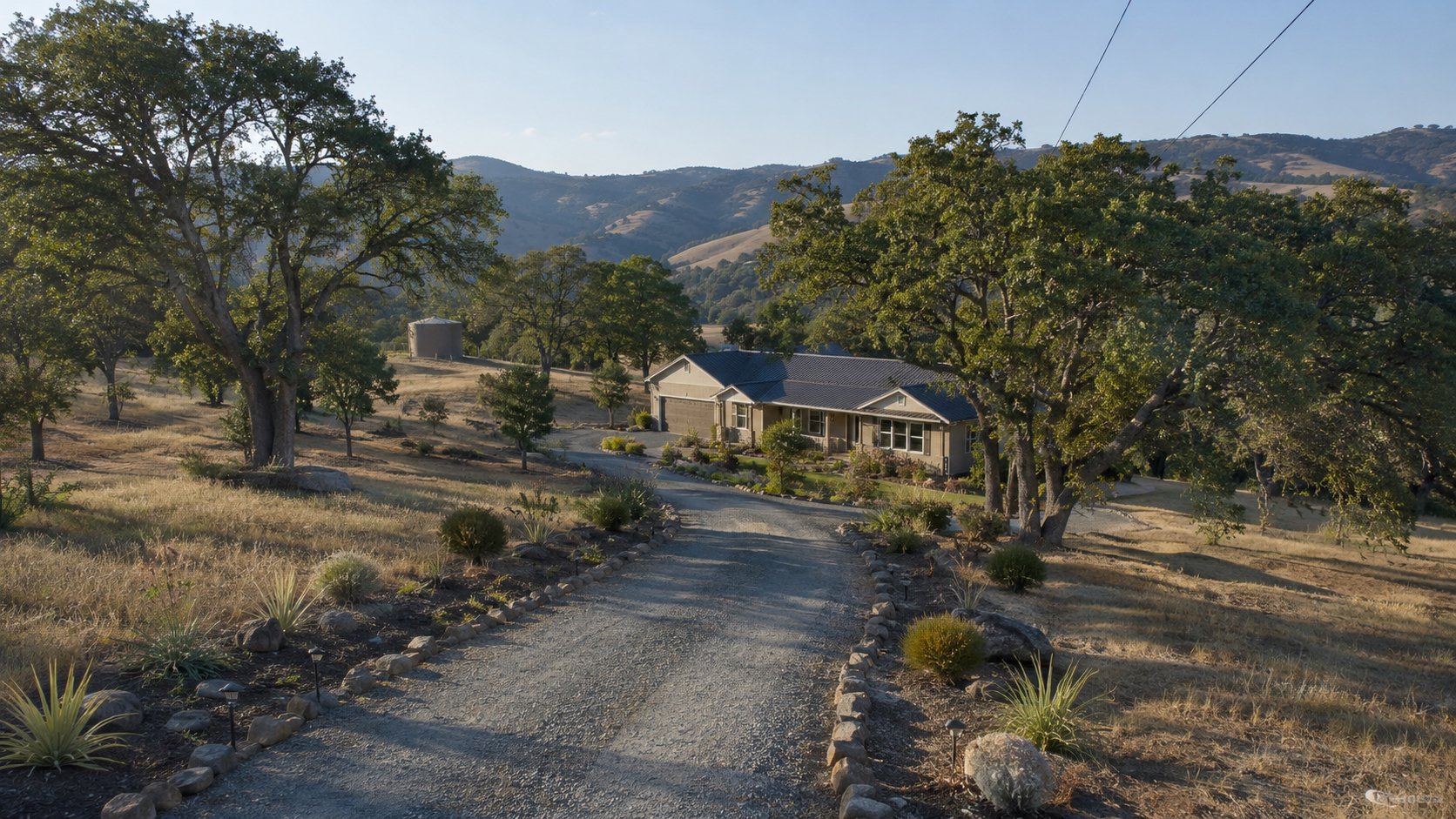
Private roads, shared driveways, steep approaches, narrow lanes, gates, bridge crossings, and seasonal drainage can affect everyday use. Rural and hillside properties deserve additional attention because access conditions may influence emergency services, deliveries, maintenance vehicles, and insurance.
Buyers should determine who maintains a private or shared road and whether any written agreements govern costs or responsibilities. They should also consider how the route would function during heavy rain, wildfire conditions, construction, or a medical emergency.
A long private driveway can be part of the appeal of an estate or acreage property. It can also require paving, grading, vegetation management, gate maintenance, and drainage work.
The question is not whether unusual access should prevent a purchase. It is whether the buyer understands the responsibilities attached to it and considers those responsibilities acceptable.
Surrounding Land Use Can Change the Ownership Experience
Buyers should look beyond what currently exists next door and understand how surrounding parcels may legally be used.
Vacant land may eventually be developed. Agricultural property may generate equipment activity, dust, odors, or seasonal operations. A nearby commercial parcel may operate differently from a residential one. Future development can influence traffic, views, privacy, and neighborhood character.
The San Luis Obispo County Planning and Building Department provides official information regarding zoning, land use, permitting, and development in unincorporated areas of the county.
Buyers should review relevant public information when surrounding land use is important to the purchase decision. A view across an undeveloped parcel should not automatically be assumed permanent. Likewise, open acreage near a residence may carry agricultural or development rights that differ from what the buyer expects.
This analysis can be especially important on the edges of San Luis Obispo, Paso Robles, Arroyo Grande, and other areas where residential, agricultural, and future development patterns may intersect.
Utilities and Private Systems Can Create Location-Specific Responsibilities
Properties connected to municipal water, sewer, electricity, gas, and conventional internet service generally create a different ownership structure than homes relying on private systems.
A rural property may use a private well, septic system, propane, water storage, or alternative internet service. Each can function very well, but buyers should understand capacity, maintenance, testing, replacement, and access requirements.
Water deserves particular attention for acreage and agricultural properties. Buyers should understand the source serving the residence and whether additional intended uses place different demands on that supply.
Septic systems introduce another set of considerations involving location, capacity, maintenance, and future expansion. A buyer planning an addition or guest unit should not assume the existing system can automatically accommodate it.
Utility risk is often manageable when the systems are understood and maintained. Problems arise when buyers treat a rural property as though its infrastructure functions exactly like a conventional subdivision home.
Noise and Traffic Should Be Evaluated at Realistic Times
Noise can be difficult to judge from a single showing. Buyers should consider nearby roads, schools, commercial uses, recreational areas, airports, rail activity, community events, and seasonal tourism.
A home that feels quiet at midday may experience significant commuter traffic in the morning or evening. Coastal communities may become more active during weekends and summer periods. Properties near Cal Poly may experience different activity patterns when school is in session.
Buyers should also consider the relationship between the house and the source of noise. Landscaping, setbacks, orientation, elevation, windows, and outdoor living areas can influence how noticeable outside activity becomes.
Some buyers are highly sensitive to sound. Others readily accept it in exchange for walkability, convenience, or proximity to attractions. The risk is not the presence of activity itself. It is discovering after closing that the level of activity conflicts with the buyer’s expectations.
Drainage and Water Movement Should Be Observed Beyond the Structure
A home inspection can identify many visible drainage concerns, but buyers should also examine how water moves across the entire property and surrounding area.
Sloped lots, retaining walls, downspouts, gutters, grading, patios, driveways, neighboring elevations, and drainage channels can all influence where water travels during storms.
Dry summer conditions can make drainage difficult to visualize. Buyers may benefit from reviewing available disclosures, asking about past conditions, and obtaining appropriate professional evaluation when site characteristics raise questions.
Coastal and hillside properties may require different drainage systems than conventional level lots. Rural land may contain seasonal water movement that is not obvious during dry weather.
Drainage risk does not necessarily mean a property should be rejected. Many homes manage water successfully through appropriate grading, drainage systems, and consistent maintenance. Buyers need to understand what systems exist and what ongoing work they require.
Wildfire Exposure Extends Beyond a Map Designation
Wildfire evaluation should include more than whether a property appears within a designated hazard area. The physical setting matters.
Vegetation density, slope, access, neighboring parcels, defensible space, building materials, roofing, vents, decks, and water availability can influence the property’s exposure and maintenance demands.
Rural areas around Paso Robles, Templeton, Atascadero, Santa Margarita, and other inland communities may require buyers to think carefully about vegetation management and evacuation routes.
A property with mature trees and natural landscaping can remain highly desirable when those features are maintained appropriately. Buyers should determine whether they are prepared for the recurring work associated with vegetation and land management.
Insurance research should be connected to this evaluation. A buyer may consider the physical risk manageable while discovering that coverage cost changes the financial calculation.
The appropriate decision comes from understanding the property as it actually exists rather than relying on a broad assumption that all rural or wooded homes carry the same conditions.
Coastal Erosion and Bluff Conditions Require Specialized Attention
Some coastal properties have location characteristics that require expertise beyond a standard residential inspection.
Homes on or near bluffs may warrant review of geologic conditions, erosion, drainage, retaining systems, setbacks, and available public records. Buyers should also understand that coastal environments change over time.
Not every coastal home has bluff exposure. A residence several blocks inland may have entirely different considerations from an oceanfront property in the same community.
This illustrates why broad labels can be misleading. “Coastal home,” “rural property,” and “hillside residence” describe general categories, but the actual risk depends on the individual parcel.
When specialized conditions exist, buyers should use qualified professionals who can evaluate the specific issue. Location risk should be investigated at the level appropriate to the property rather than dismissed or exaggerated.
Future Resale Depends Partly on How Other Buyers View the Location
A location characteristic acceptable to one buyer may narrow the future buyer pool.
A steep driveway, busy road, unusual access arrangement, high insurance cost, or specialized rural system may not matter to a purchaser who strongly values privacy, acreage, views, or location. Another buyer may consider the same characteristic a significant drawback.
This does not mean buyers should avoid properties with distinctive settings. It means they should understand how those characteristics may affect future marketability.
Permanent strengths can offset limitations. An exceptional ocean view, desirable neighborhood, large usable parcel, architectural residence, or rare location may create demand despite additional ownership obligations.
The strongest resale analysis considers both sides: what makes the location desirable and what might cause a future buyer to hesitate.
Location Risk Should Be Balanced Against Location Value
Every property involves trade-offs. The purpose of evaluating location risk is not to eliminate every risk from a purchase. That would be unrealistic.
A coastal home may require more maintenance while providing daily access to the ocean. An acreage property may require vegetation and private-system management while providing privacy and space. A central San Luis Obispo home may experience more activity while offering walkability and shorter trips to services.
Buyers should determine whether the benefits are important enough to justify the obligations. This is fundamentally a property-specific judgment.
Direct representation from the first conversation through closing allows Joesef Jackson to keep location, inspections, insurance, disclosures, buyer priorities, and property-specific research connected as new information develops.
A strong purchase is not necessarily the property with the fewest location considerations. It is the property whose location advantages are valuable to the buyer and whose risks have been investigated, understood, and accepted deliberately.
Frequently Asked Questions
What is location risk when buying a home?
Location risk refers to surrounding conditions that can affect use, cost, insurance, maintenance, future development, or resale, including hazards, access, traffic, utilities, and nearby land uses.
Should buyers avoid homes in natural hazard areas?
Not automatically. Buyers should investigate the specific exposure, insurance, property condition, mitigation measures, and ongoing responsibilities before deciding whether the risk is acceptable.
How can buyers evaluate neighborhood noise?
Visit the property at different times and consider nearby roads, schools, businesses, recreational areas, tourism, universities, and other sources of regular activity.
Why should insurance be reviewed early?
Property location and physical characteristics can affect insurance availability and cost. Property-specific information obtained early can prevent an unexpected insurance issue late in the transaction.
Are rural properties riskier than city properties?
Not necessarily. Rural homes often involve different responsibilities, such as wells, septic systems, private roads, vegetation, and access. Buyers should evaluate those systems rather than assuming they are problematic.
What should coastal buyers investigate?
Depending on the property, buyers may consider marine exposure, moisture, drainage, insurance, bluff or slope conditions, exterior maintenance, parking, and seasonal activity.
Can surrounding development affect a home's future value?
Yes. Changes in neighboring land use may affect traffic, privacy, views, activity, and buyer perception. Buyers should review relevant zoning and planning information when nearby development matters to the decision.
Is a property with location risk harder to resell?
It can be, depending on the issue and the property's compensating advantages. Strong views, privacy, acreage, neighborhood appeal, or scarcity may remain highly attractive despite additional ownership considerations.
If you are preparing to buy or sell real estate on the Central Coast and want personalized guidance, contact Joesef Jackson at SLO Life Realty Group.