A price reduction makes sense when the market is consistently showing that buyers do not see enough value at the current asking price—and when changing the price is likely to improve the home’s competitive position. It does not make sense simply because a listing has been active for a certain number of days, one buyer made a low offer, or a seller becomes uncomfortable with normal market time. The decision should come from buyer activity, competing inventory, recent sales, feedback, and the seller’s actual timing goals.
That distinction is especially important on the Central Coast because San Luis Obispo County is made up of very different housing markets. A price strategy that works for a condominium in San Luis Obispo may not fit a coastal home in Pismo Beach, a rural property near Paso Robles, or a larger home in Arroyo Grande. Buyer pools, property characteristics, price ranges, inventory levels, and the availability of close substitutes can change substantially from one community to another.
The central takeaway is straightforward: reduce the price when the evidence shows that price is preventing qualified buyers from acting, not simply because the home has not sold yet. Before making the change, determine whether the real obstacle is price, presentation, exposure, showing access, property condition, terms, or an unusually narrow buyer pool. A well-timed, meaningful adjustment can restore attention and protect the seller’s overall position. A reactive reduction made for the wrong reason can give up value without solving the underlying problem.
Why the First Weeks of a Listing Matter
The opening weeks provide some of the clearest information a seller will receive about how the market views the property. Newly listed homes reach buyers who have already been monitoring inventory, receive new-listing alerts, and are compared immediately with competing properties in the same general price range.
That does not mean every correctly priced home must sell within 14 or 21 days. Unique homes, higher-priced properties, rural acreage, coastal residences, and homes serving smaller buyer pools can naturally require more time. What matters is how the listing performs relative to appropriate competition.
Look beyond days on market. Measure showing activity, repeat showings, questions from buyer agents, online engagement that converts into appointments, requests for disclosures, and offers. If buyers are repeatedly encountering the property but choosing alternatives, the market may be signaling a competitive problem that deserves attention.
👉 How Long Does It Take to Sell a Home on the Central Coast? Timeline Breakdown
Low Showings Can Point to a Pricing Problem
Very limited showing activity can be one of the strongest reasons to reevaluate the asking price, particularly when competing homes are attracting buyers. Buyers usually screen properties online before deciding which homes deserve an appointment. If the listing receives visibility but qualified buyers are consistently declining to tour it, they may believe the price does not match the value being offered.
Price also determines the competitive set. A home offered at $1.3 million is judged against the other choices available to buyers shopping around that level—not solely against what the seller paid, invested in improvements, or hopes to net.
One week of quiet activity is not enough to reach a conclusion in every market. But continued low showing volume, combined with active competition and no obvious marketing problem, deserves a careful price review.
👉 How to Price Your Home on the Central Coast in Today’s Market
Frequent Showings Without Offers Tell a Different Story
A home receiving plenty of showings but no offers is attracting buyers at the top of the funnel. The question becomes why those buyers are not advancing.
Sometimes price is still the answer. Buyers may like the home but conclude that another property offers better condition, location, size, amenities, or overall value for similar money. Repeated comments such as “we like it, but not at this price” are more meaningful when multiple unrelated buyers reach essentially the same conclusion.
But showings without offers can also indicate a condition or property-specific issue. A difficult floor plan, road noise, deferred maintenance, insurance concern, limited parking, steep lot, or unexpected neighborhood characteristic may only become apparent after buyers arrive. Before reducing the price, identify what buyers are actually rejecting.
A price reduction works best when it addresses the objection. It should not be used as a substitute for understanding it.
Compare the Home With What Buyers Can Buy Today
Sellers compete against current choices, not just historical comparable sales. Closed sales remain important for establishing value, but active and pending listings help explain what buyers are choosing right now.
A San Luis Obispo seller may suddenly face a newly listed home with updated interiors and a similar location. In Arroyo Grande, another property may offer a larger lot or better outdoor space at nearly the same price. A Paso Robles buyer considering acreage may compare usable land, wells, outbuildings, access, and improvements rather than square footage alone.
On the coast, comparisons can become even more property-specific. Pismo Beach and Morro Bay buyers may weigh ocean proximity, views, parking, condition, exposure, and walkability differently from inland buyers. A seller should know whether new competition has materially changed the value proposition since the home was first priced.
C.A.R.’s Data & Statistics resources include county-level sales, price, inventory, and market-time information that can provide broader context for local pricing discussions.
A Reduction Should Be Large Enough to Change Something
A useful price reduction should improve the home’s competitive position. Reducing a listing merely so the price history shows activity is rarely a strong strategy.
The adjustment may need to change the homes against which buyers compare the property, place it within a more active search range, or create a clearer value difference between the home and its competition. A tiny reduction that leaves the property in essentially the same position may attract little new attention.
For example, a home sitting just above a price range commonly used by buyers may gain additional exposure by moving below that threshold. The specific number should come from the actual market rather than a generic percentage rule.
A strategic adjustment answers the question, “What will be meaningfully different after we change the price?” If there is no good answer, the proposed reduction probably needs more thought.
When a Price Reduction Does Not Make Sense
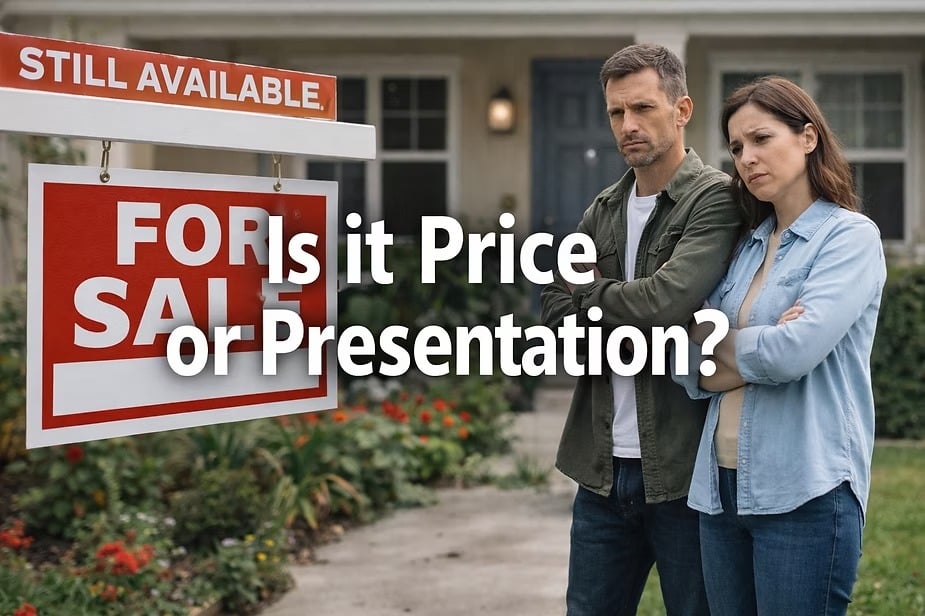
Before reducing price, confirm the issue isn't exposure or presentation.
A price reduction does not make sense when price is not the primary reason buyers are hesitating. Lowering the number can be an expensive response to a problem that could have been corrected another way.
If photographs are weak, the home is poorly prepared, showing access is unnecessarily restrictive, important features are not being communicated, or obvious maintenance issues are distracting buyers, address those issues first. A home can be reasonably priced and still underperform because buyers are not seeing it at its best.
That is especially relevant when showing traffic is low but online exposure is also poor. Before concluding that buyers rejected the asking price, make sure qualified buyers actually had an effective opportunity to discover and evaluate the home.
👉 Preparing Your Home for Sale on the Central Coast: Pricing, Staging, and Strategy
Do Not React to One Offer or One Buyer’s Opinion
A low offer is not automatically proof that the listing is overpriced. Buyers negotiate for different reasons, and one purchaser’s strategy does not establish market value.
The stronger signal is repetition. If several qualified buyers independently reach similar conclusions about value, competing homes sell while yours remains available, and showing activity begins to slow, the evidence becomes more meaningful.
The same applies to feedback. One buyer may dislike a feature another buyer values. An agent may offer a price opinion that is inconsistent with actual activity. Sellers should look for patterns across multiple sources instead of allowing a single comment to drive an important pricing decision.
A price change should respond to the market as a whole, not to the loudest individual reaction.
Be Careful With Repeated Small Reductions
Multiple incremental reductions can create activity, but they can also leave a listing chasing the market downward. If the home was materially overpriced at launch, reducing it in small steps may prolong the period during which buyers continue to see better value elsewhere.
Repeated reductions can also affect negotiation psychology. Buyers who observe a regular pattern of small cuts may decide to wait for the next one or submit more aggressive offers because they believe the seller’s position is weakening.
That does not mean a home can only be adjusted once. Market conditions can change, and a second adjustment may eventually become appropriate. But every reduction should result from a fresh analysis of sales, inventory, feedback, competition, and seller objectives.
One deliberate move that materially improves positioning is often more useful than a series of reductions without a clear target.
How to Reduce Price Without Giving Away Leverage

The pricing adjustments preserve leverage by being timely and decisive.
The best price adjustments are timely, evidence-based, and coordinated with the rest of the listing strategy. When the price changes, the seller should also make sure photography, property presentation, showing availability, description, disclosures, and marketing accurately support the new positioning.
A reduction does not require the seller to become weak in negotiation. The asking price and the seller’s ultimate negotiating position are different things. California law distinguishes the listing price from an eventual buyer offering price, and sellers remain responsible for protecting their interests and understanding the agreements governing their transaction.
The goal is to create enough value to motivate qualified buyers while retaining a rational basis for evaluating offers. Better market positioning can sometimes improve negotiating leverage because it produces more credible buyer interest instead of leaving the seller dependent on a single prospect.
👉 Understanding Offers, Counteroffers, and Negotiation When Selling on the Central Coast
Consider Carrying Costs Alongside the Sale Price
Holding out for a higher price is not free. Mortgage payments, property taxes, insurance, utilities, maintenance, landscaping, association dues, and the cost of delaying another purchase can all affect the seller’s eventual net outcome.
That does not mean sellers should automatically reduce price to sell faster. It means asking price should be evaluated alongside the financial cost of additional market time.
A seller who spends several months protecting an asking price only to eventually accept the same amount that could have been achieved earlier may have incurred substantial carrying costs in the process. Conversely, reducing too quickly in a market that simply requires normal exposure can unnecessarily sacrifice proceeds.
The right comparison is not merely “original asking price versus reduced asking price.” It is the probable net result of each realistic strategy.
Local Pricing Strategy Must Be Hyper-Local
There is no single Central Coast pricing formula. San Luis Obispo County contains coastal, urban, suburban, rural, wine-country, and small-community markets, each with its own supply and buyer behavior.
A Los Osos home may compete on lot, neighborhood setting, condition, coastal access, and insurance considerations. A Nipomo property may attract buyers comparing newer construction, larger lots, community amenities, and access to Highway 101. Atascadero buyers may evaluate usable outdoor space, heat exposure, property condition, and value relative to neighboring communities.
Even nearby homes can appeal to different buyer groups. That is why broad county statistics should provide context rather than dictate an individual listing decision.
With more than 30 years of experience, 2,130+ closed transactions, and $1.81B+ in career sales volume, Joesef Jackson’s pricing approach is built around direct property-level analysis rather than applying one percentage or timing rule across every seller.
Make the Decision From Evidence, Not Emotion
Price reductions become difficult when sellers interpret them as judgments about the home. The market is not making a personal judgment. Buyers are deciding whether the property represents enough value relative to their available choices.
The most productive review asks specific questions: Are qualified buyers scheduling showings? What happens after they visit? What are the strongest competing homes? Have any of them gone pending or sold? Has new inventory changed the comparison? Is the same objection appearing repeatedly? Would a different price materially change the buyer pool?
If the answers consistently point toward value, a price reduction can be a rational business decision. If they point toward presentation, access, marketing, condition, or insufficient exposure, address that issue first.
Good pricing strategy is not about defending the original number or automatically lowering it. It is about keeping the property accurately positioned as the market develops.
Frequently Asked Questions About Price Reductions
How do I know if my home actually needs a price reduction?
Look for a pattern of weak showing activity, buyers repeatedly choosing comparable homes, consistent feedback that the property does not represent enough value, or substantially longer market time than appropriate competition. Those signals are more useful than days on market alone.
How much should I reduce the price of my home?
There is no universal percentage. The reduction should be large enough to materially improve the property’s competitive position based on comparable homes, current inventory, buyer feedback, recent sales, and relevant search-price thresholds.
Is it better to make one larger reduction or several small ones?
When the market clearly shows a meaningful pricing gap, one deliberate adjustment can be more effective than repeatedly reducing by small amounts. The goal is to reposition the property, not simply create another entry in the listing’s price history.
Will buyers think something is wrong with the house after a price reduction?
Not necessarily. Buyers understand that sellers adjust pricing as market information develops. What matters more is whether the new price makes sense relative to the home, its condition, location, and competing properties.
Should I reduce my price if I am getting plenty of showings?
Not automatically. Strong showings with no offers require a closer look at buyer feedback, condition, layout, terms, and competition. If buyers consistently like the property but believe alternatives offer better value, price may still be the issue.
Can I wait longer instead of reducing my price?
Yes, if your timing permits and the evidence supports the current price. A seller with no urgency may choose longer exposure, particularly for a distinctive property with a smaller buyer pool. Waiting becomes less useful when comparable homes continue selling and qualified buyers repeatedly reject the current value proposition.
Does a price reduction weaken my negotiating position?
Not inherently. A well-positioned reduction can increase buyer interest and potentially create a stronger negotiating environment. Repeated reductions without a clear strategy, however, may encourage buyers to believe further concessions are coming.
Should I reduce the price before taking my home off the market?
That depends on why the home has not sold. If the evidence clearly identifies price as the obstacle and the seller still wants to sell now, a strategic adjustment may make more sense than withdrawing. If preparation, timing, repairs, or personal circumstances need to change first, a different strategy may be appropriate.
If you are preparing to buy or sell real estate on the Central Coast and want personalized guidance, contact Joesef Jackson at SLO Life Realty Group.