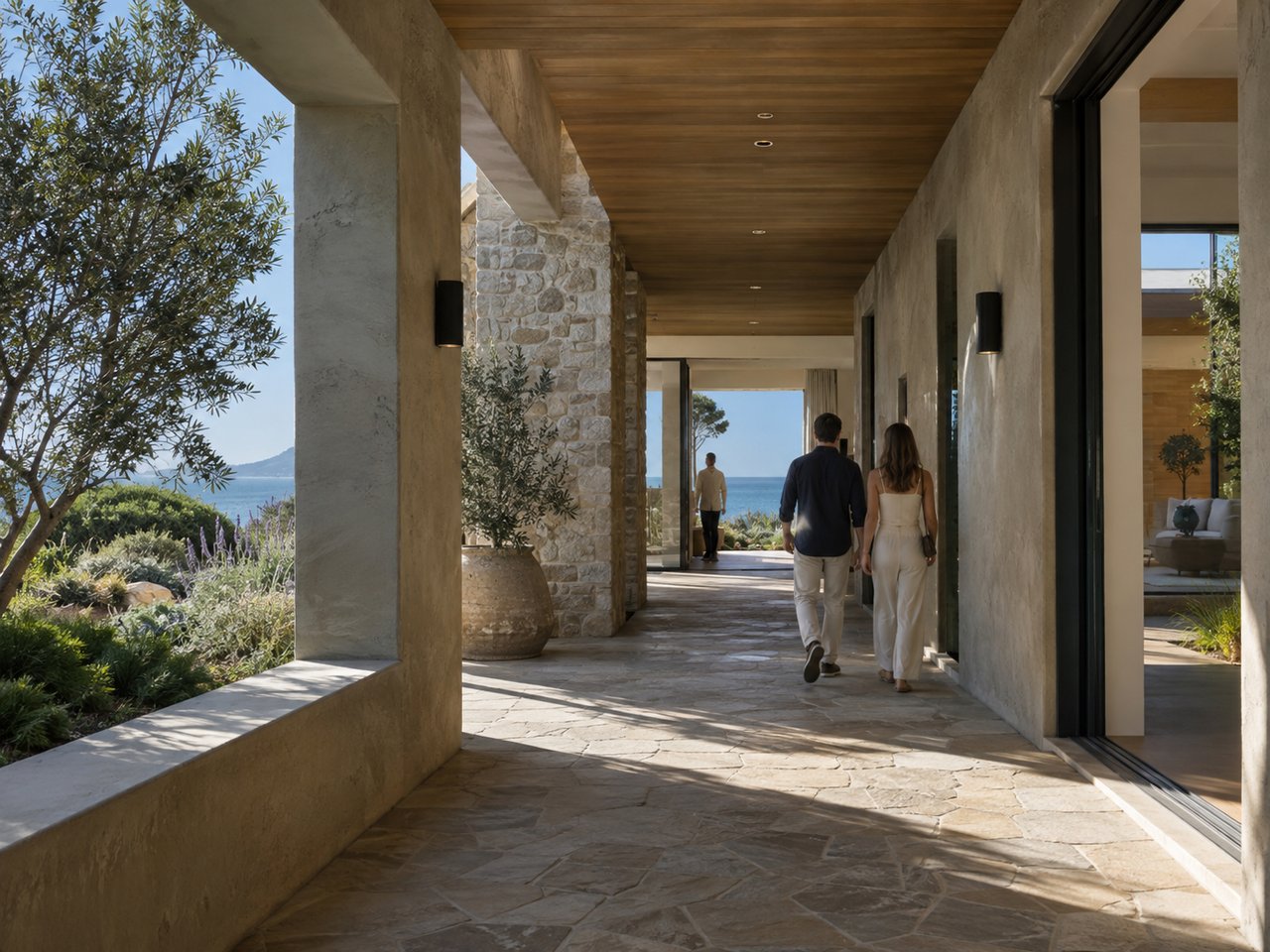
A premium coastal property is not defined simply by being expensive or close to the ocean. The strongest homes create a relationship with their setting that feels intentional from the moment someone arrives.
That experience can come from the way the house is oriented toward a view, how outdoor areas are protected from wind, where natural light enters, how much privacy exists from neighboring properties, and whether materials and architecture feel appropriate for the coastal environment.
Those qualities can appear very differently across the Central Coast. A Shell Beach residence may feel premium because primary living areas open naturally toward the coastline. A Cambria home may derive much of its character from wooded privacy and filtered ocean views. In Avila Beach, a property may stand out because warmth, orientation, and sheltered outdoor living come together in a particularly usable way.
The important distinction is integration.
A home can contain expensive finishes without feeling especially connected to its location. Another property may be more restrained yet feel substantially more refined because architecture, land, light, privacy, and the coastal setting reinforce one another.
That combination is often what separates a premium coastal experience from an ordinary house near the ocean.
Central Coast Neighborhood Video Tour ⬇️
Coastal Premium Begins With How the Property Uses Its Setting
Buying near the coastline introduces considerations that do not exist in exactly the same form farther inland.
👉 What to Expect When Buying a Coastal Home on the Central Coast
For a premium property, those considerations become part of the design experience.
A home may be oriented to capture morning light without exposing the principal outdoor area to prevailing afternoon wind. A primary suite may be positioned away from neighboring sightlines. Living spaces may frame coastal vegetation or ocean views without relying on oversized glass everywhere.
After more than 30 years representing real estate on the Central Coast, Joesef Jackson has seen that buyers often react most strongly when the home appears designed specifically for its site rather than placed on it.
The property feels more complete because the setting is doing part of the work.
Buyers Notice When Everyday Spaces Receive the Best Experience
Premium coastal homes usually do not reserve their strongest qualities for one dramatic room.
👉 What Buyers Look for Most in Central Coast Homes Right Now
Buyers often respond when the kitchen, primary living space, principal bedroom, and regularly used outdoor area all receive meaningful access to light, views, privacy, or landscape.
That matters because luxury is experienced repeatedly.
An ocean glimpse from a formal room used occasionally may have less practical impact than a more modest view visible every morning from the kitchen and breakfast area.
The same principle applies to natural light, ventilation, and indoor-outdoor access.
A property feels more sophisticated when its most desirable characteristics appear where daily life actually occurs rather than functioning mainly as presentation features.
Premium Coastal Homes Usually Possess Something Difficult to Duplicate
Demand becomes stronger when the property combines desirable characteristics that buyers cannot easily recreate elsewhere.
👉 What Makes a Property High-Demand on the Central Coast
That could mean elevation, privacy, a particularly protected orientation, an unusual relationship to the shoreline, architectural quality, mature landscaping, or a lot that provides substantially more separation than surrounding properties.
Scarcity matters because many improvements can be purchased after closing.
A buyer can replace flooring, remodel a kitchen, install lighting, or redesign landscaping.
Changing the home's orientation, moving neighboring structures, creating mature trees instantly, or reproducing a rare site is far more difficult.
Premium coastal value therefore often begins with characteristics embedded in the real estate itself.
Location Feels Premium When It Changes the Daily Experience
Coastal location is not one universal quality.
👉 Buying a Home in San Luis Obispo County: How Location Impacts Price and Lifestyle
Being closer to the water may matter, but so can street position, elevation, access, noise, exposure, walkability, neighborhood scale, and how easily someone can move between home and the places they regularly use.
A Morro Bay property positioned near the waterfront can create a different experience from one on a quieter elevated street. A Cayucos residence may feel particularly appealing because beach access and neighborhood scale work naturally together.
Premium location is therefore not simply a pin on a map.
It is the way the location changes how the property is used from morning through evening.
Sophisticated Buyers Evaluate the Entire Composition
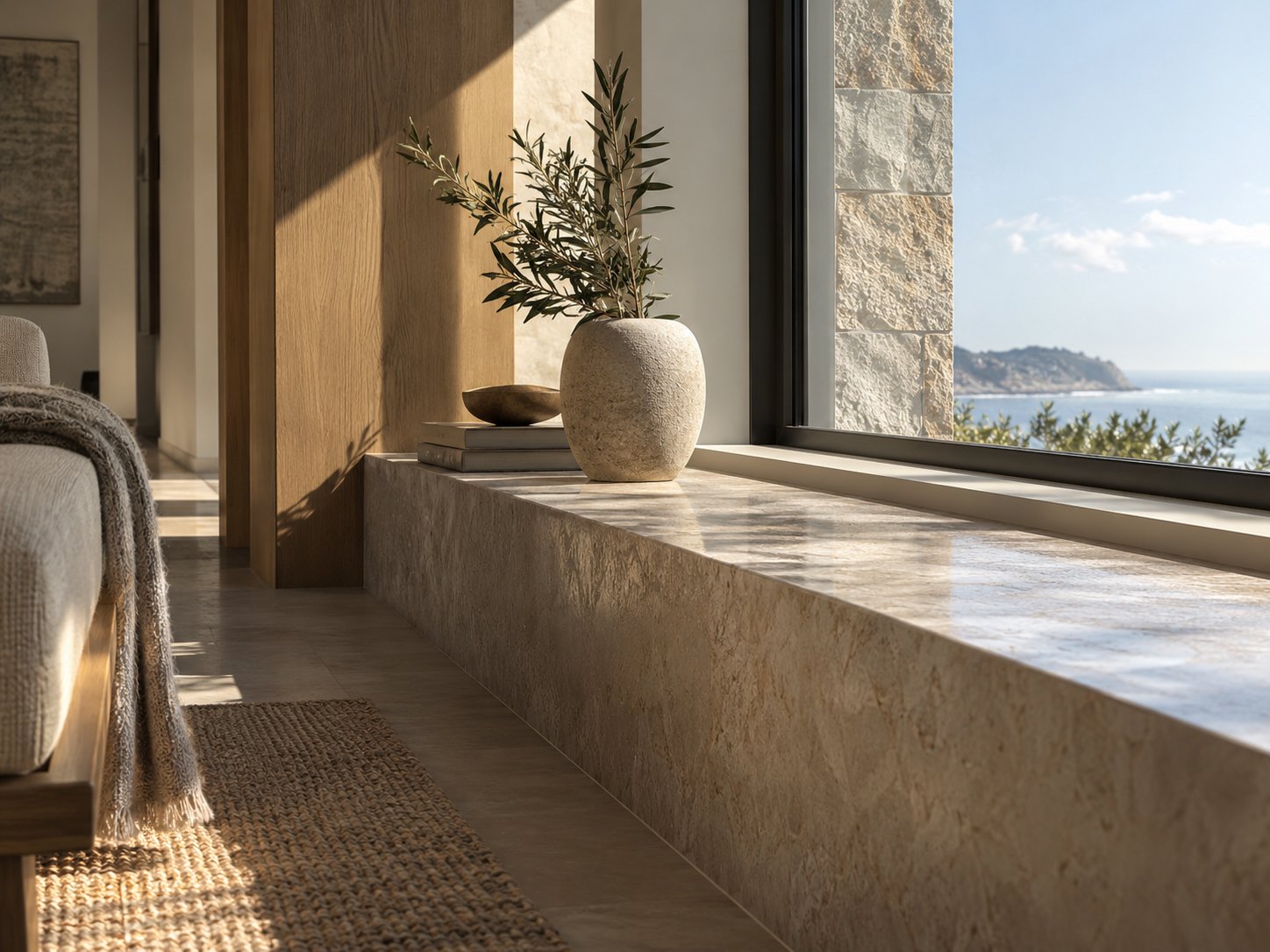
High-end buyers often look beyond individual luxury features.
👉 What High-Net-Worth Buyers Consider in San Luis Obispo County
They may study the relationship among architecture, privacy, site, materials, light, outdoor living, views, guest accommodations, storage, and supporting spaces.
A single impressive feature rarely compensates for a property that feels disjointed.
By contrast, relatively restrained elements can produce a premium impression when they work together consistently.
This is where proportion becomes important. Ceiling height, window placement, wall dimensions, exterior openings, landscaping, furniture scale, and transitions between rooms can make a home feel resolved without relying on conspicuous ornamentation.
Premium frequently comes from discipline rather than excess.
Privacy Changes How Coastal Luxury Is Experienced
Privacy can become particularly valuable in coastal areas where desirable locations sometimes place homes relatively close together.
👉 What Makes Privacy Valuable in San Luis Obispo County Real Estate
A premium property does not necessarily require a massive parcel.
Architecture, vegetation, grade, walls, window placement, and the orientation of outdoor spaces can create substantial separation within a compact coastal setting.
Buyers may notice whether neighboring windows look into the primary bedroom, whether an upper terrace exposes the outdoor living area below, or whether the main entertaining spaces feel sheltered from public sightlines.
Privacy is most effective when it feels natural.
The strongest design does not make the property feel closed off. It preserves light, views, and openness while limiting unwanted exposure.
Sheltered Outdoor Space Can Matter More Than Outdoor Square Footage
A large terrace is not automatically a premium terrace.
Coastal outdoor living depends heavily on exposure.
Wind direction, shade, afternoon temperature, orientation, vegetation, and architectural protection can determine whether an outdoor area is used regularly or primarily photographed.
A smaller protected patio that remains comfortable through more of the day may offer more practical value than a dramatic deck with constant exposure.
This is particularly relevant along stretches of the Central Coast where wind patterns can change quickly between nearby locations.
The National Oceanic and Atmospheric Administration maintains climate and weather information that provides broader context for regional coastal conditions.
Premium coastal design responds to the environment rather than pretending it does not exist.
Architecture Should Frame the Coast Instead of Competing With It
A premium coastal home does not need a literal nautical design.
In many cases, the architecture is strongest when it allows the setting to remain visually dominant.
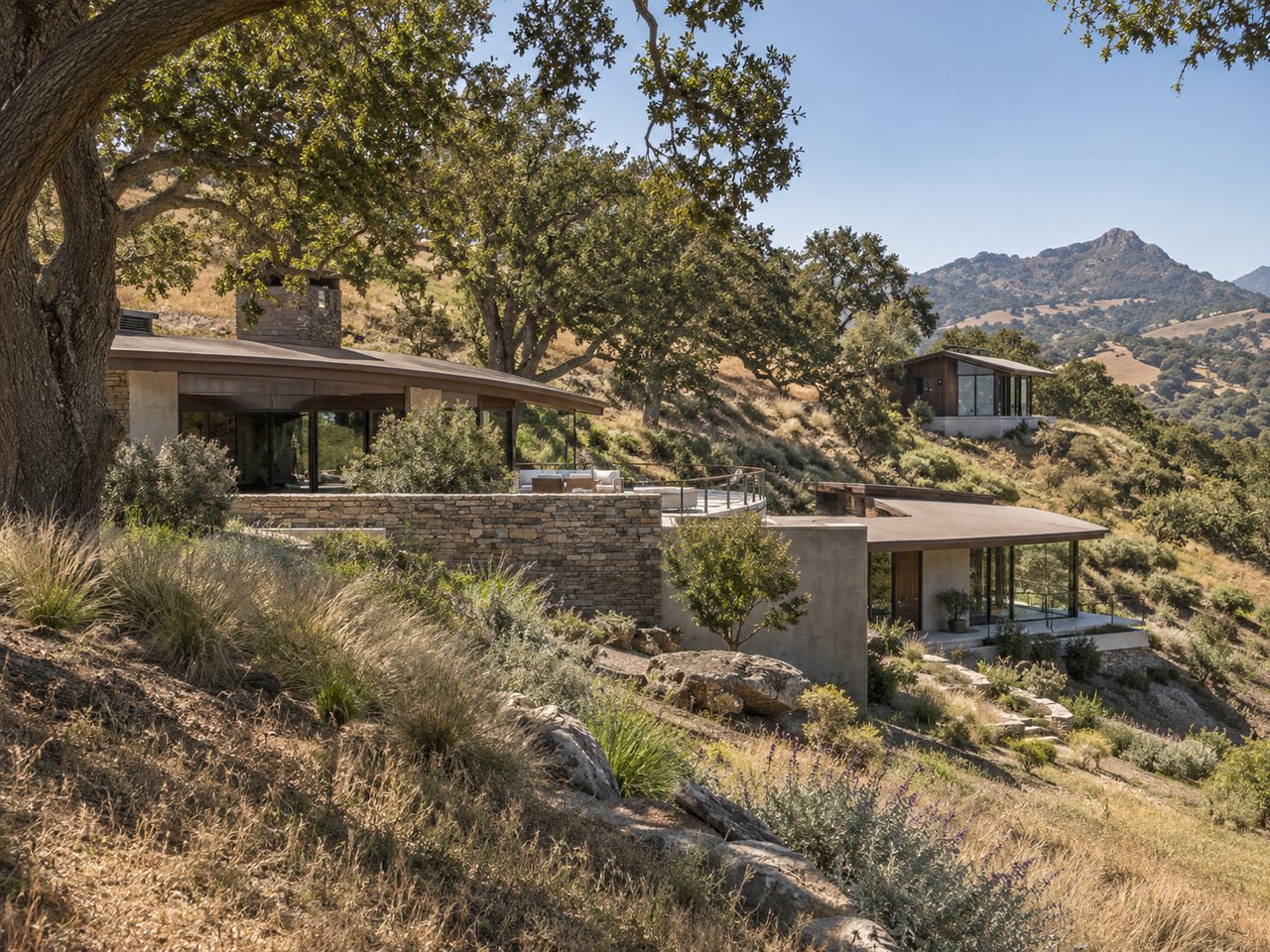
That may mean restrained materials, carefully positioned openings, deep overhangs, protected transitions, lower roof profiles, or interior palettes that respond subtly to surrounding light and landscape.
Architecture can also control what is revealed.
One room might frame a narrow water view, while another opens broadly toward the horizon. A hallway may terminate in sky rather than artwork. A stair landing may provide a brief elevated glimpse that makes the transition memorable.
These moments create richness without requiring every space to make the same statement.
Arrival Should Establish the Character Before the View Is Revealed
The arrival experience can shape how a coastal property is perceived before anyone enters the principal living area.
Premium arrival does not necessarily mean a monumental gate or oversized driveway.
It can come from sequence.
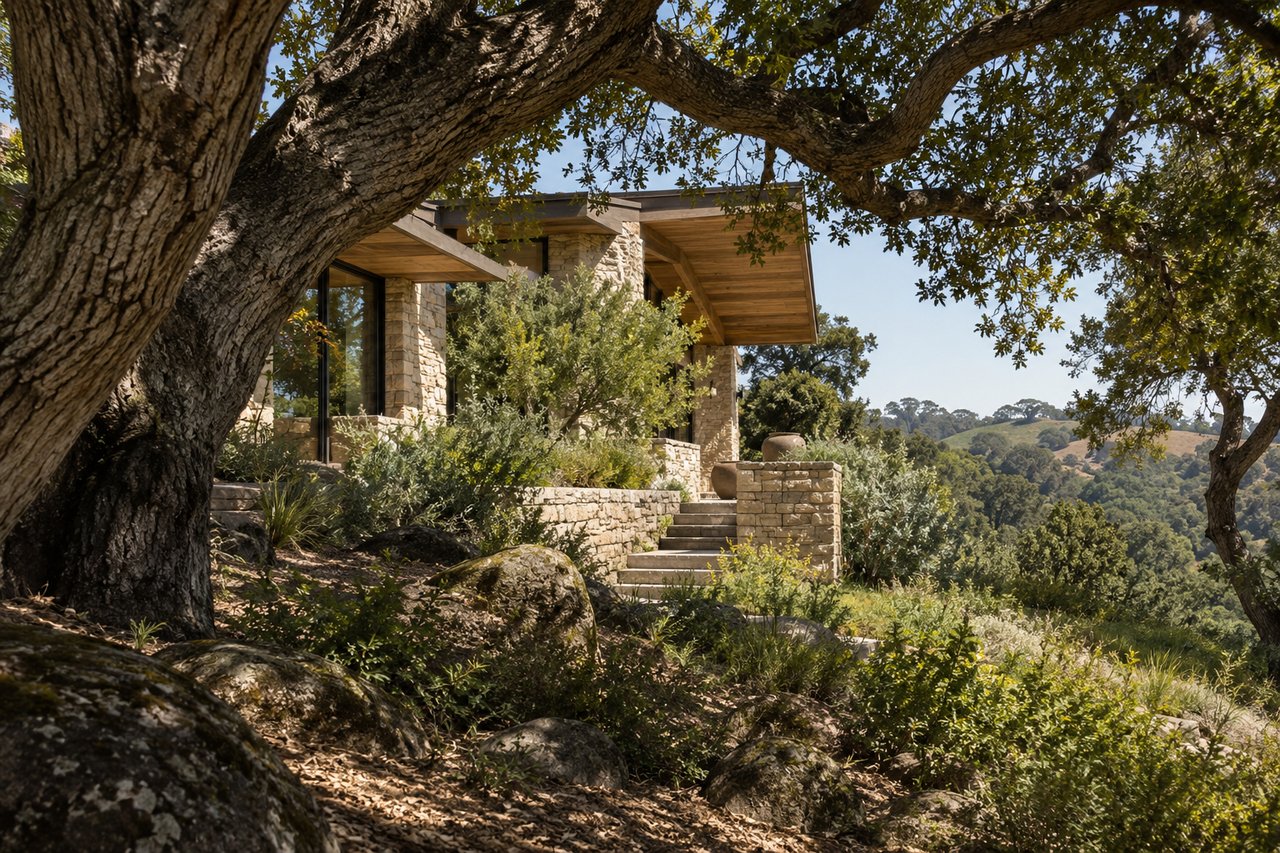
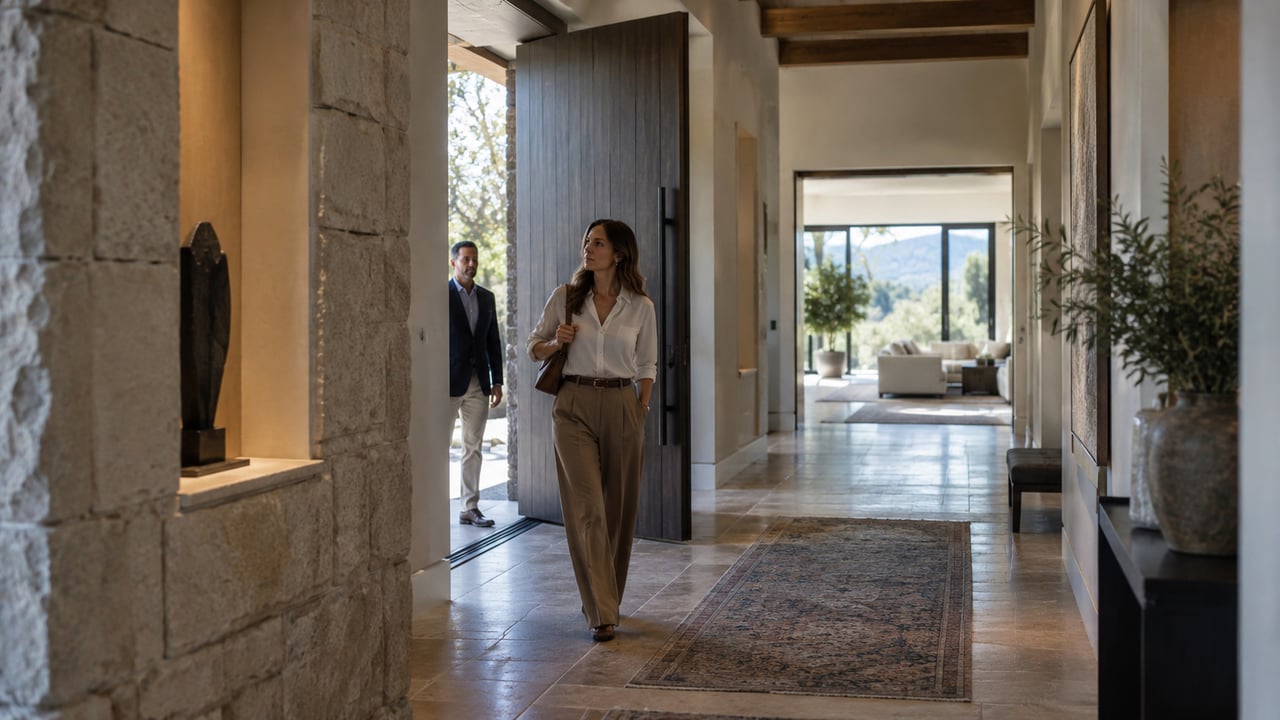
A sheltered entry may conceal the coastline temporarily before the view opens inside. Materials may begin outdoors and continue through the interior. Landscaping may create separation from the street before the architecture becomes visible.
Joesef's experience across more than 2,130 closed transactions has shown that buyers often remember properties with a distinct sequence of experiences, particularly when the arrival creates anticipation without feeling staged.
A strong coastal home reveals itself deliberately.
Material Choices Should Feel Appropriate to the Setting
Coastal properties place materials in a visually demanding environment.
Strong sunlight, salt air, fog, moisture, and exposure can make poorly chosen surfaces appear tired more quickly.
Premium does not require using the most expensive material everywhere.
It requires consistency, appropriateness, and execution.
Stone, wood, metal, plaster, concrete, glass, and tile can all work beautifully when selected with an understanding of the architecture and setting.
Buyers often notice transitions: where exterior materials meet interior ones, how railings are detailed, whether hardware feels substantial, and whether finishes retain the same level of thought from primary areas into secondary spaces.
Coastal Views Feel More Valuable When Architecture Controls Them
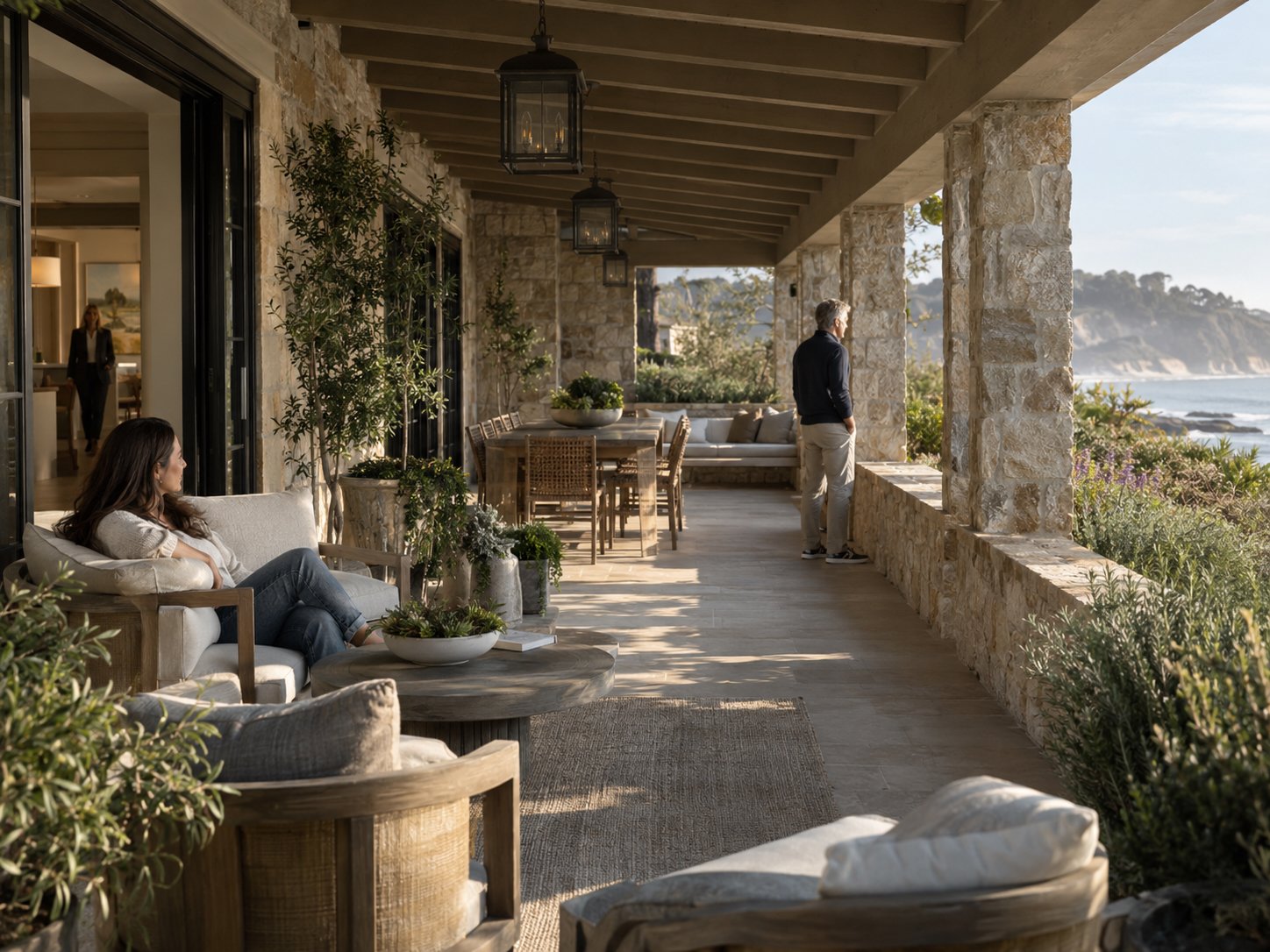
A dramatic view can become less effective when every wall is glass and the interior lacks hierarchy.
Premium design often edits the view.
Some openings may be expansive. Others may frame one portion of the coastline or landscape.
The result can make movement through the home more interesting.
A buyer may first see water through a narrow opening, then reach a principal living area where the horizon becomes fully visible. A bedroom may emphasize privacy with a more controlled view, while a terrace provides the broadest outlook.
The experience becomes architectural rather than merely scenic.
Natural Light Should Change Through the Day
Premium coastal properties often feel different at different hours.
Morning light may enter one side of the home, while softer afternoon light reaches another.
Architectural depth, overhangs, orientation, window placement, and interior materials all affect how those shifts are experienced.
This matters because bright does not always mean better.
Constant direct exposure can create glare and heat. A well-designed coastal home may balance broad views with controlled openings, filtered light, shaded glass, or protected interior zones.
The objective is a house that responds to changing conditions.
When light evolves naturally through the day, the property tends to feel connected to the coastline rather than sealed away from it.
Landscape Should Connect the Architecture to the Coastal Environment
Landscaping can make a coastal property feel either integrated or disconnected.
Premium landscape design usually relates directly to climate, architecture, privacy, and site conditions.
Native and climate-appropriate planting can soften walls, define outdoor rooms, screen neighboring properties, and direct attention toward stronger views.
Mature landscape can also provide something new construction often lacks: time.
Established trees, layered vegetation, and carefully developed planting can create depth that cannot be installed overnight.
Public coastal parks and recreation areas throughout San Luis Obispo County also demonstrate how varied the county's coastal landscape can be, from dunes and bluffs to sheltered coves and wooded areas.
A premium residence feels connected to its specific landscape rather than using the same planting vocabulary everywhere.
Sound Can Influence the Coastal Experience
Coastal real estate is not experienced visually alone.
Sound matters.
Surf, wind, nearby roads, public activity, mechanical equipment, and neighboring properties can all influence how a home feels.
A premium property often manages unwanted sound while preserving the desirable parts of the setting.
That could involve building orientation, glazing, walls, landscape, setbacks, or strategic placement of bedrooms and outdoor spaces.
A buyer may appreciate hearing distant surf from a terrace while expecting the primary bedroom to remain quieter at night.
These distinctions rarely appear in listing specifications, yet they can significantly shape the impression of quality during an extended visit.
Supporting Spaces Should Match the Standard of the Main Rooms
Premium coastal properties can lose their sense of refinement when quality drops sharply outside formal spaces.
Mudrooms, garages, laundry areas, storage, utility zones, guest bathrooms, and exterior transitions still matter.
These spaces do not need the same finishes as a primary living room.
They should, however, feel intentional.
Beach equipment may require practical storage. Outdoor showers can be useful in certain locations. Garages may need room for bicycles, boards, or recreational equipment in addition to vehicles.
A coastal home feels more complete when the practical side of the lifestyle has been considered rather than hidden behind impressive primary rooms.
Premium Does Not Require Maximum Size
Large coastal homes can be exceptional, but size alone does not create refinement.
A smaller residence can feel substantially more premium when its proportions, light, privacy, setting, and architecture are stronger.
This distinction is important in coastal communities where lots may be constrained and location carries significant value.
Efficient use of space can actually strengthen the experience.
Fewer but better rooms may allow more of the home to connect with outdoor areas or views. Thoughtful storage can reduce visual clutter. Carefully scaled ceilings and openings can create architectural presence without excessive square footage.
Premium coastal living is often about the quality of each experience rather than the quantity of space.
The Best Coastal Properties Feel Specific to Their Site
A premium coastal home should be difficult to imagine somewhere else.
The architecture, orientation, landscape, outdoor areas, materials, privacy, and views should feel connected to that exact parcel.
This is one reason copying luxury features from another market does not automatically produce the same result.
A design appropriate for an exposed bluff may not work on a sheltered wooded site. A large open terrace that performs beautifully in one microclimate may be uncomfortable only a few miles away.
Site-specific thinking creates authenticity.
The home feels premium because it belongs where it was built.
Restraint Often Makes Coastal Luxury More Convincing
Premium coastal real estate can become less persuasive when too many features compete for attention.
Oversized decorative elements, excessive material changes, dramatic lighting everywhere, or numerous competing focal points can dilute the setting.
Restraint allows the strongest attributes to remain visible.
A beautifully framed view does not need an elaborate wall beside it.
Exceptional stone may be more powerful when repeated consistently rather than mixed with several other statement materials.
A sophisticated coastal property gives important features room to register.
That restraint can make both architecture and setting feel more valuable.
Premium Coastal Properties Create a Consistent Experience
The strongest coastal homes do not rely on one dramatic moment.
They maintain a level of quality as buyers move through the property.
Arrival feels intentional. Primary rooms receive appropriate light. Outdoor spaces work with the climate. Privacy feels considered. Materials are consistent. Views appear where they matter. Supporting spaces function properly.
With more than $1.81 billion in career sales volume, Joesef has seen that memorable properties often share this consistency. Buyers may initially mention the view or architecture, but their strongest response frequently comes from how naturally the entire property works together.
That is what makes a coastal property feel premium.
It is not simply the presence of luxury features. It is the experience created when architecture, site, privacy, materials, light, landscape, and everyday function reinforce one another.
Frequently Asked Questions
What makes a coastal home feel premium?
A premium coastal home usually combines site orientation, privacy, architecture, natural light, material quality, usable outdoor areas, landscape, and views in a way that feels intentional and specific to the property.
Does a coastal property need an ocean view to feel premium?
No. Privacy, architectural quality, sheltered outdoor space, mature landscape, location, natural light, and thoughtful site design can create a premium experience without a dramatic ocean panorama.
Is a larger coastal home automatically more valuable?
Not necessarily. Size is only one factor. A smaller home with exceptional site orientation, architecture, privacy, views, and usable outdoor space may feel more refined than a substantially larger property.
Why is outdoor orientation important near the coast?
Wind, sunlight, temperature, privacy, and exposure can vary considerably. A well-oriented outdoor area can remain comfortable during more of the day and become a true extension of the home.
How important is privacy in coastal luxury real estate?
Privacy can be especially important where desirable coastal locations place homes relatively close together. Architecture, landscaping, topography, walls, and window placement can all affect the level of separation.
Do high-end coastal buyers care about practical spaces?
Yes. Garages, storage, laundry areas, utility zones, equipment storage, and transitions between indoors and outdoors can significantly affect how comfortably the property functions.
What role does architecture play in a premium coastal home?
Architecture determines how the home responds to the site, frames views, controls light, creates privacy, protects outdoor spaces, and connects interior living with the surrounding environment.
Can an older coastal home still feel premium?
Yes. Strong architecture, exceptional land, privacy, mature landscaping, thoughtful proportions, quality materials, and an unusual relationship to the setting can remain compelling regardless of the home's age.
If you are preparing to buy or sell real estate on the Central Coast and want personalized guidance, contact Joesef Jackson at SLO Life Realty Group.