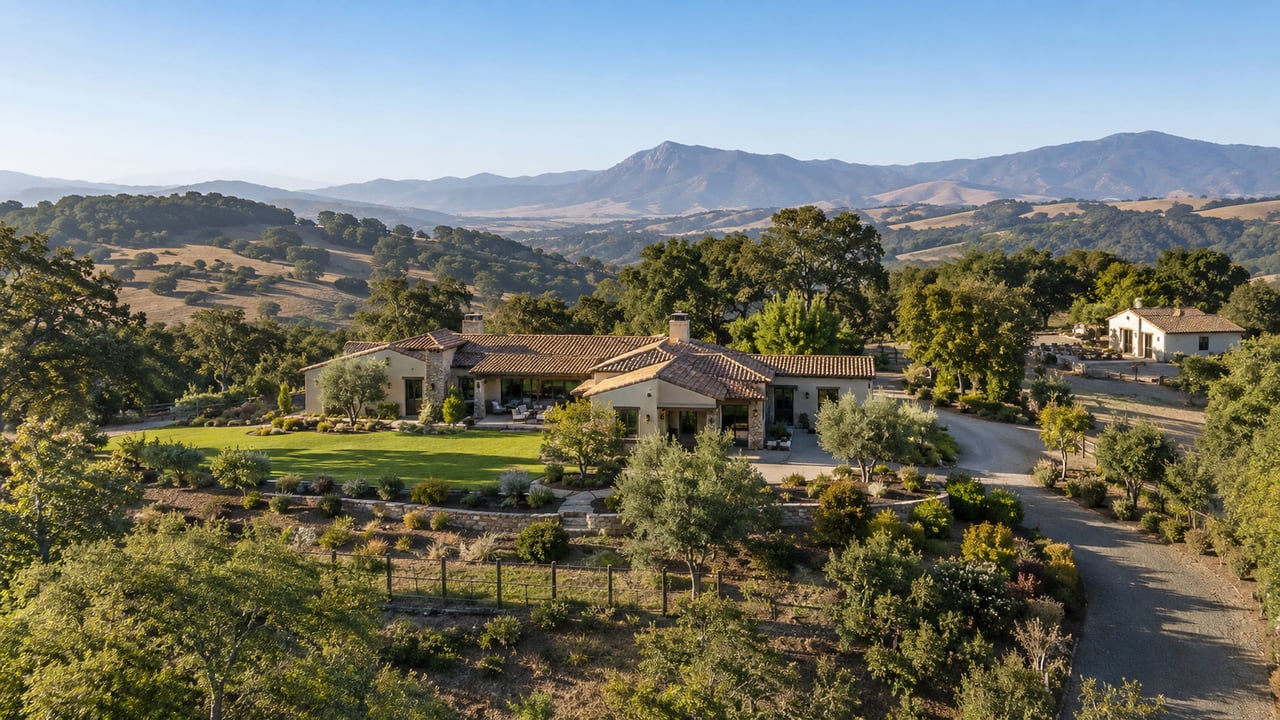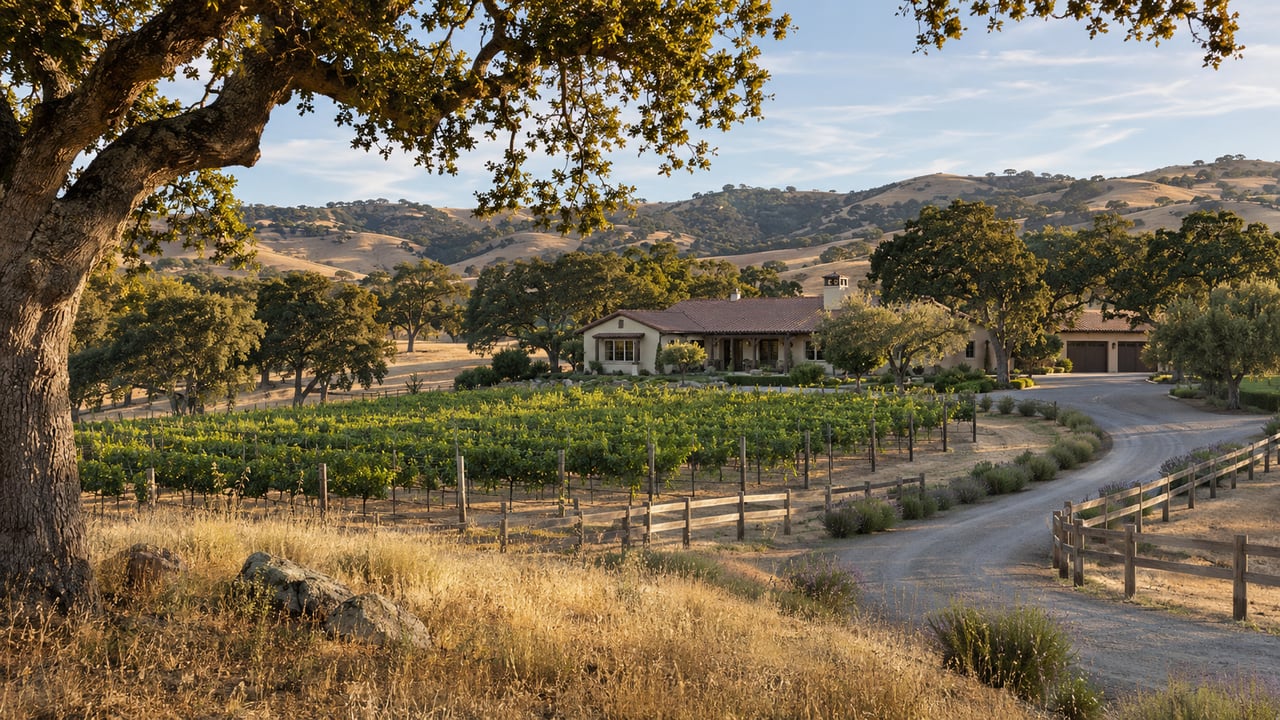
Wine country estate value depends on more than acreage, architecture, or proximity to vineyards. The strongest properties combine desirable residential living with usable land, dependable infrastructure, privacy, and features that buyers can reasonably maintain and enjoy. A large parcel may create visual appeal without offering meaningful agricultural or recreational utility. Conversely, a smaller estate with reliable water, well-designed improvements, and functional outdoor spaces may compete favorably against properties with substantially more land.
Across San Luis Obispo County, wine country estates vary considerably. Paso Robles properties may offer established vineyards, expansive agricultural parcels, or elevated homesites, while Templeton estates can combine rural privacy with convenient access to services. In the Adelaida District, terrain and vineyard surroundings may influence how buyers evaluate setting and usability. Properties near Santa Margarita, Creston, and Edna Valley introduce different combinations of agricultural potential, transportation access, climate, and residential character. These differences make local property-specific analysis essential when evaluating value.
The central question is which estate characteristics create advantages that qualified buyers recognize and are willing to pay for. Joesef Jackson of SLO Life Realty Group evaluates wine country real estate through the relationship among land functionality, improvements, location, ownership obligations, and market demand. Understanding these components helps sellers establish defensible pricing and allows buyers to distinguish lasting property advantages from attractive features that may not produce equivalent market value.
Central Coast Neighborhood Video Tour ⬇️
Understand How Buyers Evaluate the Complete Estate
👉 How Estate-Style Homes Are Evaluated on the Central Coast
Wine country estates are generally valued through the combined contribution of the residence, land, improvements, setting, and legally permitted uses. Buyers evaluate whether those components work together to create an ownership experience that would be difficult to replicate through competing properties.
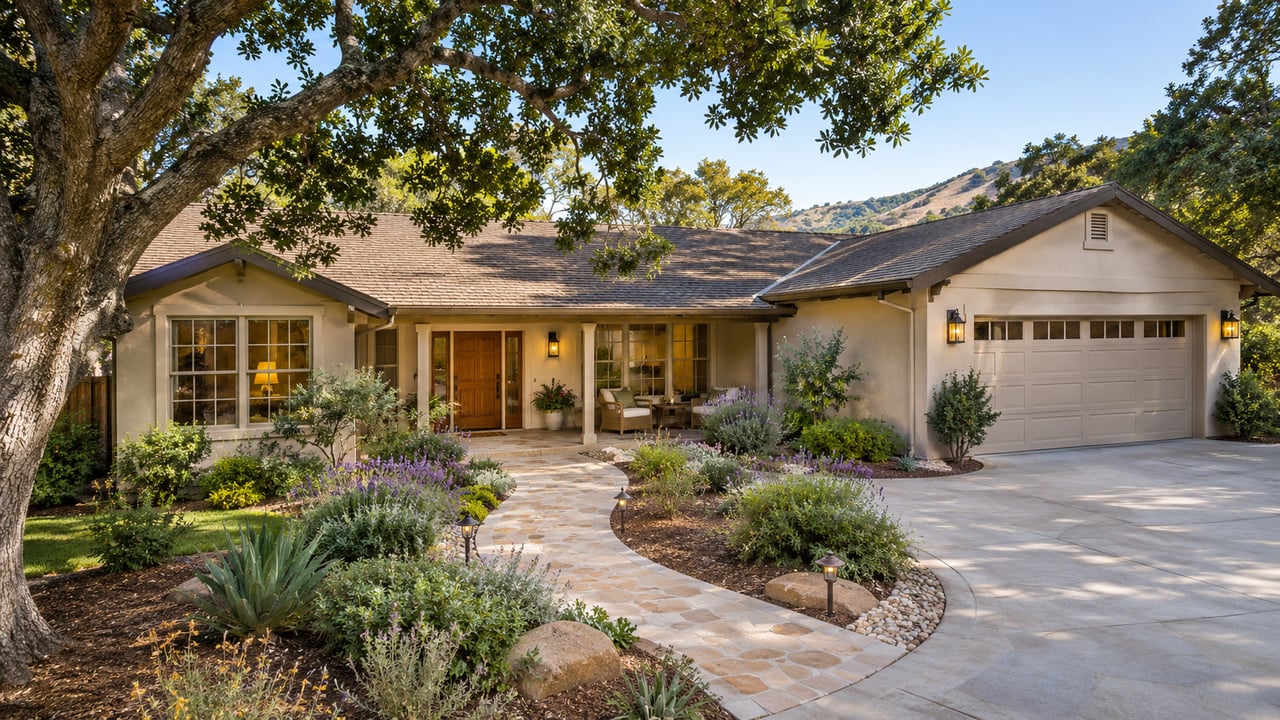
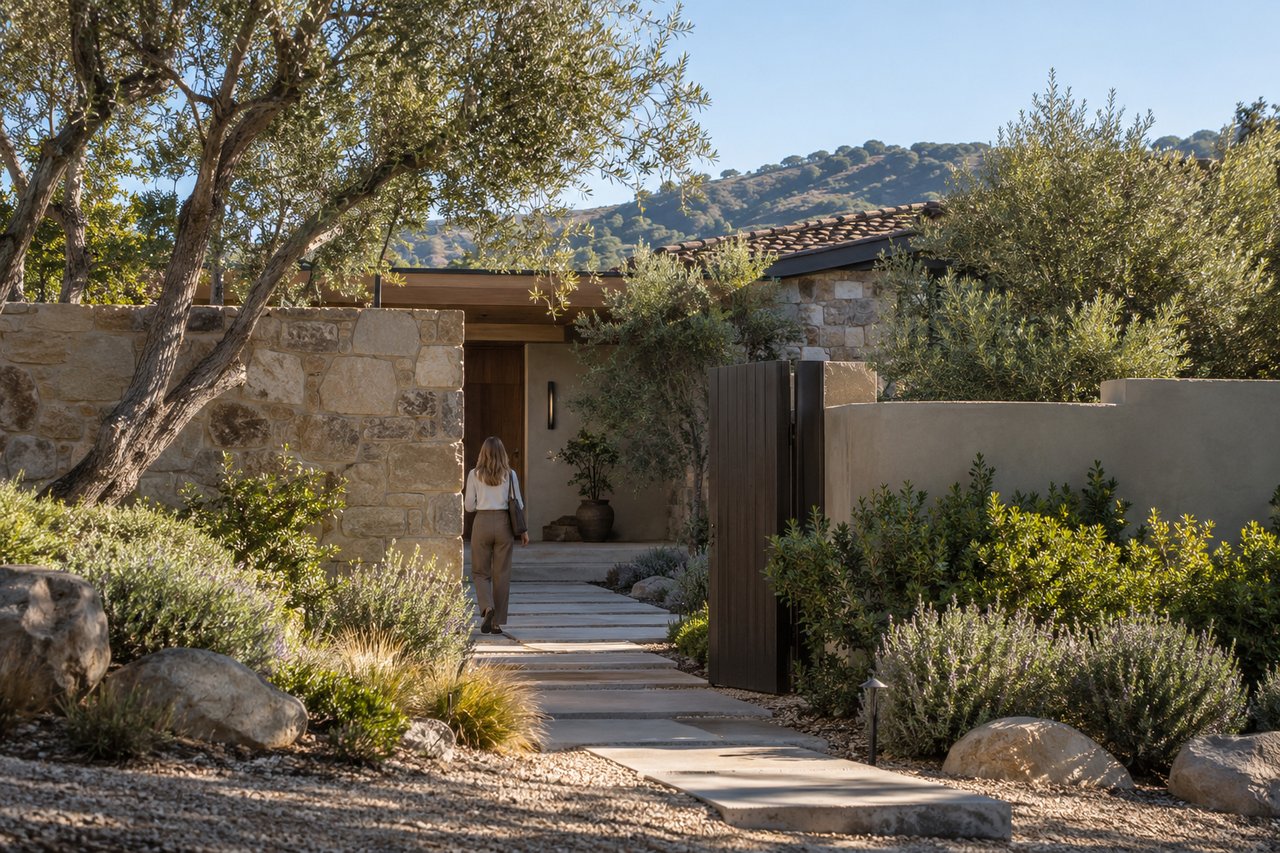
A residence surrounded by acreage does not automatically function as a premium estate. The relationship between the home and the property matters. Buyers may consider how the driveway approaches the residence, whether agricultural activities interfere with residential privacy, and whether outdoor living spaces take advantage of the surrounding landscape.
In Paso Robles, two properties with comparable acreage may have very different practical characteristics. One might contain steep, difficult-to-access land, while another offers usable terrain, established improvements, and convenient circulation between the residence and outbuildings.
Buyers should examine what the property can actually support today, not simply what its acreage suggests. Sellers benefit from demonstrating those capabilities with accurate descriptions, property maps, and documented improvements.
The resulting value reflects functional utility and buyer demand, rather than the total number of acres alone.
Determine Whether Views Create a Meaningful Premium
👉 How to Market Distinctive Properties in San Luis Obispo County
Wine country views contribute to estate value when they improve the residential experience, offer meaningful visual separation, and distinguish the property from realistic alternatives. Not every vineyard view produces the same premium.
Consider the difference between a residence overlooking distant agricultural fields and one with uninterrupted vineyard vistas from its primary living spaces. View direction, foreground conditions, seasonal changes, and the relationship between indoor and outdoor areas can influence buyer preferences.
Properties in the Adelaida District may feature elevated terrain and expansive rural settings, while certain Edna Valley estates offer views across agricultural land with a different landscape character. Neither setting should receive an automatic premium without examining comparable transactions and buyer preferences.
View durability also matters. Buyers should investigate neighboring parcels, applicable land-use restrictions, and whether future lawful changes could affect important sightlines.
The practical question is whether the view creates an identifiable advantage that competing properties cannot easily provide. A strong visual setting supports value most convincingly when buyers can enjoy it from frequently used spaces without sacrificing accessibility or everyday function.
Separate Luxury Improvements From Lasting Estate Value
👉 What Defines Luxury Real Estate in San Luis Obispo County
Luxury finishes do not necessarily create dollar-for-dollar value in wine country estates. Their contribution depends on quality, condition, functional relevance, and whether buyers in the property's market segment consider them desirable.
A custom residence may feature premium materials, expansive entertaining spaces, guest accommodations, or specialized recreational improvements. Buyers will evaluate whether those features complement the land and support their intended use.
An elaborate structure with limited practical purpose may appeal to fewer purchasers than a well-maintained guest residence or flexible building with appropriate approvals. Buyers may also discount improvements that require substantial upkeep or cannot be used as represented.
Joesef Jackson's 30-plus years of Central Coast real estate experience inform the distinction between impressive property features and improvements that strengthen competitive market positioning.
When evaluating estate improvements, sellers should separate original construction costs from current buyer-supported value. Buyers should verify permits, physical condition, maintenance requirements, and any restrictions affecting intended uses.
The objective is to identify improvements that create durable advantages rather than assuming expensive construction automatically produces a proportional resale premium.
Evaluate the Depth of Demand for Distinctive Estates
👉 What Makes a Property High-Demand on the Central Coast
Demand for wine country estates depends on the number of qualified buyers seeking the property's particular combination of price, location, land, and lifestyle. Attractive features alone do not establish a deep buyer pool.
A property with extensive vineyard operations may appeal to buyers who understand agricultural ownership. Another with modest acreage, a comfortable residence, and minimal operating responsibilities may attract buyers seeking rural lifestyle benefits without commercial obligations.
These buyer groups can overlap, but their expectations differ.
Market analysis should examine comparable active listings, pending transactions, closed sales, marketing periods, and differences in property utility. Highly distinctive estates may require broader geographic comparisons because nearby sales do not always provide appropriate evidence.
A seller should also consider whether financing, unusual improvements, or specialized operating requirements could narrow the pool of prospective purchasers.
Strong demand exists when buyers have a clear reason to favor the estate over available alternatives. Understanding that reason is more useful than relying on broad assumptions about luxury real estate popularity.
Understand What High-Net-Worth Buyers Value
👉 What High-Net-Worth Buyers Consider in San Luis Obispo County
High-net-worth buyers may prioritize privacy, property quality, ownership flexibility, and the ability to use an estate without excessive complexity. However, financial capacity does not eliminate sensitivity to maintenance costs, legal limitations, or difficult resale conditions.
For some buyers, a Templeton estate offering convenient regional access and substantial separation from neighboring homes may be preferable to a more remote property with additional acreage.
Others may prioritize vineyard production, equestrian facilities, entertaining capacity, or accommodations for extended family.
The value of these characteristics depends on how well the property satisfies a specific ownership objective.
Buyers often examine whether infrastructure and improvements are properly documented, whether the setting supports privacy, and whether ongoing responsibilities are manageable.
Sellers should identify the property's strongest legitimate advantages without assuming every luxury buyer values the same amenities.
The more specialized the estate, the more important it becomes to understand the appropriate buyer pool before making pricing and marketing decisions.
Present Agricultural and Residential Value Clearly
👉 How Luxury Home Presentation Affects Value on the Central Coast
Wine country estate marketing should distinguish the residential property from any agricultural operation. That distinction helps buyers understand which features contribute to lifestyle enjoyment and which carry separate financial or operational implications.
An established vineyard may offer productive potential, landscape character, or both. However, planted acreage does not automatically establish profitable operations or an equivalent increase in residential market value.
Documentation may include vineyard acreage, varietals, vine age, irrigation systems, production history, operating expenses, and existing agricultural agreements where applicable.
Property presentation should explain the residence and outdoor living areas separately from agricultural improvements, while also showing how they function together.
For sellers, the appropriate SLO Life Realty Group luxury real estate representation strategy should emphasize verified property advantages rather than unsupported claims about vineyard profitability or future development.
Accurate presentation allows prospective buyers to evaluate both the estate lifestyle and the responsibilities associated with agricultural ownership.
Evaluate Water Reliability and Agricultural Infrastructure
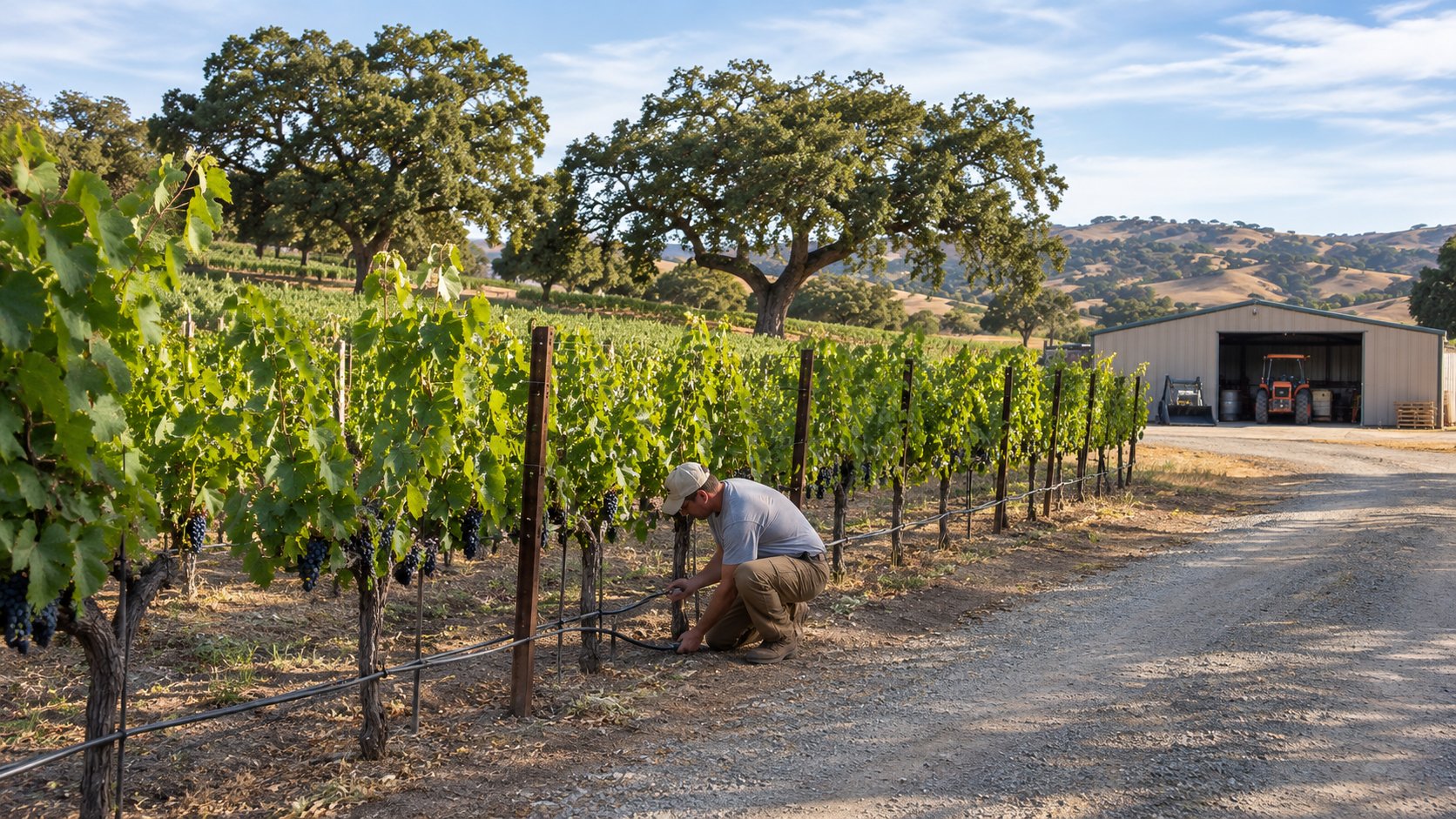
Water availability can materially influence wine country estate value because residential and agricultural uses may depend on different infrastructure, supply needs, and regulatory conditions.
Buyers should evaluate well records, recent production testing where appropriate, water quality, storage capacity, irrigation systems, and documented water-use arrangements. A functioning well does not by itself establish that supply will satisfy every proposed future use.
In portions of northern San Luis Obispo County, groundwater management considerations make parcel-specific investigation especially important.
The California Department of Water Resources drinking water well resources provide information about groundwater conditions, well records, and management resources.
Infrastructure evaluation should also include road access, drainage, electrical service, septic systems, fencing, and maintenance obligations.
A vineyard estate with reliable documented infrastructure may provide greater practical utility than a visually appealing property requiring substantial upgrades.
For sellers, supporting records can help buyers distinguish established capabilities from assumptions. For buyers, professional investigation is essential before assigning value to agricultural potential.
Examine Land Usability, Access, and Legal Restrictions
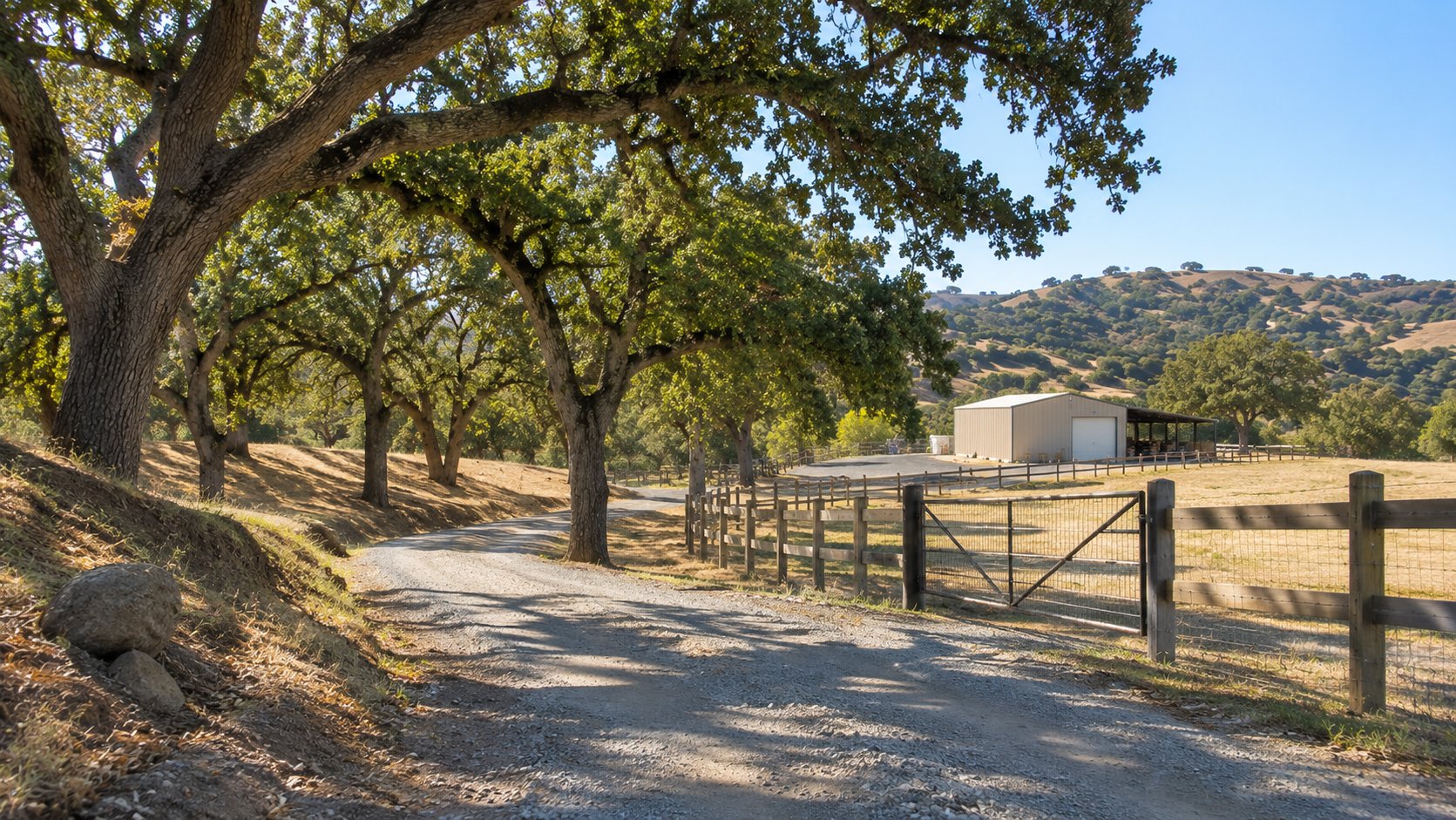
The value of wine country acreage depends on what the land can legally and practically accommodate. Parcel size alone cannot establish suitable building locations, agricultural capacity, or development flexibility.
Topography, soil characteristics, access, drainage, easements, and environmental constraints can affect how land is used.
A Creston property with usable open terrain may offer different possibilities from a hillside parcel near Santa Margarita, even when total acreage is similar.
Zoning and existing approvals require separate verification. The County of San Luis Obispo guide to zoning and property information explains how property owners can investigate land-use categories, allowable uses, and permitting requirements.
Agricultural conservation contracts may also affect permitted activities and future property decisions.
Joesef Jackson's property-specific approach to estate representation emphasizes distinguishing documented utility from speculative possibilities.
The strongest value analysis considers existing lawful uses, realistic physical capabilities, and the costs associated with maintaining them.
Measure Privacy Against Accessibility and Maintenance
Privacy contributes to wine country estate value when it improves daily enjoyment without introducing disproportionate ownership burdens.
Landscaping, topography, distance between residences, and thoughtful building placement can create privacy. Yet substantial separation may also mean longer driveways, greater maintenance responsibilities, and reduced convenience.
Buyers should evaluate travel routes, emergency access, driveway condition, service availability, and the amount of land requiring regular attention.
For an estate outside Paso Robles, proximity to shopping, medical services, and regional transportation may influence buyer preferences differently than it would for a property intended primarily as a seasonal retreat.
The most desirable balance depends on the intended ownership pattern.
A property offering meaningful privacy with reliable access and manageable upkeep may appeal to a broader group of buyers than an unusually secluded estate with complex operating needs.
Privacy should therefore be evaluated as part of the property's total functionality rather than as an isolated luxury feature.
Compare Value Through Realistic Ownership Scenarios
Wine country estates should be compared according to the ownership experience they provide, not simply their asking prices or architectural appearance.
One property may offer established vines and substantial agricultural infrastructure. Another may provide greater residential convenience with fewer operating responsibilities.
The appropriate comparison identifies the intended owner's priorities and then evaluates the cost, utility, and risks of meeting them.
Ownership expenses can include irrigation, vineyard management, fencing, insurance, private road maintenance, equipment, and specialized systems.
Agricultural income, where applicable, should be evaluated separately from residential enjoyment and supported by reliable operating information.
Buyers should also consider resale flexibility. A highly specialized estate may appeal strongly to a narrow audience while requiring more selective future marketing.
Sellers benefit from understanding which advantages support their asking price and which features introduce additional buyer questions.
A credible valuation connects documented property characteristics with actual market evidence and a realistic assessment of ownership obligations.
Frequently Asked Questions
Does having a vineyard automatically increase estate value?
No. Vineyard acreage may contribute value through agricultural production, landscape appeal, or lifestyle enjoyment, but its financial contribution depends on condition, infrastructure, operating requirements, and buyer demand. Productive potential should be evaluated with supporting records rather than assumed from the presence of vines.
Are larger wine country estates always worth more?
Not necessarily. Usable acreage, location, access, water availability, and improvements may matter more than total parcel size. Additional acreage that is difficult to access or maintain may contribute less value than buyers initially expect.
How important are water rights when buying a wine country estate?
Water availability, applicable rights, and infrastructure can be critical. Buyers should investigate the specific property's water sources, documented arrangements, regulatory conditions, and intended uses with qualified professionals before making assumptions about future supply.
Do guest houses add value to wine country properties?
Guest accommodations can add value when they are legally established, functional, well maintained, and desirable to the likely buyer pool. Their contribution depends on approved use, condition, privacy, and operating costs rather than bedroom capacity alone.
Can an estate without a working vineyard still be considered valuable wine country real estate?
Yes. Buyers may value rural scenery, privacy, architecture, outdoor living, and proximity to established wine regions without wanting vineyard operations. The property's market position should reflect its residential advantages rather than imply agricultural capabilities it does not have.
What makes a Paso Robles wine country estate different from an Edna Valley property?
Differences may include climate, terrain, agricultural setting, access, surrounding development, and buyer preferences. Individual properties should be evaluated through their actual characteristics rather than generalized assumptions about either location.
Do agricultural restrictions affect wine country estate resale value?
They can. Conservation contracts, easements, zoning rules, and other restrictions may limit certain uses or development possibilities. Some buyers may value preserved agricultural character, while others prioritize flexibility. The specific recorded restrictions require review.
How should sellers determine an asking price for a unique wine country estate?
Pricing should combine relevant closed sales, active competition, property condition, land utility, infrastructure, documented improvements, and current buyer demand. When directly comparable sales are limited, differences must be analyzed carefully rather than assigning unsupported premiums to unusual features.
Understanding What Creates Enduring Wine Country Estate Value
The most defensible wine country estate values arise when desirable residential characteristics are supported by functional land, reliable infrastructure, appropriate improvements, and realistic market demand.
Buyers should distinguish features that improve their intended ownership experience from those that create ongoing financial or operational responsibilities. Sellers should make the same distinction when establishing pricing and explaining the property's competitive advantages.
A practical evaluation considers what the estate offers today, what its documented conditions permit, and how its characteristics compare with alternatives available to qualified purchasers. This approach provides a more reliable basis for assessing value than acreage, construction expense, or scenic appeal alone.
If you are preparing to buy or sell real estate on the Central Coast and want personalized guidance, contact Joesef Jackson at SLO Life Realty Group.