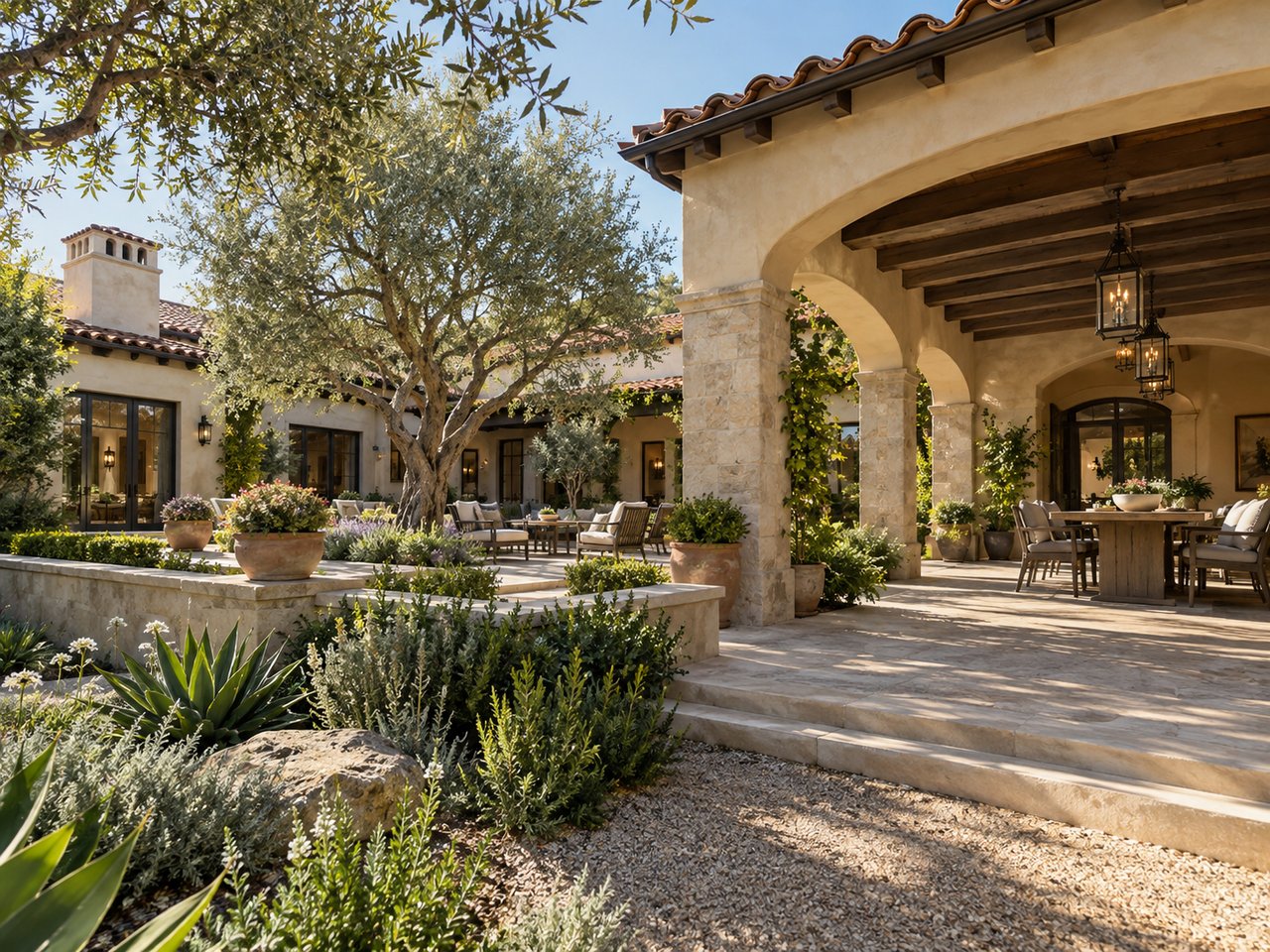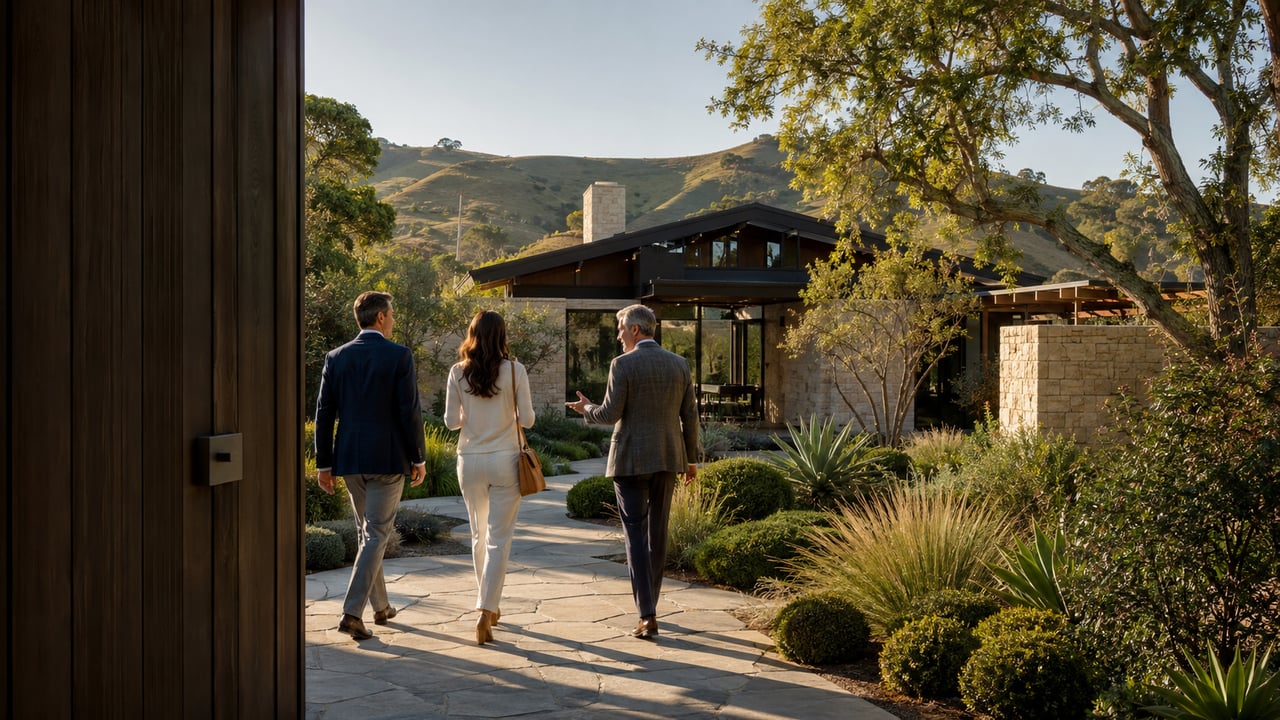
Luxury real estate in San Luis Obispo County is not defined by a single price threshold. Price establishes where a property sits within the market, but genuine luxury is usually created by a combination of scarcity, setting, architecture, privacy, craftsmanship, land, views, and features that cannot be easily duplicated.
That distinction matters on the Central Coast because luxury takes different forms from one community to another. An ocean-view residence in Shell Beach may derive much of its value from coastline proximity and an irreplaceable setting. A private estate near Paso Robles may be defined by acreage, vineyard surroundings, architectural presence, and separation from neighboring properties. In San Luis Obispo, luxury may come from a rare combination of location, design, lot size, and proximity to downtown while still preserving privacy.
Luxury buyers generally compare properties differently from buyers making a conventional housing decision. They often have more discretion over whether to purchase at all, more alternatives across markets, and a greater willingness to wait for a property that delivers something genuinely difficult to reproduce.
For that reason, the strongest luxury properties do not simply contain expensive materials. They combine qualities that remain distinctive when buyers compare them against other premium opportunities throughout San Luis Obispo County and beyond.
Central Coast Neighborhood Video Tour ⬇️
Luxury Begins With Qualities That Are Difficult to Reproduce
A luxury home's strongest advantage is often scarcity.
👉 How Luxury Buyers Evaluate Homes in San Luis Obispo County
Scarcity can come from an oceanfront position, unobstructed view corridor, unusually large parcel, architectural pedigree, exceptional privacy, direct access to recreation, or a location where very few comparable properties exist.
A beautifully remodeled home can be impressive, but finishes can often be recreated elsewhere. A particular bluff-top setting in Avila Beach, a rare estate parcel outside Templeton, or an exceptional downtown-adjacent property in San Luis Obispo may be much more difficult to duplicate.
Luxury buyers frequently recognize this distinction. They may evaluate cabinetry, appliances, flooring, and fixtures carefully, but they also look at the attributes that will remain after interior styles eventually change.
In more than 30 years representing Central Coast real estate, Joesef Jackson has seen premium buyers place substantial value on features that cannot simply be added later. The land, orientation, privacy, views, architecture, and relationship to the surrounding environment often carry more enduring significance than decorative upgrades alone.
A useful definition of luxury therefore begins with rarity: what does this property provide that a buyer cannot easily find again?
Presentation Must Match the Level of the Property
Luxury property presentation is not about making a home look artificially perfect. It is about revealing why the property deserves premium consideration.
👉 What Makes a Luxury Listing Stand Out on the Central Coast
High-end buyers tend to notice inconsistencies quickly. Exceptional architecture presented with ordinary photography, a substantial estate with poorly defined outdoor spaces, or a distinctive residence marketed without explaining its important details can weaken the way the property is perceived.
Presentation should communicate scale, proportion, materials, land, views, privacy, architectural relationships, and how the home functions throughout the day. A luxury property's strongest characteristics may not be obvious from square footage or a feature list.
A Cambria residence surrounded by mature coastal landscape needs a different visual strategy from a contemporary home overlooking the ocean in Shell Beach. A Paso Robles estate may require greater emphasis on acreage, indoor-outdoor relationships, guest accommodations, or the property's connection to the surrounding wine country.
The goal is not simply to make the property appear expensive. It is to communicate the elements that make it exceptional.
Luxury Selling Strategy Depends on Identifying the Right Buyer
Luxury marketing becomes more precise as the potential buyer pool becomes more selective.
👉 How to Sell a Luxury Home in San Luis Obispo County: What Makes the Strategy Different
A conventional property may appeal broadly to households within a particular price range. A luxury property can require a buyer who values a very specific combination of architecture, lifestyle, location, land, privacy, or amenities.
That changes positioning.
An ocean-view residence may appeal to buyers prioritizing a second home or coastal lifestyle. A wine country estate may attract someone looking for separation, acreage, and entertaining capacity. A significant San Luis Obispo residence could appeal to a buyer who wants proximity to the city without giving up architectural distinction or privacy.
Joesef's experience across more than 2,130 transactions has reinforced that premium properties should not be marketed as interchangeable luxury inventory. The buyer for a private estate may not be the buyer for a contemporary coastal residence, even when the properties occupy a similar price range.
The strategy becomes stronger when the defining characteristics of the property determine the likely audience rather than assuming that every affluent purchaser values the same things.
Luxury Still Depends on Fundamentals Buyers Value Everywhere
Premium buyers may have different expectations, but many of the qualities influencing ordinary residential decisions still matter.
👉 What Buyers Look for Most in Central Coast Homes Right Now
Natural light, usable outdoor areas, comfortable circulation, privacy, storage, parking, quality construction, and an appealing relationship between interior and exterior spaces remain relevant.
Luxury changes the standard applied to those fundamentals.
A primary suite is not merely expected to be large; buyers may evaluate its privacy, outlook, proportion, material quality, and connection to outdoor space. A kitchen is not judged only by appliance brands but by how it works for daily use and entertaining. Outdoor space may need to function as an extension of the architecture rather than as leftover yard area.
This is where some expensive homes fail to feel truly luxurious. They may contain high-cost finishes while lacking proportion, cohesion, or thoughtful relationships between spaces.
Luxury is strongest when the basic functions of the home are executed exceptionally well.
Estate Properties Are Evaluated as Complete Environments
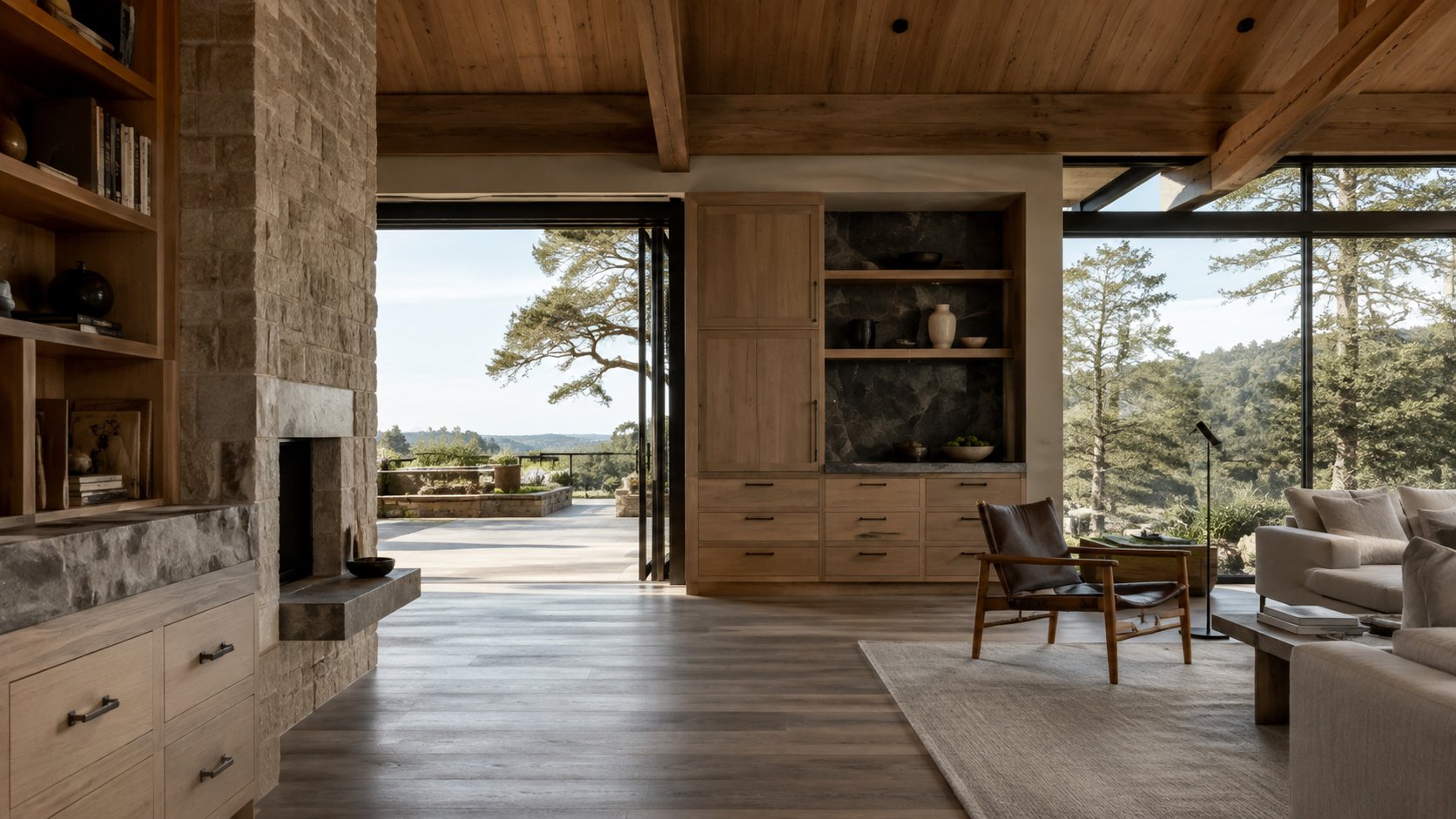
Large estate properties introduce another dimension to luxury because buyers are evaluating the entire setting, not simply the residence.
👉 How Estate-Style Homes Are Evaluated on the Central Coast
Land, entry sequence, landscape design, guest accommodations, secondary structures, privacy, views, outdoor entertaining areas, and the relationship between improvements can all influence the experience.
A Paso Robles or Templeton estate may contain substantial acreage, but acreage alone does not establish luxury. The land needs to contribute meaningfully to the property through privacy, usable open space, vineyard surroundings, equestrian potential where appropriate, exceptional views, or another distinctive advantage.
The arrival experience can matter as well. How the property reveals itself from the road, how structures are positioned, and whether outdoor spaces feel intentional can influence buyer perception before the main residence is fully explored.
Estate-style luxury is often about cohesion. The home, land, landscape, secondary structures, and setting should feel like parts of one considered property rather than separate features collected on a parcel.
High-Net-Worth Buyers Often Evaluate the Property Beyond the House
Luxury buyers frequently consider aspects of ownership that extend beyond the residence itself.
👉 What High-Net-Worth Buyers Consider in San Luis Obispo County
Privacy, access, security, guest accommodations, entertaining capacity, proximity to airports or major transportation routes, property oversight, land use, and the ability to arrive and leave efficiently can influence the decision.
For some buyers, a dramatic house near significant activity may be less desirable than a more private property with a controlled setting. Another buyer may place a premium on walking access to restaurants, beaches, or downtown amenities and willingly accept greater visibility.
The important distinction is that luxury is personal at the highest levels of the market.
A property does not become more luxurious merely by accumulating features. It becomes more relevant when its features align with the priorities of the buyer segment most likely to value them.
This is one reason premium properties require careful positioning. The features that justify the property's value need to be connected to the lifestyle and ownership experience they create.
Architecture Can Create Value That Square Footage Cannot Explain
Some luxury homes immediately feel significant even when another property offers more square footage.
Architecture can be the reason.
Proportion, ceiling height, natural light, window placement, material continuity, structural expression, connection to the landscape, and the progression from one space to another can create an experience that cannot be captured through measurements alone.
A well-designed 3,500-square-foot residence may feel more substantial than a larger home whose space lacks purpose. Premium buyers often recognize when square footage has been added without improving architectural quality.
This is particularly important with custom homes. Buyers may consider whether the design feels specific to its site or whether the same house could have been placed almost anywhere.
The strongest Central Coast architecture frequently responds to the environment—capturing views, protecting privacy, opening toward outdoor spaces, or using natural materials in ways that connect the residence to its setting.
Architectural luxury is less about size than intention.
Privacy Can Become a Premium Feature in Its Own Right
Privacy is one of the clearest examples of a characteristic that can be difficult to add after construction.
It may come from acreage, landscaping, building orientation, elevation, setbacks, gated access, or the absence of nearby development.
In luxury markets, privacy can influence how the entire property is experienced. Outdoor spaces become more usable. Large windows can remain open to views without exposing the interior. Guest areas can feel separate. Owners can entertain or relax without the property feeling visually connected to neighboring homes.
Privacy also means different things in different settings.
A large rural parcel outside Paso Robles may create physical separation through distance. A carefully designed residence in San Luis Obispo may create privacy through architecture and landscape even on a much smaller lot. A coastal home may use elevation and orientation to protect interior spaces while preserving ocean views.
The California Department of Real Estate provides consumer information concerning property transactions and disclosures that can be relevant when buyers evaluate property characteristics and ownership.
Privacy should ultimately be evaluated as a property characteristic rather than assumed from the price point or neighborhood name.
Views Matter Most When They Are Integrated Into the Property
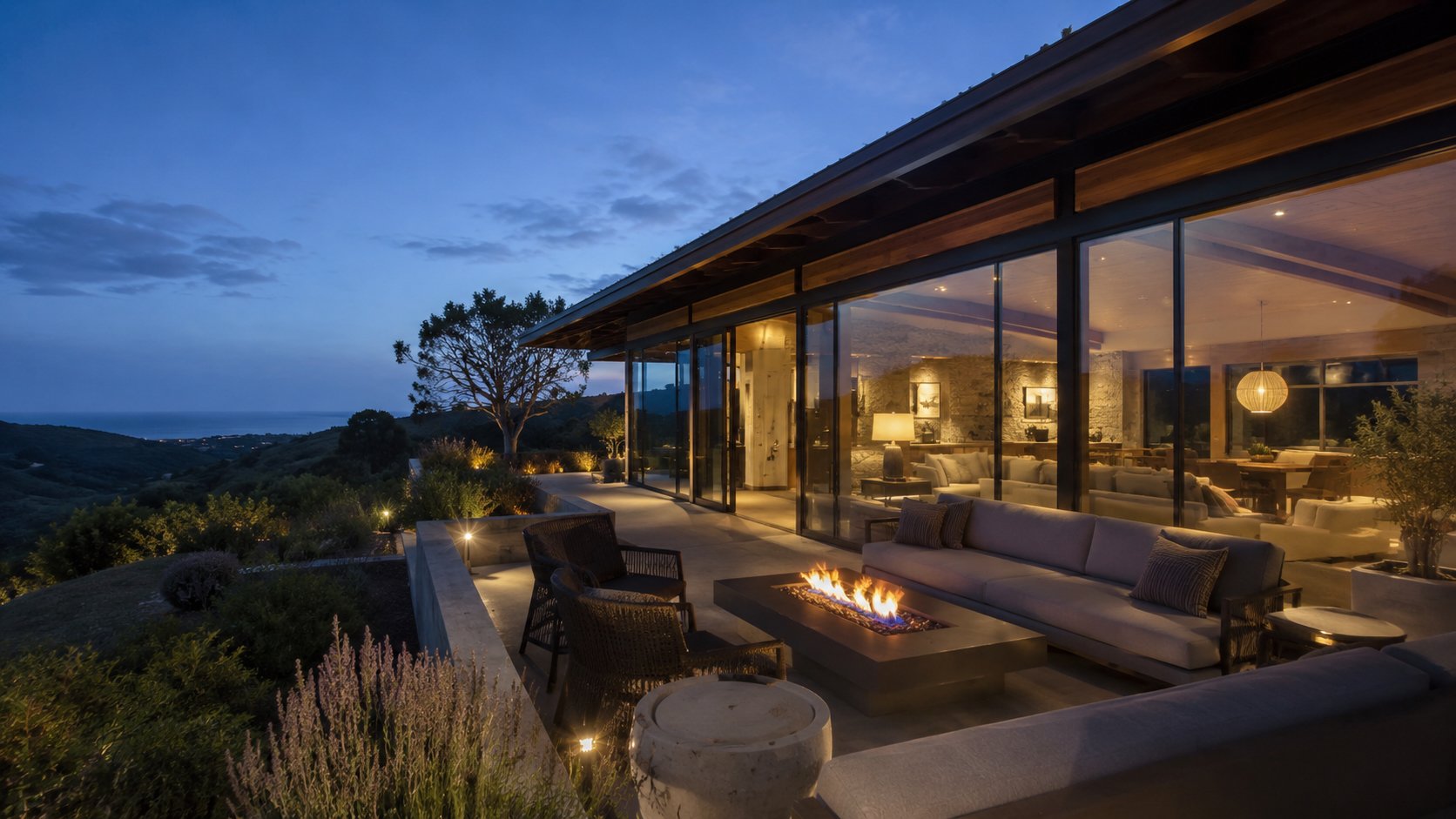
A view can create substantial value, but not every view contributes to luxury in the same way.
The quality, orientation, permanence, accessibility, and relationship between the view and the architecture all matter.
An ocean view visible only from one upstairs window is different from a residence designed around expansive coastline exposure from major living spaces. A vineyard view can be more meaningful when outdoor areas and interior rooms are positioned to experience it throughout the day.
Luxury properties often succeed when the view becomes part of the architecture rather than a separate feature.
Buyers may also consider whether landscaping, neighboring development, vegetation growth, or future land use could alter the outlook.
The San Luis Obispo County Planning and Building Department provides zoning and land-use information for property within the unincorporated county.
For a premium property, understanding the surrounding land can be particularly important when a major portion of the property's value is tied to openness, privacy, or views.
Craftsmanship Is Different From Expensive Specification
Luxury buyers can often distinguish between costly materials and exceptional execution.
A premium appliance package, stone countertop, or imported fixture may carry significant cost, but craftsmanship is reflected in how those elements are integrated into the property.
Transitions between materials, alignment of cabinetry, consistency of millwork, stone installation, doors, hardware, lighting, exterior detailing, and custom metal or wood elements can reveal the level at which the house was built.
This is especially relevant in custom construction, where buyers may expect details to remain consistent throughout the residence rather than becoming less refined away from the primary entertaining spaces.
Craftsmanship also influences how well a home ages aesthetically. Materials selected because they suit the architecture can remain relevant longer than finishes chosen primarily because they were fashionable when the home was completed.
True luxury is often visible in the details a casual visitor might never consciously identify but an experienced buyer notices immediately.
Indoor-Outdoor Living Has Particular Importance on the Central Coast
San Luis Obispo County's climate and landscape make outdoor living especially relevant to premium residential design.
Luxury outdoor space is more than a large patio.
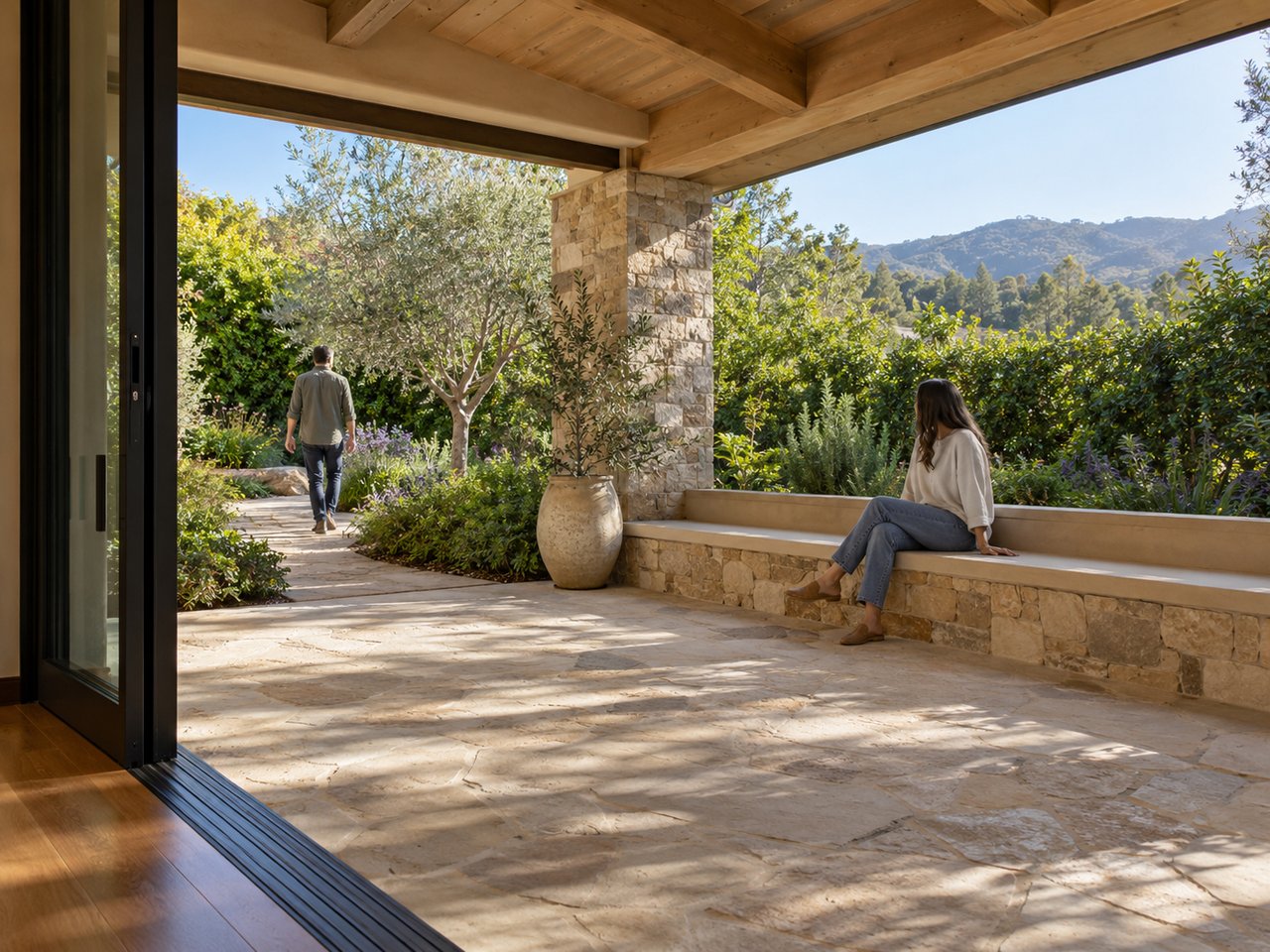
The best examples function as real extensions of the residence through protected dining areas, courtyards, terraces, fireplaces, pools, kitchens, gardens, or view-oriented seating areas positioned naturally within the architecture.
Location influences how these spaces should work.
A coastal residence may need protection from wind while preserving ocean exposure. An inland estate may benefit from shaded areas during warmer periods. Wine country properties may create several outdoor environments for different times of day.
Buyers often evaluate whether these spaces feel intentional and whether they can be used comfortably rather than simply photographed attractively.
A large outdoor area that feels disconnected from the house may contribute less to the luxury experience than a smaller space that is beautifully integrated.
Luxury Amenities Need to Strengthen the Property's Identity
Wine cellars, theaters, fitness rooms, pools, guest houses, elevators, garages, offices, spas, and outdoor kitchens can all contribute to luxury, but amenities are most valuable when they fit the property.
A wine cellar can feel natural within a Paso Robles estate. An extensive surf or recreation storage area may make sense near the coast. A sophisticated home office may be especially relevant to a buyer using the Central Coast as both residence and workplace.
Amenities become less convincing when they appear designed merely to increase a feature count.
High-end buyers may evaluate how often they would realistically use a specialized space and whether that area could adapt if their needs change.
The strongest amenities support the broader character of the property. They reinforce the reason the home is distinctive rather than competing for attention with it.
Luxury Is Also Defined by What the Property Does Not Expose
Premium value can be affected by negative characteristics just as strongly as positive ones.
Road noise, visible neighboring structures, utility infrastructure, awkward access, inconsistent surrounding properties, intrusive development, or compromised privacy can influence how buyers evaluate an otherwise impressive residence.
At conventional price points, buyers may accept more compromises because availability or affordability limits alternatives. Luxury buyers frequently have greater discretion.
That can make imperfections more significant.
A property with extraordinary architecture but substantial road exposure may appeal to a narrower buyer pool than a less dramatic residence with exceptional privacy. A spectacular view may carry less weight if the main living spaces do not capture it effectively.
Luxury is therefore partly about the absence of compromise—or at least the absence of compromises that materially interfere with the property's defining strengths.
Location Premiums Differ Across San Luis Obispo County
There is no single luxury geography on the Central Coast.
Avila Beach can command attention because of limited coastal inventory and lifestyle access. Shell Beach offers a different relationship to coastline, neighborhood character, and views. Cambria combines natural setting, architectural individuality, and coastal privacy. Paso Robles luxury may revolve around acreage, wine country surroundings, and estate-scale properties.
San Luis Obispo creates another category where premium homes may derive value from a rare combination of land, architecture, privacy, and access to the city.
These locations should not be compared by asking which is universally superior.
Luxury buyers usually select environments according to the life they want the property to support. Someone seeking walkability and restaurants may make a very different choice from a purchaser prioritizing several acres of separation.
Geographic luxury is therefore defined by scarcity within the lifestyle category the buyer values.
Price Alone Does Not Establish Luxury Positioning
A high asking price can place a home within a luxury search range, but the market ultimately determines whether the property competes successfully as a luxury asset.
Buyers compare what the price purchases.
At higher levels, those comparisons become increasingly exacting because buyers may consider properties across several communities or even different markets. A seller cannot assume that local scarcity alone eliminates competition.
The property needs to demonstrate why its combination of location, architecture, land, privacy, views, craftsmanship, and lifestyle merits its position.
Joesef's experience with more than $1.81 billion in career sales volume has shown that luxury value becomes most persuasive when the defining characteristics of the property are specific and defensible. Premium positioning is strongest when buyers can immediately understand what makes the home difficult to replace.
That is very different from simply adding luxury language to ordinary real estate marketing.
True Luxury Is the Combination Buyers Cannot Easily Duplicate
San Luis Obispo County luxury real estate ranges from coastal residences and architectural homes to wine country estates, private compounds, and distinctive city properties. They do not share one architectural style, one acreage requirement, or one minimum list of amenities.
What connects them is scarcity.
The strongest luxury homes combine several meaningful qualities—setting, privacy, architecture, land, craftsmanship, views, lifestyle, or location—in a way that would be difficult for a buyer to recreate by purchasing another available property.
That is why luxury is ultimately comparative.
A buyer is not merely deciding whether a home is beautiful or expensive. The buyer is deciding whether the property provides enough distinction that passing on it could mean waiting a long time for something comparable to become available.
In San Luis Obispo County, that scarcity is often the defining characteristic of true luxury real estate.
Frequently Asked Questions
What price qualifies as luxury real estate in San Luis Obispo County?
There is no single permanent price threshold. Luxury is relative to the local market and is better defined by scarcity, quality, location, architecture, privacy, land, and other distinguishing characteristics.
What features matter most to luxury home buyers?
Priorities vary, but architecture, privacy, views, location, craftsmanship, land, indoor-outdoor living, and distinctive amenities can all influence premium buyer decisions.
Are ocean views enough to make a property luxury real estate?
Not necessarily. The quality and permanence of the view, architecture, privacy, condition, location, and overall property experience also influence whether the home competes successfully as a luxury property.
Are Paso Robles estates considered luxury properties?
Many can be when they combine meaningful acreage, privacy, architecture, wine country setting, views, guest accommodations, or other scarce characteristics that support premium value.
Why is privacy important in luxury real estate?
Privacy can increase the usability of outdoor spaces, protect interior living areas, support entertaining, and create a level of separation that may be difficult to reproduce later.
Does square footage define a luxury home?
No. Architectural quality, proportion, setting, craftsmanship, and scarcity can make a smaller residence more compelling than a significantly larger home lacking those characteristics.
Do luxury buyers evaluate homes differently from conventional buyers?
Often, yes. Luxury buyers may have more alternatives and greater flexibility regarding timing, making the uniqueness and overall experience of the property particularly important.
What makes a Central Coast luxury property difficult to replace?
Rare location, protected views, exceptional architecture, significant land, privacy, coastal access, estate characteristics, and combinations of these qualities can make comparable alternatives difficult to find.
If you are preparing to buy or sell real estate on the Central Coast and want personalized guidance, contact Joesef Jackson at SLO Life Realty Group.