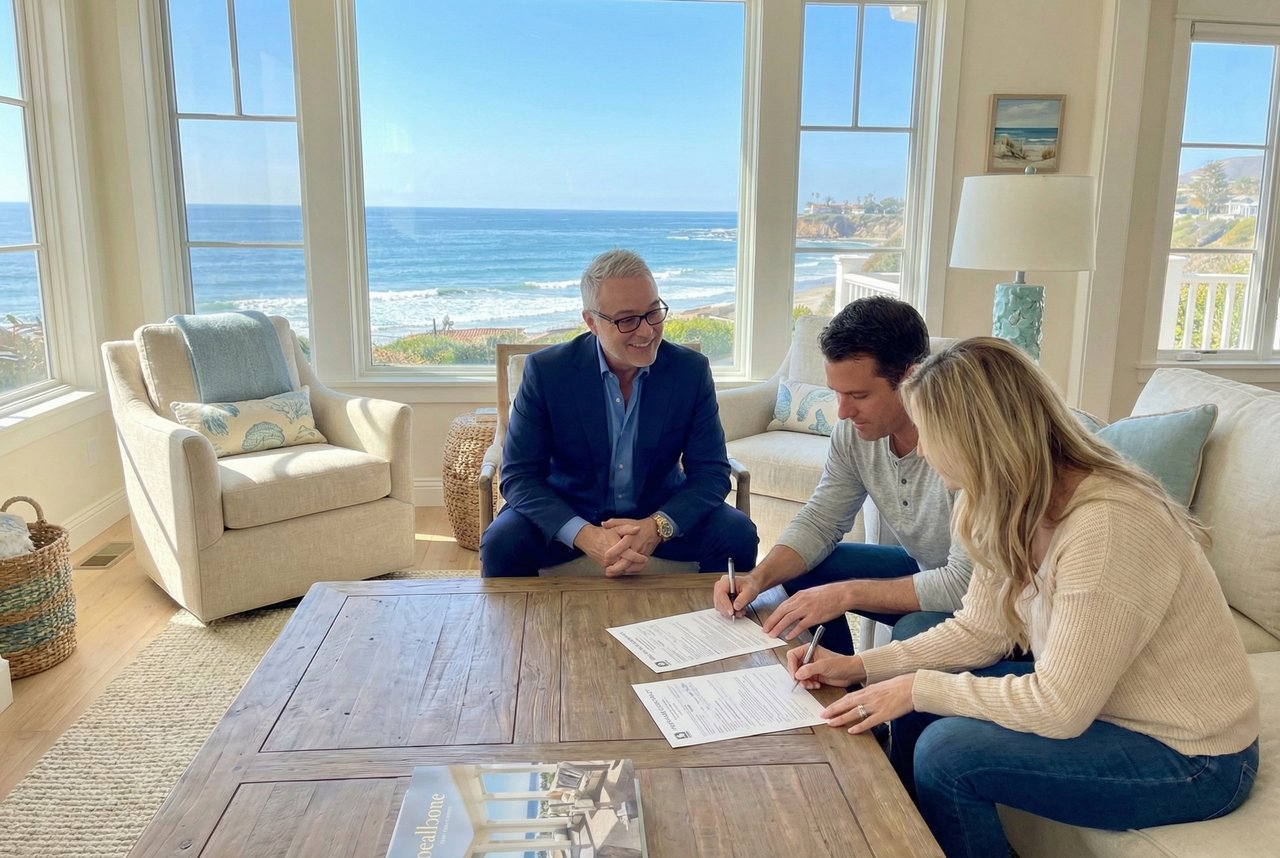
A strong listing strategy begins before a property is publicly offered for sale. It requires sellers to understand their home's competitive position, identify the buyers most likely to recognize its value, prepare the property around those buyers' expectations, and coordinate pricing, presentation, exposure, and showing access. These decisions should reinforce one another. A well-photographed home with an unsupported asking price can struggle, just as an appropriately priced property can lose attention when its presentation leaves important questions unanswered.
In San Luis Obispo County, effective listing strategies must account for meaningful differences among communities and property types. A traditional residence in San Luis Obispo competes differently from a coastal property in Morro Bay, an acreage home in Atascadero, or a wine-country residence near Paso Robles. Buyers evaluate location, condition, usable space, accessibility, ownership costs, and lifestyle suitability through different priorities. The seller's strategy should reflect the particular property's advantages and limitations rather than applying the same marketing formula to every listing.
The objective is to create a clear, defensible position that attracts qualified buyers and supports productive negotiations without relying on unnecessary price reductions or unrealistic expectations. Joesef Jackson of SLO Life Realty Group approaches listing strategy through the relationship among property characteristics, local competition, buyer decision-making, and execution. Sellers who understand those relationships can make better decisions before launch and respond more deliberately once the market begins providing feedback.
Central Coast Neighborhood Video Tour ⬇️
Evaluate Buyer Demand Before Establishing the Listing Plan
👉 How to Read Buyer Demand Before Selling on the Central Coast
A strong listing strategy starts by identifying which buyers are likely to consider the property and what alternatives those buyers can actually purchase. This is more useful than treating countywide demand as a direct prediction of an individual home's performance. Active demand must be evaluated within the property's price range, location, condition, and functional category.
For example, a well-maintained single-level residence in Arroyo Grande may appeal to downsizing households, while a larger property in Templeton with usable land may attract buyers focused on privacy, recreational uses, or additional improvements. Both properties might appear attractive in the same regional market, but their buyer pools, financing considerations, and comparison criteria can differ.
Evaluate recent comparable sales, current active inventory, pending activity, and the number of credible alternatives available. Closed sales establish historical evidence; active listings reveal present competition; pending transactions can indicate which properties have recently secured buyer commitments. None should be interpreted in isolation.
Joesef Jackson's experience representing Central Coast buyers and sellers since 1994 informs the evaluation of how property-specific demand translates into a practical listing plan. The central question is not simply whether buyers exist. It is whether enough qualified buyers can recognize the property's advantages at the proposed price.
Define the Property's Position Against Current Competition
👉 How to Position a Home Against Competing Listings in San Luis Obispo County
Competitive positioning explains why a buyer should consider one property rather than another available at a similar total cost. It combines asking price with condition, location, usable features, and the compromises buyers must accept. A listing strategy should identify the home's strongest relative advantages before choosing how to communicate them.
A seller in Pismo Beach, for instance, may compete with homes offering different combinations of ocean proximity, view quality, parking, accessibility, and renovation level. A lower asking price does not automatically make a property stronger if its limitations affect daily ownership. Conversely, an unusually functional layout or protected outdoor area can support interest even when cosmetic finishes are not the newest available.
Prepare a competitive comparison that separates measurable attributes from judgment-based preferences. Square footage, lot size, bed and bath count, and documented improvements are measurable. Privacy, natural light, circulation, and architectural appeal often require more careful interpretation.
The best pricing position is one that a qualified buyer can understand after examining real alternatives. Sellers should also identify where the property is weaker and avoid building marketing claims around features that nearby listings demonstrate more convincingly.
Build Marketing Around What Buyers Need to Understand
👉 What Listing Photos Should Communicate in San Luis Obispo County
Marketing should help buyers understand the property accurately enough to decide whether a showing is worthwhile. Photography, floor plans, descriptions, and supporting information perform different functions. Together, they should explain the home's physical configuration, practical value, and relationship to its setting.
A property with split-level living, multiple outdoor connections, or a detached flexible structure often requires a more deliberate visual sequence than a straightforward single-story residence. Buyers should be able to understand how rooms connect, where outdoor spaces begin, and which structures belong to the property without making unsupported assumptions.
The National Association of REALTORS® 2025 Profile of Home Buyers and Sellers reinforces the importance of helping consumers navigate property searches and make informed comparisons. Effective listing materials should therefore prioritize decision-useful information rather than decorative imagery alone.
For a hillside home in Cambria, an appropriate presentation might establish the arrival sequence, show the actual view orientation, explain the relationship among living levels, and disclose practical access characteristics. The strategic test is whether the marketing answers questions a serious buyer would otherwise need to resolve during the first showing.
Establish a Launch Sequence That Supports Early Momentum
👉 What Sellers Should Know About Listing Momentum in San Luis Obispo County
A listing launch should be a coordinated event, not simply the date photographs become publicly visible. Pricing approval, property readiness, accurate listing information, marketing assets, showing arrangements, and seller availability should be resolved before the property enters the active market.
Early exposure matters because newly available properties can attract attention from buyers already monitoring a particular area and price segment. However, exposure alone does not guarantee serious interest. Buyers must encounter consistent information and a property experience that supports the expectations established online.
Before launch, confirm that property measurements and feature descriptions have been checked, required marketing materials are complete, and showing instructions are workable. Determine how quickly buyer inquiries will be answered and whether access restrictions could unintentionally discourage qualified prospects.
A seller should also establish an initial review point for evaluating inquiries, scheduled tours, substantive buyer responses, and competing inventory changes. Avoid choosing a predetermined price-reduction date without considering evidence. A listing with limited exposure requires a different intervention from one receiving numerous showings but repeated objections about the same condition or value concern.
Match Property Preparation to the Intended Buyer

👉 What Sellers Should Know About Buyer Attention in San Luis Obispo County
Property preparation should focus on improvements that change how buyers evaluate condition, usability, and ownership responsibility. The goal is not to renovate everything. It is to remove avoidable distractions while preserving resources for work that genuinely affects marketability.
Start by separating maintenance concerns, presentation weaknesses, and optional enhancements. A visible leak, damaged exterior material, or poorly functioning door carries a different significance than dated but serviceable cabinetry. Buyers may accommodate an aesthetic preference more readily than uncertainty about the cost or reliability of a major component.
In Los Osos, moisture management and exterior maintenance may deserve particular attention when preparing a property. In inland communities such as Atascadero, landscaping condition, irrigation, outdoor usability, and heat-related comfort may be more relevant. These are evaluation priorities, not assumptions that any particular property has a defect.
Sellers should document significant completed improvements, assess whether additional work is economically justified, and prioritize tasks that make the property's condition understandable. Preparation becomes strategic when its cost, likely buyer impact, and completion schedule are evaluated together rather than relying on a generalized renovation checklist.
Resolve Predictable Buyer Objections Before Going Live
👉 How to Reduce Objections Before a Home Hits the Market on the Central Coast
A predictable buyer objection is a concern that can be identified from the property's visible characteristics, documentation, access arrangements, or competitive context before the first showing. Sellers cannot eliminate every objection, but they can reduce unnecessary uncertainty through preparation and accurate information.
Review known property issues, prior repairs, permits when applicable, utility arrangements, association documents, and practical access limitations. Determine which questions require supporting documentation and which need an explanation during showings. Marketing should never conceal a material limitation or replace legally required disclosures.
The California Department of Real Estate guide to disclosures in real property transactions explains important seller and agent disclosure responsibilities. Applicable requirements must be addressed independently of how attractively the property is marketed.
A home with an unusual addition, shared access, or a detached structure can be desirable while still requiring explanation. The strategy should distinguish verified facts from potential uses that depend on permits, zoning, or future approvals.
Joesef Jackson's approach to seller representation emphasizes anticipating questions before they become negotiation problems. When buyers receive accurate explanations at appropriate stages, they can evaluate the property with greater clarity and fewer avoidable misunderstandings.
Coordinate Showing Access With the Likely Buyer Pool
Showing arrangements should support qualified buyers without disregarding occupancy, privacy, or property security. A listing marketed to second-home purchasers may need reasonable accommodations for travel schedules, while a centrally located residence could receive requests from buyers who can tour with shorter notice.
Set clear expectations for advance notice, appointment windows, pets, access instructions, and occupied spaces. If certain areas cannot be viewed, decide how they will be accurately represented and when additional access can be provided. Restricted scheduling may be necessary, but sellers should understand how it could affect participation.
For distinctive properties with acreage, multiple buildings, or complex circulation, plan enough showing time for buyers to evaluate the whole property. A rushed visit can leave important advantages unnoticed.
The relevant performance measure is not the raw number of appointments. It is whether suitable buyers can examine the property thoroughly enough to make informed decisions and whether showing conditions are creating unnecessary barriers.
Establish a Feedback and Decision Process Before Launch

An effective listing strategy identifies how the seller will interpret information and which decisions that information may justify. Without a predetermined review process, individual comments can cause unnecessary adjustments while meaningful patterns go unrecognized.
Separate marketing reach from buyer engagement and engagement from purchase intent. Online viewing activity may demonstrate exposure, while requested showings indicate further consideration. Repeat tours, documentation requests, financing discussions, and written offers provide different evidence of seriousness.
If qualified buyers consistently praise a property's location but reject its asking price relative to alternatives, pricing position deserves examination. If online attention is limited despite competitive pricing, the property's imagery, distribution, or search visibility may need attention first.
Review comparable listing changes alongside feedback. A competing home's reduction, sale, or withdrawal can change the available alternatives without changing the subject property's condition.
An established decision framework helps sellers respond to evidence proportionately. It also prevents one unusual buyer comment from becoming the basis for a major strategic change.
Align Offer Evaluation With the Seller's Actual Objectives
A strong listing strategy must anticipate what happens when interest becomes an offer. Sellers should identify their priorities before negotiations begin, including proceeds, closing timing, occupancy needs, financing reliability, contingency exposure, and tolerance for transaction uncertainty.
The highest offered price is not always the strongest overall proposal. A purchase agreement with substantial unresolved conditions, an unrealistic closing schedule, or financing that does not fit the property may create risks not immediately apparent in the headline amount.
This does not mean sellers should favor particular buyer groups or make assumptions about financial reliability. Offer terms, documented qualifications, financing structure, and contractual obligations should be evaluated consistently and lawfully.
A seller planning a relocation may value predictable timing. Another seller with flexibility may reasonably emphasize net proceeds. The listing strategy should establish these priorities in advance so negotiations follow a defined objective rather than changing with each conversation.
Apply a Property-Specific Strategy Rather Than a Standard Formula
Successful listing execution depends on maintaining consistency among price, preparation, presentation, access, and negotiation priorities while adjusting to verified market information. A property can be attractive yet poorly positioned if any major element contradicts the others.
Consider two properties offered at similar prices: a newer residence in Nipomo with straightforward maintenance expectations and an older San Luis Obispo home with a distinctive location and more variable condition. Their marketing priorities, buyer questions, showing experience, and likely negotiation issues may differ considerably.
The useful approach is to determine what each property must demonstrate to justify serious consideration. Then allocate preparation resources, marketing emphasis, and seller attention accordingly.
A coordinated listing strategy should remain adaptable without becoming reactive. That distinction supports clearer decisions throughout the sale.
Frequently Asked Questions
What is the most important part of a home listing strategy?
The most important element is alignment between the property's price, competitive position, and likely buyer expectations. Preparation, photography, exposure, and showing arrangements should all support that position. Strong performance depends on the decisions working together rather than one marketing tactic compensating for weaknesses elsewhere.
How early should sellers begin planning their listing strategy?
Sellers should begin before scheduling photography or committing to a launch date. The appropriate lead time depends on repairs, documentation, occupancy, and the property's presentation needs. Starting early allows sellers to compare improvement costs with likely buyer benefits and avoid rushing consequential decisions.
Should every Central Coast home use the same marketing approach?
No. Property type, location, buyer pool, access, and condition should determine the marketing approach. A coastal view residence may require careful presentation of sightlines and outdoor relationships, while an acreage property may need clearer explanations of land usability, structures, and access.
Can a strong marketing strategy compensate for an overpriced home?
Marketing can increase exposure and improve understanding, but it cannot reliably overcome a price that buyers cannot justify against competing properties. The better approach is to coordinate competitive pricing with accurate presentation and review buyer response for evidence of misalignment.
How can sellers tell whether their listing strategy is working?
Evaluate qualified inquiries, meaningful showings, repeat interest, buyer questions, offers, and competing inventory. These signals should be reviewed together. High visibility with limited engagement may indicate a different problem than substantial showing activity followed by consistent objections.
Is professional photography enough to create buyer interest?
Photography is important, but it should be supported by accurate descriptions, appropriate pricing, useful property details, and an effective showing experience. Floor plans or other visual materials may be especially valuable when the home's layout or land relationship is difficult to understand.
Should sellers complete inspections before listing their home?
Pre-listing inspections can be useful when potential condition questions might affect marketing, pricing, or negotiation. They are not automatically necessary for every property. Sellers should discuss the scope, cost, timing, and disclosure implications with qualified professionals before deciding.
When should sellers change their listing strategy?
Changes should follow meaningful evidence rather than an arbitrary number of days. Repeated buyer concerns, insufficient qualified engagement, new competing inventory, or changed seller priorities can justify a review. The response should address the specific source of underperformance rather than automatically reducing the asking price.
Turning Listing Strategy Into a Practical Selling Decision
The strongest listing strategy is one that establishes a defensible market position before launch and defines how that position will be tested afterward. Sellers should understand which buyers the property is meant to attract, which advantages distinguish it, which limitations require explanation, and what evidence would justify changing course.
The final decision is not whether to spend more on marketing or choose a more ambitious asking price. It is whether every element of the sale supports the same credible proposition about the property's value. That principle gives sellers a clearer basis for preparation, exposure, negotiation, and adjustment throughout the transaction.
If you are preparing to buy or sell real estate on the Central Coast and want personalized guidance, contact Joesef Jackson at SLO Life Realty Group.