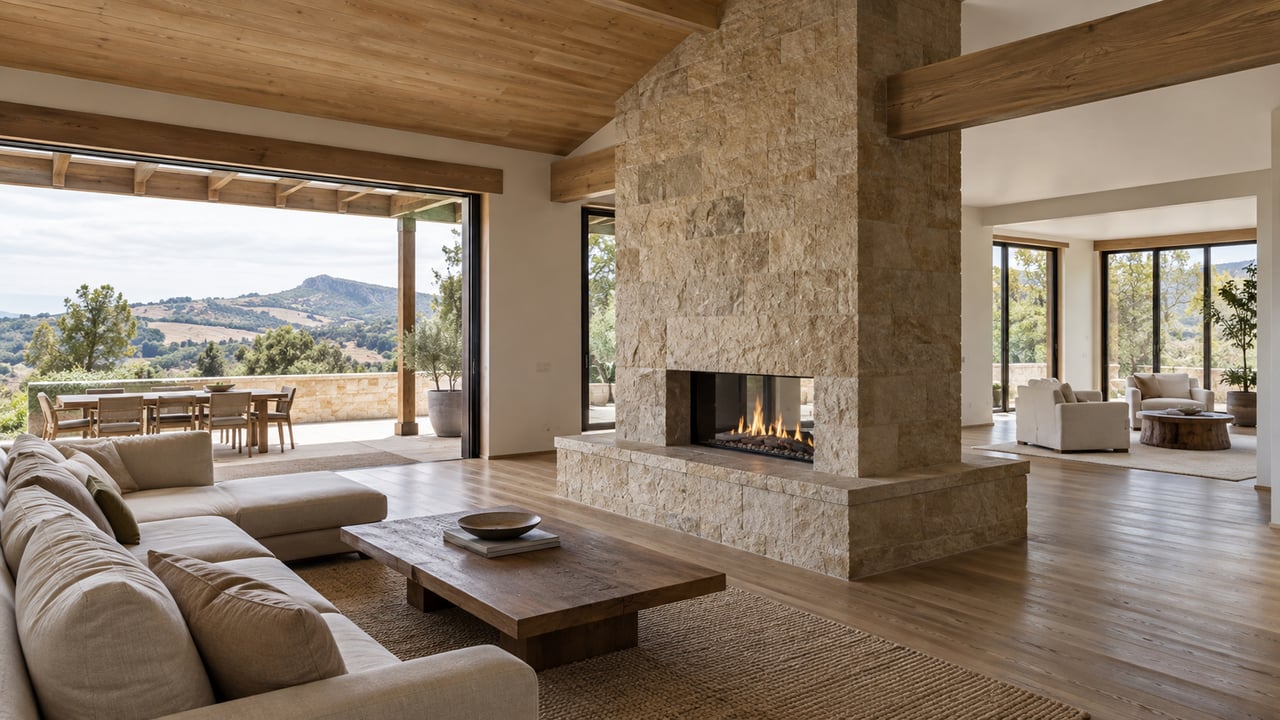
High-value property features should be presented so buyers can understand the advantage rather than simply being told that it is valuable. A significant view, substantial renovation, exceptional outdoor improvement, private setting, architectural detail, specialty structure, unusual access arrangement, or highly functional property feature may materially distinguish a home, but its importance can be diminished when marketing provides too little context or relies primarily on enthusiastic language. Sellers need to make the feature visible, understandable, and credible.
That is especially important on the Central Coast because value can come from very different physical characteristics. A Cayucos property may have limited opportunities for off-street parking, making a particularly useful parking arrangement important to explain. A Templeton property may include land improvements or specialty structures that cannot be understood from interior photographs. In San Luis Obispo, an architecturally significant renovation may deserve attention because of how successfully it integrates with the original home rather than because it simply looks newer.
The strongest presentation connects the feature to the property and to the buyer's likely experience of owning it. Buyers should be able to see where the feature is located, understand what changed when an improvement was completed, recognize how the feature functions, and determine why it may be difficult to reproduce elsewhere. High-value features become more persuasive when the property itself demonstrates their importance instead of requiring the listing to repeatedly describe them as exceptional.
Central Coast Neighborhood Video Tour ⬇️
Start by Identifying What Makes the Feature Meaningful
👉 How to Market Distinctive Properties in San Luis Obispo County
Not every expensive improvement or unusual property characteristic deserves equal marketing emphasis. Sellers should first identify why a feature matters before deciding how prominently to present it.
A detached workshop may be valuable because of its construction quality, location, vehicle access, storage capacity, or separation from the residence. Mature landscaping may matter because it creates genuine privacy rather than because the plants themselves were costly. An extensive outdoor improvement may be significant because it expands how the home can be used and connects naturally with the interior.
That distinction keeps the marketing focused on buyer relevance.
A high-value feature should have a recognizable function, experiential advantage, scarcity, quality difference, or relationship to the property that buyers can understand. Marketing becomes less effective when every upgrade receives the same level of emphasis.
The first question should therefore be specific: what does this feature allow this property to offer that would be difficult to obtain, add, or reproduce in another home?
Photography Should Explain the Feature, Not Simply Prove It Exists
👉 What Listing Photos Should Communicate in San Luis Obispo County
A photograph of a feature is not necessarily an explanation of that feature.
If a property has an exceptional view, one tightly framed photograph of the scenery may fail to show where the view is experienced from inside the home. If a residence has a substantial outdoor kitchen, buyers should ideally see how it relates to dining, seating, the residence, and the surrounding yard rather than viewing only an appliance close-up.
Photography should reveal the feature's physical context.
For example, a Morro Bay property with a particularly useful roof deck may require an image that shows both the usable dimensions of the deck and the view relationship rather than a photograph aimed exclusively toward the coastline. A buyer then understands what the property actually provides instead of seeing a scenic image that could have been taken from almost anywhere nearby.
The strongest image answers more than “What is it?” It begins answering “Where is it, how does it work, and what makes it important here?”
Presentation Should Make the Value Easier to Recognize
👉 How to Improve Perceived Value Before Listing on the Central Coast
Presentation can increase buyers' understanding of an existing advantage without changing the physical feature itself.
Consider a substantial fireplace wall that disappears behind oversized furniture, a private patio obscured by excessive landscaping, a workshop filled with stored household items, or a large pantry whose capacity is difficult to see because every shelf is crowded. The feature exists, but buyers are being asked to work harder to understand it.
Preparing these areas does not require manufacturing an artificial experience.
It means removing visual interference and allowing the significant characteristic to communicate more effectively. A private garden should reveal enough depth and enclosure for buyers to understand the privacy. A specialty garage should make its usable dimensions apparent. An architectural feature should remain visually dominant rather than competing with furnishings or decoration.
The objective is not to make the feature appear more valuable than it is. It is to prevent poor presentation from making an important property characteristic look less significant than it actually is.
Premium Features Need to Be Connected to the Larger Property
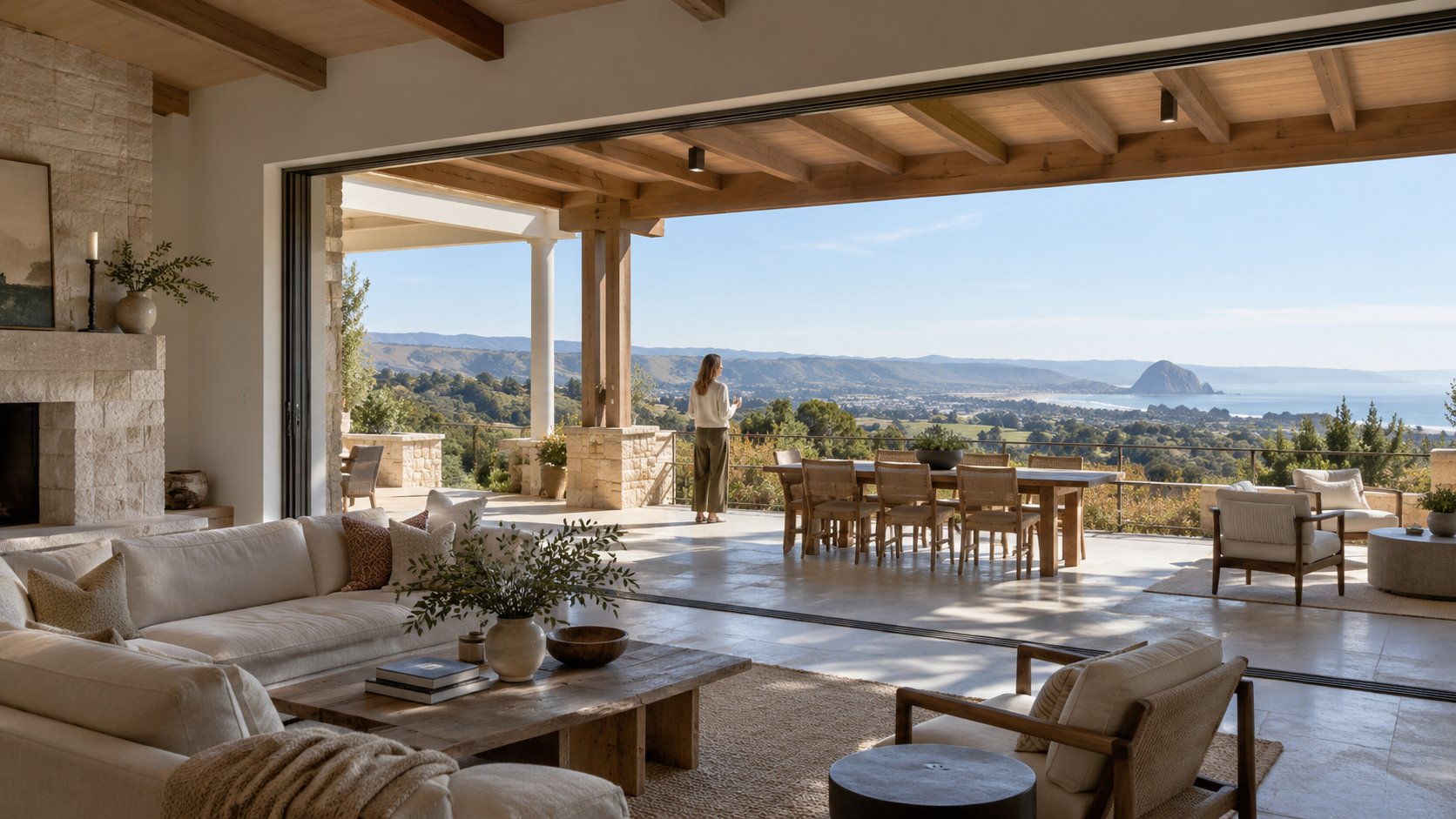
👉 What Makes a Coastal Property Feel Premium on the Central Coast
A feature becomes easier to appreciate when buyers can understand how it contributes to the entire property.
This is particularly important with coastal homes, where one characteristic may substantially affect daily use. A protected courtyard, private access point, sheltered exterior area, view orientation, parking configuration, or indoor-outdoor connection can matter because of how it solves a site-specific limitation or expands the property's usefulness.
A Pismo Beach home with a protected outdoor area, for example, should not present that space as an isolated collection of attractive furniture. Buyers need to understand its relationship to the residence, privacy, orientation, access, and usable dimensions.
Context also prevents marketing from overstating a feature.
A beautiful ocean glimpse from one upstairs window is different from a view that shapes several primary living spaces. A large yard that is difficult to reach from the house is different from outdoor space integrated directly with everyday living.
High-value presentation should accurately communicate those distinctions rather than collapsing every desirable characteristic into the same broad claim of “premium.”
Significant Improvements Need More Than the Word Updated
👉 How to Present Home Improvements Clearly on the Central Coast
A substantial improvement should be described according to what actually changed.
Calling a kitchen “remodeled,” a property “fully updated,” or an outdoor area “redesigned” gives buyers only a broad conclusion. When the improvement is important to the property's value, sellers should be prepared to explain meaningful components accurately.
That might include changes to the layout, cabinetry, surfaces, lighting, major systems, windows, flooring, structural configuration, outdoor infrastructure, or other significant work when those facts are known and supportable.
Fannie Mae's current appraisal guidance similarly requires appraisers to provide clear, detailed, and accurate descriptions of property improvements, including additional features and modernization. The appraisal process serves a different purpose from listing marketing, but the guidance reinforces why significant improvements are easier to evaluate when they are described specifically rather than reduced to broad labels.
A seller does not need to turn the listing into a construction report. The goal is to distinguish a meaningful transformation from routine cosmetic work and give buyers enough context to understand what supports the feature's significance.
Unique Value Needs Evidence the Buyer Can Experience
👉 What Sellers Should Know About Unique Property Value in San Luis Obispo County
A feature may be unusual without necessarily creating meaningful value. Presentation should therefore demonstrate the advantage rather than rely entirely on the seller's description of it.
A Grover Beach property with unusually extensive off-street parking can make that advantage apparent through photographs that show access, width, and usable configuration. An Atascadero property with a well-positioned detached structure can show how the building relates to the residence, driveway, and remaining land.
These are stronger presentations than repeatedly describing either feature as “rare.”
Physical evidence also gives buyers a better basis for comparison.
If another property technically has the same category of feature but executes it less effectively, the distinction becomes visible. Two homes may both have outdoor kitchens, guest spaces, garages, or large lots while offering very different levels of utility.
The seller's task is not to dictate how much additional value the buyer should assign. It is to make the relevant difference understandable enough that the buyer can evaluate it independently.
Show Dimensions and Relationships When Scale Is Part of the Advantage
Certain features derive much of their importance from physical scale.
A large garage, deep covered patio, substantial side-access area, oversized pantry, broad entertaining space, or usable parcel may lose much of its impact when photographed without recognizable context.
Wide-angle photography alone is not the solution. Excessive lens distortion can make spaces look larger while giving buyers less reliable information.
Instead, the composition should provide visual reference points.
A garage photograph can include the door openings, rear wall, storage zone, and circulation area. A large covered patio can show how dining and seating coexist without consuming the entire surface. A usable parcel can be photographed from an angle that reveals relationships between the residence, open land, access, and improvements.
When dimensions materially strengthen the property, accurate measurements may also provide useful support where appropriate.
High-value scale should feel demonstrable. Buyers should not need exaggerated photography or adjectives to recognize that the property genuinely offers more usable room.
Documentation Can Support a Feature Without Becoming the Marketing
Some high-value features have important information behind them that photographs cannot communicate.
Major renovations, specialty systems, solar installations, generators, significant landscape improvements, water-related infrastructure, custom construction, or newer mechanical equipment may generate questions about age, scope, specifications, approvals, or maintenance.
Relevant documentation can support those conversations when available.
That does not mean listing marketing should publish every invoice, permit, specification sheet, or technical document. Marketing introduces the feature; supporting information can answer more detailed questions as buyers investigate.
Accuracy remains essential. The California Department of Real Estate states that California real estate advertising must be truthful, accurate, and not misleading, and factual claims involving property features and potential uses should be independently verified.
The stronger approach is to distinguish what is known from what is assumed. That protects credibility while giving important improvements appropriate support.
Let Buyers Physically Understand Features That Depend on Experience

Some property advantages are difficult to communicate through photographs and listing copy alone.
Acoustic separation, privacy, sun exposure, indoor-outdoor flow, a particularly effective floor plan, substantial storage, sheltered outdoor space, or a specialty room may become much more meaningful once buyers physically experience the property.
Showing preparation should allow that to happen.
If privacy is a major advantage, buyers should be able to occupy the outdoor area long enough to understand its separation from neighboring properties. If a wine room, studio, workshop, or substantial storage area contributes materially to the property, it should be accessible rather than locked, filled with stored possessions, or treated as a secondary afterthought.
With more than 30 years of experience across San Luis Obispo County, Joesef Jackson has seen that some important features require very little explanation once buyers experience them correctly. The representation strategy should recognize which advantages need detailed context and which are strongest when the property is allowed to demonstrate the point itself.
Give the Most Valuable Features Proportional Marketing Attention
A listing can become less effective when every property characteristic receives equal emphasis.
If a residence has three genuinely important advantages, those features should not disappear inside a long description containing fifteen minor upgrades and decorative details.
Marketing hierarchy matters.
The hero photography, image sequence, written description, video, and showing experience should gradually establish the characteristics that most strongly affect the home's identity and value. Secondary details can still appear, but they should not compete with the reasons a buyer is most likely to remember the property.
This does not mean repeating the same feature in every photograph and paragraph.
A major architectural characteristic might appear first in a wider image establishing its relationship to the residence, later in a detail photograph showing material quality, and then in written copy explaining something the images cannot communicate.
The marketing becomes more informative because each element performs a different job.
The objective is emphasis without redundancy: give an important feature enough attention to become understandable, then allow the buyer to evaluate it.
Avoid Assigning a Dollar Value the Market Has Not Established
Sellers naturally want important improvements and property advantages to support stronger pricing, but marketing should be careful about converting cost into assumed market value.
A $150,000 improvement does not automatically add $150,000 to what a buyer will pay. The market may value the improvement differently depending on design, execution, condition, location, buyer demand, and whether comparable properties offer similar features.
Fannie Mae's appraisal guidance also recognizes that an improvement can exceed what the typical market demands and that its contributory value may differ from its existence or cost. Fannie Mae Selling Guide
That distinction is useful for sellers even though listing strategy and appraisal analysis are different processes.
Present the feature accurately. Explain why it may matter. Show how it improves the property. Provide supporting information when appropriate.
Then allow actual buyer response, relevant comparable evidence, and the market to determine how much weight the feature ultimately carries.
High-value marketing becomes less credible when it tries to settle that question before buyers have evaluated the property.
The Strongest Features Become Easier to Explain, Not More Complicated
An effective presentation ultimately simplifies an important property advantage.
Buyers should not need an elaborate sales pitch to understand why a feature matters. Photography can show where it is. Written marketing can explain what photographs cannot. Supporting information can substantiate significant improvements. The showing can allow buyers to experience function, scale, quality, privacy, or another advantage directly.
That coordinated approach is particularly useful on the Central Coast because properties can derive value from highly different characteristics. A coastal residence, a South County home, an older San Luis Obispo property, and a North County estate may each require a completely different feature to receive the greatest marketing attention.
The goal is not to assign artificial importance to every unusual characteristic.
It is to recognize the few property features that materially affect the buyer's understanding of the home and present those features with enough context that their significance becomes apparent.
When the description, imagery, physical experience, and supporting facts reinforce one another, sellers do not have to insist that a feature is valuable. Buyers have enough information to determine why it may be valuable to them.
Frequently Asked Questions
What qualifies as a high-value feature when selling a home?
A high-value feature is a property characteristic that materially improves utility, scarcity, quality, setting, privacy, experience, or competitive appeal. Its importance depends on the property and likely buyer rather than simply on what the feature cost.
Should every expensive home improvement be emphasized in the listing?
No. Cost alone does not determine buyer importance. Marketing should give greater attention to improvements that materially change the property's function, quality, condition, experience, or competitive position.
How should sellers present a valuable view?
Show where the view is experienced from the property and how it relates to primary rooms or outdoor areas. A scenery-only photograph may not communicate how strongly the view affects everyday use of the home.
Should sellers include improvement costs in their marketing?
Usually the more useful information is what was improved, how extensively it was improved, and when the work occurred if that information is accurate. Improvement cost does not automatically establish the amount of market value created.
How can photography demonstrate a high-value outdoor feature?
Photographs should show spatial relationships, usable dimensions, access from the home, privacy, orientation, and the feature's connection to surrounding areas rather than relying only on decorative close-ups.
Should sellers provide documentation for major improvements?
Relevant documentation can be useful when buyers have detailed questions about significant improvements or systems. Sellers should provide accurate information and avoid making claims that available records cannot support.
Can an unusual feature be valuable even if comparable homes do not have one?
Yes. Scarcity can contribute to buyer interest, but the feature still needs to offer an advantage buyers recognize. Being unusual by itself does not establish market value.
Is it better to describe a high-value feature or let buyers discover it?
Important features should be identifiable before and during the showing, but the strongest presentation often combines concise explanation with an opportunity for buyers to experience the advantage themselves.
If you are preparing to buy or sell real estate on the Central Coast and want personalized guidance, contact Joesef Jackson at SLO Life Realty Group.