A Full Cost Breakdown for Homeowners Preparing to Sell
Selling a home on the Central Coast involves more than agreeing on a sale price. As a seller, understanding closing costs upfront is critical to setting expectations, pricing correctly, and avoiding surprises at the finish line.
This guide provides a clear, realistic breakdown of what sellers typically pay at closing on the Central Coast, how those costs are calculated, and how they impact net proceeds.
What Are Seller Closing Costs?
Seller closing costs are expenses paid out of the sale proceeds at the end of escrow. These costs cover commissions, escrow and title services, taxes, and other transaction-related items required to complete the sale.
On the Central Coast, seller closing costs typically range from 6%–9% of the final sale price, depending on the transaction structure.
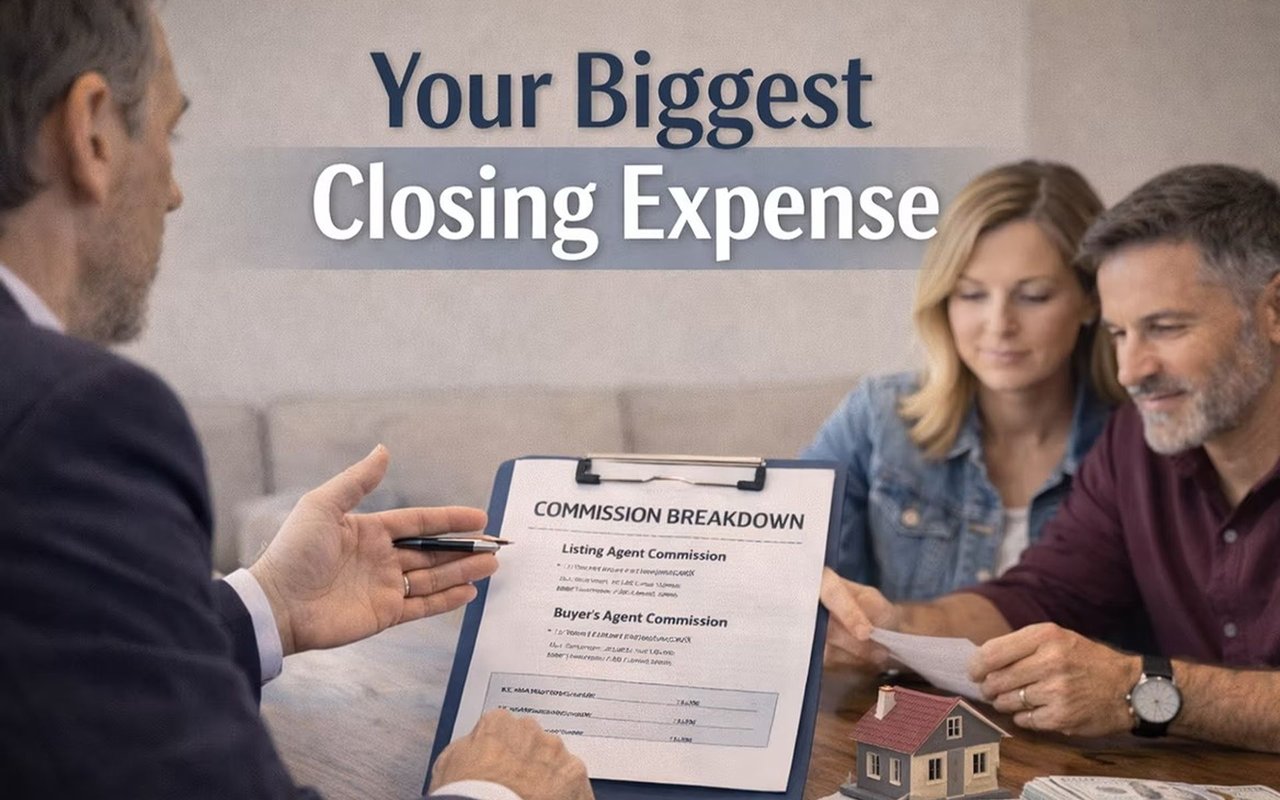
Real Estate Commissions
Commission is usually the largest single cost for sellers.
Typical structure:
- Listing agent commission
- Buyer’s agent commission
These are negotiated at the time of listing and paid from proceeds at closing.
👉 Understanding Offers, Counteroffers, and Negotiation When Selling on the Central Coast
Escrow and Title Fees
Escrow and title services ensure the transaction closes properly and ownership transfers cleanly.
Seller-paid items often include:
- Escrow fees (split or seller-paid depending on contract)
- Title insurance (seller’s policy in many Central Coast transactions)
- Recording and document handling fees
These costs vary slightly by county and escrow company but are standard across San Luis Obispo County.
Property Taxes and Prorations
👉 Capital Gains Taxes on the Central Coast: What Homeowners Should Know Before Selling
At closing, property taxes are prorated between the buyer and seller based on the closing date.
This ensures:
- The seller pays taxes for the period they owned the home
- The buyer pays taxes from the day they take ownership
If taxes are unpaid at the time of closing, they are deducted from seller proceeds.
Transfer Taxes and Local Fees
Depending on the city and county, sellers may be responsible for:
- County transfer tax
- City transfer tax (where applicable)
Some Central Coast cities have additional local requirements, so these costs should be confirmed early.
Repairs, Credits, and Negotiated Costs

Negotiated repairs and credits can impact final proceeds if not planned for in advance.
Seller closing costs may also include negotiated items agreed upon during escrow, such as:
- Repair credits
- Buyer concessions
- Home warranty coverage (if offered)
These are not fixed costs but can affect net proceeds significantly.
👉 How Long Does It Take to Sell a Home on the Central Coast? Timeline Breakdown
Mortgage Payoff and Liens
If you have an existing mortgage, the remaining loan balance is paid off at closing.
Other potential payoffs include:
- HELOCs
- Tax liens
- HOA balances
These are settled through escrow before proceeds are distributed.
Estimated Seller Closing Cost Example
For illustration purposes only:
On a $900,000 Central Coast home sale, sellers might expect:
- Commissions: ~$45,000–$54,000
- Escrow & title fees: ~$2,500–$4,000
- Taxes & transfer fees: varies by location
- Negotiated credits: transaction-specific
Planning Ahead Protects Your Net Proceeds
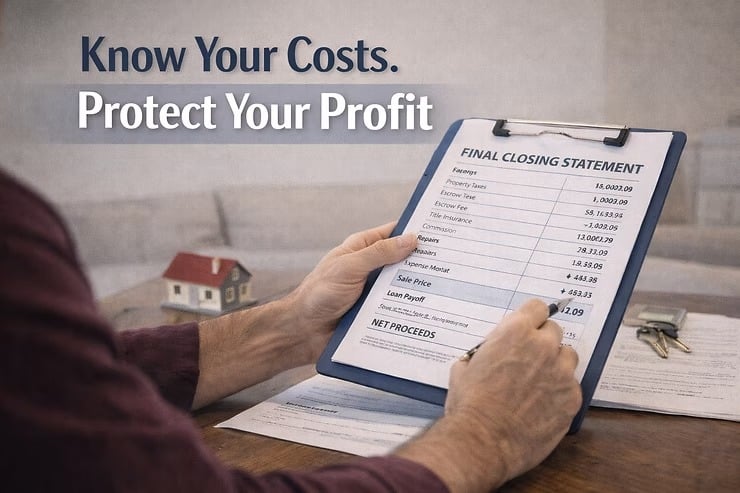
Knowing seller costs in advance helps homeowners plan and protect their net proceeds.
Understanding seller costs early helps homeowners:
- Price strategically
- Evaluate offers accurately
- Avoid last-minute surprises
- Make confident decisions during negotiation
👉 Preparing Your Home for Sale on the Central Coast
Thinking About Selling on the Central Coast?
Every transaction is different, and seller costs can vary based on location, timing, and strategy. If you’re planning to sell and want a personalized estimate of closing costs and net proceeds, contact me to review your situation and build a clear plan before you list.