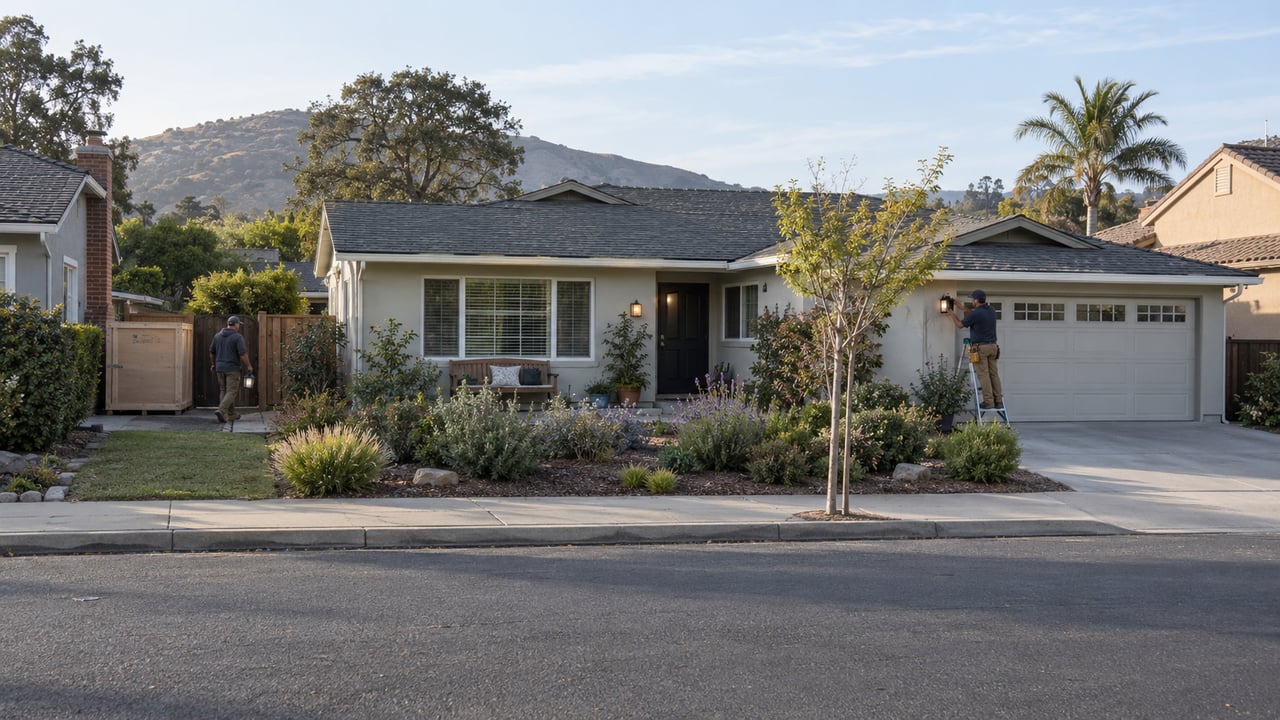
Tenant turnover is easy to reduce to one number: the number of days a rental property sits vacant between occupants. For an investor, the impact can be considerably broader.
A turnover can involve lost rent, preparation between tenancies, advertising, screening, lease administration, scheduling, deposits, inspections, and the possibility that the next tenant enters at a different rent or under different market conditions. Frequent turnover can also expose weaknesses in a property that are less visible when an investor looks only at annual rent.
On the Central Coast, turnover should be evaluated in the context of the property, the likely tenant pool, and the local rental market. A San Luis Obispo rental near major employment or Cal Poly may behave differently from a larger single-family home in Arroyo Grande. A compact unit in Grover Beach can face a different reletting pattern from a property in Atascadero or Paso Robles.
The objective is not necessarily to eliminate turnover. Tenants eventually move.
The stronger investment question is whether the property can retain appropriate tenants for reasonable periods and recover efficiently when a tenancy ends.
Central Coast Neighborhood Video Tour ⬇️
Vacancy Is Only One Part of the Turnover Cost
A period without rent is the most visible consequence of turnover.
👉 What Investors Should Know About Vacancy Risk in San Luis Obispo County
But an investor should distinguish ordinary vacancy risk from turnover itself.
Vacancy measures time without an occupant. Turnover describes the transition from one tenancy to the next, including the work and expense surrounding that transition.
A property might be vacant for only two weeks but still require substantial preparation, coordination, and capital before the next tenant moves in. Another rental could remain vacant slightly longer while requiring very little intervention.
That means turnover should be evaluated through both time and friction.
The cost is the combination of lost income and everything required to restore the property to rent-producing use.
Durable Rental Income Depends on What Happens Between Leases
Stable rental income is not created only by achieving a strong monthly rent.
👉 What Makes Rental Income More Durable in San Luis Obispo County
An investor also needs to consider how often that income is interrupted and what happens when it is.
A property producing a high rent but changing tenants frequently may create less predictable annual results than a property with slightly lower rent and longer average occupancy.
That distinction can become especially important when comparing investments.
After more than 30 years in Central Coast real estate, Joesef Jackson has seen that the most useful rental analysis often looks beyond the advertised rent. The consistency of occupancy and the property's ability to return to market efficiently can matter just as much as the monthly number.
Durable income comes from the entire tenancy cycle, not simply the rent due on the first of the month.
Tenant Demand Determines How Quickly Turnover Can Be Absorbed
A tenant moving out does not have the same financial effect in every rental market.
👉 How Investors Should Read Tenant Demand on the Central Coast
When demand for a specific property type is strong, the investor may have a larger pool of qualified prospects and a shorter transition between tenancies.
When demand is narrower, the same turnover may take longer to absorb.
Investors should therefore evaluate demand for the actual property rather than rely on broad assumptions about a community.
A one-bedroom unit near central San Luis Obispo serves a different tenant pool from a four-bedroom home in Nipomo. A rental with limited parking may perform differently from a similar unit with practical off-street parking. A property that permits pets may encounter a different applicant pool from one with more restrictive policies, subject to applicable law and ownership requirements.
Turnover risk becomes easier to understand when demand is evaluated at the property level.
Long-Term Rental Quality Can Influence Retention
Some properties naturally support longer occupancy better than others.
👉 What Makes a Good Long-Term Rental Property in San Luis Obispo County?
Tenants who expect to stay for several years may place significant weight on storage, parking, laundry, privacy, usable outdoor space, room proportions, access, and proximity to their regular destinations.
A property does not need luxury finishes to retain tenants.
It needs to function reliably for the people likely to rent it.
This is where investors should distinguish cosmetic appeal from practical staying power. A newly remodeled rental can attract immediate attention, but poor storage, difficult parking, excessive noise, or an awkward bedroom arrangement may become more important after the tenant has lived there for six months.
Properties that work well in ordinary daily use can reduce the number of reasons an otherwise satisfied tenant may choose to leave.
Local Rent Stability Can Matter More Than Maximum Rent
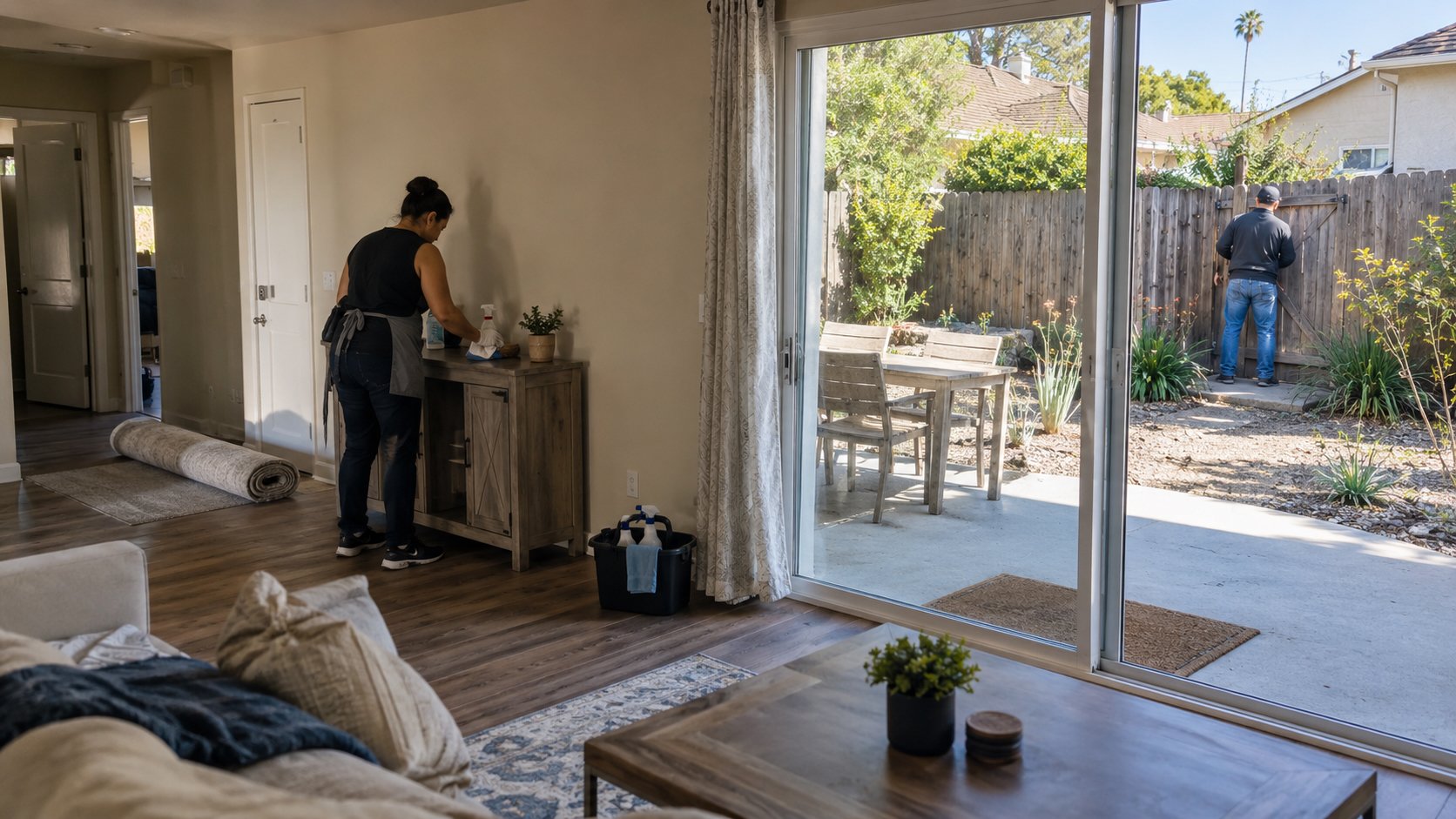
Turnover often tempts owners to focus immediately on what the next tenant might pay.
👉 How Investors Should Evaluate Local Rent Stability on the Central Coast
That question matters, but maximizing the advertised rent is not always the same as maximizing investment performance.
If a property is priced at the edge of what the market will support, the owner may encounter a smaller prospect pool or longer marketing period when the tenancy changes.
A rental positioned within a stable range may attract more qualified interest and produce a smoother transition.
The comparison should include annual results.
An additional amount of monthly rent can lose its advantage if achieving it requires several extra weeks of vacancy, repeated advertising, or more frequent tenant changes.
Investors should compare rent levels with the depth and consistency of demand supporting those rents.
Long-Term Tenant Appeal Reduces Dependence on Constant Reletting
An investment property can attract tenants quickly yet still experience frequent turnover.
👉 How to Evaluate Long-Term Tenant Appeal on the Central Coast
Long-term appeal asks a different question: once someone moves in, does the property continue to work for them?
A rental may initially win attention through location or appearance but become less suitable when occupants encounter limited storage, poor privacy, inconvenient laundry, minimal outdoor utility, or difficult access.
Investors should consider whether the property can accommodate reasonable changes within a tenant's life without immediately becoming impractical.
A second bedroom that works as an office, usable storage, a modest outdoor area, or convenient parking can increase the number of circumstances under which an occupant remains satisfied.
Retention is rarely controlled by one feature. It is usually the cumulative effect of how well the property continues to function after the excitement of moving in is gone.
Turnover Frequency Should Be Measured Across Several Years
One tenant leaving early does not automatically mean the property has a turnover problem.
Patterns matter more.
Investors who have access to prior rental records can examine how often occupants changed, whether vacancies occurred repeatedly at similar times, and whether rent or property issues appeared around those transitions.
A property with three long tenancies followed by one short tenancy presents a different history from a rental where occupants routinely leave after a year.
The longer view can also reveal whether turnover is tied to the property or simply to circumstances affecting individual tenants.
A useful turnover analysis asks how frequently the investment has needed to find a new occupant and whether that frequency appears normal for the property category.
Reletting Speed Is a Property Characteristic Worth Measuring
Investors often study how quickly homes sell but spend less time considering how quickly a rental can realistically be leased again.
Reletting speed depends on more than market demand.
The property's rent level, availability date, condition, layout, parking, pet policies, showing logistics, location, and competition can all influence how quickly the next tenancy begins.
A rental that attracts interest only after repeated price adjustments carries a different risk profile from one that historically receives qualified interest quickly.
The strongest evidence comes from actual property and local-market history when available.
With more than 2,130 closed transactions, Joesef has seen how much market response can differ between properties that appear similar on paper. Investors should expect the same principle to apply in rental housing: the market reacts to the complete offering, not just the bedroom count.
Turnover Preparation Should Be Repeatable
Every tenancy eventually ends, so an investor should know what happens next before the property becomes vacant.
A repeatable turnover process can reduce avoidable downtime.
That may include identifying likely preparation needs, scheduling vendors, documenting condition, coordinating keys and access, reviewing lease requirements, setting the next marketing date, and determining when the property will be ready for occupancy.
California has specific rules governing residential security deposits and deductions, making documentation and proper procedures important during the move-out process.
An efficient transition does not mean rushing the property back onto the market before necessary work is finished. It means reducing unnecessary gaps between tasks.
Property Features Can Make Turnover More or Less Expensive

Turnover cost is partly influenced by how difficult the property is to restore after normal occupancy.
Highly specialized finishes, extensive landscaping, complicated furnishing packages, large floor areas, or difficult access may increase the number of tasks required between tenants.
A simpler property can sometimes return to market more efficiently.
That does not mean investors should avoid quality.
Durable finishes, practical flooring, accessible mechanical components, straightforward landscaping, and materials suited to rental use can reduce repeated preparation without making the property feel institutional.
The investment question is whether the property can maintain an appealing standard without requiring disproportionate work every time the occupant changes.
Turnover Can Reveal Whether a Property Is Too Dependent on One Tenant Profile
A rental may perform well while the right tenant occupies it yet become difficult to lease when that person leaves.
That can occur when the property serves a very narrow use.
An unusual layout, limited parking, specialized furnishing, remote location, or highly specific lease structure may reduce the number of prospects who see the property as practical.
This does not necessarily make the investment weak.
Specialized rentals can perform very well when demand is deep enough.
But investors should recognize when their income depends on repeatedly locating a relatively small group of suitable tenants.
A broader practical fit can make turnover less disruptive because the next renter does not need to match such a narrow profile.
Seasonality Can Change the Cost of Losing a Tenant
The timing of turnover can matter as much as the fact that it occurs.
Some tenant populations move more frequently during particular parts of the year. School calendars, employment patterns, tourism-related work, university schedules, and ordinary household moving preferences can influence rental activity.
San Luis Obispo provides an obvious example because Cal Poly contributes to local housing rhythms, while coastal and inland communities can have different employment and household patterns.
An investor should therefore consider when a lease is likely to end.
A property becoming available during a period of strong demand may experience a very different transition from the same property entering the market during a quieter window.
Lease timing cannot eliminate turnover, but it can affect the environment in which the next tenancy must be secured.
Tenant Retention Begins With the Property, Not Just Management
Management quality matters, but it cannot correct every physical limitation.
A responsive landlord cannot manufacture off-street parking where none exists or create privacy in a unit exposed to constant neighboring activity.
Investors should separate management issues from property issues.
If repeated tenants identify similar concerns, the property may be revealing a structural weakness in its rental appeal.
Conversely, a well-located, functional property can still experience unnecessary turnover if communication, repairs, access, or lease administration are consistently poor.
Retention therefore reflects both the asset and how the tenancy is managed.
The investor should understand which factors can be changed and which are inherent to the real estate.
Fair Housing Rules Apply Throughout the Reletting Process
Turnover brings the property back into the advertising and screening cycle.
That makes consistent housing practices important.
Marketing, inquiries, showings, application standards, and tenant selection must comply with applicable fair housing laws.
The U.S. Department of Housing and Urban Development provides information regarding federal fair housing protections.
Investors should evaluate applicants through lawful, consistently applied criteria related to the tenancy rather than assumptions about who may be desirable for a particular neighborhood or property.
The reletting process should be structured around the property and legitimate rental qualifications.
Turnover Should Be Included in Annual Investment Expectations
A rental pro forma that assumes continuous occupancy indefinitely is incomplete.
Even a strong long-term rental will eventually experience transitions.
Investors can account for that reality by incorporating a reasonable allowance for vacancy, preparation, and reletting rather than treating every turnover as an unexpected event.
The appropriate assumption will vary by property.
A newly acquired rental with no operating history may require broader estimates. An established property with several years of records can offer more specific evidence.
What matters is acknowledging that annual rent is not the same as annual collected income.
Turnover is one of the reasons those numbers can differ.
A Higher Rent Does Not Automatically Offset Frequent Turnover
Consider two rentals.
One produces a higher monthly rent but experiences shorter tenancies and regular gaps between occupants. Another rents for somewhat less but attracts tenants who tend to remain longer.
The first property may still outperform the second.
But the comparison cannot be made from monthly rent alone.
Investors should examine total collected income, turnover preparation, vacancy time, management demands, and the frequency with which the property must be returned to market.
This is particularly important when a rental appears attractive because of an aggressive projected rent.
The investment needs to produce that rent consistently enough for the advantage to matter.
Low Turnover Has Value Beyond the Missing Vacancy
Stable occupancy can reduce operational interruptions.
Each additional tenancy requires a new transition, new screening process, new lease, new condition baseline, and another period in which the property may not be producing income.
Fewer transitions can therefore make the investment easier to forecast.
That predictability does not mean an owner should retain an unsuitable tenancy merely to avoid turnover.
It means that when a property consistently attracts appropriate occupants who choose to remain, the investor receives an operational advantage that may not appear in a simple rent comparison.
Tenant Turnover Is Ultimately a Test of Rental Resilience
A strong rental property should not depend on one particular tenant remaining forever.
It should be capable of surviving the inevitable transition to the next occupant without creating disproportionate expense or extended income disruption.
Joesef's career sales volume of more than $1.81 billion has included investment properties with very different operating characteristics. One distinction that matters over time is whether the underlying property continues to attract demand when circumstances change.
For investors, tenant turnover provides a useful test.
How easily can the property return to rent-producing use? How broad is its tenant appeal? How much work is typically required between occupants? Does the rent remain supported by local demand? Are tenants likely to find the property practical enough to remain?
Those questions reveal more about rental durability than simply asking whether the property is occupied today.
Frequently Asked Questions
What is tenant turnover in a rental property?
Tenant turnover is the transition between one occupant leaving and another beginning a tenancy. It can include vacancy, preparation, marketing, screening, lease administration, and property work between occupants.
Is tenant turnover the same as vacancy?
No. Vacancy measures time without an occupant. Turnover includes the broader process and expenses associated with changing tenants.
How does frequent turnover affect rental income?
Frequent turnover can create repeated gaps in rent collection and additional preparation, marketing, administrative, and management costs.
What property features can encourage longer tenancies?
Practical parking, storage, privacy, functional layouts, laundry, usable outdoor space, convenient access, and a strong location can contribute to longer-term tenant appeal.
Should investors always try to charge the highest possible rent?
Not necessarily. Rent should be evaluated alongside demand, vacancy exposure, turnover frequency, and annual collected income rather than considered only as a monthly figure.
Can lease timing affect tenant turnover risk on the Central Coast?
Yes. Rental demand can vary during the year depending on community, tenant population, university schedules, employment patterns, and other local factors.
How can an investor tell whether a property has a turnover problem?
Review prior tenancy lengths, vacancy periods, recurring tenant concerns, reletting history, and whether similar issues appear across multiple tenancies.
Why should turnover be considered before purchasing a rental?
Turnover affects annual income, operating demands, tenant retention, and how efficiently the property can return to producing rent when a tenancy ends.
If you are preparing to buy or sell real estate on the Central Coast and want personalized guidance, contact Joesef Jackson at SLO Life Realty Group.