High-end buyers rarely judge a Central Coast home by price, square footage, or finishes alone. They tend to evaluate how several qualities work together: location, privacy, architecture, land, craftsmanship, orientation, functionality, and whether the property offers something difficult to reproduce elsewhere.
That creates a different buying process from simply searching for the largest house within a budget.
A coastal home in Avila Beach may attract attention because of its relationship to the ocean and the way primary rooms capture the setting. A wine-country property near Templeton may derive much of its appeal from acreage, mature landscape, privacy, and the relationship among multiple structures. A sophisticated San Luis Obispo residence may stand out because exceptional architecture and location are combined within a more compact property.
High-end buyers are often willing to pay for distinctions that matter to them, but those distinctions need to be real. Expensive finishes do not automatically create a compelling luxury property.
The homes that make the strongest impression usually offer a combination of characteristics that would be difficult for the buyer to recreate by simply purchasing another house and remodeling it.
Central Coast Neighborhood Video Tour ⬇️
Luxury Begins With Attributes That Extend Beyond Price
Price can place a property within a luxury segment, but it does not define the experience by itself.
👉 What Defines Luxury Real Estate in San Luis Obispo County
High-end buyers commonly look for characteristics such as scarcity, architectural quality, privacy, land, views, strong indoor-outdoor relationships, exceptional construction, and locations with limited substitutes.
A large home without those distinctions may feel expensive rather than exceptional.
After more than 30 years representing Central Coast real estate, Joesef Jackson has found that luxury buyers often recognize value through the relationship among features rather than any single specification.
A beautiful kitchen carries more weight when it belongs to a thoughtfully designed home. Acreage becomes more valuable when it creates privacy, usable outdoor areas, or meaningful separation between structures.
Luxury tends to emerge from the complete property rather than an isolated list of upgrades.
Coastal Luxury Buyers Often Place a Premium on Orientation
Coastal luxury has its own priorities.
👉 How Coastal Luxury Homes Differ on the Central Coast
Ocean proximity matters, but sophisticated buyers frequently look beyond whether a view simply exists.
They consider where the view is experienced.
An outlook visible from the kitchen, primary living room, bedroom, and principal outdoor area can become part of daily life. A view available only from one upstairs corner may carry a different level of significance.
Orientation also influences wind, sunlight, privacy, and how the architecture interacts with the coastline.
In communities such as Shell Beach or Cayucos, two nearby homes may have very different relationships to the ocean because of elevation, neighboring structures, and building placement.
High-end coastal buyers often evaluate the property as architecture within a specific setting rather than as a house that happens to be close to the water.
High-End Buyer Decisions Are Usually Driven by Several Priorities at Once
Luxury buyers can have highly specific requirements.
👉 What Drives Buyer Decisions on the Central Coast?
One buyer may prioritize privacy above everything else. Another may require significant garage capacity. Someone purchasing a second residence may want guest accommodations and simple arrival. A buyer relocating full time may focus more heavily on office space, storage, and day-to-day convenience.
These priorities often overlap.
The strongest properties satisfy several important needs without forcing the buyer to make compromises that undermine the reason for purchasing at the high end of the market.
With more than 2,130 closed transactions, Joesef has seen luxury buyers become decisive when a property resolves multiple difficult requirements at once.
A home that combines location, privacy, architecture, and usable land can become far more compelling than one that excels dramatically in only one category.
Perceived Quality Comes From Details Buyers Experience Repeatedly
Luxury buyers frequently recognize quality before they begin naming individual materials.
👉 What Impacts Buyer Perception on the Central Coast
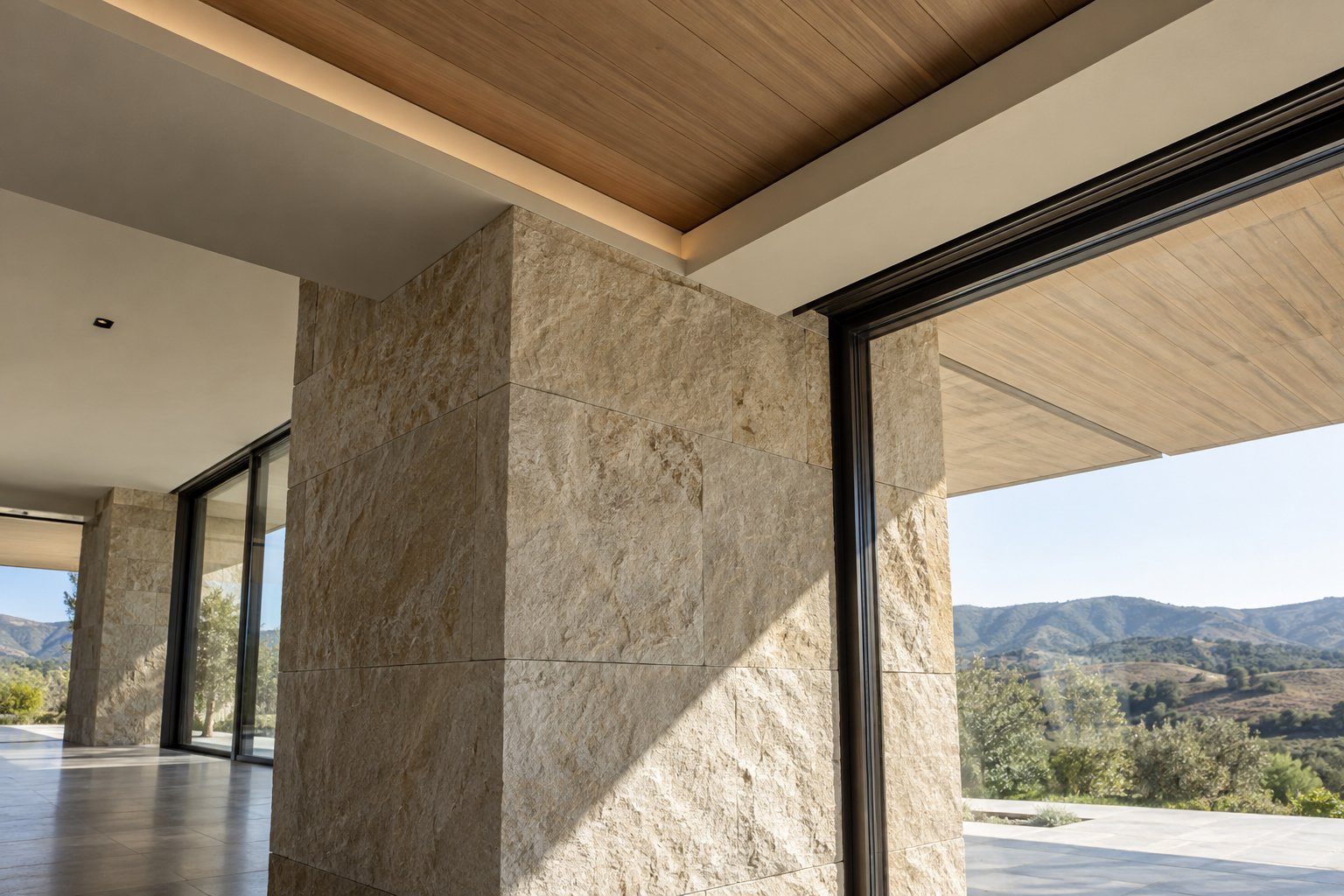
Door weight, window proportions, transitions between materials, flooring consistency, cabinetry alignment, lighting placement, ceiling treatment, hardware, millwork, and the way rooms connect can collectively affect how a home feels.
Those details do not need to be flashy.
In fact, restrained craftsmanship can be more persuasive than conspicuous luxury branding.
Buyers at the high end often have enough exposure to quality properties to notice when expensive materials have been used without corresponding attention to execution.
Perceived quality is strongest when design and construction feel consistent from primary rooms into secondary spaces.
Luxury Buyers Compare Properties Through Scarcity, Not Just Specifications
High-end buyers may compare homes with very different square footage, architecture, and property types.
👉 How Luxury Buyers Compare San Luis Obispo County Properties
The question often becomes: what does this home offer that the alternatives cannot?
A smaller coastal residence may outperform a larger inland property for a buyer who places exceptional value on a protected view and walkability.
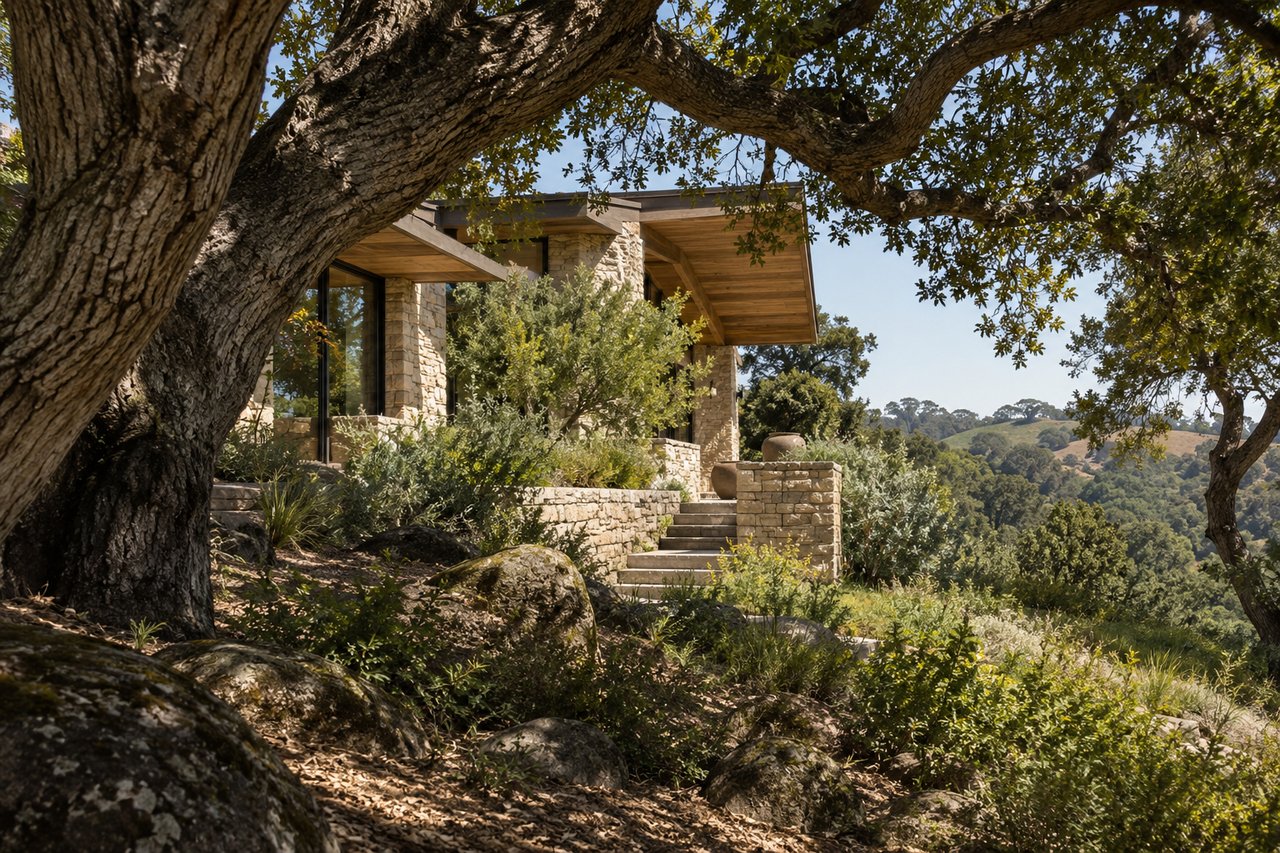
An Edna Valley estate may become more compelling because mature oaks, usable acreage, guest accommodations, and privacy exist together in a combination that would take years to reproduce.
Scarcity creates context for price.
The more difficult a desirable combination is to replace, the more important that distinction can become in the buyer's evaluation.
Irreplaceable Features Carry More Weight Than Expensive Features
Some features cost a great deal but can be recreated.
Others cannot.
👉 What Makes a High-End Home Feel Irreplaceable on the Central Coast
A new kitchen can be built. Landscaping can be upgraded. Finishes can be replaced.
A protected view, exceptional site orientation, mature specimen trees, unusual privacy, significant usable acreage in a scarce location, or architecture designed specifically around the property may be far more difficult to reproduce.
High-end buyers frequently distinguish between what can be purchased later and what must already exist.
That distinction is important because money alone cannot solve every property limitation.
An irreplaceable feature earns attention when it aligns with something the buyer values strongly.
Privacy Is Often Evaluated in Layers
Luxury buyers may value privacy differently depending on how they expect to use the property.
Street privacy is one layer.
Visual separation from neighboring homes is another.
Privacy around the primary suite, pool, outdoor dining areas, guest quarters, or home office can matter independently.
A property on significant acreage can still feel exposed if the main residence is visible from surrounding roads or elevated neighboring sites.
A more compact home can feel remarkably secluded because of architecture, orientation, walls, vegetation, and topography.
Luxury buyers generally respond to experienced privacy rather than acreage alone.
Architecture Matters When It Makes the Property More Coherent
High-end buyers do not all prefer the same architectural style.
Modern, Spanish, ranch, traditional, contemporary, and regional designs can all succeed.
What tends to matter is coherence.
The exterior should relate logically to the interior. Additions should feel intentional. Room proportions should support the architecture. Materials should repeat with discipline rather than appearing randomly selected.
Good architecture can also solve difficult site conditions.
A hillside home may use multiple levels to capture views. A coastal residence may use sheltered outdoor spaces to address wind. A wine-country estate may organize separate structures around landscape and privacy.
Architecture becomes valuable when it makes the property work better, not merely look different.
Land Is Most Valuable When It Creates a Specific Advantage
Acreage alone does not define high-end value.
Luxury buyers often ask what the land contributes.
Does it create privacy? Provide usable outdoor areas? Accommodate horses, vines, gardens, guest structures, recreation, or additional separation? Protect views? Establish a sense of arrival?
A large parcel dominated by difficult terrain may function differently from a smaller property with exceptionally usable land.
San Luis Obispo County Planning & Building provides land-use, planning, permitting, and property information for areas within county jurisdiction.
For buyers considering future improvements or specialized land uses, the actual property conditions and applicable regulations matter more than assumptions based on lot size.
High-End Buyers Notice How the Home Performs During Ordinary Life
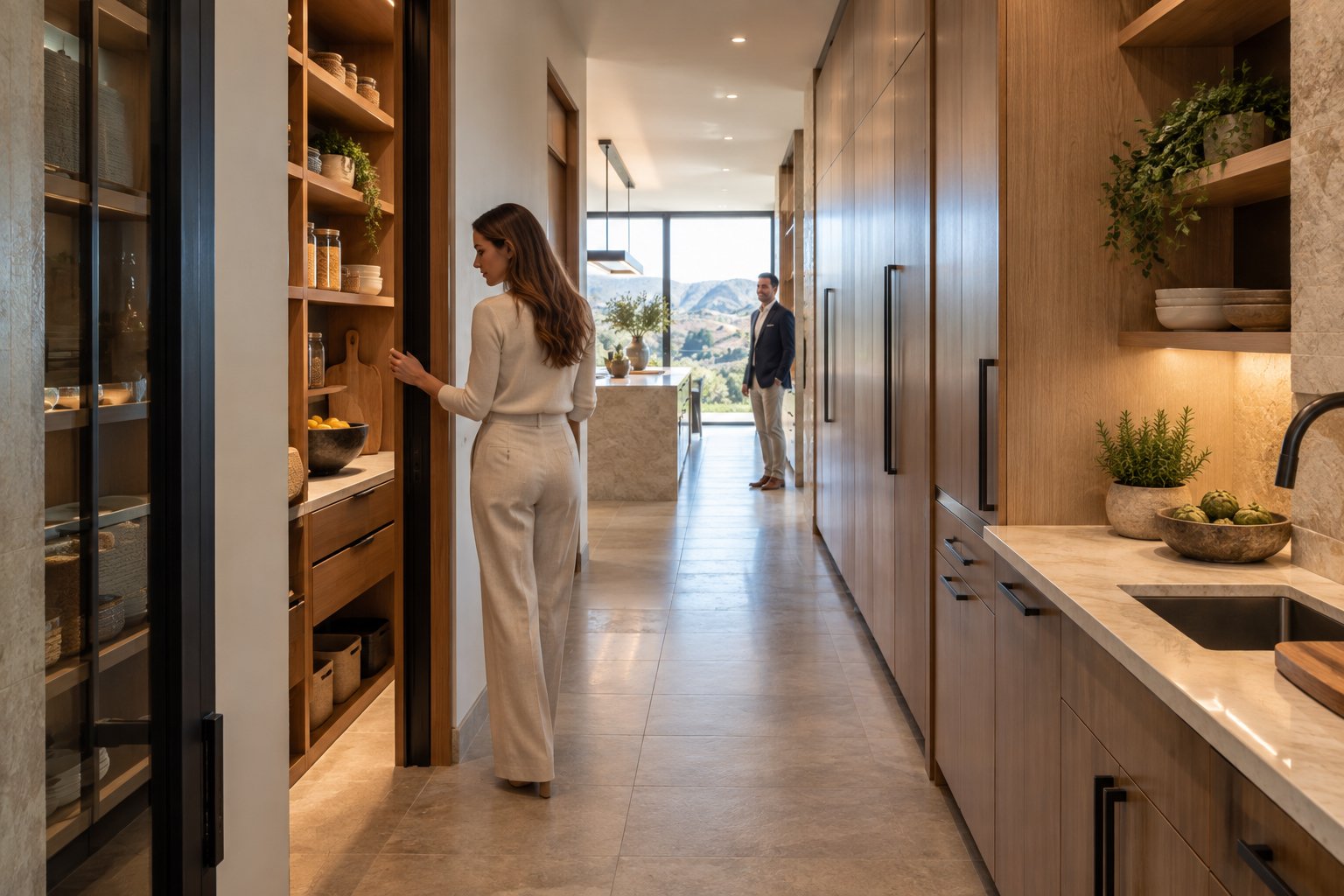
Luxury can be undermined by everyday inconvenience.
A beautiful estate may become less appealing if groceries travel an awkward route from garage to kitchen, guest rooms lack privacy, storage is insufficient, or the primary living spaces do not connect naturally.
High-end buyers often expect sophistication to extend into routine use.
That includes practical storage, service areas, secondary entrances, laundry placement, garage access, kitchen workflow, guest circulation, and the relationship between indoor and outdoor spaces.
Views Matter More When They Are Integrated Into Daily Living
Views can command substantial attention in high-end real estate, but the quality of the experience matters as much as the existence of the outlook.
Buyers may consider breadth, privacy, permanence, orientation, and the rooms from which the view is visible.
A coastline visible directly from everyday living areas can carry a different appeal from a view requiring the buyer to step onto an exposed upper deck.
The same is true inland.
Vineyard, mountain, oak woodland, and valley views may contribute strongly when the architecture frames them from spaces used throughout the day.
Luxury buyers are often purchasing the relationship between the home and the setting, not simply the view itself.
Guest Accommodations Can Expand the Use of the Property
High-end buyers frequently consider how comfortably guests can stay without disrupting the primary household.
That does not necessarily require a detached guest house.
A well-positioned secondary suite, private bedroom wing, casita, or room with separate access can create useful separation.
For larger estate properties, an independent guest residence can be particularly valuable when family or visitors stay for extended periods.
The strongest guest accommodations feel integrated with the overall property while maintaining enough independence to serve their purpose.
Privacy, access, parking, and proximity to the main home all affect how useful the space becomes.
Garages and Utility Spaces Can Carry Unexpected Weight
Luxury buyers may place significant value on spaces rarely featured prominently in listing photographs.
Garage capacity can matter for collectors, recreational equipment, boats, motorcycles, bicycles, or everyday vehicles.
Utility and storage areas can influence whether the property remains organized once occupied.
A three-car garage with awkward dimensions may be less useful than a thoughtfully designed two-car garage with additional storage and direct access.
High-end buyers often evaluate whether supporting spaces match the quality and functionality of the home's formal areas.
The sophistication of the property should not disappear when the buyer opens the garage door.
Outdoor Living Should Be Designed Around the Site
A generic patio does not automatically create luxury outdoor living.
The most compelling outdoor spaces usually respond to the property itself.
A sheltered coastal terrace may address prevailing wind while retaining an ocean outlook. An inland estate may use deep shade, mature oaks, covered dining, or multiple outdoor areas to accommodate warmer afternoons.
Pools, gardens, fireplaces, outdoor kitchens, and seating areas carry more value when their placement makes sense.
High-end buyers often study whether the outdoor environment is genuinely usable across different times of day rather than simply attractive in photographs.
Mature Landscape Can Be a Form of Scarcity
Established landscape can add value that new construction cannot immediately replicate.
Large trees, privacy hedges, specimen plants, orchard areas, mature vines, and carefully developed gardens may represent years or decades of growth.
That can materially change the experience of a property.
A new luxury home may offer pristine architecture while lacking the privacy and permanence of an established site.
An older estate may derive much of its character from landscape that could not be recreated quickly regardless of budget.
Buyers who value that maturity often treat it as part of the real estate rather than decoration.
Coastal Development Context Can Affect How Buyers View Scarcity
Certain coastal properties derive part of their appeal from the limited nature of their setting.
California's coastal zone is governed through a statewide coastal management framework administered in conjunction with local coastal programs.
That does not mean every coastal property is inherently rare or more valuable.
It does mean buyers may consider how difficult it would be to reproduce a comparable combination of location, orientation, architecture, and site characteristics.
Scarcity becomes particularly important when the property possesses features that cannot easily be added to another parcel later.
Secondary Spaces Should Meet the Same Standard as Primary Rooms
High-end buyers frequently look beyond kitchens, primary suites, and formal living areas.
They may inspect hallways, laundry rooms, storage, guest bathrooms, closets, garages, offices, and service spaces.
A property feels more complete when quality continues consistently into those areas.
That does not mean every room requires expensive finishes.
It means the hierarchy should feel deliberate.
Secondary areas can be simpler without looking neglected or disconnected from the rest of the home.
Consistency often communicates more sophistication than excessive ornamentation.
Technology Should Feel Integrated Rather Than Dominant
Smart-home systems, automated shades, lighting control, security, climate management, audio, gates, and other technology can appeal to luxury buyers.
The technology is strongest when it supports the property without becoming the property's identity.
Complex systems can become a negative when they appear difficult to operate or dependent on outdated components.
High-end buyers often prefer technology that feels intuitive and serviceable.
The objective is convenience and control, not novelty.
Multiple Structures Need a Clear Relationship
Large Central Coast properties may include guest houses, studios, barns, garages, pool houses, offices, or other detached buildings.
High-end buyers often evaluate whether those structures function as a coherent property.
Distance matters. So does privacy, access, architectural consistency, and how each structure relates to the landscape.
A detached office may become exceptionally valuable when it provides real separation from the residence.
A guest house may be more useful when guests can arrive independently without crossing the primary household's private areas.
Separate structures add value when their purpose is easy to understand.
Buyers Often Pay for Ease as Much as Scale
Large properties can become burdensome when they require complicated daily management.
High-end buyers may therefore value properties that deliver scale without constant friction.
That can mean thoughtful landscape design, logical circulation, accessible storage, well-placed mechanical systems, appropriate service access, and spaces that are easy to use.
Luxury is not always about adding more.
Sometimes it is about reducing unnecessary complication while preserving the features the buyer values.
Personalization Works Best When the Architecture Remains Adaptable
Distinctive homes can be highly appealing, but buyers still want to imagine themselves living there.
Permanent architectural character can add tremendous value.
Highly individualized decorative choices may not.
The strongest properties usually establish character through proportions, materials, light, setting, and construction rather than relying entirely on one owner's taste.
That gives the next buyer room to personalize the home without needing to erase what made it distinctive.
High-End Buyers May Consider Future Improvements Differently
A luxury buyer may willingly undertake work when the underlying property is exceptional.
An outdated kitchen may be acceptable if the site, architecture, privacy, and view are difficult to replace.
The reverse is less compelling.
Perfect finishes cannot easily correct a property that lacks the attributes the buyer values most.
This is why high-end buyers sometimes purchase a home requiring substantial updating while rejecting a fully remodeled alternative.
They are often prioritizing the elements that money cannot readily create after closing.
Luxury Buyers Tend to Recognize Value When the Property Has a Strong Point of View
The most memorable high-end properties usually know what they are.
A coastal residence designed around ocean light should feel connected to that setting.
A wine-country estate should use land, privacy, and architecture in a way that belongs to its site.
A sophisticated urban home should make location, scale, and design work together rather than attempting to imitate an estate on a compact parcel.
Joesef's experience representing more than $1.81 billion in career sales volume has reinforced that strong luxury properties rarely succeed by trying to offer every possible feature.
They succeed because the most important features reinforce one another.
The Strongest High-End Homes Are Difficult to Substitute
Luxury buyers can often afford several properties.
The challenge is finding the one they cannot easily replace.
That distinction may come from a view, an exceptional parcel, rare privacy, mature landscape, meaningful architecture, guest accommodations, land, location, or an unusually effective combination of several features.
For sellers, understanding those distinctions is essential.
For buyers, identifying them is what separates a merely expensive property from one that justifies serious consideration.
High-end buyers on the Central Coast are not simply looking for more.
They are often looking for qualities that remain valuable after price, finishes, and first impressions are stripped away.
Frequently Asked Questions
What do high-end buyers value most in Central Coast homes?
Priorities vary, but privacy, location, architecture, craftsmanship, views, land, functionality, scarcity, and difficult-to-reproduce features frequently carry significant weight.
Does a luxury home need to be large?
No. A smaller property can qualify as high-end when exceptional location, architecture, privacy, views, quality, or scarcity create substantial value.
Are ocean views always important to luxury buyers?
Not universally. Coastal buyers may value views strongly, while other high-end purchasers may prioritize privacy, land, architecture, wine-country settings, or proximity to particular amenities.
Why does privacy matter so much in high-end real estate?
Luxury buyers may expect separation around living areas, bedrooms, outdoor spaces, guests, and arrival. Privacy can come from land, topography, architecture, vegetation, or orientation.
Do luxury buyers care about garages and storage?
Many do. Vehicle capacity, recreational equipment, collections, storage, service access, and utility areas can materially affect how a high-end property functions.
Are remodeled homes more attractive to luxury buyers?
Not always. Buyers may prefer exceptional underlying real estate that requires updating over a fully remodeled property lacking scarce or difficult-to-reproduce characteristics.
What makes a luxury property feel irreplaceable?
Features such as rare location, protected views, mature landscape, unusual privacy, distinctive architecture, usable acreage, and exceptional combinations of attributes can make substitution difficult.
How do high-end buyers compare very different properties?
They often evaluate which property best satisfies their highest priorities and which desirable characteristics would be most difficult to recreate elsewhere.
If you are preparing to buy or sell real estate on the Central Coast and want personalized guidance, contact Joesef Jackson at SLO Life Realty Group.