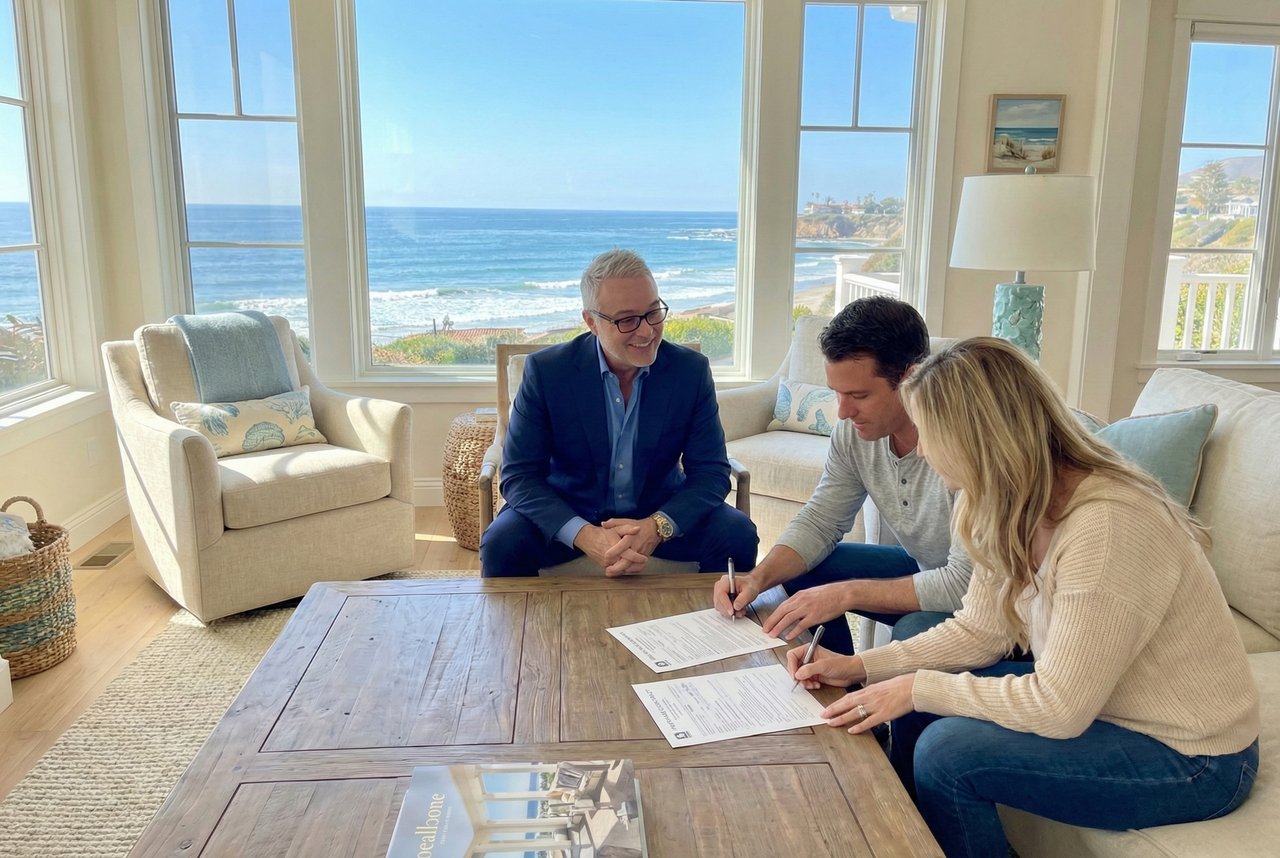
Buyer activity signals are the behaviors that show how strongly purchasers are responding to the homes currently available. Showings, repeat visits, open-house traffic, requests for information, offer timing, pending sales, price resistance, and buyer follow-up can reveal changes in the market before those changes become obvious in closed-sale statistics.
For buyers and sellers on the Central Coast, the key is interpreting these signals together. A crowded open house does not automatically mean a property will receive multiple offers. A home with modest showing activity may still attract one highly motivated purchaser. A listing that receives significant online attention but few in-person visits may be revealing a different problem altogether.
San Luis Obispo County also contains many distinct buyer pools. Activity surrounding an entry-level condominium in San Luis Obispo can behave differently from activity around an acreage home in Atascadero, a beach-area property in Pismo Beach, or a wine country residence near Paso Robles.
Buyer activity becomes most useful when it answers a more precise question: are buyers simply looking, or are they becoming willing to act?
Central Coast Neighborhood Video Tour ⬇️
Early Showing Patterns Can Reveal the Depth of Demand
The first wave of showings can provide useful information about how buyers perceive a newly available property.
👉 How to Read Buyer Demand Before Selling on the Central Coast
A strong launch may include multiple appointments, agent inquiries, requests for disclosures, and buyers returning for additional consideration. When several of those behaviors occur together, the activity is more meaningful than raw showing volume alone.
Sellers should also compare the response with competing properties. Ten showings may be encouraging if comparable homes are receiving significantly fewer. The same number may be less impressive if similar listings are attracting substantially greater attention.
After more than 30 years representing Central Coast real estate, Joesef Jackson has seen that the direction of activity often matters more than one isolated number. A property that continues generating serious interest after its initial exposure is communicating something different from one whose activity falls sharply after the first weekend.
Buyer demand is strongest when attention begins converting into deeper investigation.
Buyer Decisions Become Visible Through What People Do Next
A showing demonstrates curiosity. What happens afterward begins to reveal intent.
👉 What Drives Buyer Decisions on the Central Coast?
Buyers who are seriously evaluating a property may request disclosures, ask detailed questions, investigate insurance or financing, schedule a second visit, bring another household member, or ask their agent to explore possible terms.
These actions require greater commitment than simply touring a home.
Sellers should therefore distinguish between traffic and progression. A listing can receive substantial initial attention without moving buyers farther into the decision process. When that happens repeatedly, there may be a disconnect between the property's online appeal and how buyers perceive its value after seeing it in person.
The reverse can happen with a property that generates fewer visits but produces a high percentage of serious follow-up.
Meaningful buyer activity is not necessarily loud. It is activity that progresses toward a decision.
Offer Strength Shows How Buyers Value the Opportunity
When offers begin arriving, their structure can reveal more than the proposed purchase price.
👉 What Affects Offer Strength on the Central Coast
The number of offers matters, but so do timing, contingencies, financing structure, deposit, closing preferences, and the willingness of buyers to accommodate terms that matter to the seller.
A single offer submitted quickly with well-considered terms may communicate substantial motivation. Several offers clustered below the asking price can communicate something different: buyers may like the property but share a similar view about value.
Offer behavior can also show whether competition is real or merely anticipated. Buyers sometimes improve terms when they believe another purchaser may secure the property. If buyers remain unwilling to move despite knowing that other interest exists, that resistance is useful information.
With more than 2,130 career transactions, Joesef has found that the relationship between price and terms frequently provides a more complete picture than simply counting the number of offers received.
Buyer Behavior Changes When Alternatives Feel More Attractive
Buyer activity never occurs in isolation.
👉 What Central Coast Sellers Should Know About Buyer Behavior
A purchaser deciding whether to act on one property is simultaneously judging the alternatives. New listings, price reductions, pending sales, financing conditions, and the perceived likelihood of another suitable property becoming available can influence behavior.
This explains why buyers may move aggressively one week and become more selective several weeks later even when the broader market has not dramatically changed.
A seller in Los Osos may see activity weaken because two comparable homes entered the market nearby. A property in Arroyo Grande could experience the opposite effect when competing listings go pending and remaining buyers have fewer suitable choices.
Buyer behavior is responsive. Sellers should interpret activity in relation to what buyers can choose at that moment, not solely according to what happened earlier in the season.
Greater Buyer Selectivity Often Appears Before Prices Adjust

A market does not need to experience falling prices for buyer behavior to change.
👉 How Buyer Selectivity Changes Market Conditions in San Luis Obispo County
Selectivity may first appear through longer decision periods, more second showings before offers, greater attention to condition, stronger resistance to ambitious pricing, and buyers declining homes they might previously have pursued.
These behaviors can represent an important transitional signal.
Sellers sometimes focus primarily on whether comparable closing prices have changed. Closed sales, however, reflect contracts negotiated weeks earlier. Current buyer behavior can provide a more immediate indication of how the next group of transactions may develop.
When buyers become more selective, differences between listings become more important. Properties offering a strong combination of price, presentation, location, and features may continue moving efficiently while less competitive homes begin accumulating time on market.
Patterns Across Several Listings Are More Useful Than One Busy Property
One popular listing can be an exception. Repeated behavior across comparable homes becomes a market signal.
👉 What Buyer Demand Patterns Reveal in San Luis Obispo County
If appropriately priced properties repeatedly attract immediate appointments and move into contract quickly, buyers are demonstrating urgency. If similar homes consistently receive initial traffic but remain available, demand may be present without sufficient willingness to meet seller expectations.
Patterns also help separate property-specific problems from broader market conditions.
If one home receives little activity while nearby alternatives are moving quickly, the issue may involve price, presentation, property characteristics, or positioning. If most comparable listings are experiencing slower activity, the market itself may be changing.
This distinction matters because the response should be different. Sellers should avoid treating a marketwide slowdown as though it were unique to their property, but they also should not blame the overall market when competing homes are clearly performing better.
Repeat Showings Are Often More Informative Than First Visits
A second visit usually represents a higher level of consideration.
Buyers frequently use the first showing to decide whether a home belongs on their shortlist. A return visit may involve closer examination of room dimensions, street activity, views, parking, outdoor space, renovation possibilities, or other details that could influence an offer.
Repeat visits are especially meaningful when they occur quickly.
A buyer who returns with a spouse, contractor, family member, or other adviser may be moving closer to a decision. That still does not guarantee an offer, but it demonstrates that the property has survived the first stage of comparison.
Sellers should pay attention to the questions accompanying those visits. Repeated questions about the same issue can identify a point buyers are struggling to evaluate.
The most useful signal is not simply that buyers returned. It is what they are trying to resolve before deciding whether to proceed.
Pending Sales Show Where Buyers Have Actually Committed
Active listings show what buyers can consider. Pending sales show where someone has already made a commitment.
The National Association of REALTORS® describes its Pending Home Sales Index as a leading indicator of housing activity based on signed contracts for existing homes.
At the local level, pending activity can reveal where demand is converting into contracts. If several similar properties go pending within a short period, buyers may be absorbing inventory even before those transactions appear as closed sales.
This can influence both sides of the market. Sellers may face less competition as comparable homes leave the active market. Buyers may discover that waiting has reduced the number of alternatives available.
Pending activity is especially useful when interpreted alongside new listings. The balance between homes entering the market and homes being absorbed can reveal whether buyer choice is expanding or contracting.
Price Resistance Can Be Seen Before a Seller Reduces the Price

Buyers communicate price resistance through behavior.
A property may receive plenty of online views and respectable showing traffic while producing no serious offers. Buyers may repeatedly praise the home but choose less expensive alternatives. Agents may report that clients like the property but cannot justify the asking price relative to competing choices.
These are different signals from a listing that receives almost no attention at all.
The first situation may indicate that the property itself has appeal but the perceived value equation is weak. The second may indicate a positioning problem substantial enough that buyers are not even reaching the comparison stage.
Sellers should watch for consistency in feedback rather than reacting to one opinion. When several unrelated buyers behave similarly, the pattern deserves attention.
Pricing resistance frequently appears in buyer actions before it appears in a formal price reduction.
Online Engagement Is Useful Only When It Leads Somewhere
Digital activity can be an early indicator of interest, but it should not be confused with purchase intent.
Listing views, saves, shares, and inquiries can reveal whether buyers are noticing a property. The important question is whether that attention progresses into appointments, repeat visits, disclosure requests, or offers.
A listing that generates strong online engagement but limited in-person activity may be attracting attention for reasons that do not translate into purchase interest. Price, photographs, architecture, or an unusual feature can generate curiosity without creating sufficient motivation.
Conversely, certain properties may attract a smaller but more relevant digital audience.
The seller does not need every buyer to engage with the listing. The goal is to attract enough of the buyers for whom the property is genuinely competitive.
Digital activity is therefore most useful as the beginning of the conversion process, not the final measure of demand.
Time Between Listing and First Serious Offer Is a Valuable Signal
The speed at which activity becomes contractual can reveal how urgently buyers perceive the opportunity.
A property receiving a strong offer shortly after launch may have aligned well with current buyer expectations. A listing that experiences weeks of showings without a serious proposal is communicating something different even if traffic remains steady.
Sellers should avoid assuming that more exposure automatically solves the issue.
Additional time can introduce new buyers, but it also gives existing buyers more evidence that the property may remain available. As that perception develops, urgency can decline.
The first serious offer does not need to be accepted to provide useful information. Its timing, price, terms, and relationship to other activity can establish an early benchmark for how the market is responding.
The longer a property remains available, the more important it becomes to understand why interest has not converted.
Mortgage-Rate Movement Can Change Activity Before Prices Move
Buyer activity can react quickly to changes in borrowing costs because mortgage rates influence the monthly payment associated with a given purchase price.
Freddie Mac explains that mortgage rates affect buyer affordability and publishes its Primary Mortgage Market Survey as a benchmark for average mortgage rates.
When financing costs change, sellers may notice differences in showing activity, price sensitivity, or the price ranges receiving the strongest response before closed-sale data reflects the shift.
This does not mean every change in buyer activity can be attributed to interest rates. Local inventory, property quality, seasonality, employment, and buyer expectations all interact.
The important point is that buyer activity can respond faster than prices. Watching behavior can therefore provide useful context while broader market statistics are still catching up.
Cancellation and Withdrawal Patterns Can Reveal Buyer Conviction
Not every buyer who expresses interest remains committed.
A market in which purchasers repeatedly withdraw before writing, delay decisions, or shift toward lower-priced properties can indicate declining conviction even when showing traffic remains respectable.
Sellers should distinguish this from normal buyer comparison.
Most buyers evaluate several properties before making a decision. What matters is whether the same hesitation appears repeatedly across many listings.
When buyers are highly motivated, they tend to resolve uncertainties faster because they are concerned about losing the opportunity. When alternatives are plentiful or affordability is under pressure, they may be more willing to wait.
This behavior can emerge gradually.
The market does not suddenly switch from active to inactive. The transition often begins with buyers taking more time, asking more questions, rejecting more compromises, and requiring a stronger value proposition before acting.
Different Price Ranges Can Produce Opposite Buyer Signals
Buyer activity should never be generalized across every price point.
A San Luis Obispo condominium serving one buyer group may receive steady traffic while larger homes at another price level experience slower demand. Coastal luxury property can operate on an entirely different decision cycle, where a smaller number of highly qualified buyers may still represent healthy activity.
The size of the buyer pool changes with affordability and property type.
This is why comparing open-house attendance between unrelated properties provides little useful information. Ten visitors may be disappointing for one listing and exceptional for another.
Sellers should judge activity against the norms of the actual competitive segment.
Buyers can use the same framework. A market described as “slow” may still contain a narrow price range where desirable listings move quickly, while a generally active market can contain segments where buyers have substantial time and leverage.
Buyer Activity Can Reveal a Market Transition Before Closed Sales
Closed transactions are important because they establish completed market evidence. Their limitation is timing.
The buyer decision that produced today's closing may have occurred several weeks earlier.
Current showings, second visits, pending activity, offer frequency, negotiation behavior, and price resistance provide a closer view of what buyers are doing now.
Joesef's experience representing more than $1.81 billion in career real estate volume has shown that these behavioral shifts can become particularly useful during transitional markets. Sellers who rely exclusively on older closed sales can miss changes developing in the active market, while buyers who assume last month's competition still exists may misjudge their current position.
Buyer activity should not replace comparable sales. It adds a second layer of information: how today's buyers are responding to today's choices.
The Strongest Signal Is Conversion From Interest to Commitment
No single metric defines buyer demand.
A busy showing schedule is encouraging. Repeat visits are stronger. Disclosure requests and detailed questions indicate deeper evaluation. Offers demonstrate willingness to act. Pending sales confirm that buyers and sellers have reached agreement.
The progression between those stages is what gives buyer activity meaning.
When properties consistently move from exposure to showings, from showings to serious follow-up, and from follow-up to contracts, demand is converting efficiently. When buyers repeatedly stop at the same stage, the market is revealing resistance that deserves investigation.
For Central Coast buyers and sellers, reading those transitions can provide a much more useful picture than simply asking whether the market feels “busy.”
The most important activity signal is not how many people looked at a property. It is how many became sufficiently motivated to make a commitment.
Frequently Asked Questions
What are buyer activity signals in real estate?
Buyer activity signals are observable behaviors such as showings, repeat visits, disclosure requests, offers, pending contracts, negotiation patterns, and price resistance that indicate how purchasers are responding to available homes.
Does a busy open house mean a home will receive multiple offers?
No. Attendance measures interest, but follow-up behavior and actual offers provide stronger evidence of buyer commitment.
Why are repeat showings important?
A second visit usually means the property has survived the buyer's initial comparison and is receiving deeper consideration before a potential offer.
What does it mean when a home gets many showings but no offers?
It can indicate price resistance, a property-specific concern, stronger competing alternatives, or another mismatch between buyer expectations and the listing.
Are pending sales a good measure of current buyer demand?
Pending sales are useful because they show where buyers have recently entered contracts, providing a more current demand signal than completed sales alone.
Can buyer activity change before home prices change?
Yes. Showing patterns, offer frequency, buyer hesitation, and negotiation behavior can shift before those changes appear in closed-sale pricing data.
Should sellers react to one piece of negative buyer feedback?
Usually not. Repeated behavior or consistent feedback from unrelated buyers is more meaningful than one isolated reaction.
How should Central Coast sellers judge whether buyer activity is strong?
Activity should be compared with similar properties in the same location, price range, property type, and competitive segment rather than with the market as a whole.
If you are preparing to buy or sell real estate on the Central Coast and want personalized guidance, contact Joesef Jackson at SLO Life Realty Group.