
Understanding cash flow is one of the most important steps when evaluating an investment property on the Central Coast. Whether you're looking at a long-term rental in San Luis Obispo County or exploring opportunities in cities like Arroyo Grande or Nipomo, the ability to accurately assess income versus expenses determines whether a property is truly a smart investment—or a costly mistake.
In many Central Coast transactions, what often stands out is that investors focus too heavily on purchase price and appreciation, while underestimating the importance of consistent monthly performance. Cash flow is what sustains your investment over time. Let’s break down exactly how to evaluate it.
Righetti Ranch — San Luis Obispo Neighborhood Tour👇
What Cash Flow Really Means in Real Estate
Cash flow is the difference between the income a property generates and the expenses required to operate it. Positive cash flow means the property is producing income after all costs. Negative cash flow means you're contributing money each month to hold the property.
On the Central Coast, this calculation can vary widely depending on location, property type, and rental demand. For example, coastal properties in Pismo Beach may command higher rents but also come with higher acquisition and maintenance costs.
👉 What Makes a Good Long-Term Rental Property in San Luis Obispo County?
Step 1: Calculate Gross Rental Income
Start with the total monthly rent you expect to receive. This includes:
- Base rent
- Additional income (parking, storage, etc.)
Be realistic. Look at comparable rentals in the same neighborhood—not just listing prices, but what properties are actually renting for.
👉 Buying a Home in San Luis Obispo County: How Location Impacts Price and Lifestyle
Step 2: Account for Vacancy and Rental Gaps
One of the most common mistakes investors make is assuming 100% occupancy. That rarely happens.
A typical vacancy rate might range from 5%–10%, depending on the property and market conditions. On the Central Coast, areas near Cal Poly or downtown San Luis Obispo may have lower vacancy, while more rural areas could see longer gaps between tenants.
Adjust your rental income accordingly:
- Example: $3,000/month rent with 5% vacancy = $2,850 effective income
This adjustment creates a more realistic cash flow projection.
Step 3: Identify All Operating Expenses

This is where many investors underestimate costs.
Your monthly expenses should include:
- Mortgage (principal + interest)
- Property taxes
- Insurance
- Property management (if applicable)
- Maintenance and repairs
- HOA fees (if applicable)
- Utilities (if landlord-paid)
On the Central Coast, property taxes are governed by California law, including Proposition 13 and their official guidelines are important to familiarize yourself with.
Understanding how these taxes are structured is critical for long-term projections.
👉 Property Taxes on the Central Coast: What Homeowners Should Know
Step 4: Factor in Maintenance and Capital Expenditures
Beyond monthly expenses, you need to plan for long-term costs like:
- Roof replacement
- HVAC systems
- Exterior upkeep
A common rule of thumb is setting aside 5%–10% of rental income for maintenance and capital expenditures.
What often stands out in Central Coast properties—especially older homes in areas like Morro Bay or Los Osos—is that deferred maintenance can significantly impact profitability if not accounted for early.
Step 5: Calculate Net Cash Flow
Now bring everything together:
Cash Flow = Effective Rental Income – Total Expenses
Example:
- Rent: $3,000
- Vacancy (5%): -$150
- Effective Rent: $2,850
Expenses:
- Mortgage: $1,800
- Taxes: $400
- Insurance: $150
- Maintenance: $200
Total Expenses: $2,550
Net Cash Flow: $300/month
This is your actual return before considering appreciation or tax benefits.
Step 6: Evaluate Return Metrics (Beyond Cash Flow)
Cash flow alone doesn’t tell the full story. You should also evaluate:
- Cash-on-cash return
- Cap rate
- Long-term appreciation potential
👉 What Cap Rate Means for Central Coast Investment Properties
Step 7: Consider Market Conditions and Demand
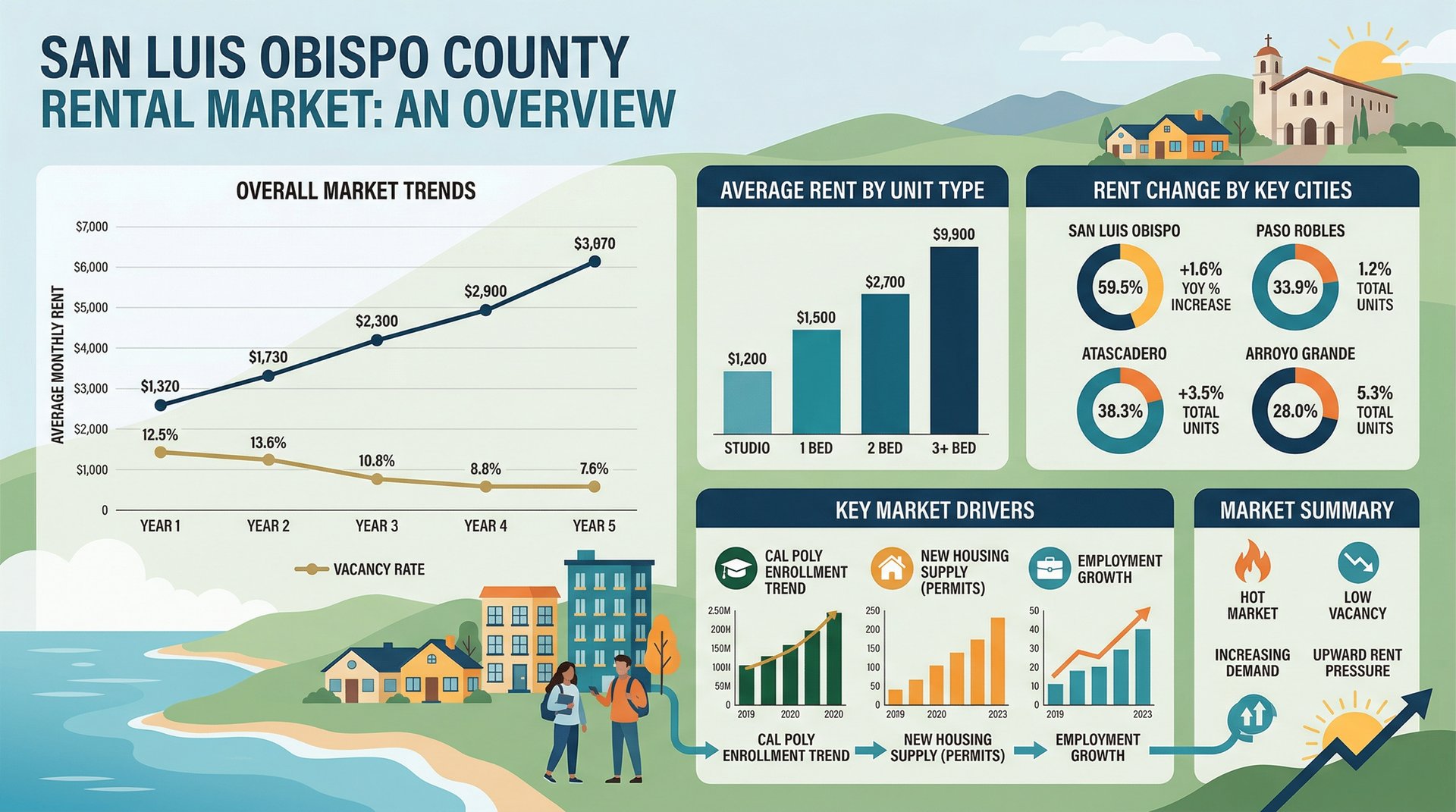
Cash flow doesn’t exist in a vacuum—it’s influenced by the broader market.
On the Central Coast, rental demand is driven by:
- Limited housing inventory
- University presence (Cal Poly)
- Coastal lifestyle demand
👉 How Vacancy Rates and Rental Demand Affect Investment Decisions in San Luis Obispo County
You should also stay aware of regulatory considerations. California housing policies and rental laws can influence both income and expenses:
Step 8: Stress-Test Your Investment
Before committing to a property, test different scenarios:
- What if rents drop 10%?
- What if vacancy increases?
- What if maintenance costs spike?
This helps you understand risk tolerance and avoid overextending financially.
Many experienced investors on the Central Coast prioritize stability over aggressive projections. A property that performs consistently—even with conservative assumptions—is often the stronger long-term investment.
Step 9: Align Cash Flow With Your Investment Goals
Not every property needs to generate strong positive cash flow immediately.
Some investors prioritize:
- Appreciation
- Tax advantages
- Long-term equity growth
Others prioritize:
- Monthly income
- Financial independence
There’s no one-size-fits-all strategy—but your cash flow analysis should align with your specific goals.
FAQ
How much cash flow is considered good on the Central Coast?
It depends on your investment goals, but even modest positive cash flow can be strong in high-demand markets like San Luis Obispo County.
Should I buy a property with negative cash flow?
In some cases, investors accept negative cash flow for long-term appreciation, but it requires careful financial planning.
Do Central Coast properties typically cash flow well?
Cash flow can be tighter due to higher purchase prices, but strong rental demand helps offset this in many areas.
If you’re evaluating investment opportunities on the Central Coast and want help analyzing real numbers, strategies, and property performance, contact me.
Internal Linking Note
Some plain-text references in this article will become live internal links as additional Central Coast real estate guides are published.