Evaluating a home’s true ownership cost means looking beyond the mortgage payment and estimating what the property will actually require from the household each month and each year. Principal and interest matter, but so do property taxes, homeowners insurance, HOA dues when applicable, utilities, recurring services, maintenance, and predictable near-term capital expenses. A home that appears affordable at the purchase-price level can feel very different once those property-specific costs are included.
That matters on the Central Coast because two homes with similar prices can produce very different ownership expenses. A compact San Luis Obispo residence may have limited exterior upkeep, while a Paso Robles property with acreage may involve irrigation, wells, septic systems, outbuildings, fencing, or more extensive landscape care. A Pismo Beach condominium may shift some exterior responsibilities into HOA dues, while a detached home in Arroyo Grande places more of those costs directly on the owner.
The useful comparison is therefore not simply “Can I make this payment?” but “What does this particular property cost to operate, maintain, insure, and own over time?” Buyers should identify recurring obligations, estimate irregular expenses in annualized terms, and separate optional lifestyle choices from costs created by the property itself. That produces a more realistic ownership number and makes it easier to compare homes that look similar on price but differ materially in ongoing expense.
Central Coast Neighborhood Video Tour ⬇️
Start With the Full Monthly Housing Obligation
👉 How to Review Inspection Findings Before Negotiating on the Central Coast
The mortgage payment is only the starting point. Buyers should identify principal and interest, estimated property taxes, homeowners insurance, mortgage insurance when applicable, and any HOA or condominium dues that will continue after closing.
A buyer can underestimate the real monthly burden by looking only at the amount automatically withdrawn for the mortgage. HOA dues, for example, may sit outside that payment entirely.
The Consumer Financial Protection Bureau provides a monthly payment worksheet that separates taxes, insurance, HOA fees, maintenance, home improvement, and utilities when buyers build a housing budget.
A buyer comparing properties should therefore create one housing number that includes recurring obligations regardless of who collects them. That gives the mortgage payment the proper context rather than allowing it to represent the entire ownership budget.
Separate Purchase Costs From Ownership Costs
👉 What Costs Buyers Often Overlook on the Central Coast
Closing costs and ownership costs answer different questions. Closing costs tell the buyer what is required to complete the purchase. Ownership costs describe what the property will continue to require after the transaction is finished.
A lender fee, escrow charge, title-related expense, or prepaid item can affect cash needed at closing without becoming an ongoing monthly burden. Property taxes, insurance premiums, HOA dues, utilities, landscape service, septic maintenance, or recurring equipment care can continue for years. Mixing those categories makes it harder to understand the financial effect of choosing one home over another.
Buyers should build a forward-looking ownership budget rather than simply total the money due at settlement. The goal is to estimate what normal life in the property will cost once the transaction itself is behind them.
That distinction also prevents a relatively inexpensive closing from creating a false impression that the home itself will be inexpensive to own.
Estimate Property Taxes From the Buyer’s Ownership Position
👉 What Buyers Should Know About Property Taxes Before Buying on the Central Coast
Property-tax planning should be based on the buyer’s expected assessment after purchase, not simply on what the current owner is paying. California’s acquisition-value system means that a long-time owner can have a tax basis that differs substantially from what a new purchaser may face after a change in ownership.
The California State Board of Equalization explains that, in most residential purchases, a change in ownership causes the property to be reassessed to current fair market value as of the ownership change, subject to applicable exclusions and rules.
Buyers should therefore avoid treating the seller’s current tax bill as a reliable forecast of their own. The purchase price, assessed value, local voter-approved charges, and supplemental assessment process can all affect what appears after closing.
For a buyer comparing homes in Templeton, San Luis Obispo, and Nipomo, the tax calculation should be built from the buyer’s likely ownership position rather than from the history attached to each seller.
Treat Insurance as a Property-Specific Cost
👉 What Buyers Should Know About Homeowners Insurance Before Buying on the Central Coast
Insurance should be evaluated before the buyer assumes that two similarly priced homes carry similar ownership costs. Premiums and available coverage can vary because of location, construction, roof condition, prior claims, wildfire exposure, replacement cost, property features, insurer underwriting, and other factors.
The useful number is not a generic estimate. It is a realistic quote for the actual property and the coverage the buyer expects to maintain. A home in Cambria, a rural North County property, and a newer subdivision residence in South County may present different underwriting questions even when their purchase prices overlap.
A property that is difficult or expensive to insure may change the buyer’s monthly budget, financing assumptions, or willingness to proceed. Insurance therefore belongs in the ownership-cost analysis while the buyer is still evaluating the property rather than after every other financial assumption has been established.
Add HOA Dues and Understand What They Replace
👉 How Buyers Should Evaluate Monthly Payment Comfort on the Central Coast
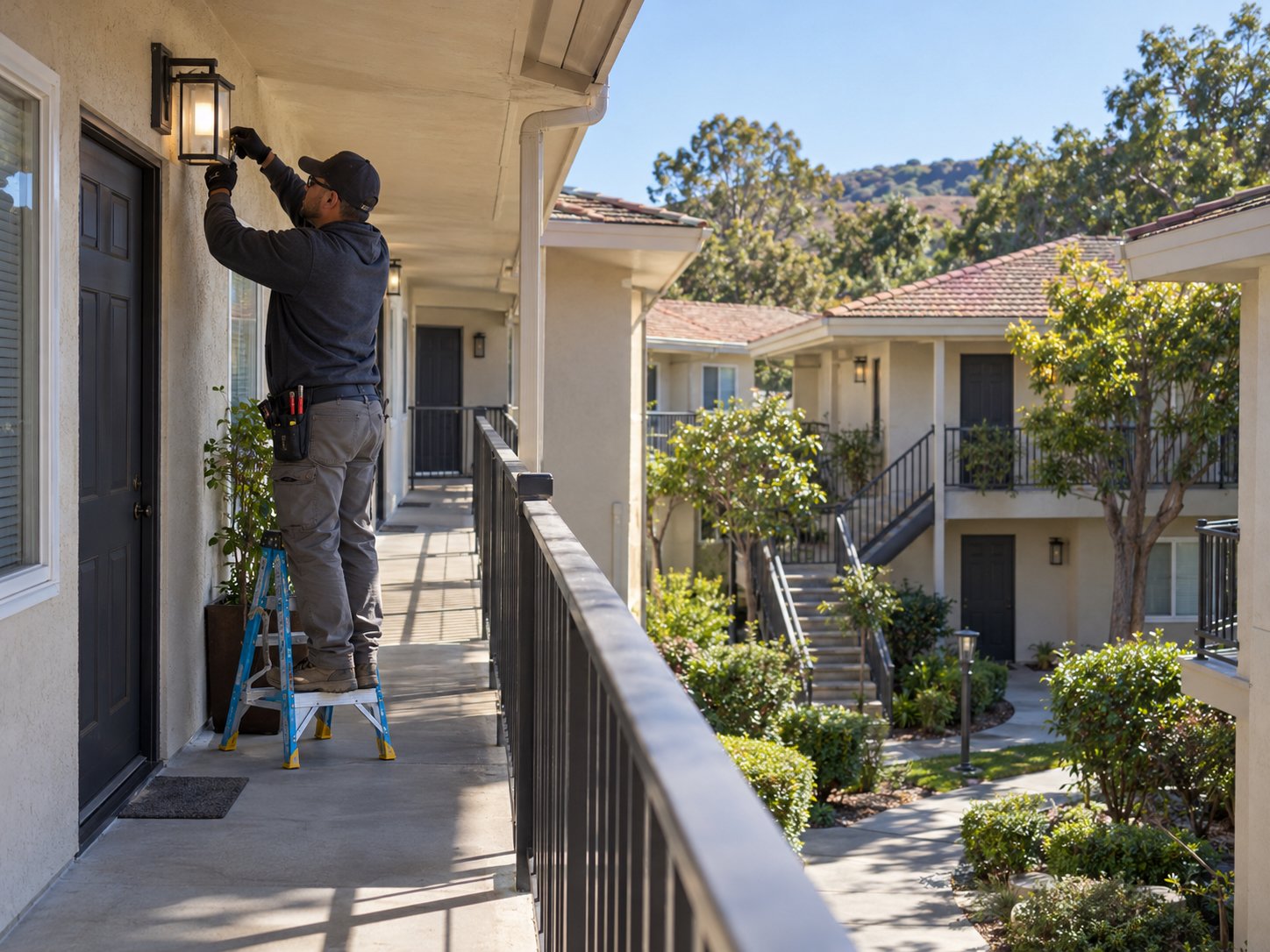
Some properties shift ownership responsibilities into a homeowners association rather than eliminating those costs.
A monthly HOA fee may cover exterior maintenance, common-area landscaping, private roads, gates, community amenities, building insurance, reserves, management, or other shared expenses depending on the association. Buyers should determine exactly what the dues cover and which responsibilities remain with the individual owner.
A condominium in Pismo Beach may have a larger monthly association expense than a detached home nearby, but part of that payment may replace costs the detached homeowner would pay independently. Simply labeling HOA dues as an “extra” can distort the comparison.
Buyers should place HOA dues alongside the costs they replace rather than looking at the dues in isolation. They should also understand whether expenses such as interior insurance, utilities, parking, exterior components, or certain repairs remain their responsibility despite the monthly association payment.
Build Utilities and Services Into the Property Comparison
👉 What Buyers Should Know About Utility and Service Costs in San Luis Obispo County
Utilities are affected by both household behavior and the property itself. Square footage, insulation, heating and cooling systems, solar, water source, irrigation, pool equipment, landscape design, number of structures, and occupancy pattern can all influence operating cost.
A larger Atascadero property may have more irrigation demand than a compact coastal home. A residence with a pool, detached conditioned office, extensive outdoor lighting, or electric vehicle charging can create a different monthly profile from a simpler property at the same purchase price. Rural properties may also have well, propane, septic, or other service arrangements that change how costs are paid and maintained.
Prior-owner utility bills can provide context when available, but they should not be treated as a guarantee because households use properties differently.
The stronger comparison identifies the physical characteristics that drive consumption and determines whether those costs fit how the buyer expects to use the property.
Convert Irregular Expenses Into an Annual Ownership Number
Some ownership costs do not arrive monthly, but they are still part of the true cost of the home. Buyers can make these expenses easier to evaluate by converting them into an annual or monthly reserve.
A bill that arrives once every year or several years can feel invisible when the buyer is focused on monthly affordability. Tree work, septic service, pool care, private-road contributions, pest service, water-treatment maintenance, or other recurring property needs may not appear on a conventional mortgage calculation at all.
Annualizing those obligations makes them easier to compare with recurring monthly expenses. A buyer does not need to predict every invoice perfectly; the purpose is to avoid treating an identifiable recurring obligation as though it costs nothing between service dates.
This approach is especially useful when comparing a relatively simple city property with a rural or coastal home whose recurring service demands are more extensive. The purchase prices may be similar while the operating profiles are not.
Distinguish Routine Maintenance From Capital Exposure
Routine maintenance and major capital expenses should not be treated as the same category.
Routine maintenance keeps the property functioning and protects existing components. Capital exposure involves larger replacements or major work that may occur less frequently but can materially affect the owner’s finances. Roof replacement, major exterior work, substantial drainage correction, or replacement of a large mechanical component belongs in a different planning category from ordinary servicing or landscape care.
The buyer does not need to predict the exact year every component will fail. The goal is to identify known age, condition, and replacement exposure so the ownership calculation does not assume that every major component will remain cost-free indefinitely.
A slightly higher-priced home with recently completed major work may compare favorably with a lower-priced home carrying several near-term capital needs. That does not automatically make the updated home the better purchase, but it changes the financial comparison.
True ownership cost includes timing as well as dollars.
Count the Cost of Property Complexity

Property complexity can create ownership expense even when nothing is defective.
A home with multiple structures, extensive landscaping, a pool, retaining walls, private drainage systems, long driveways, gates, large decks, or sophisticated mechanical equipment simply has more components to operate and maintain. Buyers should consider whether those features add enough value to justify the additional responsibility they create.
This is not an argument against complex properties. A Paso Robles estate with acreage and outbuildings may be exactly what a buyer wants. The question is whether the buyer is evaluating the entire ownership proposition rather than only the lifestyle benefit.
With more than 30 years of experience and 2,130+ closed transactions, Joesef Jackson has seen buyers become focused on acquiring desirable property features without assigning a realistic cost to maintaining them.
A feature can add substantial value to the buyer’s lifestyle while simultaneously increasing the amount of money, service, and attention the property requires.
Consider the Cost of Time and Coordination
Ownership cost is not purely financial. Some properties require more time, scheduling, vendor coordination, and ongoing attention than others.
A home that depends on several specialty service providers may require more active management than a simpler residence. A large landscaped parcel can demand irrigation oversight, pruning, weed control, equipment care, and seasonal work. A coastal exterior may require periodic attention to materials exposed to marine conditions. A property with an HOA can reduce certain hands-on responsibilities while adding rules, approvals, and association-level decisions.
Buyers should recognize when one property will require substantially more management than another. That consideration can be particularly important for a household that travels frequently, has limited time for property oversight, or simply wants ownership to remain relatively uncomplicated.
Two homes can therefore have similar direct expenses while imposing very different practical demands. Those demands should be part of the comparison when they are significant enough to affect how the buyer will actually experience the property.
Compare Homes Using One Consistent Ownership Framework
The most useful ownership-cost comparison applies the same categories to every serious property.
For each home, estimate the mortgage obligation, property taxes, insurance, HOA dues when applicable, utilities, recurring services, routine maintenance, and a reasonable reserve for identifiable capital exposure. Then note costs that are property-specific rather than universal.
This makes unlike properties easier to compare. A Morro Bay home may carry one set of expenses tied to a compact coastal setting, while an Arroyo Grande property may have more land and service responsibilities. One home may cost more to purchase but less to maintain. Another may have a lower monthly payment but require more cash reserves.
For buyers considering buying a home in San Luis Obispo County, using the same ownership framework for each serious option helps prevent the listing price or mortgage estimate from dominating the decision.
The better comparison asks what each property requires from the household after ownership begins.
True Ownership Cost Is a Decision Tool, Not a Single Perfect Number
A true ownership-cost estimate will never be perfectly precise because utility use changes, insurance premiums can change, repairs occur unpredictably, and major components do not fail on a fixed schedule.
That does not make the exercise less useful. The purpose is to expose meaningful differences before the buyer commits.
A buyer who identifies taxes, insurance, HOA dues, utility patterns, recurring services, maintenance responsibilities, and known capital exposure has a stronger basis for comparison than someone relying on principal and interest alone. The estimate can be expressed as a monthly range, an annual budget, or both.
On the Central Coast, where buyers may compare substantially different property types within the same search, that broader view matters. Price tells the buyer what it costs to acquire the home. True ownership cost explains what the property may require to keep.
Those are related numbers, but they are not the same.
Frequently Asked Questions
What should buyers include when calculating the true cost of owning a home?
Buyers should consider the mortgage obligation, property taxes, homeowners insurance, mortgage insurance when applicable, HOA dues, utilities, recurring property services, routine maintenance, and identifiable future capital expenses.
Is the mortgage payment the same as total monthly housing cost?
No. Depending on the property and loan structure, additional costs can include HOA dues, utilities, maintenance, service expenses, and other property-specific obligations that are not part of the mortgage payment itself.
Should buyers use the seller’s current property-tax bill when budgeting?
Not as the sole estimate. A buyer’s ownership may result in a different assessed value and tax obligation, so the expected post-purchase tax position should be evaluated separately.
How should buyers compare HOA and non-HOA properties?
Look at both the HOA dues and the expenses those dues may replace. A non-HOA property can have no association payment but still require the owner to pay directly for exterior maintenance, landscaping, private infrastructure, or amenities.
Do utility bills matter when comparing two homes?
Yes. Property size, systems, irrigation, pools, solar, water source, landscaping, and other features can materially affect operating costs even when purchase prices are similar.
How should buyers account for major future repairs?
Known capital exposure can be incorporated as a reserve or planning amount rather than pretending the cost does not exist until something fails. The appropriate estimate depends on the actual component and property.
Can a more expensive home actually cost less to own?
Potentially. A higher purchase price does not automatically mean higher total ownership expense. Property condition, insurance, utilities, HOA structure, maintenance requirements, and future capital needs can materially change the comparison.
Should buyers calculate ownership costs before making an offer?
Ideally, buyers should understand as much of the ownership profile as reasonably possible before becoming committed to a property, then refine the estimate as additional information becomes available during the transaction.
If you are preparing to buy or sell real estate on the Central Coast and want personalized guidance, contact Joesef Jackson at SLO Life Realty Group.