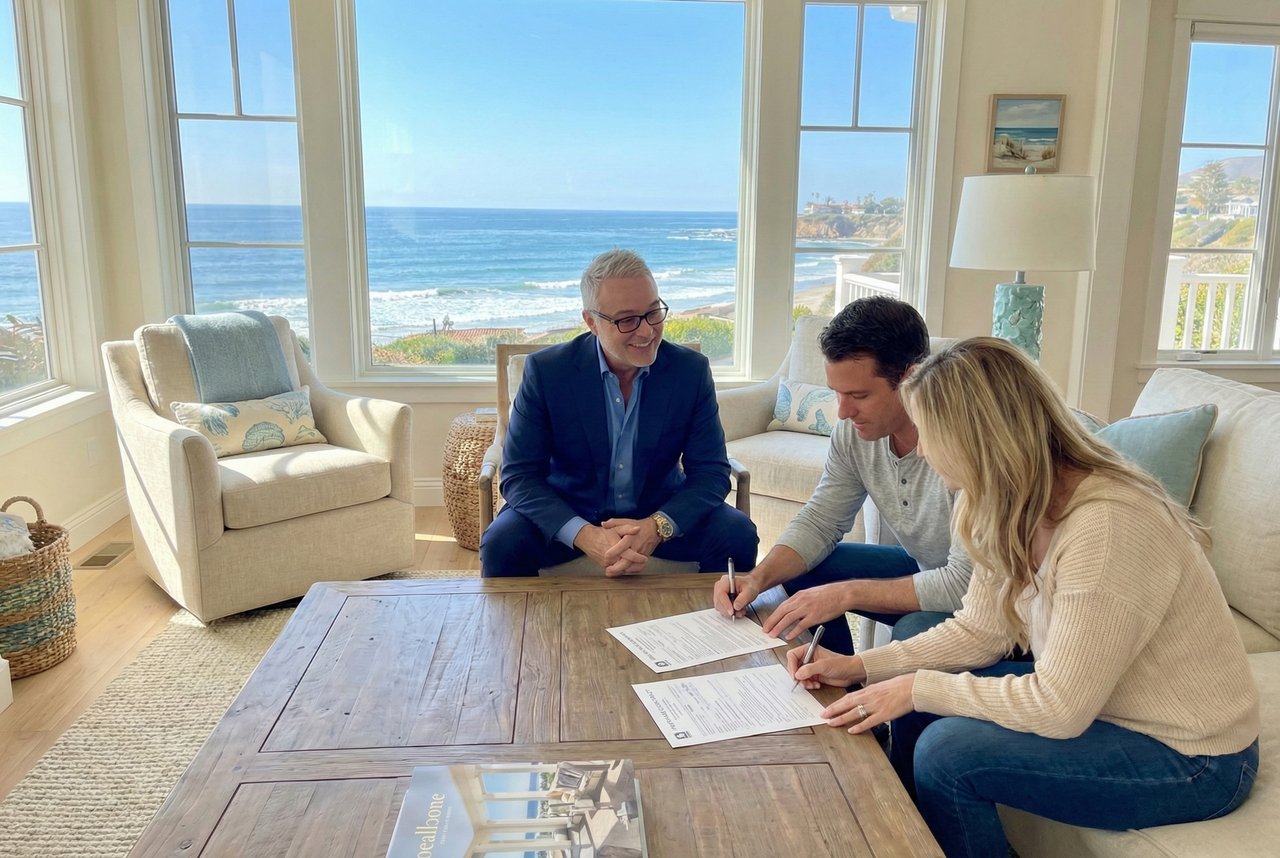
Buyer follow-up is one of the most useful signals sellers receive after a showing because it reveals whether initial interest is developing into serious consideration. A buyer who simply tours a property and disappears is communicating something very different from one who asks additional questions, requests disclosures, returns for another visit, or begins discussing terms.
For sellers in San Luis Obispo County, the challenge is interpreting that follow-up without overreacting to every individual comment or assuming that silence automatically means rejection.
Buyer behavior can vary by price range, property type, financing, and motivation. A buyer considering a primary residence in San Luis Obispo may move quickly, while someone evaluating a second home in Cambria may take more time. A purchaser comparing acreage near Templeton may have different follow-up questions from someone considering a condominium in Pismo Beach.
The most useful question is not simply whether a buyer liked the home. It is whether their actions after the showing indicate that the property remains under serious consideration.
Central Coast Neighborhood Video Tour ⬇️
Buyer Behavior After a Showing Often Reveals More Than the Showing Itself
A showing establishes that a buyer was interested enough to visit. What happens afterward provides much stronger information.
👉 What Central Coast Sellers Should Know About Buyer Behavior
Some buyers leave quickly and never engage again. Others ask their agent to obtain disclosures, clarify a property feature, confirm an inclusion, investigate a neighborhood detail, or schedule another visit.
Those actions indicate progression.
Sellers should avoid placing too much weight on facial expressions or casual comments during the showing. Buyers may be reserved while touring, enthusiastic without being serious, or critical because they are actively comparing the property with another home.
After more than 30 years representing Central Coast real estate, Joesef Jackson has found that post-showing behavior is generally more useful than attempting to interpret what buyers seemed to feel while they were physically inside the home.
The strongest follow-up tends to involve action, not compliments.
Serious Buyer Decisions Usually Produce Specific Questions
The nature of the follow-up can indicate how far a buyer has progressed.
👉 What Drives Buyer Decisions on the Central Coast?
General questions may show curiosity. Specific questions often indicate that a buyer is testing whether a remaining concern can be resolved.
A buyer may ask about a recent improvement, the age of a feature, an association rule, an included item, an outdoor boundary, parking, a permit, or another detail that matters personally.
The specificity is important.
Someone asking whether a refrigerator remains may already be imagining ownership. A buyer asking for additional information about an improvement may be deciding whether that issue affects an offer. A request for disclosures can indicate that the buyer wants to move beyond the showing and examine the property more seriously.
Sellers do not need to interpret every question as evidence that an offer is imminent. They should recognize that detailed follow-up often means the buyer has not dismissed the property.
Offer Quality Can Be Influenced by What Gets Resolved Before Writing
Follow-up can affect the strength and structure of an eventual offer.
👉 What Affects Offer Strength on the Central Coast
A buyer who receives satisfactory answers before writing may feel more comfortable presenting cleaner or more decisive terms. A buyer who still has several unresolved concerns may protect against those unknowns through contingencies, pricing, credits, or other terms.
This is why seller responsiveness matters during active interest.
The objective is not to persuade buyers that every concern is insignificant. It is to provide accurate information so they can decide how the issue affects their offer.
Joesef's experience across more than 2,130 transactions has shown that some negotiation points can be reduced before an offer is ever written simply because the buyer received enough information to understand what they were evaluating.
Follow-up therefore is not just feedback. It can influence how the next stage of negotiation develops.
Demand Is Easier to Judge When Several Buyers Behave Similarly
One buyer's response can be idiosyncratic. A pattern across several buyers can become meaningful market evidence.
👉 How to Read Buyer Demand Before Selling on the Central Coast
If several buyers request additional information, return for another showing, or ask their agents to stay engaged, the property may be attracting serious consideration even if no offer has arrived yet.
If most buyers tour once and disappear, the seller is receiving a different signal.
Patterns can also emerge around the same issue. Several buyers may ask about the same feature, question the same aspect of the price, or compare the property with the same competing listing.
That repetition matters more than one isolated opinion.
A home in Atascadero may receive strong interest in its lot but repeated concern about a particular interior limitation. A coastal property may generate substantial enthusiasm for its setting while buyers remain sensitive to another characteristic.
The purpose of follow-up is to identify what is consistently advancing or interrupting the buyer decision.
Feedback Should Inform Strategy Without Controlling It
Sellers can become overly reactive when every buyer comment is treated as a directive.
👉 How to Use Buyer Feedback Without Overreacting on the Central Coast
One buyer may dislike a color, another may object to stairs, and another may want a larger yard. Those preferences may have little value if they are unique to the individual buyer.
Meaningful feedback usually has three characteristics: it repeats, it relates to a real purchase decision, and buyer behavior supports it.
For example, repeated comments that a property feels priced above comparable alternatives deserve more attention when buyers also decline to write offers. Repeated praise for a feature becomes more meaningful when buyers return specifically to evaluate that feature again.
The seller's strategy should respond to evidence, not noise.
A Second Visit Is Often a Different Kind of Showing
A repeat showing usually means the buyer has moved beyond first impressions.
👉 What Makes Buyers Revisit a Listing in San Luis Obispo County
The second visit may be slower and more analytical. Buyers may test furniture placement mentally, examine storage, revisit outdoor areas, listen to neighborhood activity, consider renovation possibilities, or bring another person whose opinion matters.
The questions may also change.
Instead of asking whether they like the home, buyers may be asking whether they can make the purchase work.
That distinction makes a repeat showing one of the stronger forms of buyer follow-up.
It does not guarantee an offer. Some buyers return specifically to eliminate a property from consideration. But a second visit generally means the home remained compelling enough to deserve additional time.
Silence After a Showing Is Information, but It Is Not Always a Verdict
Sellers often become concerned when a buyer leaves and no immediate response follows.
That silence can mean several things.
The buyer may have eliminated the property. They may also be touring other homes, discussing finances, waiting for another decision-maker, reviewing disclosures, or simply taking more time than the seller expected.
This is why one period of silence should not automatically trigger a strategic change.
The more useful context is what happens across several buyers and over a reasonable period.
If one buyer disappears while others remain engaged, the listing may be performing normally. If nearly every buyer disappears after the first showing, the pattern deserves closer analysis.
Follow-up is useful precisely because it needs context.
Agent-to-Agent Communication Can Reveal Useful Buyer Intent
Buyers often communicate important information through their agent rather than directly.
The buyer's agent may ask whether other offers are expected, whether the seller has a preferred closing period, whether a certain item is included, or whether the seller would consider a particular structure.
Those questions can indicate that the buyer is considering how to build an offer.
Sellers should distinguish between legitimate information gathering and speculative probing.
Not every question means an offer is coming. But when the questions become specific to terms and timing, the buyer may be moving beyond property evaluation into transaction strategy.
This is one reason responsive agent communication matters.
A delayed answer can interrupt that progression and give the buyer more time to shift attention elsewhere.
Disclosure Requests Can Signal a Higher Level of Engagement
A request to review property disclosures often indicates that the buyer wants more than a visual impression.
The California Department of Real Estate provides information regarding residential disclosures and the role they play in California property transactions.
A buyer who begins reviewing disclosures is investing additional time in the property and evaluating information that could affect an eventual offer.
That does not mean disclosure review always leads to a purchase.
Some buyers may discover an issue that causes them to move on. From the seller's perspective, that is still useful information because the buyer has progressed far enough to make a more informed decision.
The value of follow-up is not that every engaged buyer converts. It is that the seller can distinguish casual traffic from genuine evaluation.
Buyer Follow-Up Can Reveal Whether Price Is Becoming the Main Issue
Price resistance does not always appear through direct criticism.
A buyer may like the home, return for another visit, request information, and still decline to write.
When that pattern repeats, the question becomes whether buyers see sufficient value at the current asking price.
Sellers should compare that behavior with competing properties.
If similar homes are receiving offers while buyers repeatedly stop short on one listing, the seller may have meaningful evidence that value perception is limiting conversion.
The California Association of REALTORS® publishes local and county market data that can provide context for listing activity, price trends, inventory, and market conditions.
The strongest analysis then narrows that information to the specific homes buyers are actually comparing.
Follow-up tells the seller what buyers are doing. Competitive analysis can provide context for why they may be doing it.
Questions About Timing Can Signal Purchase Intent
Some of the strongest buyer follow-up has little to do with the physical property.
Questions about closing dates, possession, seller timing, or scheduling can indicate that the buyer is beginning to imagine how the transaction would work.
A buyer who asks when the seller wants to close may be determining whether that timing fits their own needs. Someone asking about possession may be planning around a move or another housing commitment.
Those are transaction-oriented questions.
They suggest the buyer may have moved beyond deciding whether the home is attractive and begun considering whether an agreement is practical.
Sellers should answer these questions accurately and avoid creating unnecessary rigidity when flexibility has value.
Repeat Questions Can Identify the Barrier to an Offer
Sometimes buyers circle back to the same issue more than once.
That repetition can identify the exact point preventing a decision.
A buyer may repeatedly ask about a room's permitted use, an association restriction, a boundary, a previous improvement, or the possibility of a particular closing arrangement.
The seller should not assume the buyer is being difficult.
The issue may simply carry enough importance that the buyer cannot proceed without resolving it.
If the information can be verified, doing so may remove the barrier. If the issue cannot be changed, the buyer can at least make a decision based on accurate information.
Follow-up becomes particularly valuable when it identifies one unresolved question rather than a general lack of enthusiasm.
Buyers Who Bring Another Decision-Maker Are Often Progressing

A buyer may return with a spouse, parent, contractor, architect, financial adviser, or another trusted person.
The significance depends on why that person is involved.
Bringing someone else into the process often means the buyer has already formed enough interest to seek confirmation from another perspective.
A contractor may be evaluating a potential improvement. A family member may be weighing in on a major financial commitment. Another household decision-maker may simply need to see the home before an offer can be written.
The visit should not automatically be interpreted as an impending offer.
It does indicate that the buyer is allocating additional time and resources to the property.
Follow-Up Can Strengthen or Weaken Over Time
Buyer interest is dynamic.
A buyer may leave the first showing highly engaged and become less interested after viewing another property. Another buyer may initially seem uncertain and become more serious after comparing alternatives.
This is why sellers should not freeze a buyer's status based on one interaction.
The useful question is whether engagement is increasing or decreasing.
More detailed questions, another showing, discussion of terms, or disclosure review suggest increasing engagement. Longer response times, cancelled appointments, or a shift toward unrelated alternatives may indicate declining interest.
The direction of follow-up is often more informative than the starting point.
Seller Responses Should Be Accurate Rather Than Overly Persuasive
When a serious buyer asks a question, the temptation can be to provide the most favorable possible answer.
That approach can damage credibility if the information later proves incomplete.
If the answer is known, it should be communicated accurately. If it requires verification, the better response is to verify it.
Sellers should remember that serious buyers may incorporate those answers into a major financial decision.
Direct representation from the first seller conversation through closing allows Joesef Jackson to keep buyer questions connected to seller information and the transaction record rather than allowing informal answers to become disconnected from verified facts.
The objective is not to sell through every concern. It is to give serious buyers information they can rely on.
Follow-Up From Several Buyers Can Create Negotiating Context
When more than one buyer remains actively engaged, the seller's position can change.
Multiple second showings, disclosure requests, detailed agent inquiries, or conversations about offer timing may indicate that buyer interest is overlapping.
That does not guarantee multiple offers.
It does mean the seller should understand the level of active engagement before responding to one buyer in isolation.
For example, a buyer may ask whether the seller would consider a particular concession. The answer may depend partly on whether other serious buyers are progressing at the same time.
This is where accurate tracking matters.
A seller should know which buyers merely toured the home and which remain genuinely active.
Follow-Up Should Be Used to Diagnose, Not Chase, Buyers
There is a difference between responding professionally to buyer interest and trying to pursue every visitor until they make a decision.
Excessive follow-up can create pressure without improving the transaction.
The stronger approach is to make relevant information available, respond to legitimate questions, obtain useful agent feedback where appropriate, and watch how the buyer behaves.
If a buyer is interested, the progression usually becomes visible.
If they are not, repeatedly attempting to revive the same buyer may be less productive than understanding what the experience reveals about the listing overall.
Seller strategy should be built around market patterns rather than one reluctant prospect.
Buyer Follow-Up Shows Where Interest Becomes Commitment
The most useful way to understand buyer follow-up is as a progression.
A showing creates exposure to the physical property. Questions indicate additional thought. Disclosure review deepens investigation. A second visit demonstrates continued consideration. Conversations about timing or terms move closer to transaction planning. An offer converts that interest into a contractual proposal.
Not every buyer will pass through every stage.
For sellers in San Luis Obispo County, the value lies in recognizing how many buyers continue moving and where others stop.
That information can reveal whether the listing is attracting the right audience, whether a particular issue is blocking progress, whether pricing deserves attention, and whether meaningful competition may be developing.
Buyer follow-up is valuable because it turns a showing from a simple appointment into market evidence.
Frequently Asked Questions
What does buyer follow-up mean after a home showing?
Buyer follow-up includes actions taken after a showing, such as requesting information, reviewing disclosures, asking additional questions, scheduling another visit, or discussing possible offer terms.
Is a second showing a strong sign of buyer interest?
It can be. A second visit usually means the property remains under serious consideration, although it does not guarantee an offer.
What does it mean if buyers ask many questions after a showing?
Detailed questions can indicate that buyers are trying to resolve specific issues before deciding whether to proceed.
Should sellers worry if a buyer does not respond immediately after a showing?
Not necessarily. Buyers may be viewing other homes or considering several factors. Patterns across multiple buyers are more useful than one delayed response.
Can buyer follow-up show that a home is overpriced?
It can contribute to that conclusion. If buyers repeatedly remain interested but stop before writing while comparable homes receive offers, pricing may deserve closer review.
Why do buyers request disclosures before making an offer?
Buyers may want additional property information before deciding how strongly they want to pursue the home or how to structure an offer.
Should sellers answer every buyer question immediately?
Sellers should respond promptly when practical, but accuracy is more important than speed when information needs to be verified.
How should sellers use buyer feedback and follow-up together?
Look for repeated patterns supported by buyer behavior. Consistent comments combined with similar actions from several buyers provide stronger evidence than isolated opinions.
If you are preparing to buy or sell real estate on the Central Coast and want personalized guidance, contact Joesef Jackson at SLO Life Realty Group.