Preparing a home for serious buyers is different from simply making it look attractive. The goal is to remove unnecessary distractions, present the property's strongest characteristics accurately, and create an environment where qualified buyers can evaluate whether the home deserves serious consideration.
On the Central Coast, that process varies by property. A traditional home in San Luis Obispo may need a different preparation strategy from an acreage property near Atascadero, a coastal residence in Shell Beach, or a newer home in Nipomo. The strongest features, likely buyer expectations, and competing properties can all differ.
Serious buyers typically arrive with more purpose than casual browsers. They are comparing price, space, setting, improvements, functionality, and value against other homes they could purchase. They may return for a second visit, ask detailed questions, bring another decision-maker, or begin discussing an offer soon after the showing.
Effective preparation anticipates that level of scrutiny. It does not attempt to make the property appear perfect. It makes the home easier to understand, easier to experience, and easier to compare favorably with realistic alternatives.
Central Coast Neighborhood Video Tour ⬇️
Preparation Should Begin With the Property's Competitive Position
Sellers often begin by thinking about cleaning, staging, or improvements. The better starting point is understanding where the property will compete.
👉 Preparing Your Home for Sale on the Central Coast: Pricing, Staging, and Strategy
A home should be prepared for the buyers most likely to consider it, not for an imaginary universal audience. Those buyers will compare it with homes available in a similar price range, location, size, and property category.
A single-level residence in Arroyo Grande may compete heavily on ease of living, usable outdoor space, and overall condition. An older San Luis Obispo home may attract buyers who value architecture and location while accepting characteristics associated with its age. A property with acreage may need to communicate how the land actually functions rather than simply emphasizing lot size.
After more than 30 years representing Central Coast real estate, Joesef Jackson has found that seller preparation becomes more effective when every decision supports the property's actual market position. Spending money on improvements that buyers in that segment barely value can add expense without materially changing demand.
Presentation Should Make the Home Easier to Read
A buyer should not need extensive imagination to understand how the property works.
👉 How to Improve Home's Listing Presentation on the Central Coast
Furniture arrangement, lighting, visual clutter, window coverings, room purpose, and the connection between indoor and outdoor areas can influence how quickly buyers understand a home.
Preparation does not necessarily mean removing most of the seller's possessions. The objective is to reduce visual competition. Oversized furniture can make a room appear smaller than it is. Excess items on countertops can obscure usable workspace. Heavy window coverings may hide a view or reduce natural light that would otherwise be an important selling feature.
The strongest presentation usually makes architectural characteristics easier to notice. Buyers should recognize the proportions of the living spaces, the relationship between rooms, and the property's meaningful advantages without having to mentally subtract unnecessary distractions.
A well-prepared home gives buyers room to evaluate the property rather than the seller's belongings.
Preparation Should Reflect What Buyers Actually Prioritize
Sellers can waste time addressing items that have little influence on the buyer decision while overlooking features that matter far more.
👉 What Buyers Look for Most in Central Coast Homes Right Now
Buyer priorities vary by property type and price range, but practical elements often carry considerable weight: usable living space, natural light, storage, parking, outdoor areas, privacy, flexible rooms, and a property that feels reasonably well maintained.
The key is deciding which characteristics deserve emphasis in this particular home.
For example, a Paso Robles residence with a large covered outdoor area may benefit from presenting that space as a functional extension of the home. A compact property closer to downtown San Luis Obispo might gain more from emphasizing efficient use of interior space and convenient access to nearby amenities.
Preparing for serious buyers means allocating effort where it affects the purchase decision. Cosmetic perfection in one secondary room may matter less than making the property's strongest spaces function and photograph well.
Empty Homes Need Enough Context to Communicate Scale and Use
Vacant properties create a different preparation challenge.
👉 Should You Stage an Empty House Before Selling on the Central Coast?
An empty room can be difficult for buyers to judge. Without furniture, some spaces appear smaller while others lack an obvious purpose. Buyers may have difficulty determining whether a dining table fits comfortably, how a living room should be arranged, or whether an unconventional room can function as an office or guest space.
Staging can provide useful scale and context, but it should serve the architecture rather than overwhelm it.
Not every vacant property requires full staging. In some cases, selectively furnishing the main living spaces may be sufficient. In others, attractive architecture and straightforward room proportions can stand on their own.
The decision should be based on whether furnishings materially improve the buyer's ability to understand the property.
Serious Buyers Notice Whether Presentation Feels Complete
A property's presentation should feel deliberate from the first major impression through the secondary spaces.
👉 What Sellers Should Know About Property Presentation in San Luis Obispo County
That does not mean every closet or utility area needs to resemble a magazine photograph. It means obvious inconsistencies should not interrupt the buyer's experience.
A polished living room followed by an overloaded hallway can make the property feel less prepared. A beautiful backyard reached through a cluttered utility area can weaken the impact of an otherwise important feature.
Buyers tend to interpret the home as a whole.
With more than 2,130 career transactions, Joesef has observed that serious buyers frequently notice details casual visitors overlook because they are already imagining ownership. They open storage areas, study how rooms connect, evaluate parking, notice sightlines, and spend more time considering how the property would function after they move in.
Pre-Market Work Is Most Valuable When It Prevents Buyer Distraction
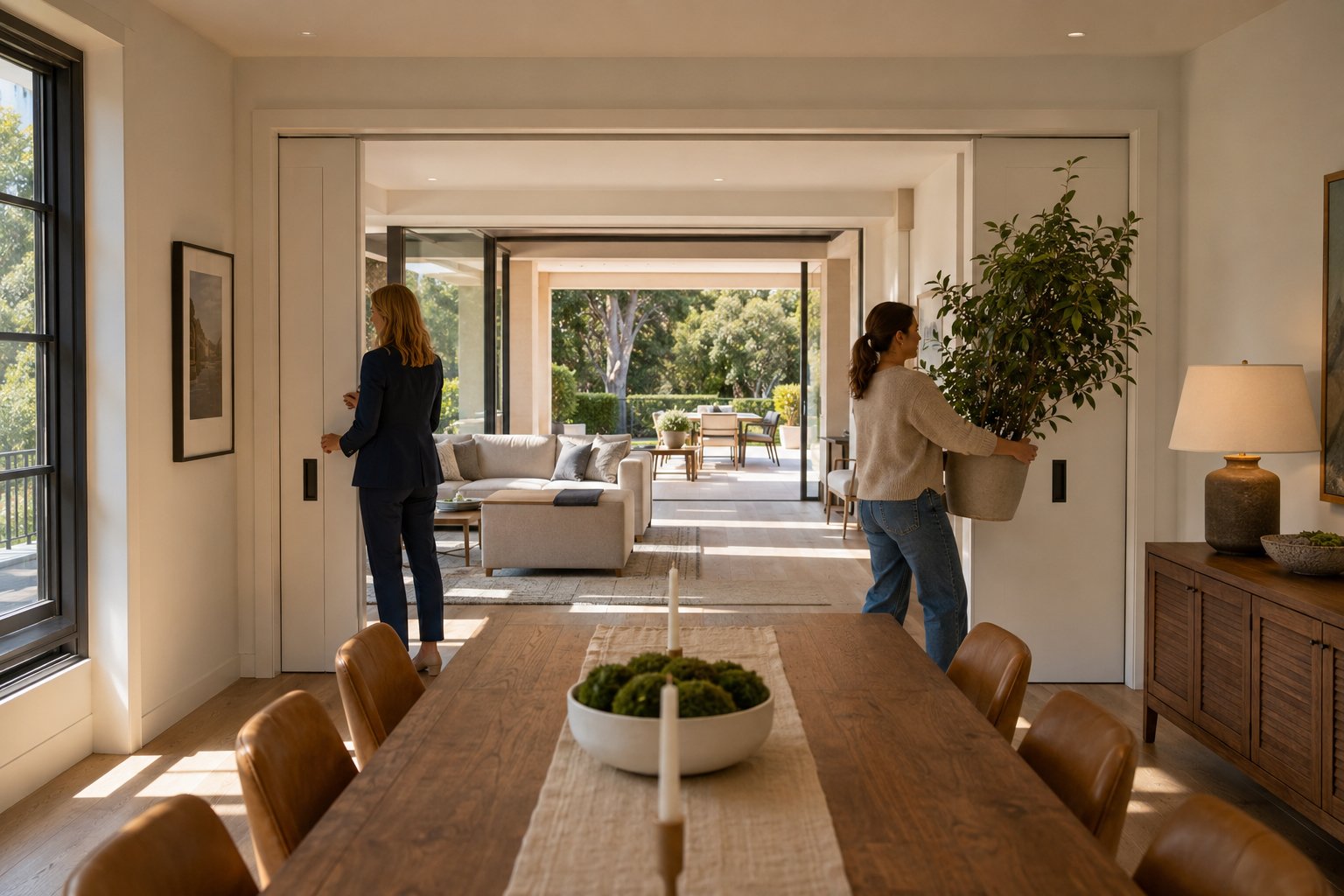
The strongest time to address avoidable problems is often before the listing becomes active.
👉 What Sellers Should Know About Pre-Market Preparation in San Luis Obispo County
Loose hardware, burned-out bulbs, damaged screens, sticking doors, unfinished touch-ups, obvious exterior neglect, and similar items may be relatively minor individually. Collectively, they can make a home feel less prepared than competing properties.
The purpose is not to renovate everything buyers might eventually change. It is to identify unfinished details that unnecessarily compete for attention.
Pre-market preparation also provides time to gather useful information about significant improvements, permitted work where relevant, warranties, association documents, or other property-specific items buyers may ask about later.
California sellers also have disclosure responsibilities that should be approached separately from marketing preparation. The California Department of Real Estate provides consumer information regarding disclosures and residential property transactions.
A seller should never use cosmetic preparation as a substitute for appropriate disclosure. Presentation and disclosure serve different purposes.
The Arrival Sequence Deserves More Attention Than Sellers Often Give It
The buyer experience begins before the front door opens.
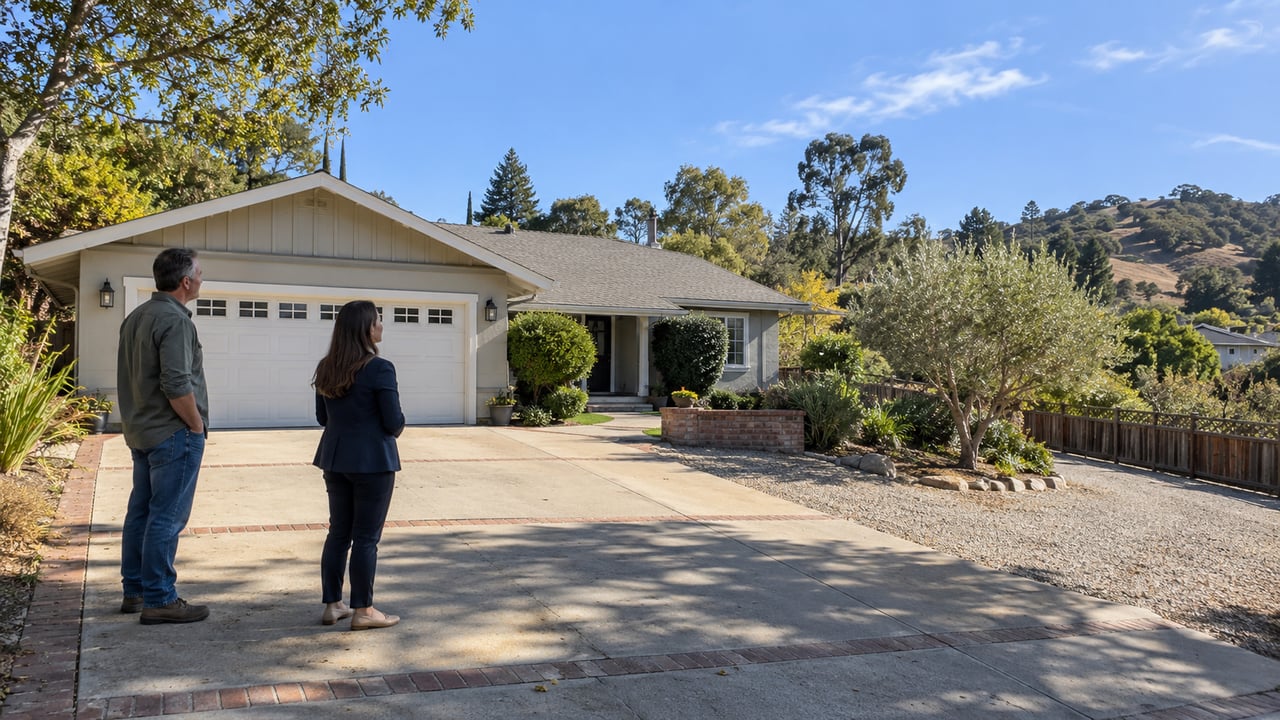
Parking, the approach to the house, gates, pathways, exterior lighting, landscaping, entry visibility, and the condition of the front door all contribute to the first physical impression.
This does not require elaborate landscaping.
A clear pathway, trimmed vegetation, functioning exterior lights, an unobstructed entrance, and an orderly arrival area can make the property feel easier to approach.
That sequence matters particularly for properties where the entrance is not obvious. Rural homes, hillside residences, flag lots, and homes with detached garages can create confusion if buyers are unsure where to park or how to enter.
A serious buyer should spend the first few minutes noticing the property rather than trying to determine how the property works.
Buyers Need Space to Experience the Home Without the Seller Present
Occupied homes can be challenging to show because the seller is still living there.
Whenever practical, buyers should have enough privacy during a showing to evaluate the property openly.
A seller remaining in the home can unintentionally change buyer behavior. Purchasers may avoid discussing concerns, hesitate to open closets or examine storage, move through rooms faster, or postpone questions until after leaving.
The National Association of REALTORS® provides extensive consumer research on how buyers search for homes and use both online and in-person resources throughout the purchasing process.
The in-person showing remains a critical point because it is where buyers determine whether the digital presentation translates into a property they would actually purchase.
Creating reasonable privacy allows that evaluation to occur naturally.
Lighting Should Reveal the Property Rather Than Create an Effect
Good lighting can materially change how a buyer experiences a home, but preparation should not depend on artificial atmosphere.
Natural light should be used where it is an advantage. Window coverings can be adjusted so buyers see outdoor connections and important views. Interior lights should function consistently so darker hallways, bathrooms, and secondary areas are easy to evaluate.
Time of day may matter for certain properties.
A residence with west-facing outdoor living could present differently in late afternoon than early morning. A home surrounded by mature trees may benefit from brighter midday showing periods. A coastal property affected by marine conditions can look different depending on weather and light.
The goal is not to conceal those realities. It is to choose a showing environment in which the home can be understood accurately.
Storage Areas Should Demonstrate Capacity Without Looking Artificial
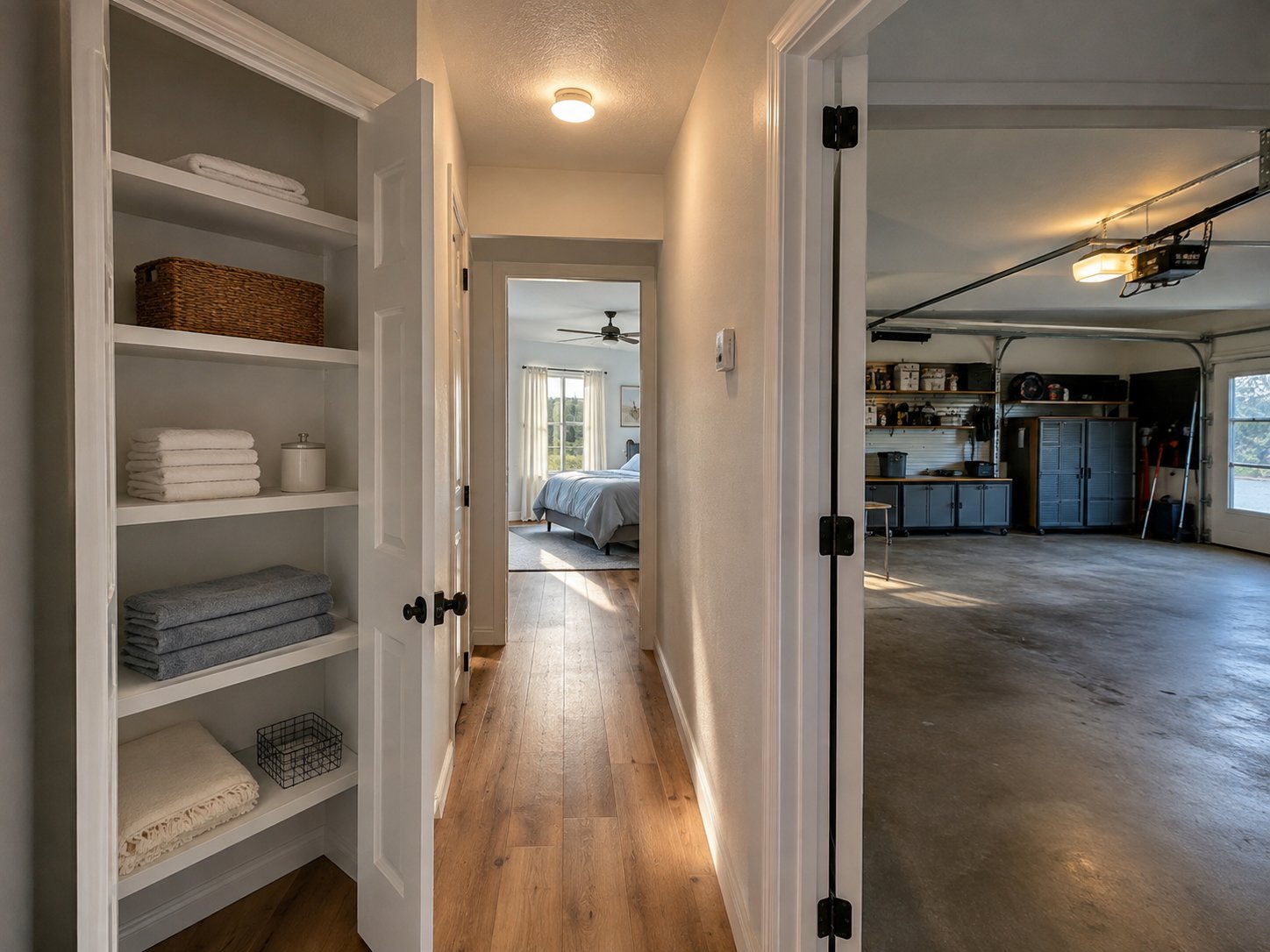
Serious buyers frequently examine storage.
Closets packed to capacity can make usable storage appear insufficient even when the property actually provides adequate space. Garages filled from wall to wall can make it difficult to evaluate parking or workspace.
Sellers do not need to empty every cabinet.
Reducing obvious excess can make the dimensions easier to understand. This is particularly useful when a home has features worth highlighting, such as a substantial pantry, built-in garage storage, walk-in closet, mudroom, or linen area.
Storage should communicate function.
The same principle applies to garages. If parking capacity is an important feature, buyers should be able to see that a vehicle can realistically use the space.
Outdoor Areas Should Demonstrate How They Function
Central Coast buyers often place meaningful value on outdoor living, but an outdoor space should communicate more than square footage.
A patio covered with unused furniture may feel smaller than it is. An overgrown path may hide access to a portion of the yard. A large parcel may appear less useful if buyers cannot understand where practical outdoor areas begin and end.
Preparation should make the organization of the exterior understandable.
In Morro Bay, that might mean keeping a protected courtyard open enough to demonstrate its relationship to the home. On a larger inland property, it may mean showing how the immediate residential yard relates to the remaining acreage.
The goal is not to landscape every portion of a property intensively. It is to make the areas buyers are likely to use easy to recognize.
Highly Personal Elements Can Compete With the Property
A home does not need to be stripped of personality before selling.
Buyers generally understand that an occupied property belongs to someone else. Excessive personalization becomes a problem when it dominates important surfaces, rooms, or focal points.
Large collections, numerous personal photographs, highly specialized décor, or rooms devoted entirely to an unusual use can make it harder for buyers to see the architecture and available space.
Selective editing can preserve warmth without allowing personal belongings to become the main visual subject.
The objective is not to make the home anonymous. It is to shift attention back toward the property.
Preparation Should Include the Areas Buyers Discover on a Second Visit
First showings and second showings are often different.
During an initial visit, buyers may focus on whether they like the home. During a return visit, they may examine practical details more closely.
They may look inside closets, inspect garage dimensions, study outdoor boundaries, consider furniture placement, listen for surrounding noise, or examine areas they moved through quickly the first time.
Seller preparation should anticipate that progression.
A property that feels polished only from obvious photographic viewpoints may lose strength when serious buyers begin examining it more thoroughly.
Consistent preparation throughout the property supports deeper buyer evaluation.
Strong Preparation Does Not Require Eliminating Every Flaw
Attempting to make a resale property appear flawless can become expensive and unnecessary.
Buyers understand that homes age. Materials wear. Styles change. Some purchasers will renovate regardless of what the seller does.
The more useful objective is distinguishing between a characteristic buyers can reasonably evaluate and a distraction the seller could address easily before marketing.
A dated bathroom may be an understandable property characteristic. A leaking faucet in that bathroom is an avoidable distraction. Older cabinetry may simply reflect the home's age. Doors hanging crookedly because of loose hardware can create an impression of neglect.
Preparation should prioritize the latter.
Seller Spending Should Be Tied to Likely Buyer Response
Pre-sale improvement decisions deserve financial discipline.
Painting, flooring, landscaping, lighting, repairs, staging, and larger improvements all cost money. The relevant question is whether an expenditure is likely to improve the property's competitive position enough to justify it.
The answer varies considerably by home.
A relatively modest visual improvement may dramatically improve an otherwise strong property. A major renovation immediately before sale may produce less value if the next buyer would have chosen different materials or finishes.
Joesef's experience representing more than $1.81 billion in career sales volume has reinforced the value of evaluating preparation through the buyer's likely response rather than the seller's desire to complete every possible project.
Preparation is a market strategy, not a remodeling contest.
Final Preparation Should Focus on Readiness Rather Than Perfection
As the listing date approaches, sellers should shift from improvement mode to readiness.
The home should be clean, organized, accessible, properly lit, and presented consistently with the marketing. Important spaces should function. Exterior areas should be understandable. Information likely to matter to serious buyers should be reasonably organized.
Continuing to add projects at the last minute can create its own problems.
Contractors, unfinished materials, delayed deliveries, or partially completed work can interfere with photography and showings.
At some point, the stronger decision is to stop improving and begin presenting.
Serious Buyers Respond to Homes That Are Easy to Evaluate
The purpose of preparing a home is not to create an illusion.
It is to remove the unnecessary obstacles between the buyer and the property.
Serious purchasers want to understand what they are buying. They notice how the rooms function, whether important spaces feel usable, how the outdoor areas connect, what distinguishes the property, and whether the asking price makes sense relative to the alternatives.
Effective preparation allows those questions to become the focus.
For Central Coast sellers, the strongest result occurs when buyers can walk through the home and spend their time considering whether they want to own it—not mentally compiling a list of avoidable distractions the seller left behind.
Frequently Asked Questions
What should sellers do first when preparing a home for serious buyers?
Start by identifying the property's likely buyer, competitive price range, and strongest features. Preparation decisions should support those specific advantages.
Does every home need professional staging before selling?
No. Some properties benefit from complete staging, while others may need only selective furnishings or adjustments to existing furniture.
How much should sellers remove from an occupied home?
Enough to make rooms, storage, circulation, and major features easy to understand without making the property feel unnecessarily empty.
Should sellers renovate before listing a home?
Not automatically. Improvements should be evaluated according to cost, expected buyer response, current competition, and whether the work materially improves the property's position.
Why does showing privacy matter to serious buyers?
Buyers often examine a home more carefully and discuss concerns more openly when they can tour without the seller present.
Do serious buyers look inside closets and garages?
Frequently. Storage and parking can be meaningful parts of the purchase decision, particularly during a second or more detailed showing.
Should sellers prepare differently for a second showing?
The property should be consistently ready throughout the marketing period because returning buyers often examine areas and practical details more closely.
What is the main goal of preparing a home for sale?
The goal is to make the property's strengths easy to recognize while reducing avoidable distractions that could interfere with serious buyer evaluation.
If you are preparing to buy or sell real estate on the Central Coast and want personalized guidance, contact Joesef Jackson at SLO Life Realty Group.