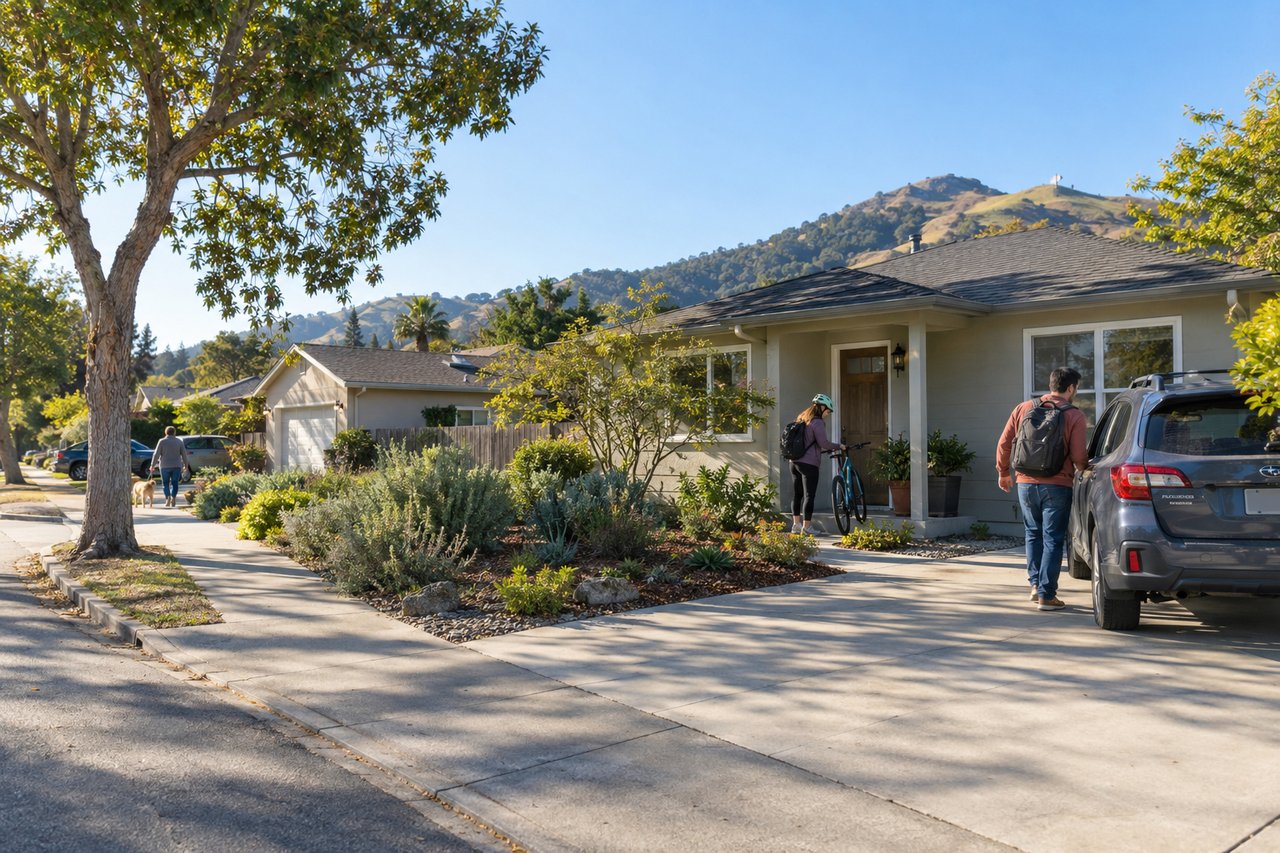
Rent stability is not the same as rent growth. For an investor, a stable rental market is one where a property can continue attracting qualified tenants at supportable rents without relying on unusually tight inventory, a temporary surge in demand, or aggressive annual increases. The stronger question is whether local demand is broad enough, repeatable enough, and well matched to the property type to remain resilient through normal market changes.
That distinction matters on the Central Coast because rental demand is not driven by one tenant profile. San Luis Obispo can be influenced by Cal Poly, professional employment, healthcare, and households that want access to the city, while Paso Robles and Atascadero can draw renters with different employment patterns, household sizes, and housing preferences. Coastal communities such as Pismo Beach or Morro Bay may have limited rental supply but also a different mix of year-round and seasonal housing pressures.
Investors should therefore evaluate rent stability through several connected signals: who rents in the area, why they stay, how many comparable units compete for those tenants, how quickly vacancies are absorbed, whether rents remain supportable after concessions, and whether the property itself matches durable local demand. A strong investment is not simply one that can command a high rent today. It is one whose achievable rent is supported by a tenant base likely to remain present over the holding period.
Central Coast Neighborhood Video Tour ⬇️
Start With Vacancy Risk, Not Asking Rent
👉 What Investors Should Know About Vacancy Risk in San Luis Obispo County
The first test of rent stability is whether the property can remain occupied at a supportable rent. High asking rents can look attractive on paper, but they are less meaningful if comparable units remain vacant for long periods or require repeated concessions to secure tenants.
Investors should look beyond a single vacancy-rate figure. A useful review includes days on market for comparable rentals, the number of competing units, turnover frequency, seasonal variation, and whether landlords are adjusting rents to fill units. National vacancy data can provide broader context, while the actual investment decision should be based on the property's local competitive set.
See details here:
https://www.census.gov/housing/hvs/
In San Luis Obispo County, vacancy exposure can differ materially by property type and location. A well-positioned two-bedroom unit near employment and everyday services may behave differently from a larger rural rental with a narrower tenant pool. A low vacancy assumption should therefore be earned through evidence rather than inserted automatically into an investment projection.
Stable rent begins with repeatable occupancy. An investor should know what normally happens when a comparable property becomes available, not simply what one occupied unit happens to be earning today.
Durable Rental Income Depends on More Than One Tenant Group
👉 What Makes Rental Income More Durable in San Luis Obispo County
Rent stability improves when demand comes from multiple sources rather than one narrow tenant segment. A property that can appeal to working professionals, couples, small households, retirees, or other long-term renters may be less exposed to a change affecting one group.
This does not mean every rental should appeal to everyone. The objective is to understand whether the local tenant base is broad enough to support the unit through different conditions. In San Luis Obispo, proximity to Cal Poly can create strong demand for some properties, but an investor should still ask whether the layout, parking, price point, and lease structure also make sense to other potential renters when student demand shifts.
The same principle applies in Arroyo Grande, Grover Beach, and Nipomo. A rental supported by several employment, lifestyle, and household patterns can be more resilient than one dependent on a single source of demand.
Durable income is usually supported by a durable reason to live there.
Read Tenant Demand Through Actual Leasing Behavior
👉 How Investors Should Read Tenant Demand on the Central Coast
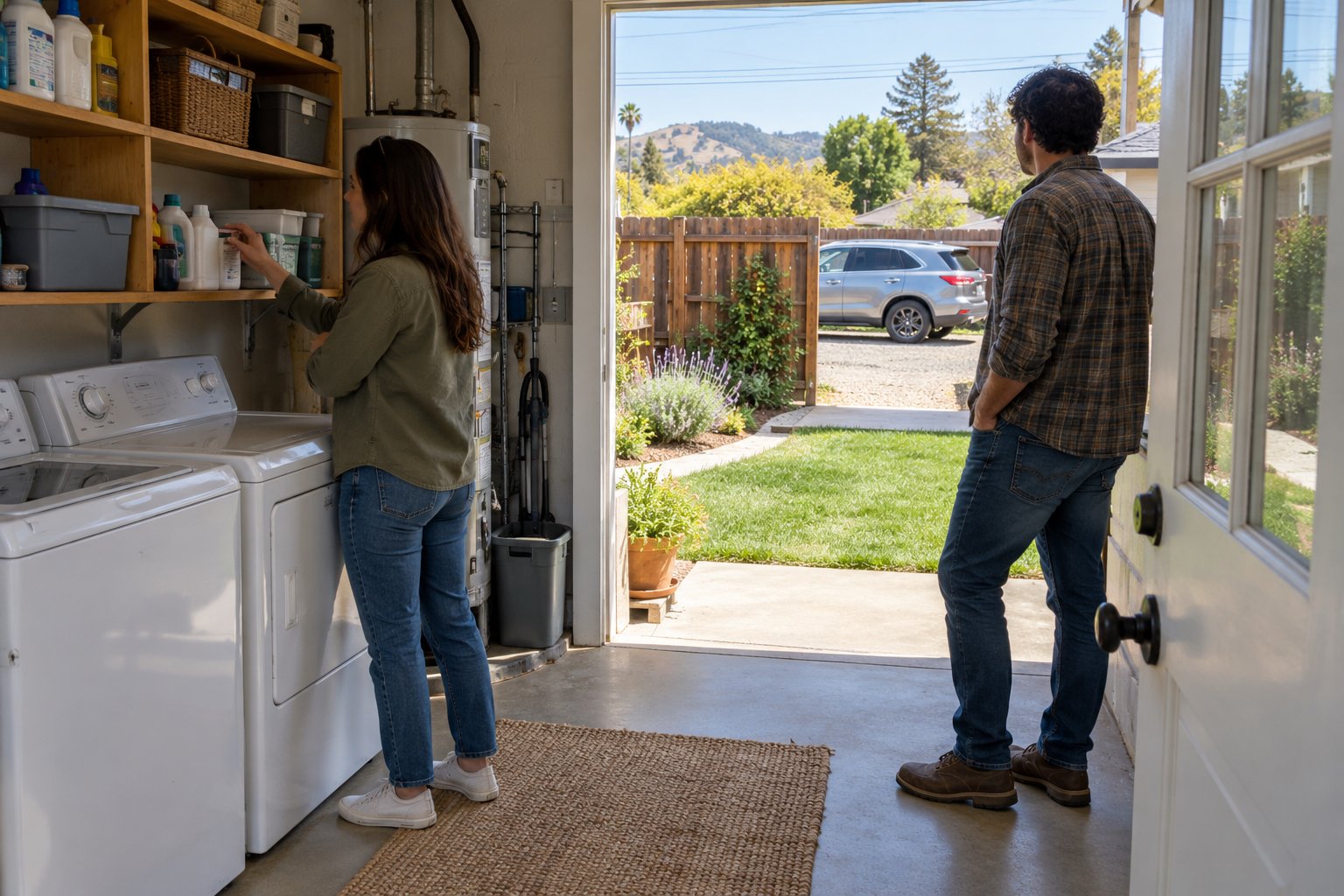
Tenant demand should be measured by what renters do, not simply by how many people inquire about a listing. Strong demand shows up when qualified tenants apply, units lease within a reasonable period, renewal activity remains healthy, and comparable properties do not need unusual incentives to secure occupancy.
An investor should separate attention from commitment. Online views and inquiries can be plentiful even when tenants reject the rent, location, parking, condition, or layout after closer review. The more useful evidence is whether comparable units convert interest into actual leases.
This is where neighborhood-level observation matters. In Morro Bay, a compact rental with parking and efficient use of space may have a different leasing profile from a larger inland home. In Atascadero, yard space, storage, or bedroom count may affect which households remain interested after touring.
Rent stability is stronger when the property consistently fits what local renters are actually choosing, not merely what they are clicking on.
Test the Rent Against Realistic Alternatives
👉 What Makes a Property Easy to Rent in San Luis Obispo County
HUD states that stable rent is the amount qualified tenants will repeatedly pay for the property in relation to realistic alternatives. Investors should compare similar units by location, bedroom count, condition, parking, outdoor space, utilities, lease terms, and other features that materially affect renter choice.
Area-level rent benchmarks can provide context, but they should not substitute for a property-specific review of current comparable rentals.
A Templeton rental with a garage and usable outdoor area may support a different rent from a similarly sized unit without those features. A recently remodeled unit may also command a premium, but the investor should determine whether renters repeatedly recognize enough value to support that premium.
The important distinction is between an achievable rent and an optimistic rent. If the projected number depends on finding an unusually motivated tenant at every turnover, the assumption is fragile.
Stable rent should survive comparison.
Neighborhood Stability Supports Repeatable Tenant Demand
👉 How Investors Should Evaluate Neighborhood Stability in San Luis Obispo County
Neighborhood stability is not simply about whether home values are rising. For rental investors, it means the area continues to support the routines tenants care about: access to jobs, schools when relevant, transportation, shopping, services, recreation, and a housing type that fits local households.
A neighborhood can remain a strong rental location even when rent growth slows. If tenants continue to seek the area, vacancies remain manageable, and competing units continue leasing without excessive discounting, the underlying demand may still be durable.
Investors should pay attention to whether the neighborhood is becoming more or less useful to its likely renter base. In Paso Robles, proximity to employment and everyday services may matter more for some tenants than proximity to tourist destinations. In coastal communities, parking, access, and year-round usability can materially affect renter appeal.
Stable rent is usually connected to a location that remains practical for everyday life, not merely one that is fashionable during a particular market cycle.
Long-Term Tenant Appeal Matters More Than a Short-Term Premium
👉 How to Evaluate Long-Term Tenant Appeal on the Central Coast
A property that consistently fits common tenant needs may produce more stable rent than one that achieves a higher number only because of a specialized feature or temporary shortage. Investors should evaluate whether the unit's layout, bedroom count, parking, storage, laundry, outdoor space, and general functionality support a broad and repeatable tenant pool.
This is especially important when buying a home in San Luis Obispo County for investment purposes. A property may appear attractive because current rents are high, but long-term performance depends on whether future tenants will continue to value the same combination of features.
A two-bedroom unit with practical parking, laundry, and straightforward living space may have stronger long-term appeal than a highly customized rental at the same price point.
The investor should focus on features tenants repeatedly use and value rather than features that only make the property memorable during one leasing cycle.
Stable Rent Should Survive Normal Turnover
Every long-term rental eventually faces turnover. The more important question is whether a change in tenants creates a normal leasing process or exposes a fragile rent assumption.
If a unit can be re-leased at a similar supportable rent without extended vacancy, aggressive concessions, or major repositioning, the rent may be relatively stable. If each turnover requires a substantial price adjustment or an unusually specific tenant profile, the income stream is more sensitive.
Investors should review how comparable rentals behave when tenants move out. Are new listings absorbed efficiently? Do landlords hold asking rents or reduce them? Are properties at certain price points staying available longer? Does the unit have features that encourage tenants to renew rather than search for an alternative?
One successful lease does not establish a trend.
Repeated leasing at similar economic terms is much stronger evidence that the property's rent is supported by the market rather than by a single favorable transaction.
Property Type Creates Its Own Rental Market
Local rent stability is partly a market question and partly a property question. Even within the same neighborhood, different housing types can perform differently because they serve different renter needs.
A studio, condominium, detached house, duplex unit, or larger family-sized rental can each have a different tenant pool. In San Luis Obispo, a smaller unit close to the city core may attract a different renter from a three-bedroom detached property farther from Cal Poly. In Nipomo, a home with a yard and garage may appeal to households that would not consider an apartment-style unit.
Investors should therefore avoid applying one local rent trend to every property. The relevant competitive market is the intersection of location, property type, bedroom count, condition, features, and price.
A stable rental is one that fits a durable tenant segment within its own competitive set rather than simply benefiting from strong demand somewhere nearby.
Watch for Rent Growth That Outruns Tenant Capacity

Rapid rent growth can improve short-term revenue, but it does not automatically indicate long-term stability. Investors should ask whether household incomes, local employment, unit quality, and competing supply can continue supporting the rent being charged.
When rent pushes beyond what the likely tenant pool can comfortably justify, the response may appear through longer vacancy periods, greater resistance at renewal, more comparison shopping, or migration toward less expensive alternatives. A nominally higher rent can therefore produce a weaker economic result if occupancy deteriorates.
This is particularly relevant when comparing nearby Central Coast communities. A renter who finds San Luis Obispo increasingly difficult at a particular price point may consider Grover Beach, Atascadero, or another community if the commute, property type, and housing trade-offs remain acceptable.
Stable rent is not necessarily the highest number achievable during the strongest part of a market cycle. It is the amount that continues making sense when tenants have credible alternatives.
Use More Than One Leasing Cycle as Evidence
Rent stability is easier to judge when investors look across several leasing cycles rather than one moment. Historical asking rents, vacancy periods, renewal behavior, turnover timing, and comparable leasing patterns can reveal whether performance has been consistent or unusually dependent on current conditions.
This does not require perfect historical data. Prior listings, owner records, property-management experience, available rental histories, and current comparable units can all contribute to the analysis. What matters is identifying whether the property repeatedly performs within a reasonable range.
With more than 30 years of Central Coast real estate experience and 2,130+ closed transactions, Joesef Jackson has seen how easily investors can overvalue a strong current rent without testing whether that number is repeatable. A rent supported through several tenant changes carries different evidence from a newly achieved peak rent with no history behind it.
The longer the intended holding period, the more important that distinction becomes.
Separate Stable Rent From Guaranteed Rent Growth
Investors should not assume that a stable rental must produce continuous rent increases. A property can perform well even during periods when rents flatten if occupancy remains reliable, turnover is manageable, and the achieved rent continues supporting the investment strategy.
This distinction matters because investors can become too focused on annual increases. Raising rent beyond the level tenants will support can produce turnover, vacancy, or leasing resistance that offsets part of the additional income.
A stable property may sometimes benefit from keeping a strong tenant at a reasonable rent rather than continually testing the maximum possible number. That decision depends on the property, tenant, operating costs, lease structure, and broader investment plan.
The important measure is economic performance over time.
Consistent occupancy at a defensible rent can be more valuable than a higher advertised rent that proves difficult to sustain from one tenant to the next.
Rent Stability Comes From Repeatable Local Demand
The strongest rent-stability analysis combines local demand, property fit, vacancy behavior, tenant retention, and achievable rent rather than relying on one metric. Investors should ask whether enough qualified tenants consistently want this type of property in this location at a rent that remains competitive with realistic alternatives.
That framework matters across San Luis Obispo County because rental markets can differ sharply even between nearby communities. A property in San Luis Obispo may draw from education and professional demand, while a rental in Arroyo Grande, Nipomo, Paso Robles, or Morro Bay may depend on a different combination of jobs, household types, property characteristics, and lifestyle priorities.
The objective is not to predict future rent perfectly. It is to determine whether the property's income is supported by durable conditions instead of temporary scarcity, one unusually strong lease, or optimistic projections.
When the tenant base, location, property type, and achievable rent reinforce one another, the investment has a stronger foundation for stable rental performance over time.
Frequently Asked Questions
What does rent stability mean for a real estate investor?
Rent stability means a property can repeatedly attract qualified tenants at a supportable rent without depending on unusually low vacancy, temporary demand, or constant aggressive rent increases.
Is strong current tenant demand enough to prove rent stability?
No. Investors should determine whether demand has multiple sources, whether comparable properties lease consistently, and whether that demand is likely to remain relevant through future leasing cycles.
How does vacancy affect rent stability?
Longer or recurring vacancies can indicate that the rent, property type, location, or tenant pool is less stable than projected. Occupancy behavior should be evaluated alongside the rent amount.
Should investors use Fair Market Rent as the expected rent for a property?
Not by itself. Area-level benchmarks can provide context, but investors still need property-specific comparable rentals, condition, features, location, and current tenant behavior to estimate achievable rent.
Can a property have stable rent without strong rent growth?
Yes. Reliable occupancy and repeatable leasing at supportable rents can represent stable performance even when annual rent growth slows or pauses.
Why does tenant turnover matter when evaluating rent stability?
Turnover reveals whether the property can reproduce its income with a new tenant. Repeated re-leasing at similar economic terms provides stronger evidence than one unusually favorable lease.
Does property type affect rent stability?
Yes. Studios, condominiums, detached homes, duplexes, and larger rentals serve different tenant pools. Investors should evaluate demand for the specific property type rather than rely only on broad local rental trends.
What is the strongest sign of durable local rent demand?
The strongest evidence is usually a pattern: consistent qualified tenant interest, manageable vacancies, repeatable rents, reasonable renewals, and a property that continues matching the needs of its likely tenant base.
If you are preparing to buy or sell real estate on the Central Coast and want personalized guidance, contact Joesef Jackson at SLO Life Realty Group.