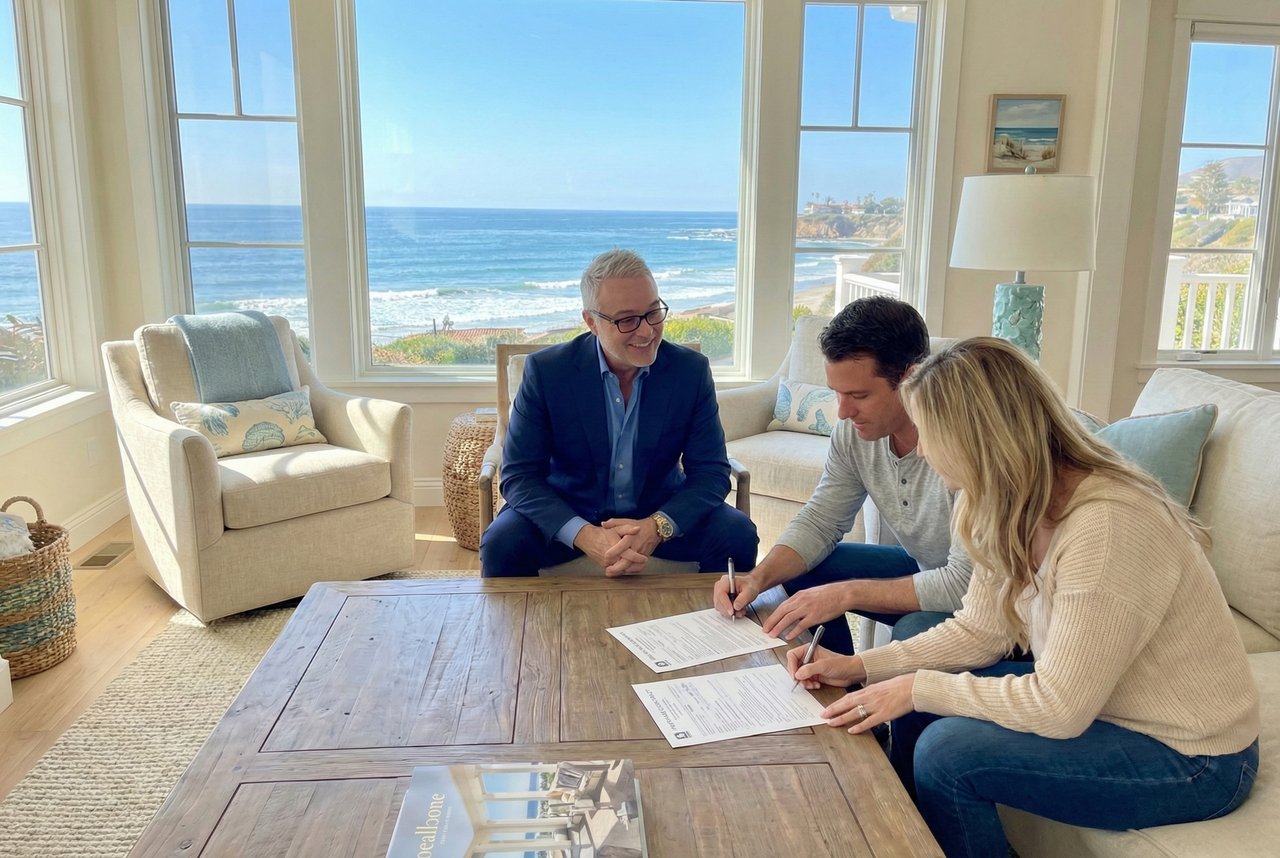
Buyer confidence changes when people become either more or less willing to commit to a home purchase under the conditions they see around them. That shift can happen even when buyers still want to own a home and remain financially capable of purchasing one.
On the Central Coast, changes in confidence often appear first in behavior. Buyers may schedule more showings, make decisions faster, tolerate fewer compromises, negotiate more aggressively, or wait longer before writing an offer. Those changes can occur before median prices, closed-sale statistics, or broader housing reports fully reflect the shift.
Confidence is influenced by several forces at once: mortgage rates, economic expectations, job security, housing inventory, recent sales, affordability, and the feeling buyers develop about whether waiting will improve or weaken their position.
San Luis Obispo County also contains very different buyer environments. A Cal Poly parent purchasing in San Luis Obispo may interpret market conditions differently from a move-up buyer in Arroyo Grande, a coastal purchaser in Morro Bay, or someone relocating to Paso Robles. The underlying signal is the same: when buyers become more or less willing to act, market dynamics change.
Central Coast Neighborhood Video Tour ⬇️
Stable Markets Can Still Experience Rapid Changes in Buyer Willingness
A market can remain fundamentally stable while buyers temporarily become more cautious or more aggressive.
👉 What Market Stability Means on the Central Coast
Stability does not mean every home sells at the same pace or that buyer behavior remains constant. It means the broader market is functioning without extreme imbalance even while individual segments change.
Buyers may become more comfortable when listings are moving predictably, financing feels manageable, and recent sales provide understandable reference points. They may become more hesitant when those reference points become harder to interpret.
This distinction matters for sellers. A period of increased buyer caution does not automatically mean property values are falling. It may mean purchasers are taking longer to validate price before committing.
After more than 30 years representing Central Coast real estate, Joesef Jackson has seen buyers become more deliberate well before a market could reasonably be described as weak. That behavioral change is worth recognizing because it can alter how a property needs to be positioned even when broader fundamentals remain sound.
Economic Expectations Influence Whether Buyers Feel Ready to Commit
Home purchases are long-term financial decisions, so buyers naturally pay attention to what they believe may happen next.
👉 How Economic Conditions Affect the Central Coast Housing Market
Employment expectations, inflation, household expenses, investment markets, and general economic sentiment can influence whether buyers view a purchase as well timed or prefer to remain flexible.
The effect is not always straightforward. A buyer with stable employment and substantial savings may continue purchasing despite broader economic uncertainty. Another buyer with similar income may delay because the same headlines make committing to a large mortgage feel less attractive.
This is why economic conditions influence psychology as well as affordability.
A strong local property can still receive significant attention during uncertain periods, particularly when buyers recognize limited alternatives. At the same time, marginal properties may face greater resistance because purchasers become less willing to accept compromises.
Economic uncertainty often increases the difference between homes buyers strongly want and homes they merely consider acceptable.
Mortgage Rates Can Change Behavior Before They Change Purchase Budgets
Mortgage rates affect monthly payments, but their psychological effect can be just as important.
👉 How Interest Rates Influence the Central Coast Housing Market
A buyer may technically qualify for a home after rates increase and still become more cautious because the monthly obligation feels substantially different from what was expected several months earlier.
Conversely, improving rates can create renewed urgency. Buyers who had been watching from the sidelines may begin touring again because the financing environment feels more workable.
Freddie Mac publishes its Primary Mortgage Market Survey and educational information explaining how mortgage rates influence borrowing costs for homebuyers.
The key market signal is not simply whether rates moved up or down. It is whether enough buyers respond by changing what they are willing to purchase, how quickly they act, or what price feels acceptable.
That behavioral response can vary by price range. A modest rate change may have limited influence on a cash buyer while materially changing the monthly calculation for a financed purchaser near the upper end of a budget.
Perception Can Become as Important as the Property Itself
Buyers do not evaluate homes in a vacuum.
👉 What Impacts Buyer Perception on the Central Coast
They compare what they see against competing homes, recent sales, asking prices, monthly payment expectations, property condition, and the likelihood that another suitable home will become available.
When buyer confidence is strong, purchasers may interpret scarcity as a reason to act. When confidence weakens, the same scarcity may not be enough to overcome concerns about price or timing.
Perception can also become self-reinforcing. A property that attracts immediate activity may appear more compelling because buyers recognize that others are interested. A listing that remains available longer than expected can prompt buyers to search for a reason—even when the property itself has not changed.
For sellers, this makes first impressions and market positioning particularly important during periods when buyers are evaluating risk more aggressively.
A property should give buyers enough reasons to proceed rather than requiring them to explain away multiple concerns before making an offer.
Local Buyer Confidence Can Influence Pricing Before Closed Sales Show It

Changes in buyer willingness often appear in negotiation before they appear in published pricing statistics.
👉 How Local Buyer Confidence Affects Pricing in San Luis Obispo County
When buyers feel secure about the market, they may defend less aggressively against asking prices they consider reasonable. They may also move faster when they believe waiting could mean losing a property.
When confidence softens, pricing becomes more heavily scrutinized. Buyers may compare recent sales more carefully, ask why a listing has remained available, and become more willing to walk away when value is not immediately persuasive.
This creates a practical distinction between market value and pricing power.
A property may still be worth roughly what recent comparable sales suggest while the seller has less power to stretch beyond those benchmarks. Conversely, strong buyer conviction can allow an exceptionally positioned property to attract more aggressive competition.
Joesef's experience across more than 2,130 transactions has shown that negotiation often reveals changes in buyer sentiment before broader statistics fully capture the shift.
Economic Confidence Changes the Threshold for Saying Yes
A buyer does not need to become pessimistic to become more selective.
👉 How Economic Confidence Shapes Real Estate Decisions in San Luis Obispo County
Sometimes the threshold simply moves.
A purchaser who previously accepted an older kitchen, smaller yard, or longer commute may decide that the property needs to offer more value before taking on the same monthly payment. Another buyer may increase urgency because a stable job, improved financing conditions, or a stronger personal financial position makes purchasing feel appropriate.
Fannie Mae's Home Purchase Sentiment Index tracks consumer attitudes toward housing, including whether consumers believe it is a good time to buy or sell, expectations regarding home prices and mortgage rates, and household employment concerns.
Those broad measures do not determine what one San Luis Obispo County buyer will do. They illustrate why housing demand is partly behavioral. Buyers interpret financial conditions through their own circumstances, and those interpretations influence transaction activity.
Stronger Confidence Usually Shows Up in Decision Speed
One of the clearest behavioral changes is how quickly buyers move from interest to commitment.
When buyers feel favorable about their position, they may shorten the time between the first showing and an offer. They may bring decision-makers to the property sooner, request disclosures immediately, and complete financing discussions before touring.
This does not mean buyers become careless.
A confident buyer can still investigate thoroughly. The difference is that the buyer has already accepted the broader decision to purchase and is primarily deciding which property deserves the commitment.
When confidence weakens, buyers often remain in the evaluation stage longer. They revisit homes, expand searches into other communities, compare additional listings, and wait to see whether prices adjust.
Sellers should pay attention to this timing. A property receiving numerous visits but little progression may be encountering a market where buyers are interested but not yet convinced.
Lower Confidence Can Increase the Value Buyers Place on Optionality
When buyers are uncertain, keeping alternatives open becomes more attractive.
They may resist making an offer on the first acceptable property because another listing could appear. They may broaden the search geographically. They may negotiate more carefully because walking away feels easier than committing under uncertain conditions.
This behavior can be particularly visible when inventory is increasing.
A buyer considering Atascadero may begin comparing Templeton or Paso Robles. A South County purchaser may look across Arroyo Grande, Grover Beach, and Nipomo rather than remaining focused on one neighborhood.
The effect is greater competition among sellers for the same buyer.
The strongest listings can still perform well because buyers often concentrate on properties that clearly distinguish themselves. Average or poorly positioned listings can feel the change more quickly because buyers no longer feel compelled to compromise.
Seller Expectations Can Lag Behind Buyer Behavior

One of the more difficult market transitions occurs when sellers base expectations on recent closings while current buyers have already changed.
Closed sales are backward-looking. They reflect decisions made several weeks earlier.
If confidence weakens quickly, sellers may compare their property with a recent sale achieved under more aggressive buyer conditions. Buyers, meanwhile, may be responding to today's financing costs, today's inventory, and today's alternatives.
That gap can produce extended negotiation or longer marketing periods.
The reverse can happen as confidence improves. Sellers relying on older slower-market examples may initially underestimate renewed competition.
Effective pricing requires recognizing where current buyers are behaving differently from the buyers who produced the most recent comparable sales.
Stronger Confidence Can Reduce the Importance of Small Imperfections
Buyer confidence changes how purchasers weigh compromises.
When buyers believe the timing is favorable and attractive inventory is scarce, they may accept cosmetic issues or secondary limitations because the overall opportunity remains compelling.
That does not mean defects disappear.
It means buyers assign them a different weight in the decision.
When confidence is weaker, the same imperfections can become reasons to wait. An outdated room, awkward parking arrangement, smaller secondary bedroom, or less desirable orientation may receive greater scrutiny because buyers feel less urgency to accept compromises.
Sellers cannot control buyer psychology, but they can control how many unnecessary objections a property presents.
During cautious markets, reducing avoidable friction becomes particularly valuable because buyers are already looking for reasons to remain flexible.
Cash Buyers and Financed Buyers May React Differently
Changes in buyer confidence do not affect every purchaser equally.
Cash buyers are insulated from direct mortgage-rate effects but still evaluate market direction, value, liquidity, and opportunity cost. Financed buyers may react more immediately because borrowing costs alter the monthly calculation.
A downsizing homeowner using substantial equity may interpret uncertainty differently from a first-time buyer relying heavily on financing.
Luxury buyers can also operate on a different decision cycle because their purchase may be more discretionary.
This is why broad statements such as "buyers are nervous" or "buyers are aggressive" have limited usefulness. The more accurate question is which buyers have changed behavior and within which property segments.
San Luis Obispo County can contain strong activity in one price range while another segment becomes considerably more deliberate.
Offer Terms Can Reveal More Than Offer Count
The number of offers on a property is only one measure of buyer confidence.
Terms can reveal how strongly buyers believe they need to compete.
When conviction is high, purchasers may focus heavily on making the overall proposal attractive. When it is lower, they may preserve more negotiating room, seek credits, remain closer to comparable-sale benchmarks, or maintain protections they might otherwise modify.
This does not mean every aggressive offer represents a confident market. Property-specific scarcity can create competition even when buyers are cautious elsewhere.
The useful signal is the pattern across comparable listings.
If sellers repeatedly receive stronger terms, faster decisions, and less price resistance, buyer conviction may be strengthening. If negotiations become longer and buyers consistently preserve more flexibility, the opposite may be occurring.
Longer Marketing Times Can Reinforce Buyer Caution
Buyer psychology responds to time on market.
A newly listed home can create urgency because buyers do not yet know whether competition will develop. As the property remains available, that uncertainty decreases.
Some buyers begin asking why it has not sold. Others assume the seller may become more flexible. Still others decide there is little cost to waiting.
This effect can occur even when the property was initially priced only slightly above the level the market would support.
Once urgency fades, rebuilding it can be difficult without a material change in price, presentation, or competitive circumstances.
For sellers, the lesson is not that every home must sell immediately. It is that market time itself becomes information buyers use when confidence is already fragile.
Confidence Can Improve Without a Major Economic Event
Buyer sentiment does not always need a dramatic catalyst.
Sometimes a gradual improvement in available inventory, modest movement in mortgage rates, several successful comparable purchases, or a more predictable market is enough to make buyers comfortable acting again.
Personal circumstances matter as well.
A buyer may receive a promotion, sell another property, build additional savings, or simply reach the point where delaying a move no longer makes sense.
As more buyers reach that point simultaneously, activity can improve even before economic headlines look dramatically different.
This is why local transaction behavior deserves attention alongside national narratives.
The Central Coast market is influenced by broader conditions, but individual buyers ultimately make decisions based on how those conditions intersect with their own housing needs.
Sellers Should Respond to Behavior Rather Than Headlines
Market commentary can provide useful context, but a seller's pricing strategy should reflect what actual buyers are doing with comparable properties.
Are they scheduling appointments quickly? Returning for second visits? Requesting disclosures? Writing offers? Negotiating aggressively? Walking away over relatively small differences in price?
Those behaviors provide more actionable information than a generalized description of whether consumers feel optimistic or pessimistic.
Joesef's experience representing more than $1.81 billion in career sales volume has reinforced that property-level evidence remains essential during periods of changing sentiment. Broad economic narratives matter, but the local competitive set determines whether a particular seller has leverage today.
A homeowner should know how current buyers are behaving before deciding how firmly to defend a price or when a strategic adjustment deserves consideration.
Buyers Should Separate Market Anxiety From Property Analysis
Changing confidence can also distort buyer decisions.
A buyer who becomes overly concerned about market headlines may reject a property that fits long-term goals because of short-term uncertainty. Another buyer may become overly aggressive when competition increases and stop evaluating whether the purchase still makes sense personally.
Neither response is ideal.
Buyers should separate two questions: Is this an appropriate property and price for my circumstances? And what does the current market suggest about how I should negotiate for it?
The first is personal. The second is strategic.
A changing market can alter negotiation leverage without changing the reasons someone wanted to own a home in San Luis Obispo County in the first place.
Buyer Confidence Is Ultimately a Measure of Willingness to Act
Confidence in real estate is not simply optimism.
It is the willingness to convert interest into a financial commitment.
When that willingness strengthens, buyers make decisions faster, tolerate fewer delays, compete more actively for scarce properties, and may accept a narrower margin between asking price and perceived value. When it weakens, they preserve options, analyze alternatives longer, negotiate harder, and demand a more persuasive reason to purchase now.
Those behavioral changes can reshape San Luis Obispo County market conditions before conventional statistics fully reveal the transition.
For buyers and sellers, the most useful question is therefore not whether people feel confident in the abstract. It is whether today's buyers are sufficiently convinced by the property, price, financing environment, and available alternatives to act.
That is where confidence becomes a real market force.
Frequently Asked Questions
What does buyer confidence mean in real estate?
Buyer confidence describes how willing purchasers are to commit to buying under current financial, economic, inventory, and market conditions.
How can sellers tell when buyer confidence is weakening?
Possible signals include longer decision periods, fewer repeat showings, greater price resistance, more negotiation, and buyers becoming more willing to pursue alternative properties.
Can buyer confidence change before home prices change?
Yes. Buyer behavior can shift before those changes appear in closed-sale statistics because completed sales reflect negotiations that occurred earlier.
Do mortgage rates affect buyer confidence?
They can. Mortgage rates influence monthly payments and can also affect how comfortable financed buyers feel about committing to a purchase.
Does lower buyer confidence mean home values are falling?
Not necessarily. Buyers may become more selective or price-sensitive while overall property values remain relatively stable.
Can one property still receive multiple offers when buyer confidence is weaker?
Yes. Scarce or particularly desirable homes can attract strong competition even when buyers are more cautious across the broader market.
Why does time on market matter when buyer confidence changes?
A longer marketing period can reduce urgency and give buyers more reason to believe they can wait, negotiate, or pursue alternatives.
What should buyers focus on when market sentiment changes?
Buyers should evaluate whether the property and purchase fit their own finances and long-term goals, then use current market conditions to determine an appropriate negotiation strategy.
If you are preparing to buy or sell real estate on the Central Coast and want personalized guidance, contact Joesef Jackson at SLO Life Realty Group.