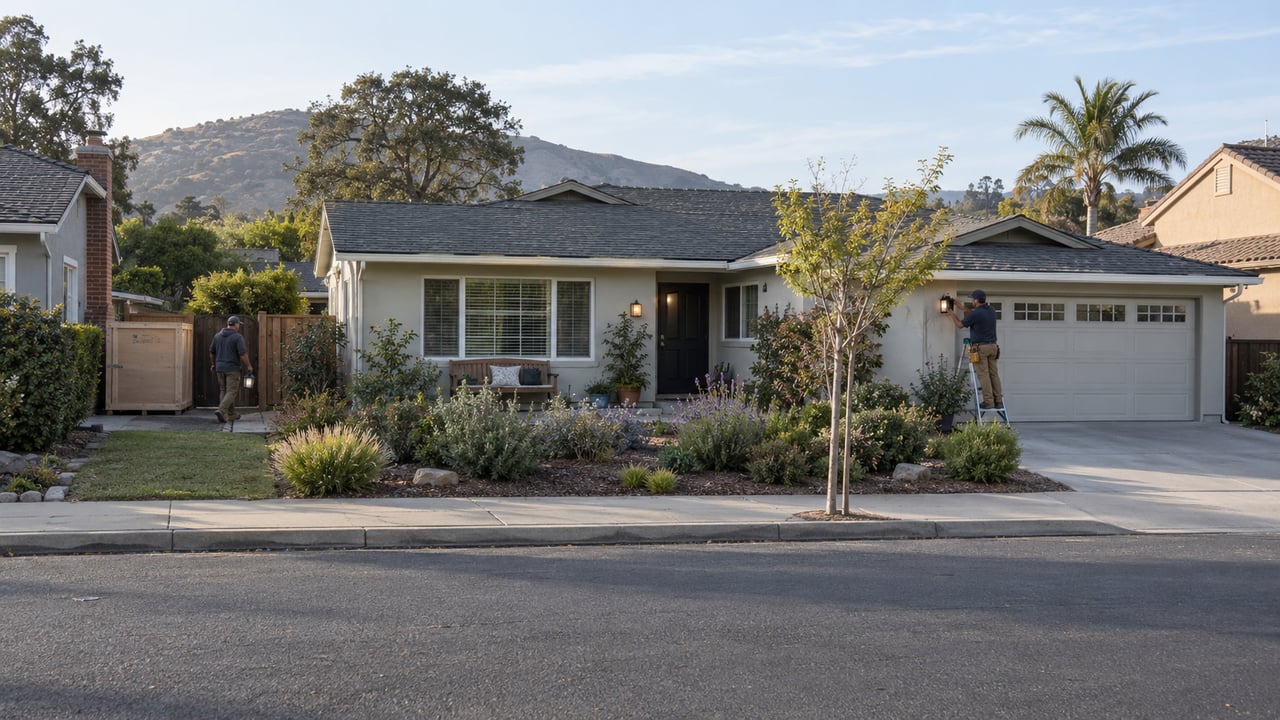
Selling a home with unique features on the Central Coast requires more than identifying what makes the property different. The real challenge is determining which differences matter to buyers, communicating their value effectively, and positioning the property against alternatives that may not look similar on paper.
A distinctive home might include custom architecture, acreage, panoramic views, a guest residence, unusual outdoor spaces, equestrian facilities, a historic design, extensive remodeling, exceptional privacy, specialized rooms, or a location that is difficult to duplicate. Those attributes can create substantial appeal, but they can also make pricing and marketing more complex because direct comparable properties may be limited.
Throughout San Luis Obispo County, distinctive homes often attract buyers differently than conventional properties. A buyer considering an architect-designed residence near San Luis Obispo may approach value differently from someone searching for acreage in Templeton or a coastal property in Cayucos. The selling strategy needs to reflect the specific reasons a buyer would choose that property rather than another home available at a similar price.
Central Coast Neighborhood Video Tour ⬇️
Identify the Features That Actually Drive Buyer Interest
The first step in selling an unusual property is separating features that are merely different from features that meaningfully influence buyer demand.
Sellers naturally attach importance to improvements they selected, paid for, or enjoyed. Buyers evaluate those same features according to their own priorities. A highly customized room may have required significant investment but appeal to only a small group of purchasers. By contrast, an unassuming feature such as additional usable land, exceptional privacy, detached guest space, or protected views may materially expand the property's appeal.
The distinction matters because marketing every unusual detail equally can dilute the features that deserve the most attention.
A strong strategy identifies the property's primary value drivers and builds the listing around them. If an ocean view is the defining characteristic, the presentation should reinforce that advantage. If acreage and privacy distinguish the home, buyers should understand how the land can actually be used. If the architecture is important, its design, materials, proportions, and relationship to the setting should be communicated specifically.
What makes a unique home more marketable? A distinctive feature becomes more marketable when buyers understand both what it is and why it improves the experience of owning the property.
After more than 30 years representing Central Coast real estate, I have found that the most effective marketing of unusual homes begins with prioritization. Buyers should not have to sort through twenty secondary features before discovering the two or three characteristics that truly make the property difficult to replace.
👉 What Makes a Luxury Listing Stand Out on the Central Coast
Define the Buyer Before Building the Marketing Strategy
A unique home may not appeal equally to the entire buyer population, and attempting to market it as though it does can weaken the message.
Instead, consider who is most likely to value the property's defining characteristics.
A home with substantial acreage may appeal to a buyer seeking privacy, animals, agriculture, or simply separation from neighboring properties. A contemporary architectural residence may attract someone who specifically values design. A home with detached living quarters could appeal to buyers considering multigenerational living, guests, or flexible use subject to applicable regulations.
This does not mean creating an overly narrow buyer profile. It means understanding the motivations most likely to produce serious interest.
When the buyer is better understood, the marketing language becomes more precise. Instead of describing a property as simply “unique,” the listing can explain what makes it useful, scarce, or compelling.
The same principle applies geographically. A distinctive home outside Paso Robles may attract buyers from outside the immediate community because they are searching for wine-country acreage rather than a specific neighborhood. A specialized coastal home may draw buyers comparing several communities because access to the ocean is more important to them than a particular ZIP code.
That broader buyer perspective can influence exposure strategy significantly.
Translate Unusual Features Into Practical Value

A feature becomes more persuasive when buyers can understand what it does for them.
For example, saying a property has “three acres” communicates a measurement. Explaining that much of the acreage is usable, private, accessible, or connected to specific property functions gives buyers additional context.
Likewise, saying that a home has a detached structure is less meaningful than accurately explaining its permitted use, location relative to the main residence, approximate size, and how it functions.
Distinctive architecture should also be described through specific characteristics rather than exaggerated adjectives. Natural materials, ceiling height, window placement, indoor-outdoor relationships, custom millwork, orientation, and other tangible design attributes give buyers something concrete to evaluate.
How should sellers describe unusual home features? Describe the physical feature accurately, explain the practical benefit when appropriate, and avoid assigning value claims that the market has not established.
This approach makes unusual properties easier to understand without overselling them.
👉 What Impacts Buyer Perception on the Central Coast
Price the Property Around Buyer Alternatives
Pricing a distinctive property presents a specific challenge: buyers may compare it with homes that are not traditional comparables.
A custom coastal residence might compete with another property several communities away because both offer similar views or lifestyle characteristics. A rural estate might be compared with homes across a wider portion of San Luis Obispo County because buyers seeking acreage are willing to consider several locations.
That means pricing cannot depend solely on the nearest recent sale.
Closed transactions remain important, but they should be evaluated alongside active competition, current buyer behavior, the property's scarcity, and the alternatives available at the proposed asking price.
A home's price also determines the expectations buyers bring to the showing. At one price point, a particular feature may appear exceptional. At a significantly higher price, buyers may expect that feature plus additional amenities.
The California Association of REALTORS® publishes county-level market reports that track measures including sales, median prices, inventory, and median time on market. Those broader indicators can provide useful context, while the value of a distinctive property still requires property-specific analysis.
With more than 2,130 completed transactions, one recurring lesson has been that distinctive homes are vulnerable to pricing errors when uniqueness is treated as unlimited value. Scarcity can justify a premium, but buyers still compare what their money can purchase elsewhere.
Make the Listing Explain What Photographs Alone Cannot
Certain property advantages are immediately recognizable. Others require context.
A photograph may show an expansive outdoor area without explaining the relationship between different portions of the land. A buyer may see a detached structure without understanding whether it was designed as guest space, a studio, workshop, office, or another use. Architectural details may be visible without explaining why they are unusual.
The listing description should fill those information gaps.
This is particularly important with properties that involve multiple buildings, unusual floor plans, large parcels, specialty improvements, or features that are difficult to understand from standard property data.
The objective is not to produce an excessively long promotional description. It is to make the property intelligible.
Buyers should be able to answer basic questions after reviewing the listing: What distinguishes this home? Why might those distinctions matter? How does the property function? Why should it remain on the buyer's consideration list?
A distinctive property that is confusing online may lose potential buyers before they ever schedule a showing.
👉 How to Maximize Exposure When Selling in San Luis Obispo County
Give Buyers Context Without Overexplaining
There is a balance between providing useful information and overwhelming buyers.
Unique properties sometimes accumulate years of history, modifications, special features, custom installations, technical systems, and owner-specific improvements. Sellers may understandably want to communicate all of them.
But equal emphasis on everything can make the listing harder to understand.
The better approach is hierarchical. Lead with the features that most strongly influence value and buyer interest. Support those with secondary details. Reserve technical or transactional information for the appropriate stage of the buyer's evaluation.
This is also where accuracy matters.
California sellers may have disclosure obligations concerning known property conditions and other matters. The California Department of Real Estate's consumer material explains the state's disclosure framework and emphasizes providing meaningful information about the property being transferred. Sellers should complete required disclosures accurately and obtain appropriate professional advice when questions arise.
For a distinctive property, accurate information becomes particularly important when additions, specialized improvements, accessory structures, or substantial modifications contribute to the home's appeal.
Create a Showing Experience That Reveals the Property Gradually
Some homes can be understood within minutes. Distinctive properties often cannot.
A buyer touring a conventional subdivision home may immediately understand the floor plan, lot, and neighborhood. A custom residence on several acres may require considerably more time to appreciate how the house, land, views, secondary spaces, and outdoor areas relate to one another.
Showing strategy should reflect that difference.
A property with acreage may need a logical path through the land. A home with multiple outdoor living areas may deserve enough time for buyers to experience them rather than simply glance through a window. A highly architectural residence may reveal design relationships that are not obvious during a rushed showing.
The purpose is not theatrical presentation. It is comprehension.
Do unique homes need longer showings? Sometimes. If the property's value depends on features that take time to understand, allowing serious buyers enough opportunity to evaluate them can be important.
Direct representation from the first conversation through closing also allows the original positioning strategy to remain connected to how the property is presented once buyers begin visiting it.
Distinguish Personalization From Permanent Advantage
Highly customized homes often contain improvements that fall along a spectrum from broadly useful to intensely personal.
That distinction can influence both marketing and buyer response.
Permanent advantages such as a superior site, strong views, usable land, privacy, quality architecture, or a scarce location cannot easily be recreated. Personalized finishes and specialty rooms may be expensive but easier for a future owner to modify.
When selling, permanent advantages usually deserve greater strategic emphasis.
This does not mean concealing customization. Instead, the listing should present highly personal features accurately while ensuring they do not overshadow benefits that have broader market relevance.
For example, buyers may not share an owner's enthusiasm for a specialized hobby room, but they may value the room's size, natural light, storage, separation from other living areas, or potential flexibility.
Reframing the property through usable characteristics allows buyers to imagine possibilities without requiring them to share the seller's exact lifestyle.
👉 How to Market Distinctive Properties in San Luis Obispo County
Use Market Feedback to Learn Which Features Buyers Value
Once a distinctive home reaches the market, buyer behavior provides information that cannot be obtained entirely before launch.
Sellers should pay attention not only to whether buyers like the property, but to what they repeatedly discuss.
Which features generate questions? What do buyers remember after showings? Which characteristics do they compare with other homes? Are they responding strongly to the property's primary differentiator, or is another feature creating more interest than expected?
Patterns matter.
If several independent buyers recognize the same feature as exceptional, that information reinforces the positioning strategy. If buyers consistently question how a particular space functions, the marketing may need to explain it more effectively.
If buyers appreciate the home but repeatedly struggle with its relationship to the asking price, that points toward a different issue.
Market feedback should not produce constant reactive changes. One buyer's preference is simply one opinion. Repeated behavior across several qualified buyers is more meaningful.
👉 How to Present High-Value Features on the Central Coast
Do Not Make Uniqueness the Entire Sales Argument
A property does not deserve a premium merely because there is nothing exactly like it.
This is one of the most important principles when selling an unusual home.
Uniqueness creates scarcity. Value arises when that scarcity intersects with buyer demand.
A one-of-a-kind architectural detail may be fascinating but contribute little to price if buyers are indifferent to it. A difficult-to-find combination of privacy, usable land, views, and location may create much stronger demand because several desirable characteristics exist together.
Does a one-of-a-kind home automatically sell for more? No. The market rewards differences buyers value, not difference by itself.
That distinction should guide the entire strategy. Marketing should not repeatedly tell buyers the home is special. It should demonstrate why the features matter and allow buyers to reach that conclusion themselves.