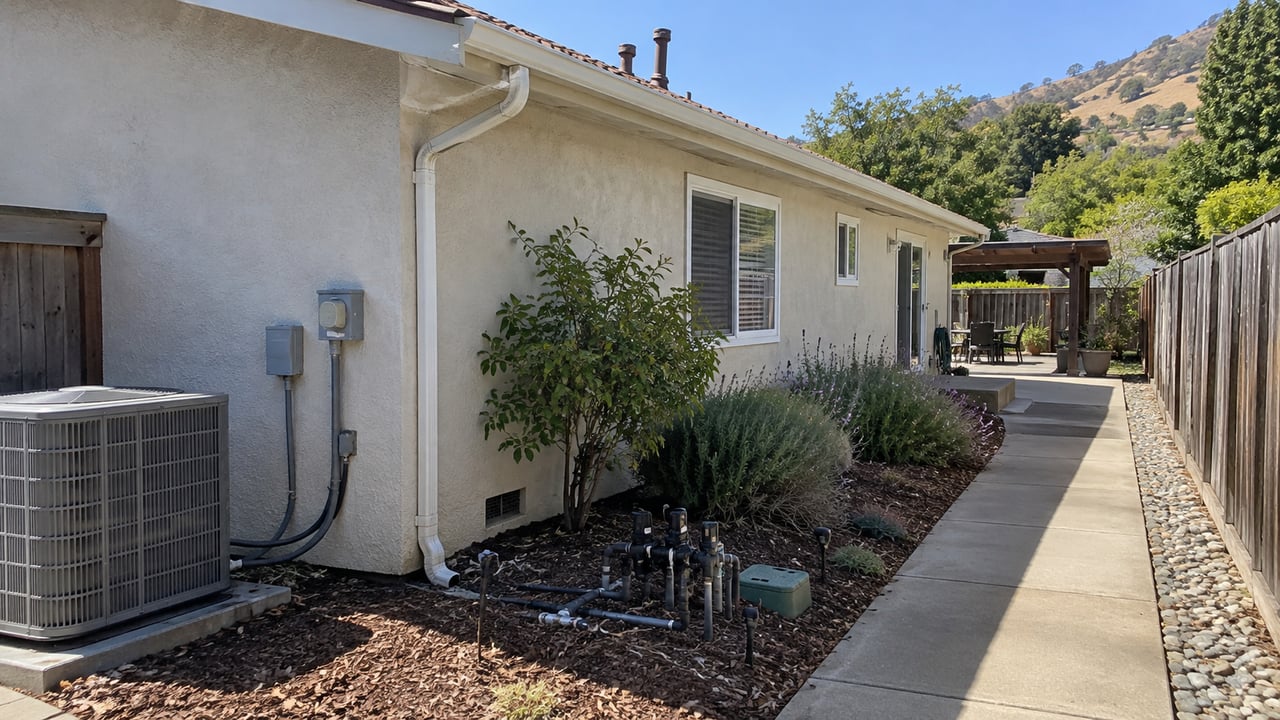
Maintenance can materially change the performance of a rental property even when the purchase price, rent, and location initially look attractive.
For investors, the important question is not simply whether a property appears well maintained today. It is how much work the property is likely to require repeatedly, which larger components are approaching replacement, how difficult the property is to service, and whether the building has characteristics that make routine ownership unusually simple or unusually demanding.
That distinction matters across San Luis Obispo County because rental properties can vary substantially. A compact home in Grover Beach may have a very different maintenance profile from an older residence in San Luis Obispo, a larger property in Atascadero, or a rental on acreage near Paso Robles.
The objective is not to find a property that will never require work. Every rental requires maintenance.
A stronger evaluation identifies what work is predictable, what could become expensive, how easily repairs can be completed, and whether the property's overall maintenance demands fit the investor's operating strategy.
Central Coast Neighborhood Video Tour ⬇️
Maintenance Belongs in the Holding-Cost Analysis
Maintenance expenses do not occur on a perfectly predictable monthly schedule.
👉 How to Evaluate Holding Costs on the Central Coast
That is why investors should separate routine operating expenses from irregular repair and replacement costs.
A property may have manageable taxes, financing, and insurance while still requiring substantial capital over several years because of roofing, exterior surfaces, plumbing, drainage, landscaping, or other components.
A realistic holding analysis should therefore account for both the work happening now and the work likely to arrive later.
After more than 30 years representing real estate on the Central Coast, Joesef Jackson has seen properties with similar purchase prices create very different ownership experiences because one required repeated intervention while another had simpler systems, better access, and a more manageable maintenance profile.
Maintenance is not merely an expense category. It is part of how demanding the asset will be to own.
A Fixer-Upper Requires a Different Maintenance Evaluation
A property needing work can still be a viable investment, but existing deficiencies and future maintenance should not be treated as the same thing.
👉 What to Know Before Buying a Fixer-Upper Investment Property on the Central Coast
A planned renovation may correct outdated finishes, damaged materials, or known deficiencies shortly after acquisition.
Ongoing maintenance begins after that work is completed.
Investors should distinguish between the one-time capital required to reposition the property and the recurring demands that will continue throughout ownership.
For example, replacing an aging roof can remove one immediate concern. It does not eliminate future gutter cleaning, drainage monitoring, exterior upkeep, or eventual roof maintenance.
The strongest analysis separates rehabilitation from the property's normal operating burden.
Deferred Maintenance Can Reveal a Pattern, Not Just a Repair List
Deferred work deserves attention because accumulated problems can interact.
👉 How to Sell a Property With Deferred Maintenance in San Luis Obispo County
Peeling exterior paint may appear cosmetic until moisture reaches exposed material. A neglected gutter can contribute to drainage problems. Minor plumbing leaks can create damage that costs far more than the original repair.
Investors should therefore look for relationships among maintenance items rather than simply counting them.
With more than 2,130 closed transactions, Joesef has seen that visible deferred maintenance can sometimes point to a broader ownership pattern. When several unrelated components have all been allowed to deteriorate, an investor may need to look more carefully at areas that are less obvious during an ordinary showing.
The question becomes whether the property needs isolated work or whether maintenance has historically been reactive throughout the asset.
Easier-to-Own Properties Often Share Practical Characteristics
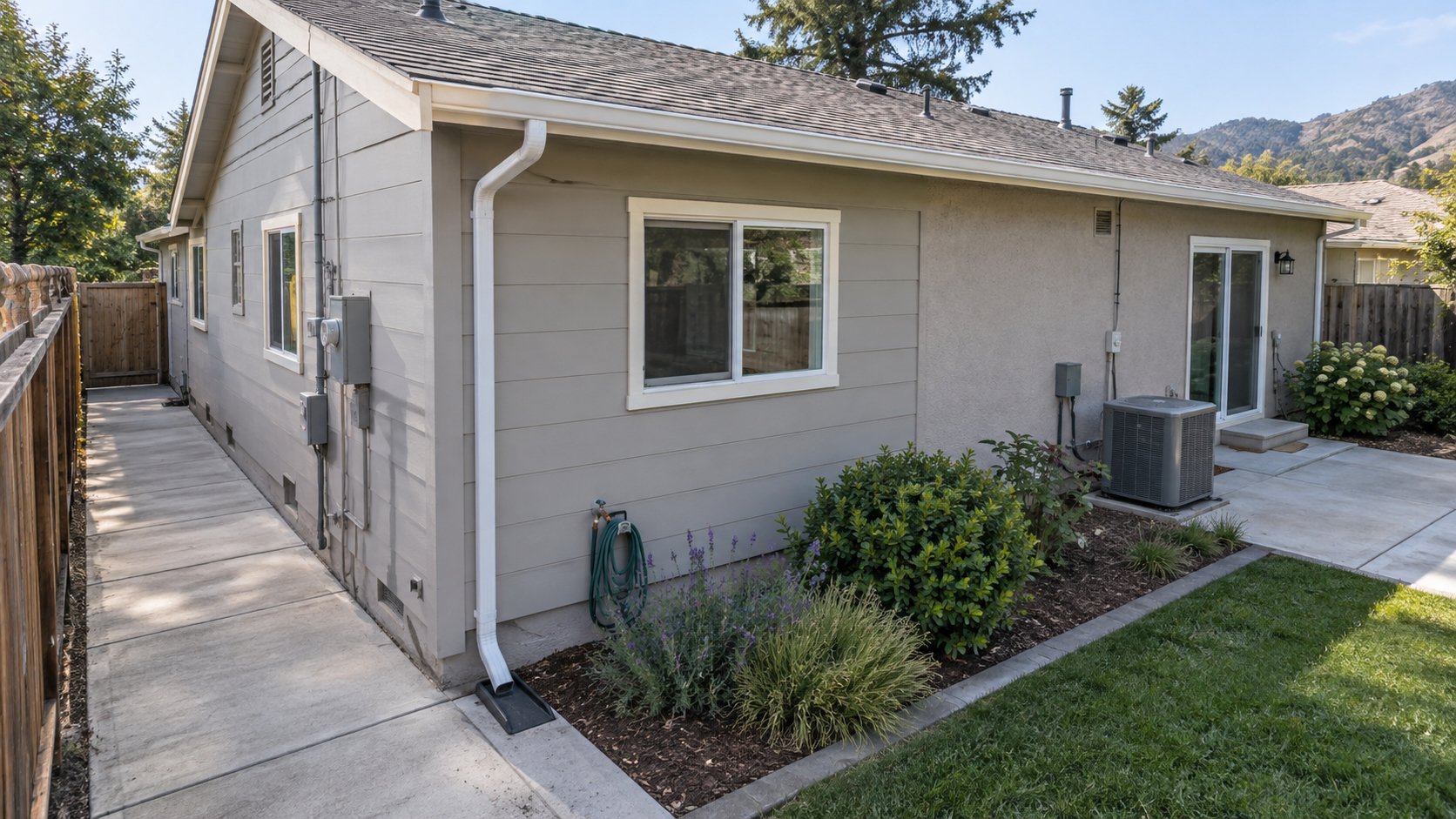
Some homes naturally require more ongoing attention than others.
👉 What Makes a Home Easier to Own in San Luis Obispo County
Simple rooflines, accessible utility areas, durable exterior materials, practical landscaping, straightforward drainage, and common building components can all make recurring service easier.
Complexity is not inherently negative.
A larger home, extensive landscape, pool, private road, well, septic system, multiple structures, or specialized equipment may be completely appropriate for the right investment.
But each additional component introduces another inspection, maintenance, scheduling, or replacement responsibility.
A property becomes easier to operate when its features provide enough value to justify the work they create.
Property Management Needs Often Begin With the Physical Asset
Management workload is partly determined by what the property requires.
👉 How to Evaluate Property Management Needs on the Central Coast
A rental that needs frequent vendor visits, specialized servicing, substantial landscape coordination, or repeated access to difficult locations can demand more oversight than a simpler asset.
That workload exists whether the investor manages the property personally or hires a professional manager.
The difference is who coordinates it.
Investors should consider how many recurring tasks the property creates and how easily those tasks can be delegated. A service that can be scheduled routinely is different from an issue requiring the owner to locate a specialized contractor every time it arises.
Physical complexity often becomes management complexity.
Maintenance Expenses Can Grow at Different Rates
Current repair costs should not be treated as permanent.
👉 How to Analyze Expense Growth on the Central Coast
Labor, materials, equipment, vendor minimums, landscaping, and specialty services can all change over time.
Older components can also become more expensive to maintain as replacement parts become difficult to obtain or repairs occur more frequently.
That means a property with modest maintenance costs today may not remain equally inexpensive throughout a long hold.
Investors should pay particular attention to components that are already late in their useful life or dependent on specialized service.
Expense growth matters most when several aging items are likely to overlap within the same ownership period.
Routine Maintenance and Capital Replacement Should Be Separated
A useful rental-property analysis distinguishes small recurring work from major replacement.
Routine maintenance may include landscaping, servicing equipment, clearing drainage, touch-up work, and ordinary wear items.
Capital replacement can include roofing, heating and cooling equipment, water heaters, major exterior work, windows, or other long-lived components.
The distinction matters because these expenses affect cash flow differently.
Routine items may be relatively predictable within an annual operating budget.
Large replacements may occur only occasionally but require significantly more capital when they arrive.
Investors should understand both categories before deciding whether the property's projected income adequately compensates for its physical demands.
Remaining Component Life Matters More Than Age Alone
An older property does not automatically have a poor maintenance profile.
A well-kept home may have already received major replacements that substantially reduce near-term exposure.
Conversely, a newer-looking property may still contain original components approaching the end of their expected service life.
Investors should therefore evaluate what has been replaced, when the work occurred, and what remains.
Documentation can be valuable when available, but physical inspection and appropriate specialist review may still be necessary.
The California Contractors State License Board provides information for consumers regarding licensed contractors and construction-related matters.
Age provides context. Remaining service life provides the more useful investment question.
Access Can Determine Whether a Simple Repair Stays Simple
Maintenance cost is influenced by how easily workers can reach what needs service.
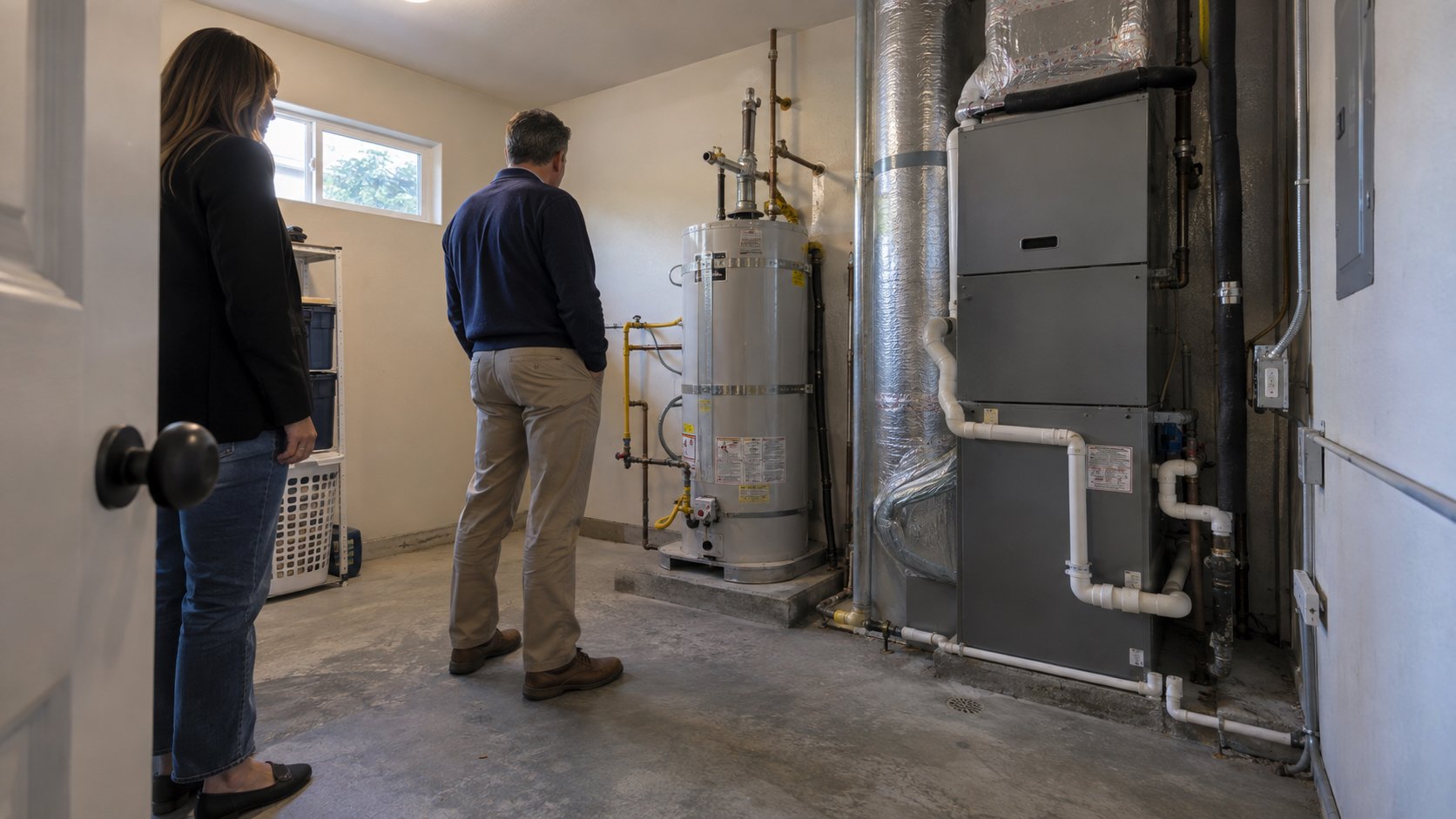
A water heater in a practical utility area is different from equipment installed in a tight location with restricted access. Exterior components on straightforward terrain are different from systems located down a steep slope.
This issue can appear in hillside homes, larger rural parcels, and properties with additions or multiple structures.
Difficult access may increase labor time even when the actual repair is ordinary.
Investors should therefore look beyond the component itself and consider the path required to inspect, service, remove, or replace it.
Access is easy to overlook during acquisition because everything may be functioning on the day of the showing.
Its importance becomes obvious when something fails.
Exterior Exposure Can Change the Maintenance Schedule
San Luis Obispo County contains very different microclimates.
A property near the coast may experience salt air, fog, moisture, and wind differently from a home farther inland. An Atascadero or Paso Robles rental may encounter stronger heat and sun exposure during parts of the year.
Those differences can affect paint, sealants, roofing materials, exterior wood, metal components, landscaping, and irrigation.
The same building material can age differently depending on orientation and exposure.
Investors should examine which elevations receive the most weather and whether previous maintenance appears consistent with those conditions.
A maintenance plan should respond to the actual environment rather than assume every property in the county will age the same way.
Landscaping Should Be Evaluated as an Operating System
Landscape maintenance can become a meaningful recurring obligation, particularly on larger lots.
The question is not simply whether the yard looks attractive today.
Investors should consider irrigation, trimming, leaf debris, slope maintenance, fencing, drainage, trees, and whether tenants or vendors are expected to perform particular tasks.
A compact drought-tolerant yard in Los Osos may require a very different schedule from a landscaped property on a larger parcel in Templeton.
Mature trees can add substantial appeal while also introducing pruning, debris, root, or irrigation considerations.
The strongest landscape for a rental is one whose value to tenants and the property is proportionate to the work required to maintain it.
Water Management Deserves Its Own Review
Water can create disproportionately expensive maintenance when drainage is poorly managed.
Investors should observe where roof water goes, whether surface runoff moves away from structures, how irrigation interacts with foundations and hardscape, and whether low areas collect water.
This is particularly important on properties with slopes, retaining walls, multiple elevation changes, or substantial hardscape.
Small drainage deficiencies can produce recurring symptoms without an obvious single failure.
The investor may see staining, erosion, settlement, moisture, landscape deterioration, or repeated patchwork rather than one dramatic problem.
The County of San Luis Obispo Public Works Department provides information regarding drainage, roads, flood control, and related infrastructure.
Site drainage should be evaluated as part of the property, not as an afterthought to the building.
Multiple Units and Structures Multiply Maintenance Relationships
A duplex or property with an accessory dwelling unit does not simply double every maintenance cost.
It creates more interactions.
There may be separate water heaters, entrances, yards, meters, appliances, exterior areas, utility routes, parking surfaces, and tenant-access considerations.
On larger properties, detached garages, studios, storage buildings, or other structures can add additional roofs, drainage systems, electrical components, and exterior surfaces.
Investors should map what must actually be maintained.
A property with several simple, accessible structures may still be relatively manageable.
A property with fewer but highly complex components may require substantially more coordination.
The number of buildings alone does not determine the workload.
Tenant Use Can Affect the Maintenance Profile
The building creates the maintenance baseline, but tenancy affects how frequently certain components are used.
A rental serving several occupants may place different demands on plumbing, appliances, flooring, parking surfaces, and common areas than a smaller unit occupied by one person.
This does not mean investors should predict maintenance based on assumptions about individual tenants.
It means the physical design should be considered in relation to the legal occupancy and intended residential use of the property.
Durable materials can be particularly valuable in high-use areas.
The objective is not to make a rental indestructible.
It is to choose a property whose materials and systems are appropriate for the level of use it is designed to accommodate.
Vendor Availability Can Change the Practical Cost of Ownership
A maintenance item is easier to manage when several qualified providers can service it.
Specialized equipment, unusual construction, remote locations, or proprietary systems can narrow that vendor pool.
An investor considering a distinctive system should ask who services it locally, how often service is recommended, and whether replacement parts are readily available.
This becomes more important for investors who do not live nearby.
A conventional repair with several local options can often be scheduled more easily than a specialized service requiring a technician from another region.
Joesef's career sales volume of more than $1.81 billion has included properties ranging from conventional residences to unusual Central Coast real estate. A recurring practical distinction is whether a property's special features create enough value to justify their additional ownership demands.
Maintenance History Can Be More Informative Than a Perfect Showing Day
A freshly prepared property can look excellent while revealing little about its operating history.
Investors should look for evidence of how the property has been maintained over time when that information is available.
Repeated repairs to the same area may deserve more attention than one isolated service call. Consistent professional maintenance can provide useful context around systems that might otherwise appear concerning simply because of age.
The objective is not to demand a perfect record.
It is to understand whether maintenance has been proactive, reactive, or deferred.
That history can change how an investor interprets the property's current condition.
Reserves Should Reflect the Property Rather Than a Generic Percentage
Investors commonly build maintenance reserves into their projections.
A generic allowance can be useful during an early comparison, but the final reserve should reflect the asset being purchased.
A small newer property with recently replaced major components may warrant a different near-term reserve strategy from an older rental with multiple systems approaching replacement.
Lot size, exterior complexity, climate exposure, construction type, component age, and number of units can all influence expected maintenance.
The reserve should therefore follow the property.
Using the same percentage for every investment can create false precision when the underlying assets have very different physical profiles.
Maintenance Complexity Should Be Compared With the Return It Supports
Some maintenance-intensive properties can still be excellent investments.
A larger lot may require more landscape work but command stronger rent or attract a tenant pool that values outdoor space. A duplex has more components than a single residence but can produce two rental income streams.
The question is whether the additional complexity produces an investment advantage.
If two properties offer similar projected returns but one requires significantly more coordination, capital, and specialized service, that difference deserves consideration.
Maintenance is part of the return equation because it consumes both money and management capacity.
An asset should compensate the investor appropriately for the work it creates.
A Strong Maintenance Profile Is Predictable, Accessible, and Proportionate
The strongest rental property is not necessarily the newest or simplest property.
It is one whose physical demands can be understood and planned for.
Investors should know which tasks recur, which major components are aging, whether service access is practical, where exposure could accelerate wear, how much outside coordination is likely, and whether reserves are appropriate for the asset.
A maintenance profile becomes more manageable when problems can be identified early and the work required is proportionate to the property's income and investment advantages.
That is ultimately the reason maintenance should be evaluated before purchase rather than treated as a future operational detail.
A property's rent may determine what it earns.
Its maintenance profile influences how much effort and capital are required to keep earning it.
Frequently Asked Questions
What should investors evaluate when reviewing rental property maintenance?
Investors should consider recurring upkeep, major component age, deferred work, exterior exposure, drainage, landscaping, service access, specialized systems, and the likely cost and frequency of future repairs.
Is an older rental property automatically more expensive to maintain?
No. An older property with recently replaced systems and consistent upkeep may have a more predictable maintenance profile than a newer property with deferred work or complicated features.
What is the difference between routine maintenance and capital replacement?
Routine maintenance includes recurring work such as servicing, minor repairs, landscaping, and cleaning. Capital replacement involves larger, less frequent items such as roofs or major equipment.
How does deferred maintenance affect a rental investment?
Deferred work can increase immediate capital requirements and may allow relatively small issues to affect other parts of the property when they remain unresolved.
Does coastal location increase maintenance requirements?
It can. Salt air, moisture, fog, wind, and exposure may affect certain exterior materials and components differently from inland conditions.
Why does service access matter when evaluating a rental?
Difficult access can increase labor time and complicate inspection, servicing, removal, and replacement even when the underlying repair is relatively ordinary.
Should investors maintain a repair reserve?
A reserve can provide funds for predictable and unexpected property work. The amount should reflect the specific property's age, components, size, complexity, and maintenance history.
Can a maintenance-intensive property still be a strong investment?
Yes. Additional maintenance may be justified when the property's income, demand, land, configuration, or other investment advantages adequately compensate for the additional work and expense.
If you are preparing to buy or sell real estate on the Central Coast and want personalized guidance, contact Joesef Jackson at SLO Life Realty Group.