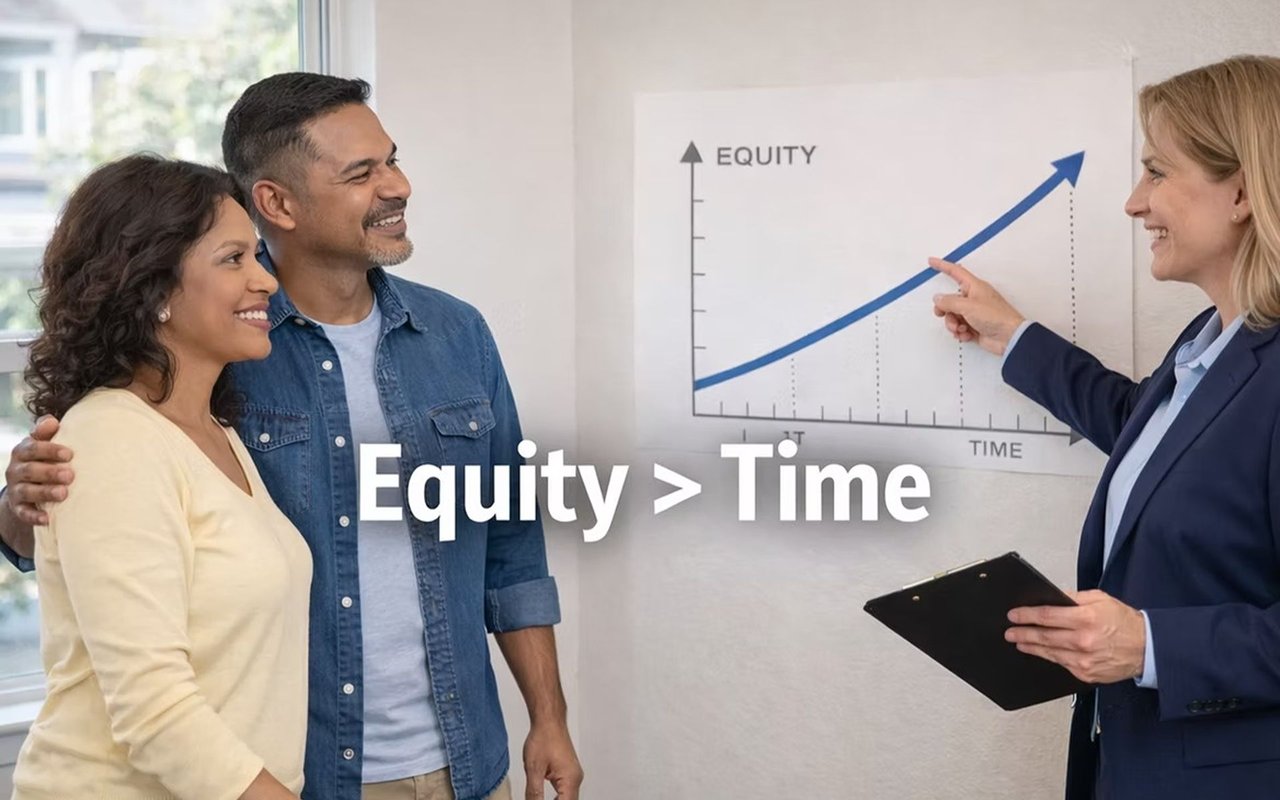
Homeowners often hear that they should live in a house for five years before selling. It is a useful benchmark, but it is not a rule. The financially sensible ownership period depends on what has happened since you purchased the home, how much equity you have accumulated, what selling will cost, whether taxes could affect the proceeds, and what the current market is likely to support.
That distinction matters in San Luis Obispo County because appreciation and buyer demand do not move uniformly across every city, neighborhood, price range, or property type. A San Luis Obispo home near Cal Poly may respond to a different buyer pool than a coastal property in Pismo Beach, a larger home in Arroyo Grande, or a rural property near Paso Robles. Two owners who purchased at the same time can therefore be in very different financial positions when they consider selling.
Your next move matters just as much. Selling after three years because a relocation creates a clear need is a different decision from selling after three years simply because the home has appreciated. Likewise, remaining in a property for ten years does not automatically make staying another five years the best choice.
The better question is not how many years you are “supposed” to stay. It is whether your equity, costs, taxes, market position, and personal plans support selling now.
Central Coast Neighborhood Video Tour ⬇️
The Five-Year Rule Is a Guideline, Not a Requirement
The traditional five-year guideline developed because buying and selling real estate involves costs, and homeowners generally need enough time for equity growth and principal reduction to absorb those costs.
If a homeowner purchases a property and sells it shortly afterward, even a modest increase in market value may not translate into a substantial financial gain. Selling expenses, preparation, repairs, escrow-related costs, moving expenses, and the cost of purchasing another property can all reduce what remains after the sale.
Five years can provide more room for those numbers to work, but it should not be treated as a required holding period.
A homeowner who purchased well, accumulated substantial equity, made a meaningful down payment, and is selling into favorable conditions may have considerable flexibility before reaching five years. Another owner may have occupied a property much longer but still need to evaluate whether current market value and selling costs support the next move.
There is no universal minimum number of years a homeowner must live in a property before selling. The useful measurement is whether the expected net proceeds and the reason for selling justify the financial cost of changing homes.
👉 When Is the Right Time to Sell a Home on the Central Coast? Market Timing Explained
Equity Matters More Than the Calendar
Ownership length tells only part of the story because two homeowners can build equity at very different rates.
Equity begins with the difference between the property's market value and the debt secured against it. Over time, it can increase through mortgage principal reduction, market appreciation, and improvements that buyers are willing to recognize in the resale value.
A homeowner who made a large down payment may have meaningful equity almost immediately. Someone who purchased with a smaller down payment may need more appreciation and principal reduction before selling produces the desired proceeds.
Market performance matters too. San Luis Obispo County values can change differently across neighborhoods and property types. A limited-supply coastal home, a downtown San Luis Obispo property, and a newer subdivision home in Nipomo may not experience identical appreciation over the same ownership period.
The Federal Housing Finance Agency maintains a House Price Index that measures changes in single-family home values and provides data at national, metropolitan, county, ZIP code, and other geographic levels.
Equity should therefore be calculated from the home's likely current market value and outstanding loan balance rather than assumed from the number of years the property has been owned.
Selling Costs Can Change the Break-Even Point
A home can appreciate and still be expensive to sell too quickly.
Homeowners should look beyond the difference between the original purchase price and a potential sale price. The more useful number is estimated net proceeds after the costs associated with the transaction.
Depending on the property and transaction, those costs may include brokerage compensation, escrow and title expenses, preparation, inspections, repairs, buyer credits, moving expenses, loan payoff amounts, and other closing costs.
The next purchase can create additional expenses as well. A homeowner selling only to purchase another property may have moving costs, financing expenses, a new down payment, inspections, and other acquisition costs shortly after completing the sale.
This is one reason ownership duration cannot be evaluated in isolation. If appreciation has been modest and transaction costs consume much of the available equity, waiting may improve the financial position. If substantial equity already exists and the next move solves an important housing or financial need, waiting simply to reach an arbitrary anniversary may accomplish very little.
👉 What Sellers Pay at Closing on the Central Coast: Full Cost Breakdown
Market Conditions Can Matter More Than How Long You Have Owned the Home

Market conditions can matter more than tenure when deciding to sell.
Market conditions can matter more than tenure when deciding whether to sell.
Ownership duration does not tell you how buyers will respond when the home goes on the market.
Inventory, buyer demand, mortgage rates, affordability, competing listings, and the condition of the property all influence the likely outcome. A seller who has owned a home for only a few years may still be well positioned if equity is sufficient and there is strong demand for that specific property. An owner who has held a home much longer can still encounter a difficult sale if the property is poorly positioned against current competition.
This is particularly important on the Central Coast because countywide market descriptions can obscure substantial local differences.
A home in Atascadero may have a different competitive set from a property in Morro Bay. Demand for a single-level residence in Arroyo Grande may not resemble demand for an acreage property near Templeton. Even within the same community, price range and property characteristics can change the depth of the buyer pool.
Current market value is based on what qualified buyers will support today, not on how long the seller has owned the property.
👉 How Market Conditions Affect Home Values on the Central Coast
The First Few Years Deserve a More Careful Financial Review
Selling within the first few years of ownership is not inherently a bad decision, but the numbers deserve closer attention.
Early in a mortgage, principal reduction may represent a relatively modest portion of the monthly payment compared with later years. If the property has not appreciated substantially, the owner may have less room to absorb selling expenses and still produce meaningful proceeds.
The original purchase also matters. A buyer who purchased below market value, made a substantial down payment, or improved the property intelligently may have a very different equity position from someone who purchased near a market peak and financed most of the acquisition.
For owners considering a sale after one, two, or three years, an estimated seller net sheet can be more useful than relying on a general five-year rule. It connects the expected sale price with the actual mortgage payoff and anticipated costs.
The question becomes specific: after everything required to complete the sale, what would remain, and is that amount enough to accomplish the next objective?
Tax Rules Create an Important Two-Year Benchmark
The federal home-sale capital-gain exclusion creates another ownership benchmark that should not be confused with the traditional five-year rule.
Under current IRS rules, homeowners may qualify to exclude up to $250,000 of gain on the sale of a main home, or up to $500,000 for certain married couples filing jointly. The general eligibility test includes owning and using the property as a principal residence for at least 24 months during the five-year period before the sale, along with other requirements. Partial exclusions can apply in some circumstances, and rental or business use can complicate the calculation.
This means the two-year point can be financially significant for some homeowners, but it does not mean every seller should automatically wait until exactly two years have passed.
Tax circumstances vary. The amount of actual gain, marital filing status, previous use of the exclusion, property use, improvements, selling expenses, and specific exceptions can all matter.
👉 Capital Gains Taxes on the Central Coast: What Homeowners Should Know Before Selling
A homeowner approaching a tax threshold should evaluate the potential difference before establishing a closing date and consult a qualified tax professional when the tax consequences could materially affect the decision.
Appreciation Should Not Be Assumed
One of the weaknesses in simple “stay five years” advice is the assumption that home values will increase steadily throughout the ownership period.
Real estate markets do not move in straight lines.
A property may appreciate strongly during one period, remain relatively stable during another, or experience temporary declines. The specific home can also perform differently from broad county or national trends because of location, condition, supply, buyer preferences, and changes to nearby competition.
Homeowners should therefore avoid multiplying an assumed annual appreciation rate by the number of years they have owned the home and treating the result as market value.
A current comparative market analysis is more useful. Recent comparable sales show what buyers have paid, current listings show the alternatives buyers have today, and pending activity can indicate which properties are currently attracting offers.
Time can help create equity, but time alone does not guarantee a particular return.
Improvements Can Change the Ownership Equation
Home improvements complicate the question because money invested in a property is not automatically recovered dollar for dollar.
Some improvements may strengthen resale appeal or correct deficiencies that would otherwise reduce buyer demand. Others may primarily improve the owner's enjoyment of the home without producing an equivalent increase in market value.
A seller who recently completed significant work should evaluate what the market is likely to recognize rather than simply adding the project cost to the original purchase price.
The same principle applies to deferred maintenance. A homeowner who has owned a property for many years may have substantial appreciation but also face roofing, exterior, HVAC, plumbing, landscaping, or other work before selling. Those costs can affect the practical return from a longer holding period.
Ownership duration and property condition need to be evaluated together.
Your Next Purchase Can Matter as Much as the Sale
Selling a home is often only one side of the decision.
If the seller plans to buy another property on the Central Coast, the cost and availability of that next home can materially change the calculation.
A homeowner may have gained substantial equity but also be moving into a more expensive price range. Mortgage rates may be different from the rate on the existing loan. Property taxes, insurance, maintenance costs, or HOA dues may change. A larger down payment may be required to keep the next monthly payment within the desired range.
This is why homeowners should be cautious about evaluating a sale based solely on whether their current home has appreciated.
The better question is what the entire move accomplishes financially and practically.
Selling can make excellent sense even when the next home costs more if it solves an important housing need. Conversely, strong appreciation does not necessarily make moving attractive if the replacement-property economics do not work.
Life Changes Can Override an Ideal Holding Period

Life circumstances often dictate timing more than market cycles.
Life circumstances often determine timing more than an ideal ownership period.
A job relocation, household change, retirement, downsizing decision, financial restructuring, accessibility need, or desire to live closer to family can make selling appropriate even when the timing is not theoretically perfect.
In those situations, the objective changes.
Instead of asking how to maximize every possible dollar by choosing the perfect year to sell, the homeowner may need to determine how to execute the necessary move while protecting as much equity and flexibility as possible.
The same principle works in reverse. A homeowner should not feel obligated to sell simply because five, seven, or ten years have passed. If the property still fits, the ownership costs remain manageable, and there is no compelling financial or lifestyle reason to move, a longer holding period may be entirely appropriate.
The right ownership period is ultimately connected to the homeowner's goals, not an industry rule.
Is Three to Five Years Long Enough Before Selling?
For some homeowners, yes. For others, no.
Three to five years can be enough when appreciation, principal reduction, the initial down payment, and current market conditions have created sufficient equity to cover selling costs and support the next move.
The same period may be too short when appreciation has been limited, transaction costs would consume most of the available equity, or selling would create an unfavorable tax or replacement-property situation.
Five to seven years can provide more financial flexibility because there has been additional time for principal reduction and potential appreciation, but even that is not a guarantee of a better result.
The correct holding period is the point at which selling makes sense based on actual numbers and current circumstances rather than a predetermined number of years.
Frequently Asked Questions About How Long to Own a Home Before Selling
Is it bad to sell a home after only two years?
Not necessarily. Selling after two years can make sense when sufficient equity exists and the move serves a clear financial or personal purpose. The expected proceeds, selling costs, tax circumstances, and cost of the next home should all be evaluated before deciding.
Is five years the minimum time I should stay in a home?
No. Five years is a commonly used guideline rather than a minimum requirement. Some homeowners can sell successfully sooner, while others benefit from holding longer.
How do I know if I have enough equity to sell?
Start with a realistic estimate of current market value, then subtract the mortgage payoff and expected selling costs. The remaining estimated proceeds can then be compared with what you need for the next move.
Does the two-year tax rule mean I should never sell before two years?
No. The federal home-sale exclusion has ownership and use requirements that make two years important for many primary-residence sellers, but exceptions and partial exclusions can apply. Individual tax circumstances should be reviewed before relying on the general rule.
Should I wait to sell if home prices are rising?
Not automatically. Future appreciation is uncertain, and the value of waiting should be compared with your personal timing, the current market, ownership expenses, and what you intend to purchase next.
Does renovating a home mean I should keep it longer?
Not necessarily. The relevant question is how much the improvements contribute to current market value and whether selling now accomplishes your goals. Improvement costs do not automatically translate into equal resale gains.
Can selling too soon cause me to lose money?
Yes. If appreciation and principal reduction have not created enough equity to offset selling costs and the original purchase expenses, an early sale can produce little gain or, in some cases, a financial loss.
What matters most when deciding whether it is time to sell?
The most important factors are current equity, likely net proceeds, market conditions, tax considerations, the cost of your next housing move, and the reason you are considering selling in the first place.
The Right Time to Sell Is a Financial and Personal Decision
There is no single ownership period that works for every homeowner in San Luis Obispo County. Three years can be enough for one property and too soon for another. Five years can create substantial flexibility, but it does not guarantee that selling is the best decision. Ten years of ownership can produce significant equity while still leaving unanswered questions about the next move.
The strongest decision comes from connecting the pieces: current market value, mortgage balance, anticipated selling expenses, possible tax consequences, market conditions, property condition, and the cost and purpose of whatever comes next.
That analysis replaces a generic timeline with a decision based on the property and the homeowner's actual circumstances.
If you’re considering selling a home on the Central Coast, contact Joesef Jackson at SLO Life Realty Group to discuss your equity, current market conditions, and the timing strategy that best fits your goals.