Financing is not only about the buyer’s income, credit, down payment, and lender approval. The home itself also matters. Some properties are easier to finance because they are in marketable condition, have strong comparable sales, fit common loan guidelines, are easier to insure, and create fewer questions for the lender, appraiser, and underwriter. Other properties may be desirable but more complicated because of condition issues, unusual features, deferred maintenance, property type, occupancy, title concerns, or appraisal challenges.
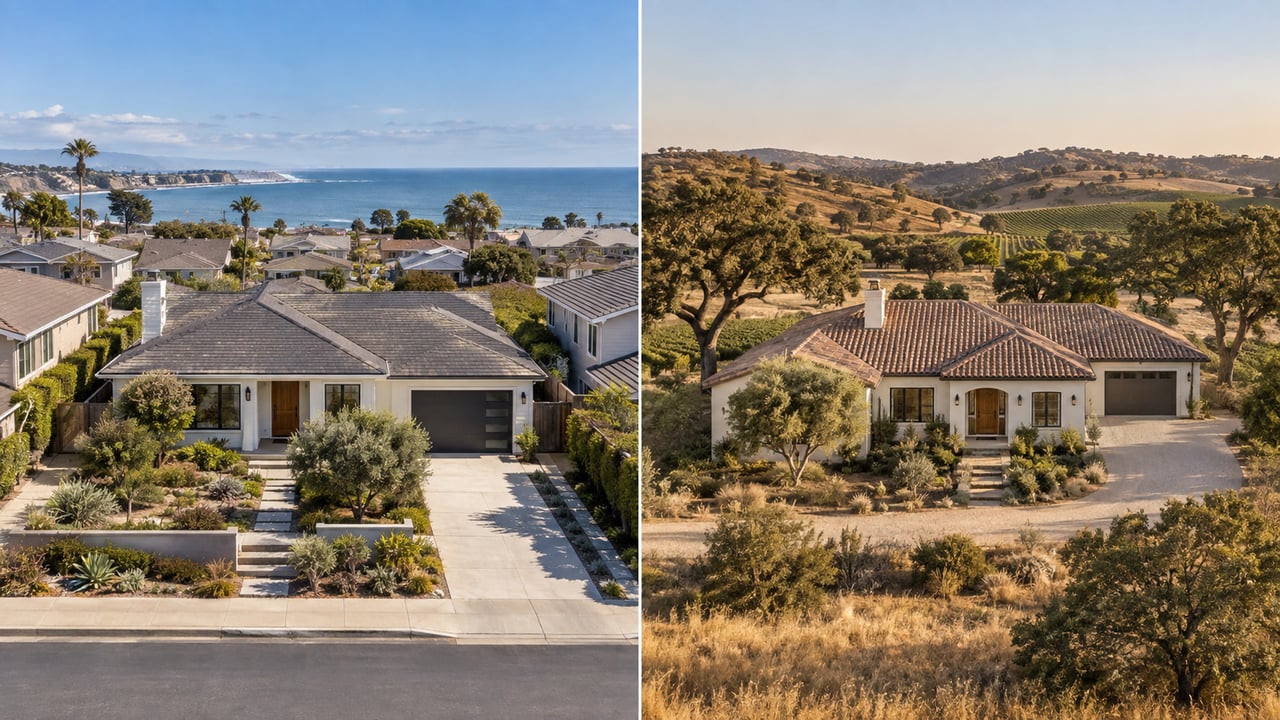
In San Luis Obispo County, financing can vary by property type and location. A newer or well-maintained home in San Luis Obispo, Arroyo Grande, Nipomo, Atascadero, Templeton, or Paso Robles may be more straightforward than a highly unique coastal home, older rural property, mixed-use property, or home with significant deferred maintenance. A property in Pismo Beach, Avila Beach, Morro Bay, Cayucos, Cambria, or Los Osos may be very attractive, but buyers and lenders may still need to evaluate insurance, condition, comparable sales, and long-term ownership costs.
After more than 30 years in real estate, 2,130+ closed transactions, and over $1.81 billion in career sales volume, Joesef Jackson has seen that smoother financing usually comes from alignment. The buyer, lender, property, appraisal, insurance, contract, and timeline all need to make sense together. When those pieces are clear, the purchase is often easier to move from offer acceptance to closing.
Central Coast Neighborhood Video Tour ⬇️
The Right Loan Type Needs to Match the Property
A home is easier to finance when the buyer’s loan type fits the property. Conventional, FHA, VA, jumbo, portfolio, renovation, and investment loans can each have different requirements. A property that works well for one loan type may create concerns for another.
For example, a well-maintained single-family home in San Luis Obispo or Arroyo Grande may fit many common loan programs. A condo may require review of the HOA, insurance, owner-occupancy, budget, and project eligibility. A rural property near Paso Robles, Templeton, or Atascadero may require additional review of acreage, wells, septic, access, or outbuildings. A luxury property in Avila Beach, Pismo Beach, or Morro Bay may require jumbo financing and stronger appraisal support.
👉 How to Choose the Right Loan Type in San Luis Obispo County
One expert insight Joesef often shares with buyers is that the strongest financing plan is not just about getting pre-approved. It is about confirming that the loan type matches the kind of home the buyer actually wants to purchase. A buyer looking at condos, coastal homes, rural homes, older homes, or investment properties should discuss those property types with the lender early.
The U.S. Department of Housing and Urban Development provides information about homebuying and loan resources, including FHA-related options.
Loan Approval Depends on Both Buyer and Property
The loan approval process involves the buyer’s financial profile, but it also involves the property. Lenders review income, assets, credit, debt, employment, down payment, and reserves. They also rely on appraisal, title, insurance, contract terms, and property condition to complete the file.
A buyer may be well-qualified, but financing can still become more complicated if the property has serious condition concerns, weak comparable sales, unclear legal use, title issues, insurance challenges, or unusual features. This is why buyers should not assume that loan approval is only about personal finances.
👉 What Happens During the Loan Approval Process on the Central Coast
A natural-language answer for buyers asking what makes a home easier to finance is this: a home is easier to finance when it is in acceptable condition, has strong comparable sales, can be insured, matches the buyer’s loan type, has clear title, and does not create major appraisal or underwriting concerns.
From Joesef’s experience across thousands of transactions, financing problems often show up when the buyer, property, and loan program are not aligned. Good preparation means asking lender and property questions before the buyer is deep into escrow.
The Loan Estimate Helps Buyers Understand the Real Cost

A home may be technically financeable, but the buyer also needs to understand whether the loan terms and monthly payment feel comfortable. The Loan Estimate helps buyers review loan amount, interest rate, monthly payment, closing costs, prepaid expenses, and other important financing details. This can help buyers compare loan options and understand the true cost of the purchase.
👉 What Is a Loan Estimate and How to Read It on the Central Coast
The Consumer Financial Protection Bureau provides a Loan Estimate explainer to help buyers review mortgage loan details and compare offers.
A buyer purchasing in San Luis Obispo County should look beyond the purchase price. Property taxes, insurance, HOA dues, utilities, maintenance, and reserves can all affect payment comfort. A property may be easier to finance from a lender standpoint but still feel uncomfortable if the monthly obligation stretches the buyer too far.
Financing Can Fall Apart When Property Risks Are Too High
Financing can fall through during escrow for several reasons. Some are buyer-related, such as changes in income, employment, credit, debt, assets, or documentation. Others are property-related, such as appraisal issues, condition concerns, title problems, insurance difficulties, or loan guideline conflicts.
👉 What Happens If Financing Falls Through During Escrow in San Luis Obispo County
A home is easier to finance when the risk factors are visible and manageable. Buyers should be cautious with properties that have significant deferred maintenance, unpermitted work, unclear use, unusual structures, or difficult comparable sales. These issues may not make financing impossible, but they can create delays, extra conditions, or loan denial.
Joesef has seen that financing risk is often reduced by asking the right questions early. What kind of loan is the buyer using? Has the lender reviewed the property type? Are there known condition issues? Is insurance likely to be available? Are comparable sales strong enough to support the value? These questions matter before escrow becomes stressful.
Monthly Payment Comfort Affects Financing Confidence
A buyer’s ability to finance a home is not only about approval. It is also about comfort. A lender may approve a payment that feels too high for the buyer’s lifestyle. A buyer may qualify for a price range but still decide that the long-term monthly obligation is not wise.
👉 How Buyers Should Evaluate Monthly Payment Comfort on the Central Coast
Payment comfort is especially important on the Central Coast because home prices, property taxes, insurance, HOA dues, and maintenance can vary widely by location and property type. A San Luis Obispo condo may have HOA dues. A coastal home in Morro Bay or Pismo Beach may have different insurance and maintenance considerations. A larger property in Paso Robles or Templeton may require more landscaping, utilities, and upkeep.
A natural-language answer for buyers asking whether they should buy at the top of their approval is this: approval is not the same as comfort. Buyers should evaluate monthly payment, reserves, lifestyle, future repairs, taxes, insurance, and long-term goals before deciding how much home to finance.
Property Trade-Offs Can Affect Loan Fit
Most buyers make trade-offs. They may choose location over size, condition over views, newer systems over charm, or monthly payment over preferred neighborhood. Those trade-offs can affect financing.
👉 What Buyers Should Know About Property Trade-Offs in San Luis Obispo County
A buyer may love an older home but need to understand whether the property condition fits the loan program. A buyer may prefer a rural property but need to evaluate well, septic, access, and insurance. A buyer may want a condo but need HOA eligibility. A buyer may want a luxury coastal property but need jumbo loan preparation and strong appraisal support.
Joesef’s expert guidance is that buyers should not only ask whether they like the property. They should ask whether the property, financing, and ownership plan work together.
Appraisal Confidence Makes Financing Smoother
Appraisal is one of the most important financing factors. The lender needs confidence that the property value supports the loan. If the appraisal comes in low or raises condition concerns, the buyer, seller, lender, and agents may need to negotiate next steps.
Homes are often easier to finance when there are strong recent comparable sales. This does not mean every property must be cookie-cutter. It means the appraiser has enough market evidence to support the value. Unique homes, luxury homes, rural properties, coastal properties, and properties with unusual improvements can require more careful appraisal interpretation.
In San Luis Obispo County, appraisals may be more straightforward for homes in active neighborhoods with many comparable sales. They may be more complex for properties with acreage, views, guest units, high-end finishes, historic character, or limited recent sales.
Condition Matters Because Lenders Care About Collateral
A lender views the home as collateral for the loan. Serious condition issues can affect whether a property meets loan requirements. Health, safety, habitability, structural issues, roof problems, pest damage, missing systems, peeling paint in certain loan contexts, or incomplete repairs can create financing concerns.
A buyer using FHA or VA financing may face different property condition expectations than a buyer using conventional or portfolio financing. Renovation loans may work for some properties, but they require different planning and are not the same as standard financing.
A home is generally easier to finance when it is safe, functional, marketable, and not burdened by obvious major repairs that conflict with the loan program.
Insurance Availability Supports Financing
Insurance is tied closely to financing because lenders generally require acceptable homeowners insurance. If insurance is difficult, expensive, limited, or delayed, the loan can be affected. Buyers should review insurance early, especially for coastal, rural, older, or higher-risk properties.
On the Central Coast, insurance considerations may vary by location. A coastal home may raise questions about replacement cost, roof condition, exterior materials, and moisture exposure. A rural property may raise questions about wildfire exposure, access, defensible space, and distance to services. Older homes may raise questions about electrical, plumbing, roof age, and prior updates.
A home that is easier to insure is often easier to finance. Insurance should not be treated as a last-minute closing item.
Clear Title Helps Financing Move Forward
Title review is another part of financing confidence. Lenders need clear title conditions before funding. Liens, ownership questions, easements, unresolved legal issues, boundary concerns, or recorded matters may need to be addressed before closing.
Most title issues can be reviewed and handled through the escrow and title process, but some can cause delay or complication. A home is easier to finance when ownership, legal description, liens, and title matters are clear.
Buyers should review title information and ask questions early. Sellers can help by resolving known title or payoff issues before they become late-stage problems.
Property Type Can Change the Financing Process
Different property types can have different financing requirements. Single-family homes are often the most straightforward. Condos may involve HOA review. Multi-unit properties may require rental income analysis or different loan terms. Manufactured homes, mixed-use properties, rural acreage, investment properties, and homes with accessory units may require more specialized review.
This does not mean those properties are bad. It means buyers should align their financing with the property type. A buyer considering a duplex in Grover Beach, a condo in San Luis Obispo, a rural home near Templeton, or a coastal property in Cambria should have lender guidance specific to that property type.
The more specialized the property, the more important early lender communication becomes.
Buyer Stability Matters During Escrow
Even when the home is easy to finance, the buyer must maintain financial stability during escrow. Buyers should avoid taking on new debt, changing jobs, moving money without documentation, missing payments, making large unexplained deposits, or buying furniture and vehicles before closing without lender approval.
A property may qualify, the appraisal may support value, and the title may be clear, but buyer-side changes can still create financing problems. The loan file must remain consistent through closing.
This is one reason experienced guidance matters. Buyers need to understand that loan approval is a process, not a one-time event.
Sellers Should Care About Financing Strength
Financing does not only matter to buyers. Sellers should also care because the strength of the buyer’s financing affects certainty of closing. A seller reviewing offers should consider pre-approval quality, loan type, down payment, contingencies, appraisal risk, property condition, and the buyer’s ability to close.
The highest offer is not always the strongest offer if the financing risk is greater. A slightly cleaner offer with better financing confidence may sometimes be more attractive than a higher offer with unclear loan strength or appraisal concerns.
For sellers in San Luis Obispo County, understanding financing can help protect the transaction. This is especially true when selling homes with condition issues, unique features, higher price points, or property types that may require specialized financing.
The Easiest Homes to Finance Are Clear, Marketable, and Well-Aligned
A home is easier to finance when it is clear to the buyer, lender, appraiser, insurer, and underwriter. It has acceptable condition, strong marketability, reliable comparable sales, available insurance, clear title, and a loan type that matches the property. It also fits the buyer’s payment comfort and long-term ownership plan.
After more than three decades helping buyers and sellers on the Central Coast, Joesef Jackson understands that financing success depends on preparation and alignment. Buyers should understand the property before writing the offer. Sellers should understand how the property may be viewed by lenders and appraisers. Both sides benefit when financing questions are addressed early.
A natural-language answer for anyone asking why one home is easier to finance than another is this: homes are easier to finance when they are safe, insurable, marketable, supported by comparable sales, aligned with the buyer’s loan type, and free from major condition or title concerns.
FAQ
What makes a home easier to finance in San Luis Obispo County?
A home is easier to finance when it is in acceptable condition, has clear title, strong comparable sales, available insurance, a marketable property type, and fits the buyer’s loan program.
Can property condition affect financing?
Yes. Major health, safety, habitability, roof, structural, pest, or system issues can affect whether a property meets lender or loan program requirements.
Does loan type matter when choosing a home?
Yes. Conventional, FHA, VA, jumbo, portfolio, renovation, and investment loans can each have different property and borrower requirements.
Why does the appraisal matter?
The appraisal helps the lender confirm that the home’s value supports the loan. Weak comparable sales or unusual property features can make appraisal review more complex.
Can insurance affect loan approval?
Yes. Lenders usually require acceptable homeowners insurance. If insurance is unavailable, expensive, or delayed, financing can be affected.
Are condos harder to finance?
Not always, but condos may require HOA and project review. Buyers should confirm condo eligibility with their lender early.
Should buyers use the full amount they are approved for?
Not necessarily. Buyers should consider monthly payment comfort, taxes, insurance, HOA dues, repairs, maintenance, reserves, and long-term financial goals.
Why does local guidance matter when financing a home?
Local guidance helps buyers and sellers understand property condition, appraisal support, insurance concerns, title issues, loan fit, and financing risks across San Luis Obispo County and the Central Coast.
If you are preparing to buy or sell real estate on the Central Coast and want personalized guidance, contact Joesef Jackson at SLO Life Realty Group.
This article intentionally connects to both published and future Central Coast real estate resources as part of a long-term geographic authority strategy. Some plain-text references may become active links as additional San Luis Obispo County and Central Coast content is published.