Coastal luxury homes on the Central Coast are defined by more than price, square footage, or high-end finishes. Their value often comes from a combination that cannot easily be recreated: setting, orientation, architectural response to the site, privacy, views, outdoor living, construction quality, and access to the coastal lifestyle buyers are seeking.
That makes luxury along the Central Coast different from luxury in markets where size or interior specification may dominate the comparison. A smaller residence in Shell Beach with protected ocean views and exceptional indoor-outdoor integration can compete at a very different level from a substantially larger inland property. A Cayucos home with rare beach access may derive much of its desirability from location and scarcity rather than sheer scale.
For buyers and sellers, the distinction matters because coastal luxury properties cannot always be evaluated through conventional measurements alone. The strongest homes combine attributes that reinforce one another and create an ownership experience that would be difficult to duplicate elsewhere.
Understanding those differences is central to evaluating, pricing, presenting, and negotiating high-end coastal real estate.
Central Coast Neighborhood Video Tour ⬇️
Coastal Luxury Requires a Property-Specific Selling Strategy
High-end coastal homes generally require more individualized positioning than conventional residential listings.
👉 How to Sell a Luxury Home in San Luis Obispo County: What Makes the Strategy Different
A luxury property's market position depends on identifying what genuinely separates it from the available alternatives. That distinction may come from architecture, direct ocean orientation, protected views, exceptional privacy, a rare parcel configuration, custom materials, or the way the home relates to its site.
Simply emphasizing that a property is expensive does not establish luxury value.
After more than 30 years representing Central Coast real estate, Joesef Jackson has found that distinctive homes perform best when the marketing and pricing strategy begin with the property's hardest-to-replace characteristics rather than a generic list of upscale features.
A buyer considering a significant purchase wants to understand why this particular property deserves attention among other high-quality options.
That question becomes especially important in coastal markets where two homes located only a few blocks apart can offer very different experiences.
Luxury Buyers Evaluate the Entire Experience of the Property
High-end buyers often look beyond individual rooms and finishes.
👉 How Luxury Buyers Evaluate Homes in San Luis Obispo County
They may be evaluating how arrival feels, whether privacy is preserved, where the morning and afternoon light falls, how outdoor areas function throughout the day, whether views are protected, and whether the architecture takes advantage of the property rather than simply occupying it.
The sequence matters.
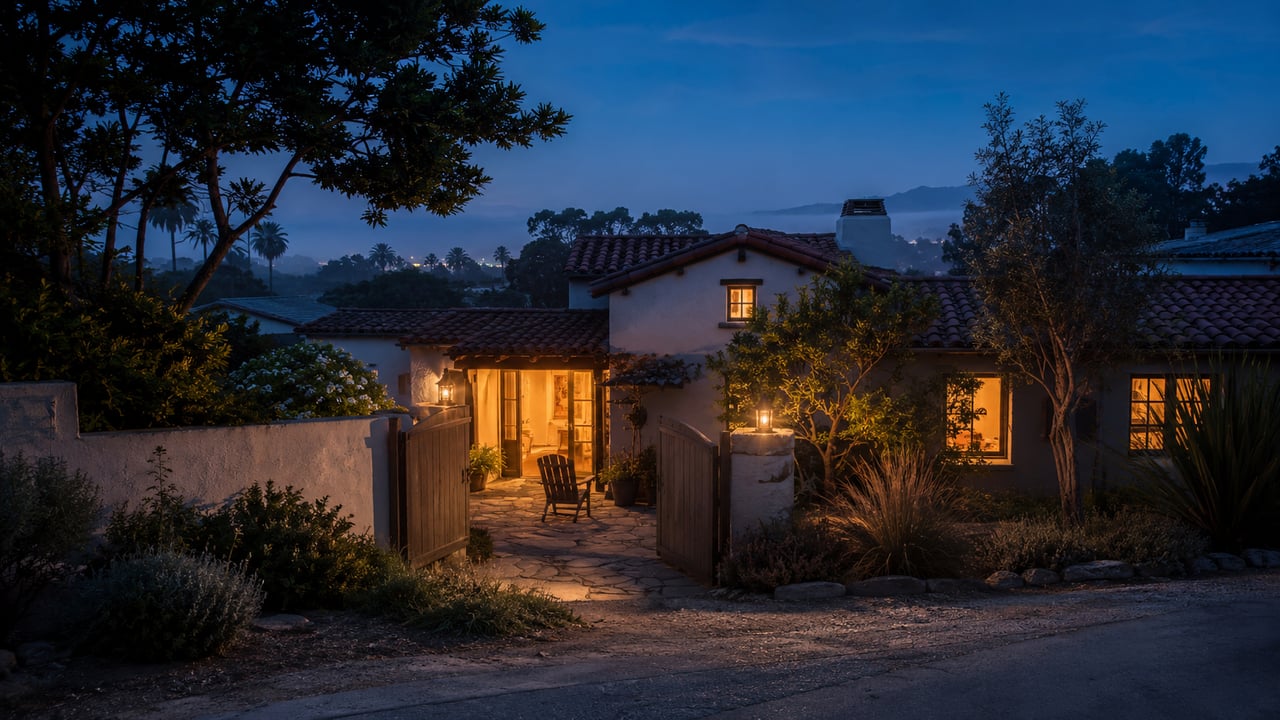
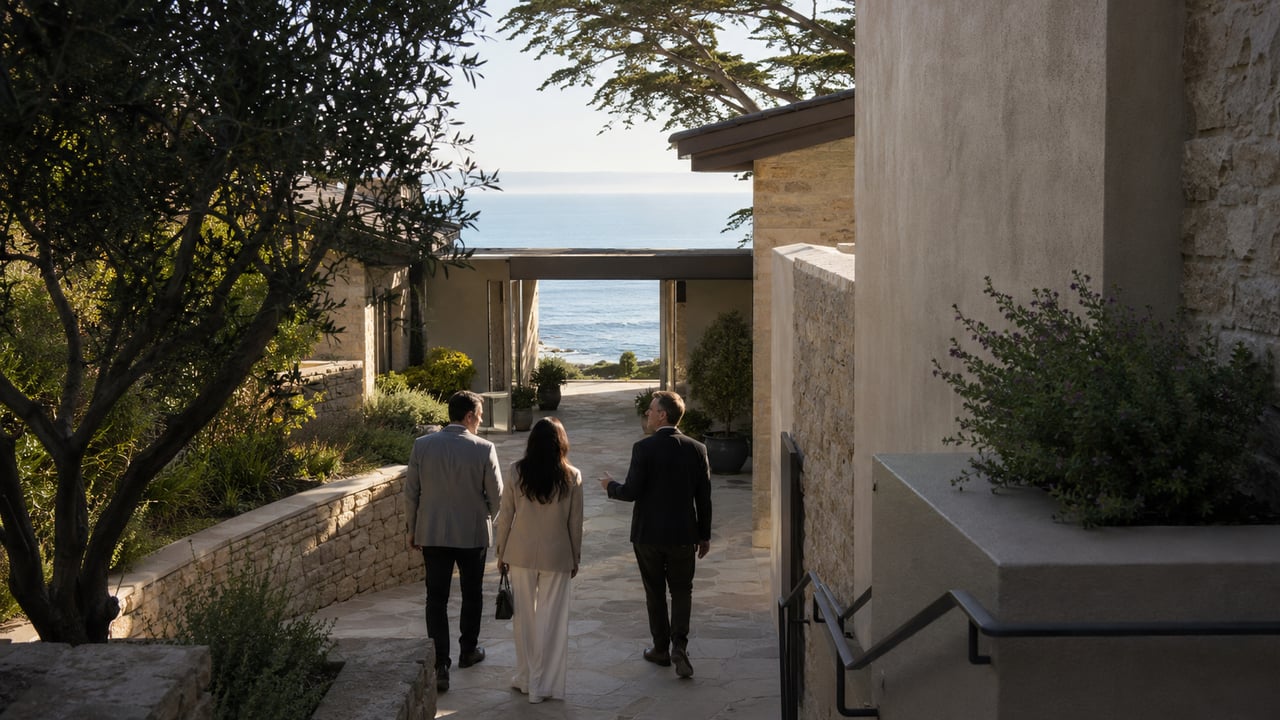
A coastal home may begin with a discreet street presence, open into a sheltered courtyard, transition through the main living spaces, and then reveal the ocean only after entering the home. Another may prioritize expansive views immediately upon arrival.
Neither approach is automatically superior. The distinction is whether the design creates a coherent experience.
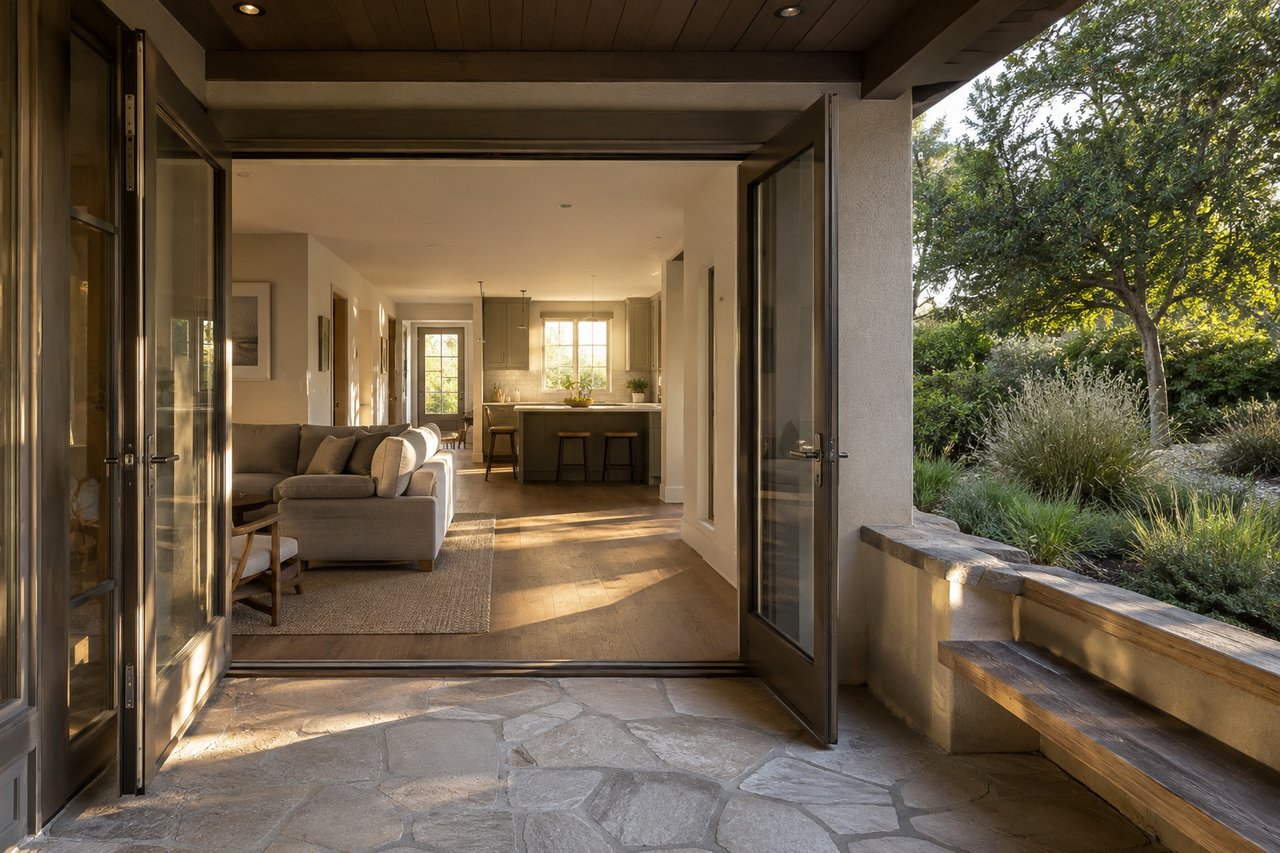
At the luxury level, buyers frequently notice relationships among spaces that conventional measurements do not capture. Ceiling height, window placement, privacy between bedroom wings, the connection from kitchen to terrace, and the transition between interior and landscape can all influence whether a home feels exceptional.
Distinctive Luxury Listings Need More Than Generic High-End Presentation
Luxury properties benefit from presentation that reveals what makes the home unusual.
👉 What Makes a Luxury Listing Stand Out on the Central Coast
A generic collection of wide-angle interior photographs may document the property without explaining why it matters.
The strongest presentation emphasizes the details that establish scarcity.
That might include the way a residence sits above the shoreline, a custom stone courtyard protected from prevailing wind, views visible from multiple living areas, an architecturally significant stairway, a guest suite positioned for privacy, or a landscape designed around mature native trees.
Luxury buyers are often comparing homes that are all attractive.
Presentation should therefore answer a more demanding question: what can this property offer that the others cannot?
With more than 2,130 closed transactions, Joesef has seen that strong buyer response often depends on making those distinctions immediately understandable rather than expecting buyers to discover every important attribute on their own.
Coastal Ownership Adds Setting to the Value Equation
Buying along the coast introduces considerations that are less prominent in many inland markets.
👉 What to Expect When Buying a Coastal Home on the Central Coast
Ocean proximity, bluff position, marine exposure, wind patterns, access, coastal development rules, drainage, topography, and neighboring sightlines can all affect how a property functions and how buyers perceive long-term value.
The California Coastal Commission oversees coastal development under the California Coastal Act and provides information about planning and permitting within the state's coastal zone.
That regulatory environment can make certain coastal property characteristics particularly difficult to reproduce.
A residence with established siting, legal improvements, mature landscaping, and protected orientation may offer advantages that cannot simply be created on another parcel.
This contributes to scarcity, which is one of the defining characteristics of many high-end coastal homes.
Comparable Luxury Homes May Be Similar on Paper but Very Different in Person
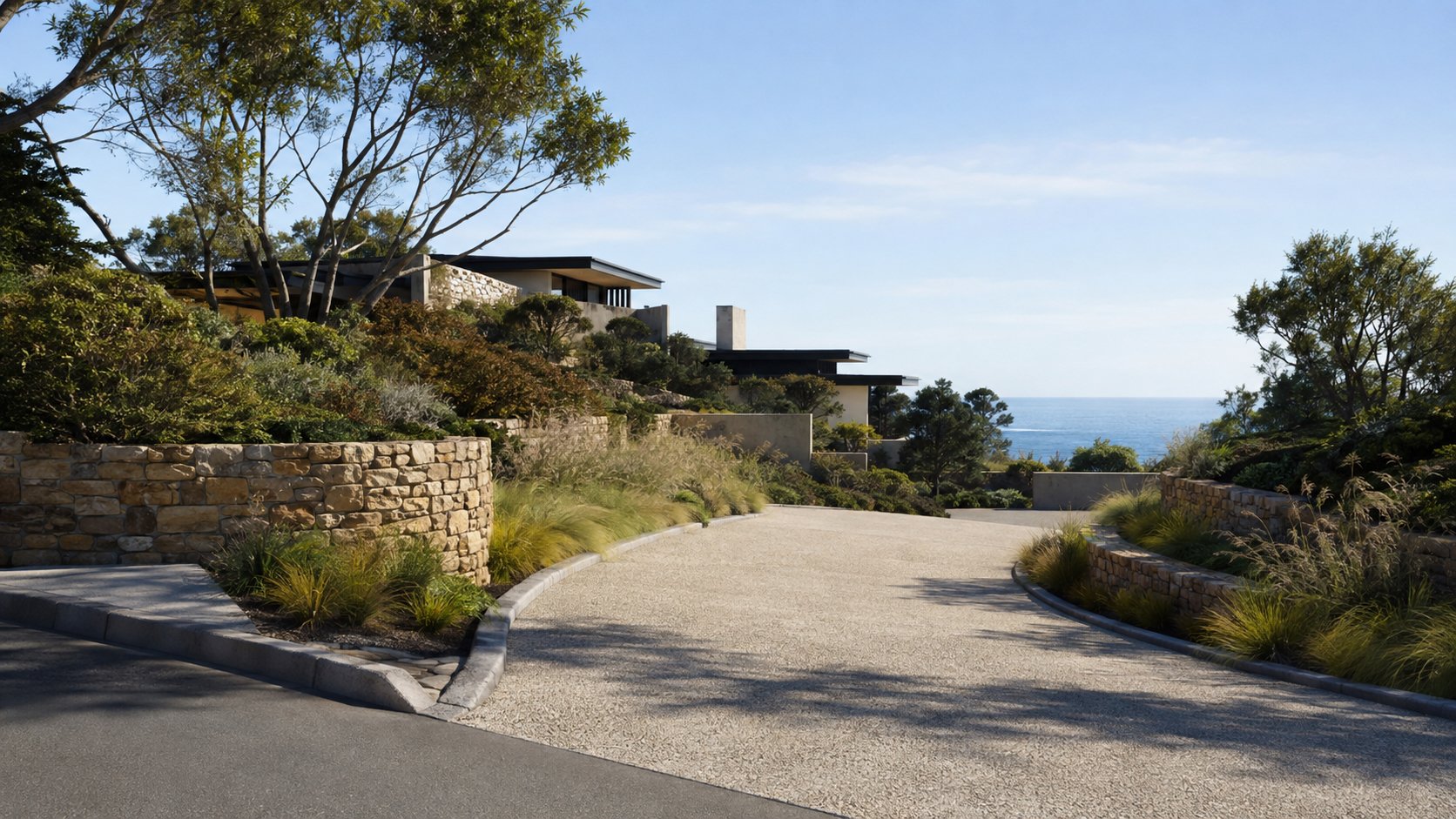
High-end buyers frequently encounter properties that appear comparable in basic statistics but feel dramatically different once experienced.
👉 How Luxury Buyers Compare San Luis Obispo County Properties
Two residences may contain similar square footage, bedroom counts, and general finish quality while offering completely different levels of privacy, site integration, natural light, views, noise exposure, outdoor usability, and architectural character.
This is why price-per-square-foot comparisons can become less reliable as properties become more distinctive.
A Cambria residence surrounded by mature Monterey pines may derive much of its appeal from privacy and atmosphere. A Pismo Beach property may command attention because its orientation creates wide ocean views from the primary living areas. An Avila Beach residence may gain value from proximity to the village combined with a setting that still feels secluded.
Luxury comparisons become more useful when they identify which characteristics buyers consider genuinely substitutable and which are not.
Irreplaceability Is Often the Highest Form of Luxury
A property becomes especially compelling when several uncommon attributes exist together.
👉 What Makes a High-End Home Feel Irreplaceable on the Central Coast
A panoramic view alone may not be unique. A panoramic view combined with architectural privacy, protected outdoor living, walkability, generous parking, and a particularly usable floor plan may be far more difficult to duplicate.
Luxury buyers often recognize these combinations quickly.
The challenge for sellers is identifying which attributes are truly scarce and which are simply expensive.
Imported materials can be purchased again. Appliances can be replaced. Finishes can be updated.
A protected view corridor, exceptional parcel orientation, direct shoreline relationship, established privacy, or mature landscape structure may be considerably harder to reproduce.
Those enduring characteristics can become central to both valuation and buyer conviction.
Architecture Matters Most When It Responds to the Coastal Site
A luxury home does not need one specific architectural style.
It does need a strong relationship with its setting.
On the Central Coast, that can mean designing around prevailing light, views, slope, mature vegetation, ocean exposure, and outdoor living conditions.
A modern residence may use broad expanses of glass and deep overhangs to frame the landscape while controlling glare. A Mediterranean-influenced property may use sheltered courtyards to create protected outdoor spaces. A contemporary coastal home may rely on carefully placed openings rather than uninterrupted glass to preserve privacy.
The architecture becomes more meaningful when buyers can see why the house was designed the way it was.
At the luxury level, site-responsive design often creates an experience that feels intentional rather than merely impressive.
Outdoor Living Is More Valuable When It Works With the Microclimate
Coastal outdoor space should not be evaluated only by size.
A large exposed terrace may be less usable than a smaller protected courtyard.
Wind, fog, afternoon sun, shade, and orientation can change how outdoor areas function throughout the year.
This becomes particularly noticeable in coastal communities where conditions can vary significantly over relatively short distances.
A sheltered terrace in Avila Beach may provide a very different experience from an exposed bluff-top deck elsewhere. A property in Shell Beach may have several outdoor zones designed around changing sun and wind conditions throughout the day.
Luxury buyers often recognize the difference between an outdoor area created for photographs and one designed for frequent use.
That usability can become an important part of the home's overall value.
Privacy Is Often Designed Rather Than Simply Provided by Acreage
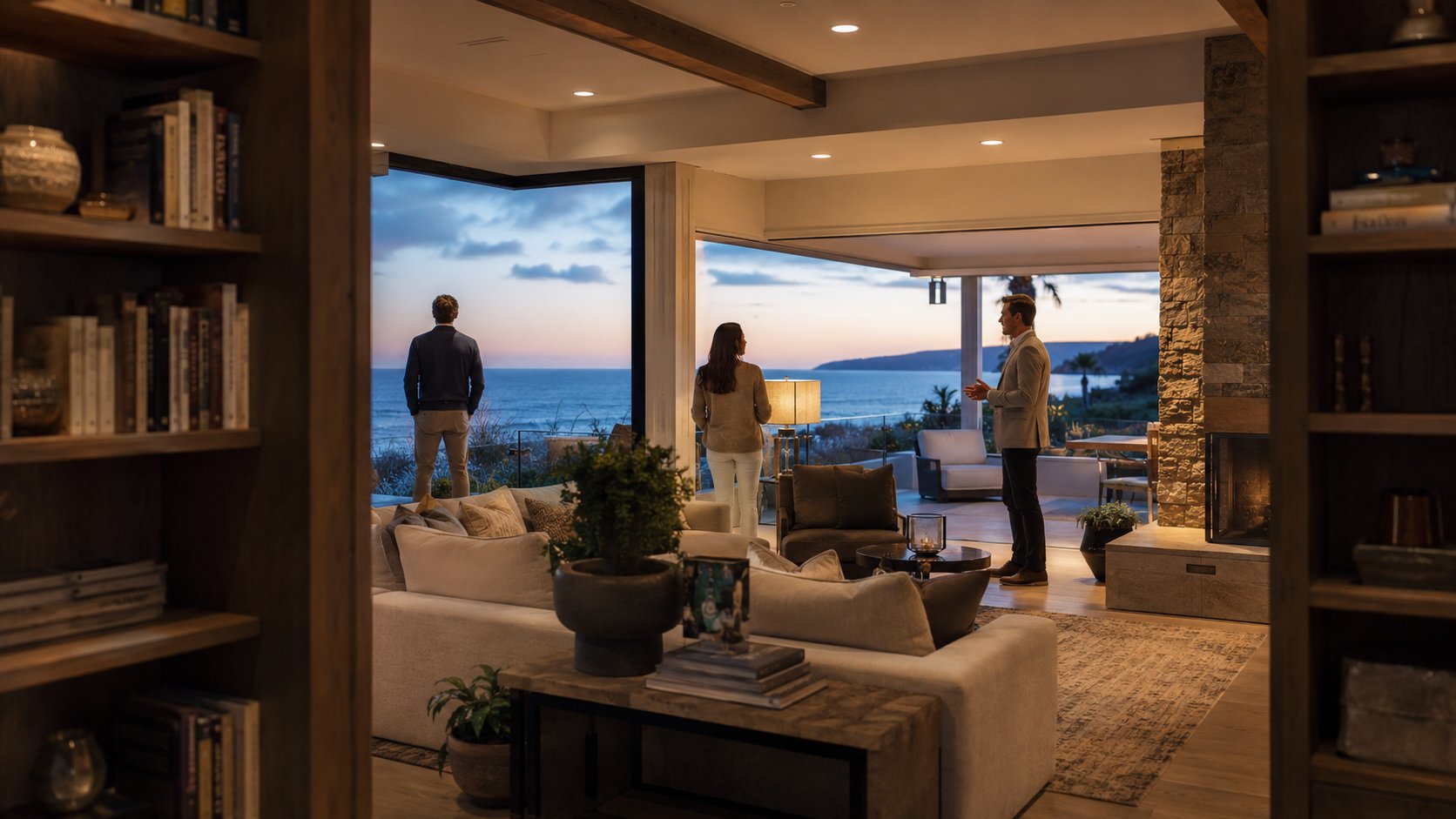
Large parcels can provide privacy, but acreage is not the only way to achieve it.
A coastal luxury property may use elevation, landscape architecture, wall placement, window orientation, courtyards, and building position to create separation from neighboring homes.
This is particularly important in desirable coastal locations where land is limited.
A residence close to shops, beach access, or village amenities may still feel remarkably private when the architecture controls views into and out of the property.
Luxury buyers often value that combination because it allows access and seclusion to coexist.
Privacy therefore should be evaluated experientially rather than simply by lot size.
Ocean Views Vary Dramatically in Quality
Not every ocean view carries the same value.
Buyers distinguish between distant water glimpses, partial views, broad panoramic exposure, protected corridors, whitewater views, and direct shoreline orientation.
The location of the view within the home also matters.
A dramatic view from one upstairs bedroom can be less influential than a slightly narrower view visible continuously from the kitchen, living room, primary suite, and outdoor areas.
Buyers may also consider whether neighboring vegetation, future construction, or topography could affect the outlook over time.
The County of San Luis Obispo provides mapping and planning resources that can be useful when researching parcels, land-use designations, and coastal-area planning considerations.
For luxury property evaluation, views should therefore be considered in terms of quality, usability, location within the residence, and potential durability.
Material Quality Is Most Powerful When It Feels Appropriate to the Property
Luxury homes frequently include expensive materials, but price alone does not create architectural quality.
Stone, wood, metal, plaster, glass, and other materials are most effective when they support the home's design and setting.
A coastal residence may benefit from durable exterior materials that age naturally in the marine environment. Interior finishes may repeat tones or textures found in the surrounding landscape.
The strongest homes often avoid the feeling that luxury components were selected independently from one another.
Instead, the details reinforce an overall architectural idea.
This cohesion can distinguish a genuinely custom property from one that simply contains a collection of expensive features.
Guest Accommodations Can Change How a Coastal Property Functions
Secondary suites, detached guest spaces, flexible rooms, and private bedroom wings can be especially valuable in coastal luxury homes.
Many buyers expect to host family or friends, sometimes for extended stays.
The distinction is not simply whether the home contains enough bedrooms.
Buyers may consider whether guests have privacy, whether circulation allows household members to maintain separate routines, and whether outdoor spaces can be shared without compromising the primary residence.
A well-designed guest component can therefore expand how the property is used.
It may also differentiate one luxury home from another with similar overall square footage.
Garage and Parking Capacity Can Become a Luxury Feature Near the Coast
Parking can appear ordinary until it becomes scarce.
In dense or highly desirable coastal areas, generous garage space, usable driveway parking, secure storage, and convenient guest parking can contribute meaningfully to a property's appeal.
This is especially relevant for buyers expecting frequent visitors or storing recreational equipment associated with coastal living.
A luxury home may offer exceptional architecture and views but become less practical if parking creates daily frustration.
Conversely, a well-integrated garage and parking plan can add an element of convenience that buyers appreciate more after comparing other coastal properties.
Luxury is often expressed through the absence of unnecessary compromises.
Coastal Luxury Buyers Often Pay for Scarcity Rather Than Size
Square footage remains important, but it does not always determine the hierarchy of coastal luxury properties.
A smaller residence may be substantially more valuable when its location, view, privacy, architecture, and outdoor experience are difficult to replicate.
This is one reason coastal luxury valuation requires careful comparison.
The question is not merely how much house the buyer receives.
It is what ownership experience the buyer receives and how many reasonable alternatives can provide something similar.
Scarcity becomes especially powerful when several rare characteristics are combined in one property.
Premium Features Need to Support the Way Buyers Will Actually Live
Luxury buyers may appreciate a dramatic wine room, elaborate outdoor kitchen, resort-style pool, private office suite, or extensive smart-home system.
Those features carry the greatest value when they fit naturally into the overall property.
A feature that feels disconnected from the home may attract attention without materially changing buyer conviction.
Conversely, something relatively understated—such as a protected breakfast terrace overlooking the ocean—can become one of the most memorable aspects of the property because it improves daily life.
Joesef's experience representing more than $1.81 billion in career sales volume has reinforced that high-end buyers frequently respond most strongly to features they can imagine using regularly rather than features designed primarily to impress during a showing.
The Best Coastal Luxury Homes Create a Sense of Place
Exceptional coastal homes feel connected to where they are.
They do not simply provide luxury interiors near the ocean.
The architecture, landscape, views, light, materials, outdoor areas, and privacy combine to make the location part of everyday life.
A Cambria property may draw its identity from forest and coastline. A Cayucos residence may revolve around beach access and an open horizon. A Shell Beach home may combine bluff-top exposure with sheltered private spaces. Avila Beach can offer another relationship entirely, shaped by hills, sun, village access, and protected orientation.
Those differences are why coastal luxury cannot be reduced to one template.
The defining quality is often not extravagance but specificity: a home designed, positioned, and experienced in a way that belongs to its site.
Coastal Luxury Is Ultimately About What Cannot Easily Be Recreated
The most valuable characteristics of a luxury coastal home are often the least replaceable.
Interiors can be remodeled. Appliances can change. Finishes can be upgraded.
A rare parcel, protected view, exceptional orientation, architectural relationship to the landscape, mature privacy, walkable coastal location, or direct connection to the shoreline is far more difficult to duplicate.
For buyers, those characteristics can justify choosing one property over another even when basic statistics appear similar.
For sellers, they form the foundation of an effective luxury strategy.
Understanding what truly separates the home allows the property to be evaluated on its own merits rather than reduced to a generic comparison of size, amenities, and price.
Frequently Asked Questions
What makes a coastal home a luxury property?
Luxury typically comes from a combination of scarcity, location, architectural quality, privacy, views, site characteristics, craftsmanship, and the overall ownership experience rather than price alone.
Are ocean views always the most important luxury feature?
No. View quality matters, but privacy, architecture, outdoor usability, parcel characteristics, access, and other hard-to-replace attributes can be equally important.
Why are coastal luxury homes harder to compare?
Distinctive properties may differ substantially in site, orientation, views, architecture, privacy, and amenities even when their square footage and bedroom counts are similar.
Does a luxury coastal home need to be large?
No. A smaller property can occupy a high luxury position when its setting, architecture, scarcity, and lifestyle advantages are exceptional.
How important is privacy in Central Coast luxury real estate?
Privacy can be extremely important, particularly when a property also maintains access to coastal amenities, views, or walkable locations.
Do high-end buyers care about outdoor living?
Yes. Outdoor areas can be particularly valuable when they are protected from wind, appropriately oriented, connected to the interior, and usable throughout much of the year.
Why does architecture matter more with distinctive coastal properties?
Architecture can determine how effectively the home captures views, light, privacy, outdoor space, and the natural characteristics of its site.
What tends to make a coastal luxury home feel irreplaceable?
Irreplaceability often comes from several scarce characteristics existing together, such as a strong view, privacy, exceptional architecture, usable outdoor space, desirable access, and a site that cannot easily be duplicated.
If you are preparing to buy or sell real estate on the Central Coast and want personalized guidance, contact Joesef Jackson at SLO Life Realty Group.