Buyer selectivity changes a real estate market even when buyers have not disappeared. When buyers become less willing to compromise on condition, location, layout, presentation, price, or long-term fit, demand concentrates around a smaller share of available homes. The result is a market in which some listings attract immediate attention while others accumulate exposure, even though overall buyer activity may still look healthy.
That distinction matters in San Luis Obispo County because inventory is diverse and buyer priorities can change substantially by community, price range, and property type. A buyer considering a home in San Luis Obispo may weigh proximity, neighborhood feel, and functional use differently from someone comparing coastal properties in Avila Beach or larger parcels near Atascadero. Selectivity does not affect every listing equally; it changes which homes buyers consider worth acting on and which ones they are willing to leave behind.
The central market effect is greater separation between stronger and weaker listings. Selective buyers can create intense competition for homes that align closely with current priorities while leaving more compromise-heavy properties with fewer serious prospects. That widening performance gap can influence pricing leverage, negotiation, time on market, seller expectations, and the way inventory should be interpreted.
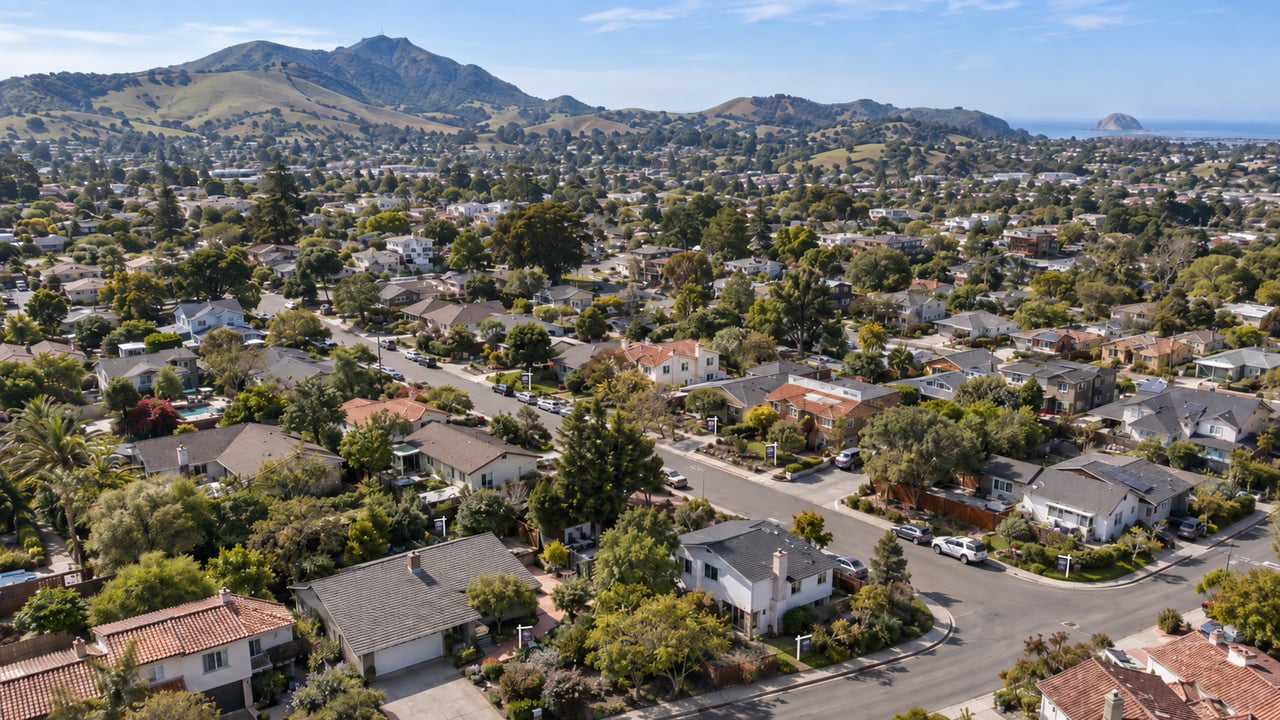
Central Coast Neighborhood Video Tour ⬇️
Selective Buyers Change the Meaning of Buyer Activity
👉 What Buyer Activity Signals Mean on the Central Coast
Buyer activity can remain visible while becoming much less evenly distributed. When buyers tour many homes but write offers on only a narrow group, raw showing volume can overstate how broad demand really is. Selectivity changes the question from “Are buyers active?” to “Which properties are buyers willing to act on?”
That difference matters because a market can contain plenty of buyers without providing equal support to every listing. Homes that align with current expectations may generate repeat visits, stronger offers, and shorter decision timelines. Properties requiring more compromise may receive attention without producing serious commitment.
In practice, buyer activity should be judged by depth as well as volume. Ten casual showings can be less meaningful than two serious second visits followed by an offer. The more selective buyers become, the more important that distinction becomes for interpreting current conditions.
For sellers, the signal is not simply the number of people looking. It is the conversion from interest to action. When that conversion becomes concentrated in a smaller slice of inventory, market conditions become more segmented.
Inventory Can Look Adequate While Buyers Still Feel Short on Choices
👉 How Local Inventory Shapes Pricing Power in San Luis Obispo County
Inventory counts do not show whether the available homes match what buyers actually want. A buyer may technically have fifteen listings to consider but dismiss most of them because of location, condition, layout, price, parking, or another meaningful constraint. From that buyer's perspective, usable inventory may be much smaller than the headline number suggests.
This is one way selectivity can create competition even in a market with more listings. If only a few homes satisfy the criteria shared by a large group of buyers, those properties can receive disproportionate attention while less aligned homes remain available.
In San Luis Obispo County, this can be especially visible when buyers compare highly specific alternatives. A buyer focused on walkability in San Luis Obispo may not treat a larger home farther away as an equivalent substitute. Inventory quality and inventory quantity are not the same thing.
This can make the market feel contradictory. Sellers may hear that inventory has increased while qualified buyers still say they cannot find the right home. Both observations can be accurate when much of the available supply falls outside the combinations buyers are prioritizing.
High-Demand Properties Separate From the Rest More Quickly
👉 What Makes a Property High-Demand on the Central Coast
Selectivity tends to sharpen the difference between homes buyers consider compelling and homes they view as acceptable but replaceable. Properties with a strong combination of location, condition, useful features, presentation, and price can still attract decisive interest because buyers see fewer reasons to keep searching.
The market effect is concentration: a smaller number of listings absorb a larger share of serious demand. That does not mean every desirable property will receive multiple offers. It means the performance gap between the strongest listings and the middle of the market can widen.
After more than 30 years representing real estate on the Central Coast, Joesef Jackson has seen this kind of separation become important before broad market averages fully explain it. When buyers become more selective, average statistics can conceal how differently individual properties are performing.
Economic Conditions Can Make Buyers More Selective Without Eliminating Demand
👉 How Economic Conditions Affect the Central Coast Housing Market
Buyer selectivity often increases when the cost or consequence of making the wrong choice feels higher. Financing conditions, household budgets, employment expectations, and broader economic uncertainty can all make buyers scrutinize properties more carefully.
A buyer who remains fully capable of purchasing may still become less willing to accept deferred work, an awkward location, a difficult commute, or a price that leaves little financial flexibility. That behavior differs from buyers leaving the market entirely.
A selective buyer is still participating, but the standard for action has risen. This can slow weaker listings while leaving well-positioned homes comparatively resilient. The effect can be especially noticeable when monthly payment sensitivity rises, because every additional compromise competes with a larger financial commitment and makes homes with multiple disadvantages easier to eliminate early.
The Consumer Financial Protection Bureau provides mortgage-rate tools that illustrate how borrowing costs can vary and why financing conditions matter when buyers evaluate monthly affordability.
Buyer Competition Becomes More Concentrated

👉 How Buyer Competition Forms in San Luis Obispo County
Selective markets often produce uneven competition rather than uniformly weak or strong conditions. When several buyers independently identify the same small group of homes as the best available options, competition can form quickly around those listings. Meanwhile, other properties at similar price points may receive limited serious interest.
This is why broad statements such as “buyers have leverage” or “sellers have leverage” can become misleading. The answer may depend on the specific property.
In Pismo Beach, for example, a home with a combination of usable outdoor space, parking, and coastal proximity may compete differently from another listing that requires buyers to compromise on several of those priorities. Selectivity can create seller leverage around the first property and buyer leverage around the second at the same time.
Inventory Gaps Can Become More Important Than Total Inventory
👉 What Inventory Gaps Mean on the Central Coast
A selective market is often shaped by what is missing rather than simply by how many listings are available. If buyers repeatedly seek a certain combination of price, condition, location, and features but few homes satisfy it, that gap can support stronger competition within that segment.
Homes outside the preferred range may not benefit from the same demand. This explains why certain listings can perform quickly even when overall inventory is rising.
The gap may also shift over time. If more suitable homes enter the market, buyers gain alternatives and become even more willing to compare. If desirable inventory remains scarce, selectivity can reinforce competition around the limited options that fit.
Understanding those gaps requires looking at what buyers repeatedly choose, not simply counting active listings.
Selectivity Changes How Comparable Homes Compete
When buyers are less willing to compromise, small differences between otherwise comparable homes matter more. A superior floor plan, better natural light, practical parking, stronger privacy, or a more usable yard can move from being a secondary preference to a deciding factor.
Buyers may reject a property not because it is objectively poor, but because another option solves more of their priorities at a similar cost. That raises the importance of direct comparison.
A home in Arroyo Grande may compete differently depending on whether buyers are comparing it with nearby South County alternatives, newer construction, larger lots, or a different location entirely. The relevant competitive set is determined by actual buyer behavior, not simply by similar square footage.
For sellers, the most relevant comparison may not be the closest recent sale. It may be the active property buyers are choosing instead. Watching where serious interest goes can define the competitive set more accurately than broad similarities alone.
Selective buyers force listings to compete on the full package rather than on one headline feature.
Negotiation Leverage Becomes Property-Specific
Selectivity changes negotiation because leverage becomes less uniform across the market. A listing that buyers view as difficult to replace may still give the seller meaningful negotiating strength. A similar-priced property with several substitutes may face more pressure on price, credits, timing, or other terms.
This creates a market where two transactions can unfold very differently within the same week.
With more than 2,130 closed transactions, Joesef has seen negotiation strength follow scarcity and buyer commitment more closely than broad labels about whether the market favors buyers or sellers. When selectivity rises, that relationship becomes even more pronounced.
The practical market signal is straightforward: leverage increasingly attaches to the specific property rather than the market as a whole.
Longer Exposure Does Not Affect Every Listing the Same Way
Time on market becomes more revealing when buyers are selective. A property that remains available while newer, similar listings secure contracts can indicate that buyers are repeatedly choosing alternatives. That pattern provides stronger information than days on market viewed in isolation.
The cause may be price, condition, presentation, location, or a combination of factors. What matters is that buyers are making an active comparison and reaching the same conclusion often enough to affect the listing's performance.
Longer exposure can also alter buyer interpretation. Once a listing has remained available while several alternatives have sold, new buyers may approach it with more questions about why others passed. That does not make the home undesirable, but it can change the burden of proving value.
The Federal Reserve Bank of St. Louis maintains housing-market data through FRED that can provide broader context for inventory, pricing, and housing activity over time.
Local listing-level interpretation is still necessary because aggregate data cannot explain why one home is being selected over another.
Selectivity Can Produce a Two-Speed Market
One of the clearest effects of greater selectivity is a market where strong listings and marginal listings move at noticeably different speeds. The first group may generate quick decisions, stronger terms, and limited negotiation. The second may experience extended exposure, more comparison, and greater pressure to justify value.
This can happen in Templeton, Paso Robles, Los Osos, or other San Luis Obispo County communities without every segment moving in the same direction. The underlying pattern is not geography alone; it is the relationship between what is offered and what current buyers consider worth choosing.
That is why countywide averages can feel disconnected from individual seller experiences. Buyers may be highly active, but only around a narrower set of homes. This two-speed effect is one reason market conversations can sound inconsistent: one seller may receive several strong offers while another nearby owner sees little movement because selective demand is rewarding different property characteristics.
Buyer Selectivity Reshapes Market Conditions Through Choice
Buyer selectivity changes market conditions because choices become more concentrated and consequences become more visible. When buyers reject compromise more readily, stronger homes separate from weaker ones, inventory gaps matter more, negotiation leverage becomes property-specific, and sellers receive faster feedback about whether their listing meets current expectations.
The market does not need to lose buyers for these changes to occur. Selectivity can coexist with meaningful demand.
The key is where that demand goes. If buyers repeatedly choose a smaller group of homes while bypassing the rest, market conditions become increasingly segmented. For buyers and sellers on the Central Coast, that pattern is often more useful than a simple description of the market as “hot,” “slow,” or balanced.
Frequently Asked Questions
What does buyer selectivity mean in real estate?
Buyer selectivity means active buyers are narrowing the types of homes they will seriously consider and becoming less willing to compromise on characteristics they view as important.
Can buyers be selective even when demand is strong?
Yes. Strong overall demand can exist while buyers concentrate their attention on a smaller group of properties that meet current priorities.
How does buyer selectivity affect sellers?
It can widen the performance gap between listings. Homes closely aligned with buyer priorities may perform quickly, while properties requiring more compromise can experience longer exposure or greater negotiation pressure.
Does more inventory always reduce buyer competition?
No. Buyers may still compete strongly if much of the available inventory does not meet the criteria they are prioritizing.
Why can two similar homes perform very differently?
Small differences in location, layout, condition, parking, privacy, presentation, price, or other buyer priorities can become more important when buyers are highly selective.
Does buyer selectivity mean the market is weakening?
Not necessarily. Selectivity can develop while buyers remain active. The defining change is that demand becomes more concentrated rather than disappearing.
How does selectivity affect negotiation leverage?
Leverage becomes more property-specific. Homes buyers see as scarce or difficult to replace may retain strong seller leverage, while listings with many substitutes may face more negotiation.
What is the clearest sign that buyer selectivity is changing market conditions?
A widening performance gap between comparable listings is one of the clearest signs, especially when a narrow group attracts quick commitment while other properties receive attention without serious action.
If you are preparing to buy or sell real estate on the Central Coast and want personalized guidance, contact Joesef Jackson at SLO Life Realty Group.