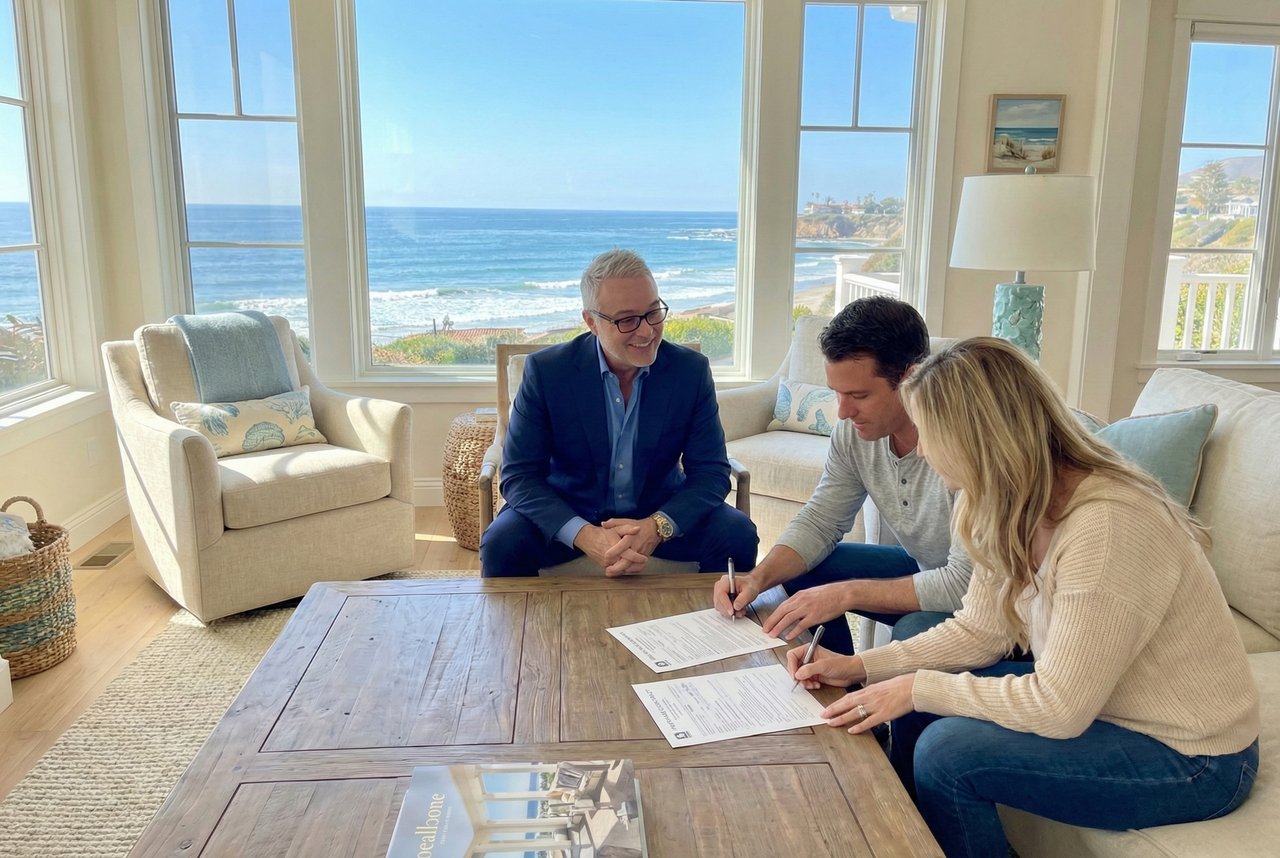
Real estate investors evaluate property through a different lens than most traditional homebuyers. A buyer purchasing a primary residence may focus first on lifestyle, comfort, design, views, neighborhood feel, and whether the home fits their personal life. Investors care about many of those same things, but they usually ask a different first question: does this property make sense as an asset?
On the Central Coast, that question requires more than a quick look at rent estimates or resale appreciation. A property in San Luis Obispo may have strong long-term demand but a higher entry price. A duplex in Grover Beach or Arroyo Grande may offer practical rental function and regional access. A property in Atascadero, Templeton, or Paso Robles may offer more space, a different price point, and different maintenance exposure. A coastal property in Pismo Beach, Morro Bay, Los Osos, Avila Beach, Cayucos, or Cambria may offer scarcity and lifestyle value, but it may also require closer review of insurance, exterior condition, and local use rules.
After more than 30 years in real estate, 2,130+ closed transactions, and over $1.81 billion in career sales volume, Joesef Jackson has seen that strong investors do not buy based on one attractive feature. They evaluate the whole property: income potential, expenses, condition, tenant profile, financing, location quality, risk, future resale, and exit strategy. A good investment property is not just one that looks promising today. It is one that can hold up under real ownership conditions.
Central Coast Neighborhood Video Tour ⬇️
Investors Look First at the Property’s Core Use
The first investor question is simple: what is this property best used for? A property may be best suited as a long-term rental, a student rental, a second-home rental, a small multifamily hold, a future owner-occupant property, a value-add improvement project, or a long-term appreciation play. If the use is unclear, the investment becomes harder to evaluate.
On the Central Coast, property use can vary significantly by location. A home near Cal Poly in San Luis Obispo may be evaluated for student, faculty, or staff housing demand. A duplex in Grover Beach may be evaluated for long-term rental income and coastal access. A home in Paso Robles may be evaluated for space, wine country appeal, and long-term affordability relative to coastal communities. A property in Morro Bay or Pismo Beach may be evaluated for scarcity, lifestyle demand, and future resale appeal.
Investors look for properties where the use matches the location, layout, condition, and rules. A property with strong rental demand but poor parking may create practical challenges. A property with short-term rental potential may not be useful if local rules do not allow that use. A property with great land may not be a good investment if the improvements are too costly or the rental demand is too narrow.
👉 Is Buying a Rental Property on the Central Coast Still a Smart Investment?
One expert insight Joesef often shares with investors is that the best property is not always the one with the most exciting story. It is the one where the intended use is clear, realistic, and supported by the local market.
Cash Flow Matters, But It Is Not the Only Measure
Cash flow is one of the most important investor considerations. Investors want to understand income, expenses, debt service, taxes, insurance, management, maintenance, vacancy, reserves, and likely capital improvements. A property that looks profitable before expenses may look very different once the full cost of ownership is included.
On the Central Coast, pure cash flow can be challenging in higher-priced communities. San Luis Obispo, Pismo Beach, Avila Beach, Morro Bay, and Cayucos may have strong demand, but purchase prices can be high relative to rent. Atascadero, Grover Beach, Nipomo, and Paso Robles may offer different entry points, but investors still need to analyze tenant demand, repair needs, insurance, and long-term resale.
A good investor does not stop at gross rent. They look at net operating potential. They also ask what happens if the property is vacant for a month, if insurance increases, if a roof needs replacement, or if repairs are needed soon after closing.
👉 What Makes a Good Long-Term Rental Property in San Luis Obispo County?
The IRS provides information for property owners about rental income and expenses, which can help investors understand that rental performance should be evaluated after costs, not only by gross rent.
From Joesef’s experience across thousands of transactions, disciplined investors separate hope from math. They may still buy for long-term appreciation or lifestyle value, but they understand the financial trade-off before they close.
Investors Evaluate Appreciation Potential Separately From Income
Some properties are purchased primarily for income. Others are purchased because the investor believes the location, scarcity, land, improvement potential, or long-term demand may support appreciation. The strongest investments often have a blend of both, but investors should be clear about which factor is driving the decision.
A property in San Luis Obispo may not produce the strongest immediate cash flow, but it may offer durable long-term demand because of limited supply, Cal Poly, downtown access, and lifestyle appeal. A coastal property in Morro Bay or Pismo Beach may have long-term scarcity value, but the investor must understand whether the carrying costs are justified. A property in Atascadero or Paso Robles may offer more favorable entry pricing, but the investor should evaluate whether demand and resale strength fit their long-term goals.
Investors look for appreciation signals such as desirable location, limited supply, improving neighborhood conditions, usable land, flexible floor plans, and broad future buyer appeal. They also look for risks that may limit appreciation, such as poor location, functional problems, high maintenance exposure, or narrow resale demand.
The California Association of REALTORS® provides statewide housing market information that can help investors and property owners understand broader California real estate trends.
A strong investment decision should not confuse appreciation potential with guaranteed appreciation. Investors should understand the reason they believe value may grow and what risks could affect that assumption.
Property Condition Can Change the Entire Investment

Condition is one of the biggest factors investors evaluate because repairs directly affect return. A property that needs work may be a smart investment if the price reflects the condition and the improvement plan is realistic. But a property with hidden or underestimated repairs can quickly damage the investment case.
Investors look carefully at roofs, foundations, plumbing, electrical systems, drainage, windows, HVAC, water heaters, exterior materials, pest issues, and prior renovations. They also evaluate whether repairs are cosmetic, functional, safety-related, structural, or capital-intensive.
On the Central Coast, condition must be read locally. Coastal homes in Pismo Beach, Cayucos, Avila Beach, Morro Bay, and Los Osos may require closer attention to moisture, salt air, decks, roofs, windows, and exterior materials. Older homes in San Luis Obispo and Arroyo Grande may need review of systems and prior remodels. Rural or semi-rural properties near Atascadero, Templeton, and Paso Robles may involve septic, wells, fencing, defensible space, and land maintenance.
Joesef has seen many investors succeed because they understood condition before buying. He has also seen buyers underestimate repairs because they focused too heavily on potential income. The numbers only work if the repair assumptions are realistic.
Short-Term Rental Potential Must Be Verified, Not Assumed
Some investors are attracted to short-term rental possibilities, especially in coastal or tourism-driven areas. A property in Pismo Beach, Avila Beach, Morro Bay, Cayucos, Cambria, or Paso Robles may appear to have strong visitor appeal. But short-term rental potential must be verified carefully before it becomes part of the investment plan.
Investors should review local regulations, permitting, occupancy limits, HOA restrictions, insurance, transient occupancy tax requirements, seasonality, management costs, cleaning costs, furnishing costs, guest turnover, and competition. A property that works beautifully as a vacation home may not legally or financially work as a short-term rental.
👉 What to Know About Short-Term Rentals on the Central Coast
A serious investor does not buy based on an online income projection alone. They verify whether the use is allowed, whether the numbers are realistic, and whether the property can be managed profitably. Joesef often helps clients slow down at this stage because short-term rental assumptions can be one of the easiest places to overestimate performance.
Property Taxes and Ownership Costs Shape Real Return
Investors pay close attention to property taxes because taxes affect long-term net return. In California, a purchase can establish a new assessed value, and investors should understand how that tax basis fits into their financial projection. A property may appear strong before taxes but less attractive after tax, insurance, financing, maintenance, and vacancy are included.
👉 Understanding Investment Property Taxes in San Luis Obispo County
Investors should also consider insurance, HOA dues, utilities, management fees, repairs, reserve funds, legal compliance, bookkeeping, and professional services. These are not side issues. They are part of the investment.
A condo in San Luis Obispo may have HOA dues that affect monthly return. A coastal property may have higher exterior maintenance and insurance considerations. A larger property in Paso Robles or Templeton may require more land care. A rental in Arroyo Grande or Nipomo may have different maintenance expectations than a downtown property.
The strongest investors evaluate total ownership cost before buying. They do not wait until after closing to discover the true cost of carrying the asset.
Investors Study the Tenant Profile
Investors want to understand who will live in the property. A tenant profile affects rent level, turnover, maintenance expectations, marketing, vacancy risk, and long-term stability. A property should be evaluated based on the likely tenant, not just the investor’s personal preferences.
A San Luis Obispo rental near Cal Poly may attract students, faculty, staff, or young professionals. A single-family rental in Arroyo Grande or Nipomo may attract families or longer-term tenants. A property in Atascadero or Paso Robles may appeal to tenants who need more space or relative affordability. A coastal rental in Morro Bay, Los Osos, or Pismo Beach may attract tenants drawn to lifestyle and location.
👉 How to Forecast Rental Trends
Investors should ask whether the property fits the tenant’s real needs. Is there parking? Is the layout functional? Is there laundry? Is the commute reasonable? Are bedrooms usable? Is the home easy to maintain? Does the location support daily life?
A property that fits its tenant profile is usually easier to rent and easier to own.
Good Investment Properties Offer Practical Tenant Appeal

Tenant appeal is not always about luxury. Many long-term tenants value function, convenience, cleanliness, safety, storage, parking, laundry, heating and cooling, outdoor space, and responsive maintenance more than high-end finishes.
👉 What Makes a Property Attractive to Long-Term Tenants
Investors look for properties that are easy for tenants to understand and want. A confusing layout, difficult parking situation, poor access, or high-maintenance design may reduce appeal. A simple, clean, functional property in the right location may outperform a more dramatic property with practical problems.
Joesef’s long-term experience has shown that tenant appeal often protects the investor. When a property has broad practical demand, it may stay more resilient during changing market conditions.
Financing Structure Can Make or Break the Deal
Investors evaluate financing differently than owner-occupants. Loan terms, down payment, interest rate, reserves, property type, rent projections, and lender requirements all affect the final decision. A property can look attractive until the financing is applied.
Investors should stress-test the property. What happens if the interest rate is higher than expected? What if rent is lower? What if repairs appear in the first year? What if the property sits vacant longer than planned? What if insurance costs increase?
A strong investment should not depend entirely on a perfect scenario. It should have enough margin, flexibility, or long-term rationale to survive normal ownership challenges.
Some investors prioritize cash flow. Others prioritize appreciation. Others are using a 1031 exchange, planning for retirement income, helping children near Cal Poly, or building long-term equity. The right financing structure depends on the investor’s goal.
Exit Strategy Is Part of the Purchase
Experienced investors think about the exit before they buy. They ask who might buy the property later, how flexible the use is, whether the location will remain desirable, and whether the property could appeal to both investors and owner-occupants.
A duplex may appeal to future investors. A single-family rental in a strong neighborhood may appeal to both investors and families. A coastal property may appeal to lifestyle buyers even if rental performance changes. A highly specialized property may perform well under one strategy but be harder to sell later.
Exit strategy matters because markets change. Regulations change. Financing changes. Investor goals change. A property with more than one future path may carry less risk.
A good Central Coast investment property should not only work on acquisition. It should make sense if the investor needs to refinance, reposition, rent differently, improve, or sell.
Local Rules and Property Constraints Must Be Understood
Investors also look at what the property can legally and practically do. Zoning, ADU potential, short-term rental rules, HOA restrictions, parking requirements, occupancy limits, permits, utility capacity, easements, and local planning rules can all affect investment value.
San Luis Obispo County includes incorporated cities and unincorporated areas, and rules can vary. San Luis Obispo, Pismo Beach, Morro Bay, Arroyo Grande, Atascadero, Paso Robles, Grover Beach, and county areas may each treat rental use, development potential, and permitting differently.
A property may look like it has room for an ADU, but that does not mean an ADU is automatically feasible. A home may appear ideal for rental use, but HOA rules may limit leasing. A coastal property may appear attractive for short-term stays, but local regulations may restrict that use.
Investors look for facts, not assumptions. Verification is part of due diligence.
The Strongest Investment Properties Balance Risk and Return
Every investment property has risk. The goal is not to eliminate risk entirely. The goal is to understand it clearly enough to decide whether the potential return justifies it. Investors look at risk through condition, financing, vacancy, tenant demand, regulation, insurance, taxes, maintenance, resale, and market timing.
A high-return property with unclear condition may not be worth the risk. A lower-return property in a stronger location may be the better long-term hold. A property needing improvements may be a good opportunity if the investor has the capital, time, and experience to execute the plan. A beautiful property may still be a poor investment if the numbers do not work.
After more than three decades helping clients evaluate real estate on the Central Coast, Joesef Jackson understands that investor decisions require disciplined analysis. A strong property should have a clear purpose, realistic income, manageable expenses, understandable risk, and a sensible long-term plan.
The best investors do not chase every opportunity. They look for properties where the fundamentals support the strategy.
FAQ
What do investors look for in properties on the Central Coast?
Investors look for location strength, rental demand, cash flow, appreciation potential, property condition, tenant appeal, financing fit, tax impact, ownership costs, local rules, and resale value.
Is cash flow the most important factor?
Cash flow is important, but it is not the only factor. Some investors prioritize income, while others focus on appreciation, flexibility, tax planning, or long-term equity. The property should match the investor’s strategy.
What makes a rental property strong?
A strong rental property usually has a clear tenant pool, functional layout, parking, manageable maintenance, good location, realistic rent, and ownership costs that make sense after expenses.
Should investors buy properties that need work?
A property needing work can be a good investment if the price reflects the condition and repair costs are realistic. Investors should understand the scope, timing, and risk before buying.
Why do property taxes matter for investors?
Property taxes affect net return and cash flow. Investors should estimate taxes based on the purchase and evaluate how they fit into the full ownership cost.
Are short-term rentals good investment properties?
They can be, but only when legally allowed and financially realistic. Investors must verify local rules, occupancy, seasonality, management costs, cleaning, taxes, insurance, and neighborhood restrictions.
Why is exit strategy important?
Exit strategy helps investors understand future resale, refinance, repositioning, or owner-use possibilities. A property with broader future appeal may carry less long-term risk.
Why does local experience matter for investors?
Local experience helps investors understand neighborhood demand, tenant profiles, condition concerns, pricing patterns, regulations, expenses, and resale strength across San Luis Obispo County and the Central Coast.
If you are preparing to buy or sell real estate on the Central Coast and want personalized guidance, contact Joesef Jackson at SLO Life Realty Group.
Internal Linking Note
This article intentionally connects to both published and future Central Coast real estate resources as part of a long-term geographic authority strategy. Some plain-text references may become active links as additional San Luis Obispo County and Central Coast content is published.